
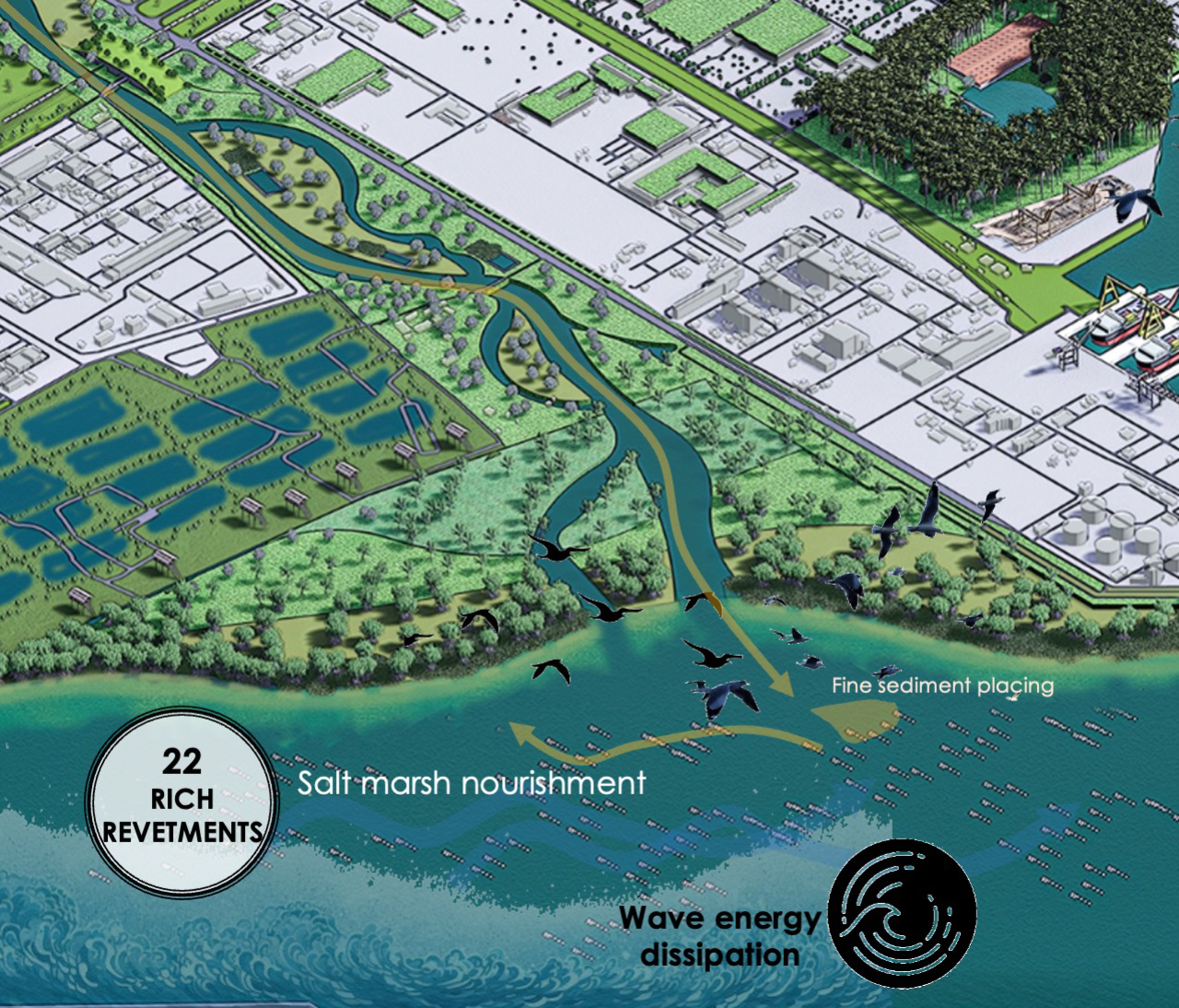
Planting Mats And Rich Revetments

Planting mats and rich revetments are innovative ecological solutions aimed at restoring and enhancing marine and coastal environments while supporting biodiversity and ecosystem resilience.

Planting mats, typically made from biodegradable or durable materials, provide a stable substrate for aquatic vegetation such as seagrasses, mangroves, or marsh plants to anchor and grow, stabilizing sediments and reducing erosion.

Rich revetments improve traditional coastal defence structures by incorporating textured surfaces, eco-friendly materials, and features like eco-basins or tide pools to create habitats for marine life, including algae, shellfish, and fish. Together, these approaches enhance water quality, foster habitat complexity, and attract diverse marine species.

In coastal and port areas, they contribute to sediment stabilization, mitigate wave energy, and offer recreational and educational opportunities while promoting the recovery of marine ecosystems.


  • Ecosystem restoration
  • Ecosystem based disaster risk reduction
  • Integrated coastal zone management
  • Green infrastructure
Biodiversity Loss Biodiversity Loss
Flood Control Flood Control
Carbon Sequestration Carbon Sequestration
Disaster Risk Reduction Disaster Risk Reduction
Soil Erosion Soil Erosion

SUPPORTING

  • Create stable habitats for marine organisms, including algae, seagrasses, shellfish, and fish, fostering biodiversity in degraded port areas.
  • Facilitate nutrient exchange and cycling through the growth of aquatic vegetation and filter-feeding organisms.

REGULATING

  • Reduce pollution by supporting filter-feeding organisms like shellfish and mussels, which remove contaminants, heavy metals, and organic waste from port waters.
  • Stabilize sediments to prevent the resuspension of pollutants commonly found in port areas.
  • Reduce wave energy and mitigate erosion by stabilizing sediments and dampening wave impact.

PROVISIONING

  • Support the recovery of fish and shellfish populations, including species affected by port pollution.
  • Provide a sustainable source of biomass for ecological restoration or bioproducts while improving degraded environments.

SOCIAL BENEFITS

  • Improve the visual appeal and ecological health of polluted or industrialized port environments, fostering a stronger connection between communities and marine ecosystems.
  • Enhance water clarity and marine life diversity, making port areas more attractive for eco-tourism, diving, and other recreational activities.
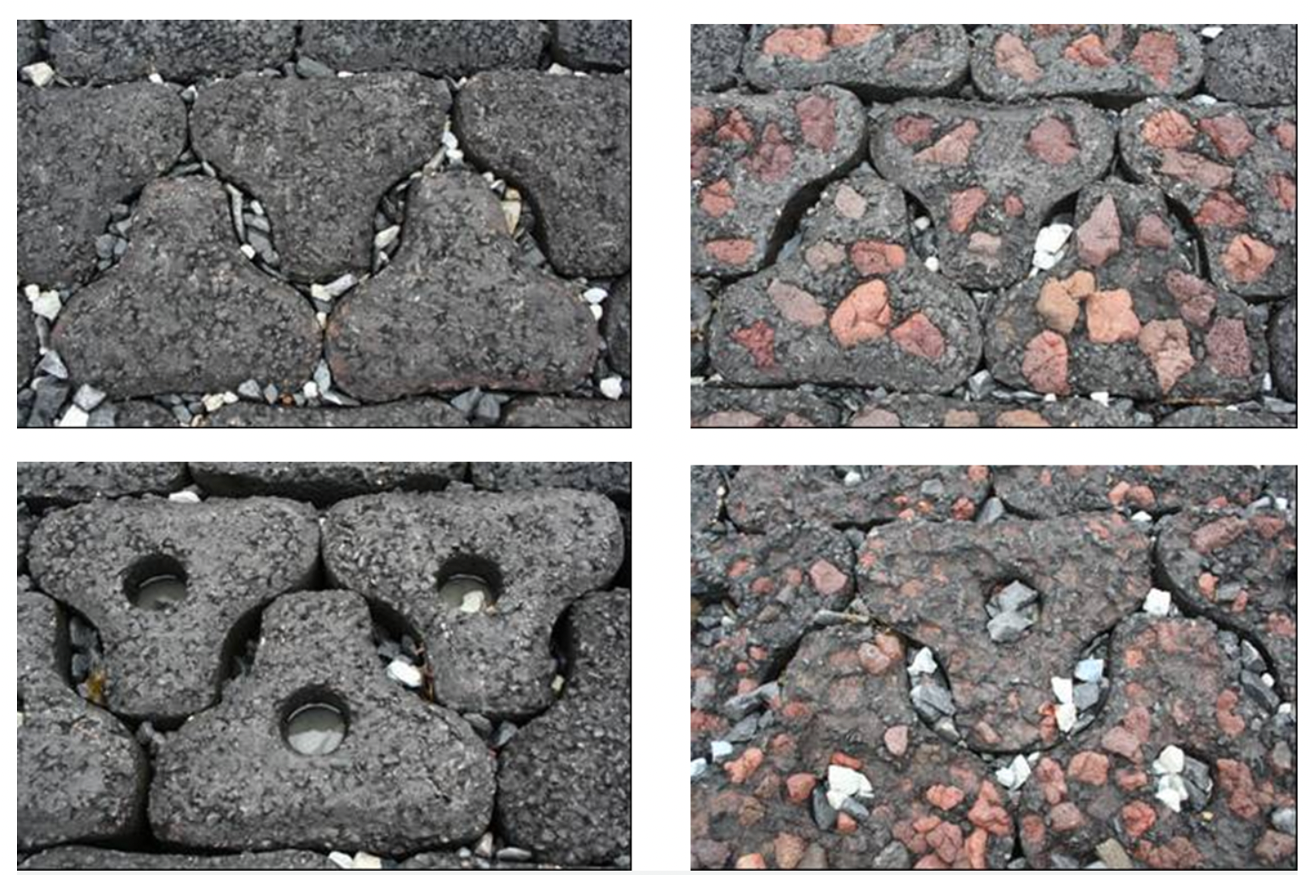
NbS22_Holes in Revetments to Attract Marine Organisms
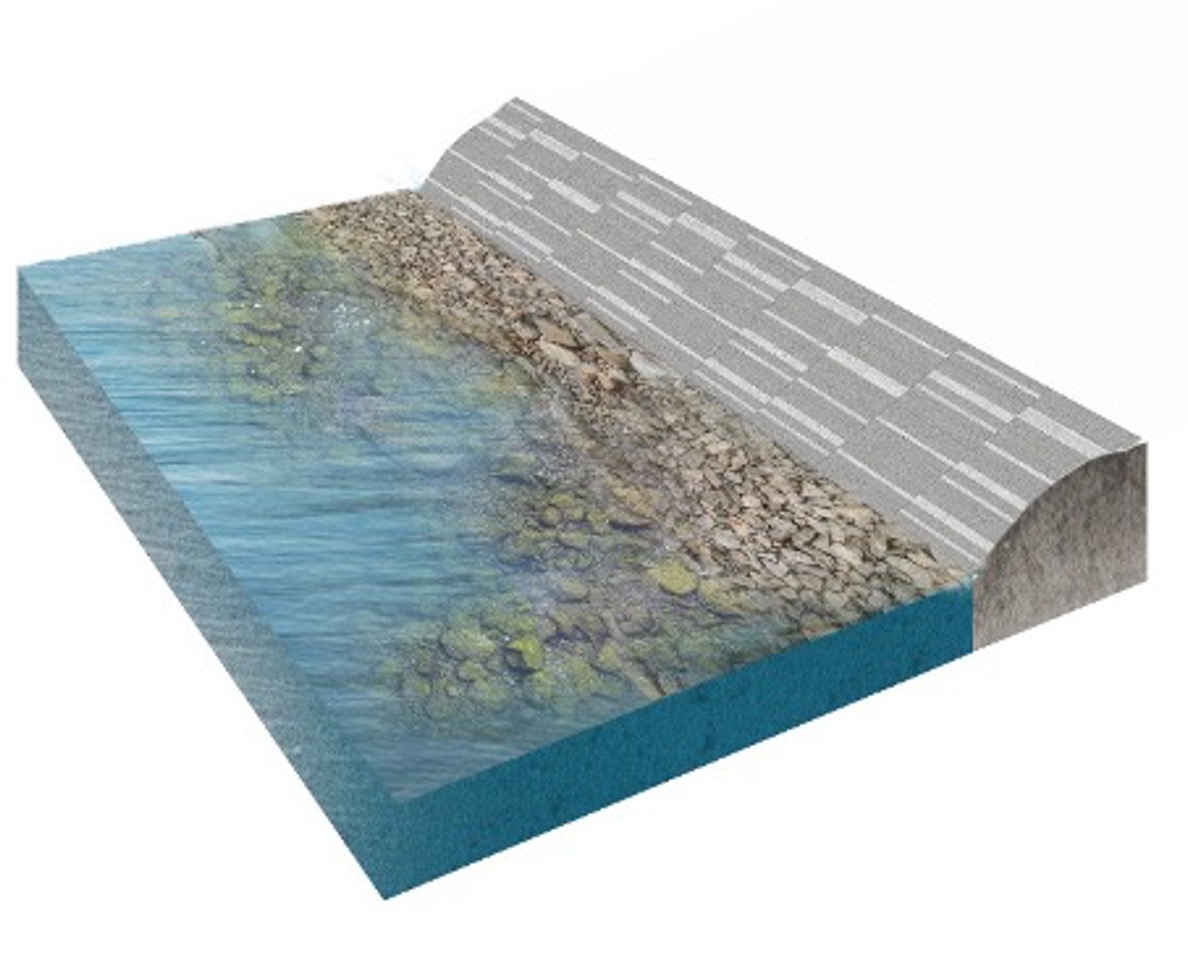
NbS22_Rich marine Revetments along Coastline

Port Area: Ports often have polluted seabeds with heavy metals, hydrocarbons, or chemicals that may hinder vegetation establishment or harm marine life attracted by these structures.

Boat Activity: High boat traffic, propeller wash, and frequent dredging activities in ports create strong currents and turbulence, which may damage planting mats.

Infrastructure density: Limited available space for ecological installations due to the density of port infrastructure (docks, seawalls, shipping lanes).

Poor Connectivity: Limited connectivity between created habitats within ports may reduce their effectiveness for supporting larger marine populations or restoring ecological functions.

Biodiversity Enhancement

Measurement of habitat diversity created by the installation of mats and revetments .

Coastal Protection

Reduction in the rate of shoreline retreat or sediment loss, increase in sediment accumulation.

Water Quality Improvement

Decrease in heavy metals, hydrocarbons, or organic pollutants in the water column, increase in dissolved oxygen levels.

Resilience to climate

Frequency and intensity of flooding events before and after implementation, reduction in the impact of storm surges and high waves on port infrastructure and surrounding areas.

Pollution Migration in Port Environments

Amount of contaminants (e.g., hydrocarbons, heavy metals) removed by the planting mats and rich revetments over time, reduction in the levels of pollutants in port sediments, such as oils, heavy metals, and other toxic substances.

Direct Costs

Site preparation, materials, construction and labor, monitoring : $180–$460 per m².

Indirect Costs

Opportunity costs, operational disruptions, long term maintenance.

Time Horizon

Short-term (1–5 years): Site preparation, installation, monitoring and maintenance. Long-term (5-50 years): long term maintenance.

Direct Benefits

Improved water quality, biodiversity recovery, coastal protection, carbon sequestration.

Indirect Benefits

Enhanced resilience to climate change, economic growth (eco-tourism and fisheries).

Risk Assessment

Pollution resurgence, failure of vegetation establishment, damage from port operations, climate change impacts.

REFERENCES

The Netherlands, Rotterdam, the Green Gateway. Zeelandbrug, foreshore strengthening.

Australia, Sydney harbour, Seawall enhancement with eco-friendly revetments.

IMPLEMENTATION OPPORTUNITIES

Indonesia, Batam, industrial and port city with significant coastal development.

Philippines, Manilla Bay.

Cambodia, port of Sihanoukville.