
Wastewater-fed aquaculture, wastewater stabilization ponds (WSPs), and anaerobic treatment ponds support waste management, water depollution, and regenerative agriculture by harnessing natural processes for nutrient recycling, pollution control, and resource recovery.
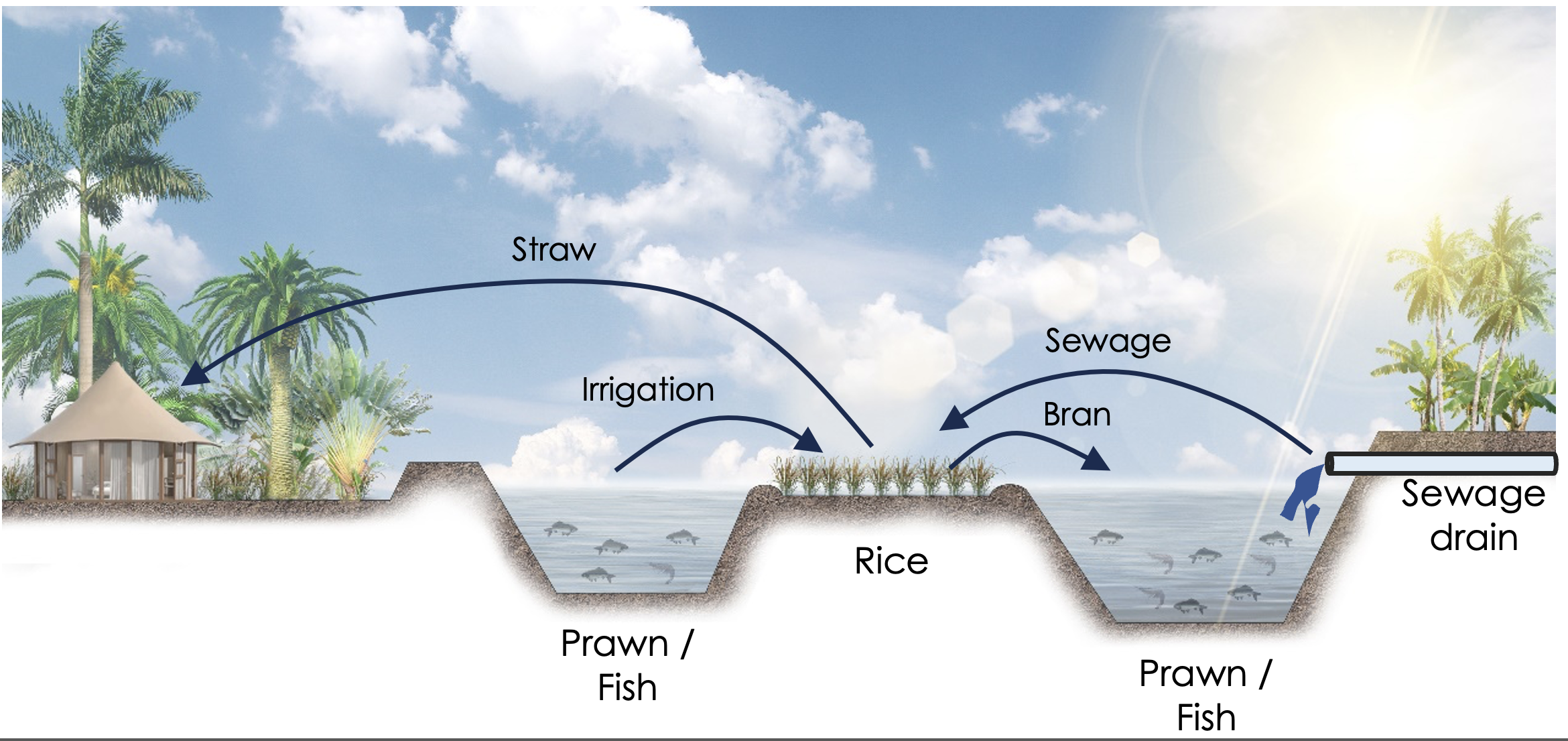
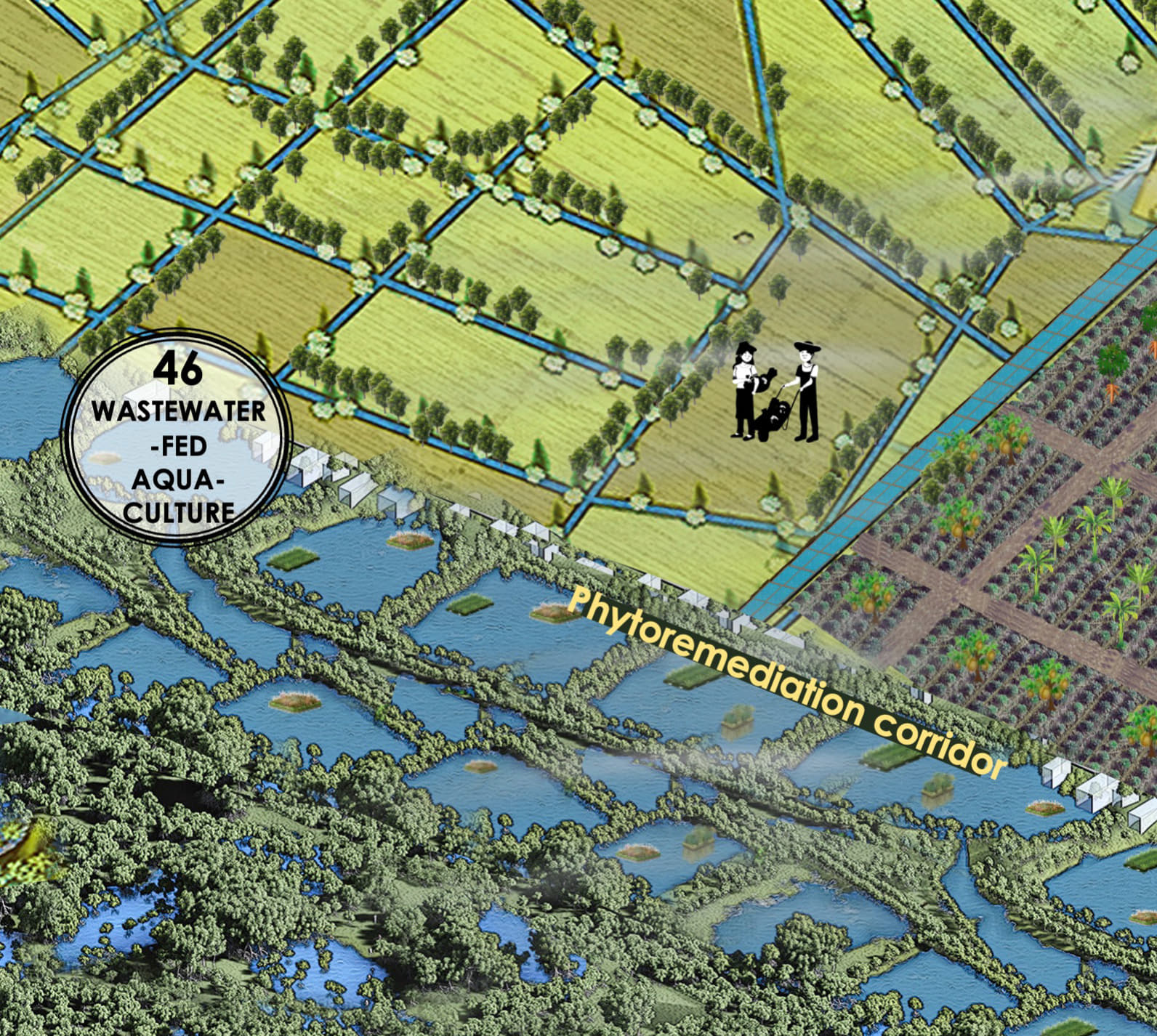
They can be considered as a sub-category of wastewater-related NbS. Wastewater-fed aquaculture utilizes treated or partially treated wastewater to cultivate fish, plants, and other aquatic organisms, integrating waste reuse with food production, as seen in Bangladesh and Vietnam’s rice-fish farming systems.
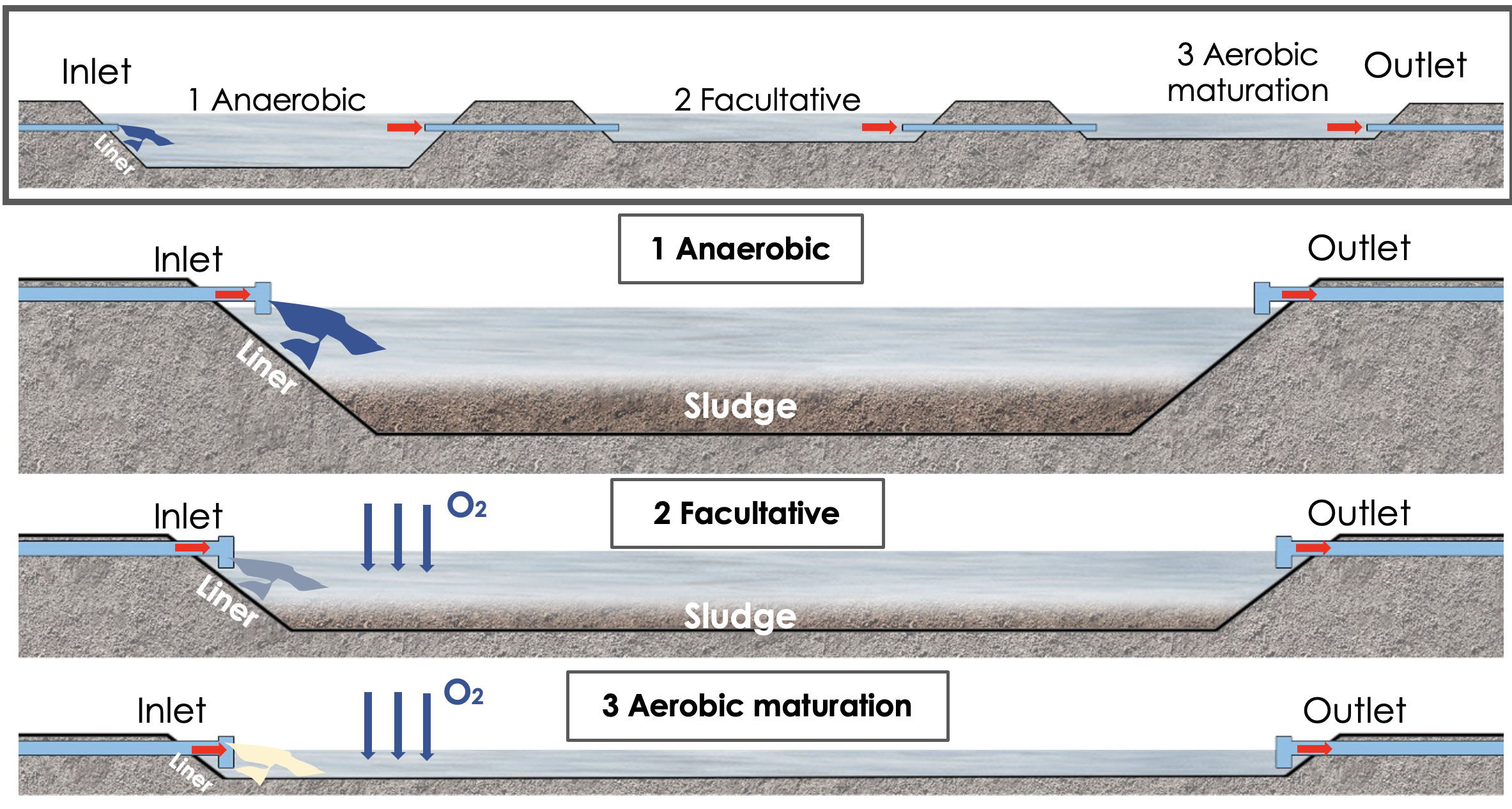
WSPs, including anaerobic, facultative, and aerobic ponds, treat blackwater, greywater, or faecal sludge through sunlight, wind, microorganisms, and algae, effectively removing biochemical oxygen demand (BOD) and pathogens.
Anaerobic treatment ponds specifically focus on breaking down organic material and producing biogas, which can be used as an energy source for heating, cooking, or small-scale electricity generation.
These systems offer technical benefits, such as low-cost operation, high nutrient recovery for agricultural reuse, and significant BOD reduction (up to 85%), while addressing water pollution.
They also provide landscape-level co-benefits, including reduced nutrient runoff, improved soil fertility, and a circular economy approach to wastewater reuse. Social and economic advantages include lower sanitation costs for rural and peri-urban areas, food security and opportunities for local energy production.