

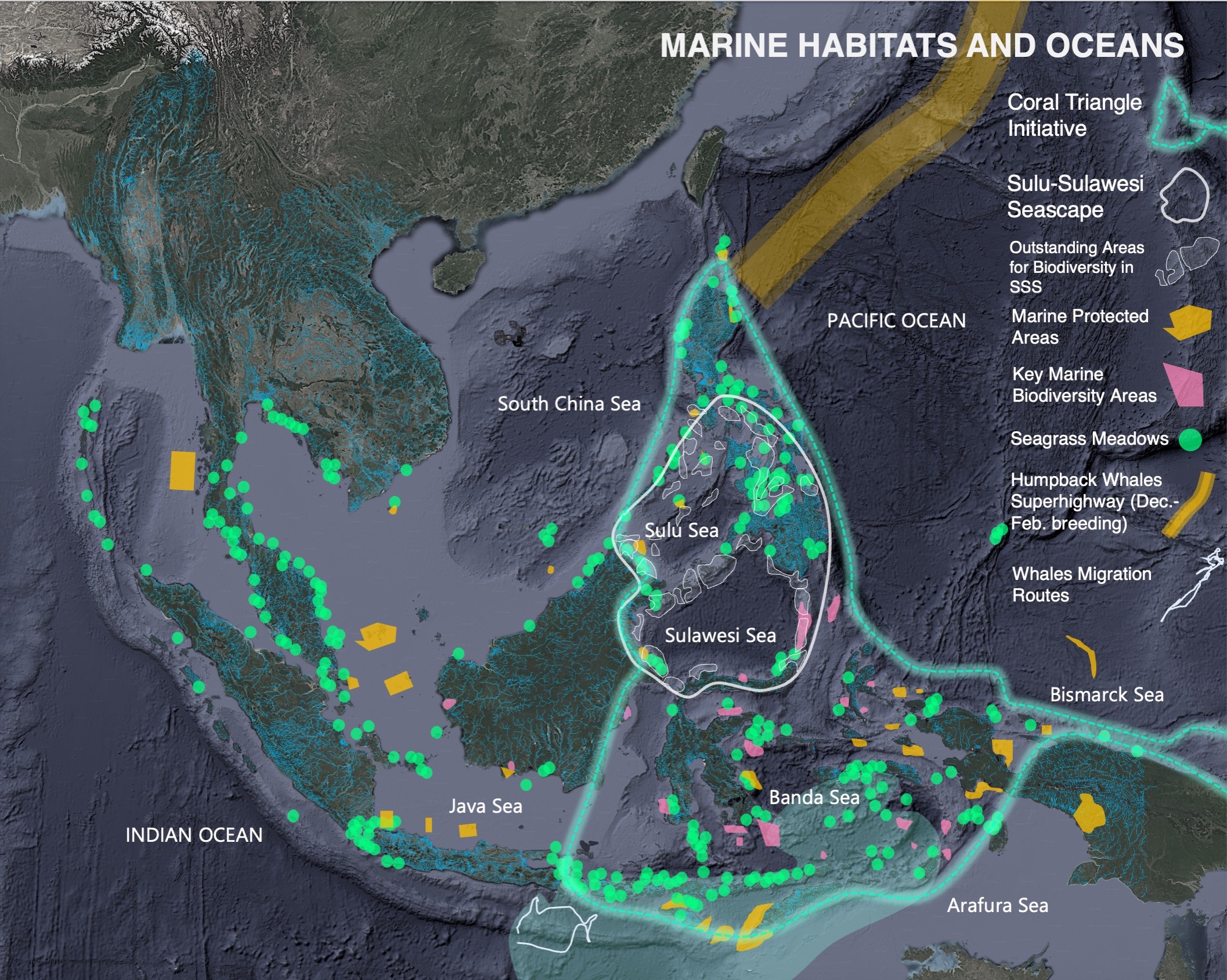
Marine habitats and oceans form one of Southeast Asia’s most vital landscape categories, encompassing coral reefs, seagrass meadows, mangroves, and deep-sea ecosystems within a region globally recognized for its biodiversity, such as the Coral Triangle. These seascapes provide essential ecosystem services – coastal protection, carbon sequestration, fisheries productivity, and water purification – yet face escalating threats from climate change, overfishing, and pollution.
ASEAN NbS Platform
-
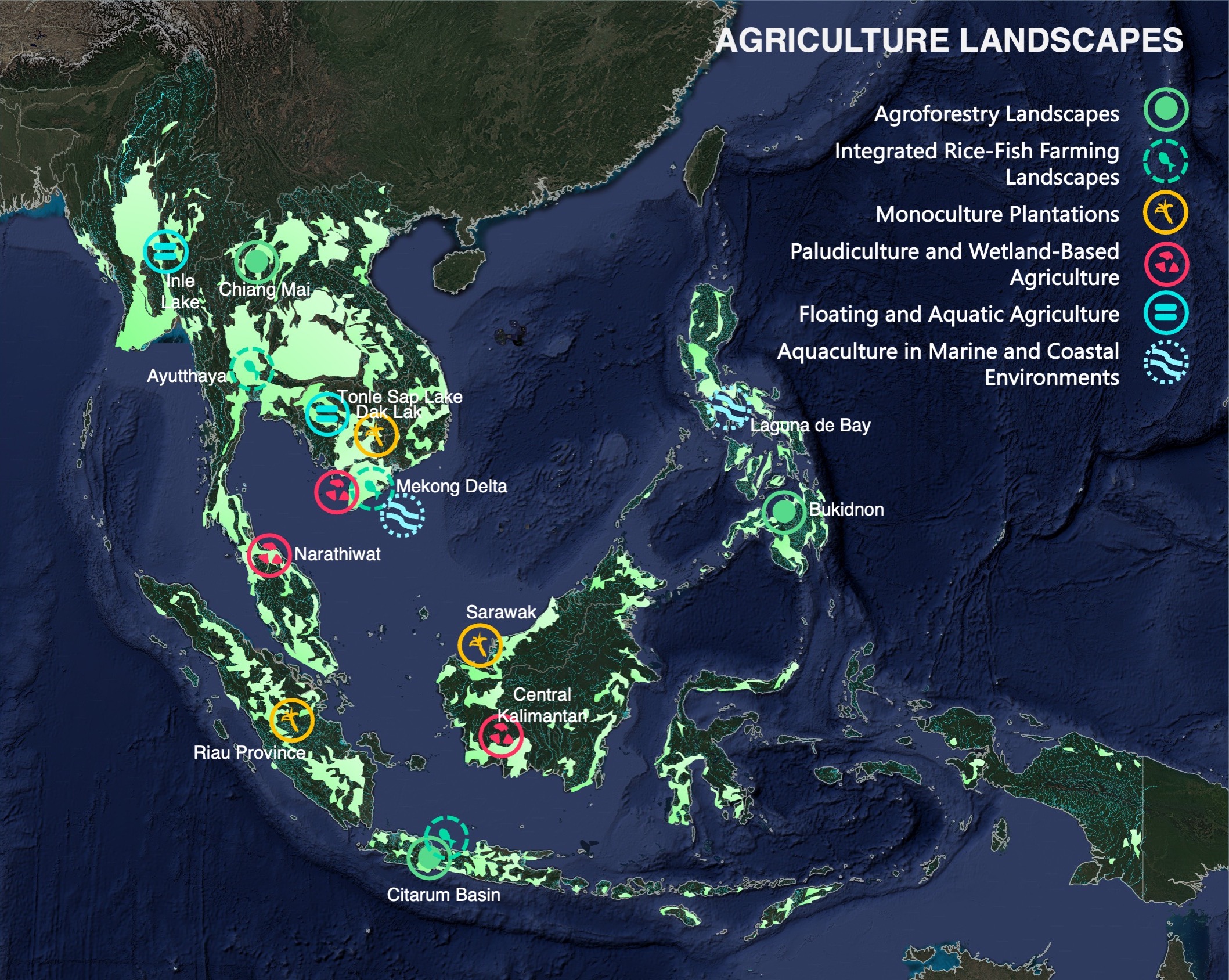
Agricultural Landscapes
Agriculture is central to both the economy and food security in Southeast Asia. Agricultural landscapes, rich in biodiversity and tradition, face challenges such as soil degradation, water scarcity, shifting rainfall patterns, and the pressures of intensive farming. By leveraging NbS, agricultural systems can regenerate soil health, enhance water management, and mitigate the impacts of climate change, ensuring long-term agricultural productivity and ecosystem restoration.
-
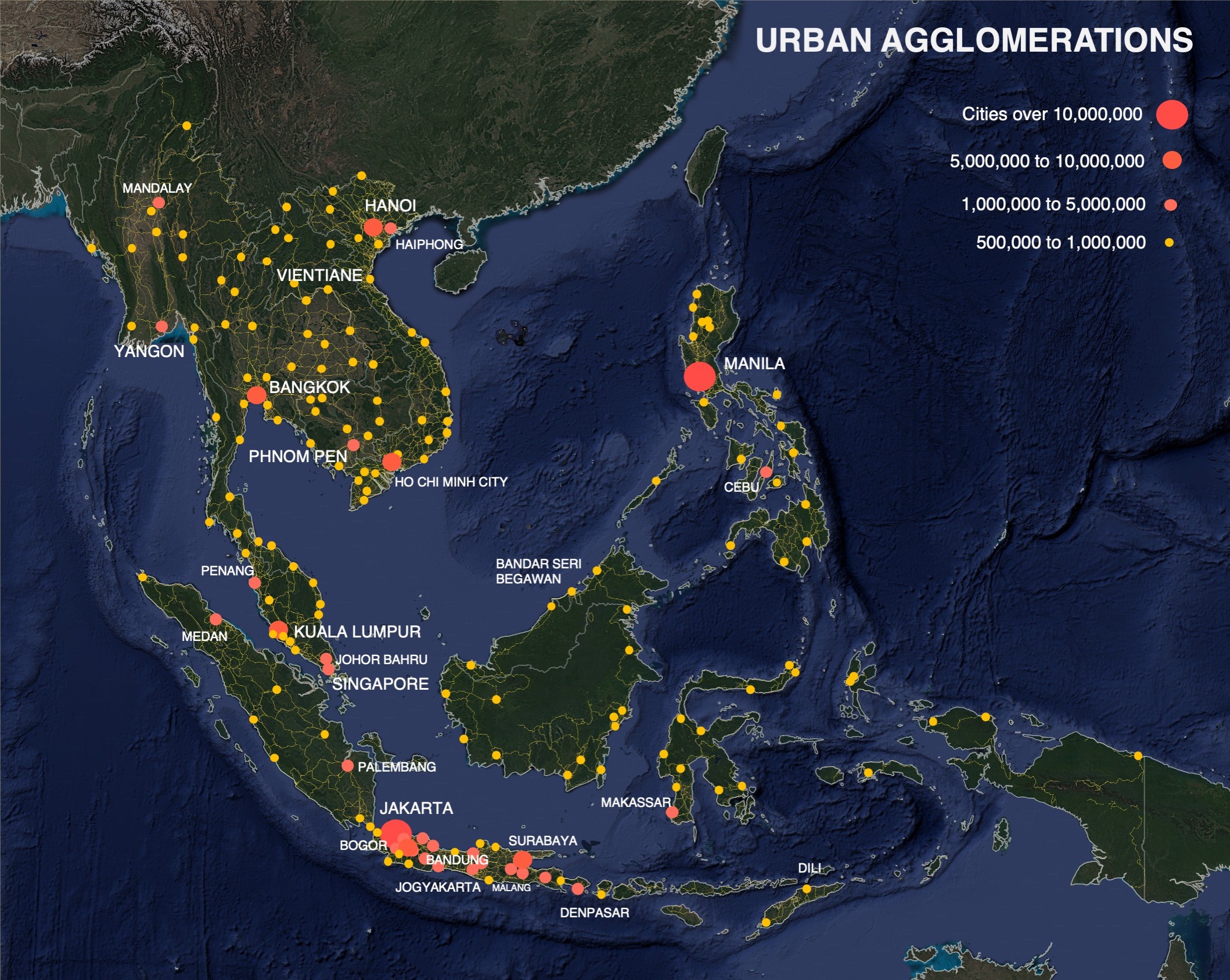
Urban Agglomerations
Urban agglomerations across Southeast Asia are dynamic landscapes increasingly challenged by flooding, heat stress, drought, and land subsidence. As climate impacts intensify, cities need to turn toward nature-based and water-sensitive urban planning to build resilience. Through green and blue infrastructure – such as permeable streets, urban forests, and sponge-city systems – urban areas aim to manage stormwater, reduce heat, and enhance biodiversity.
-
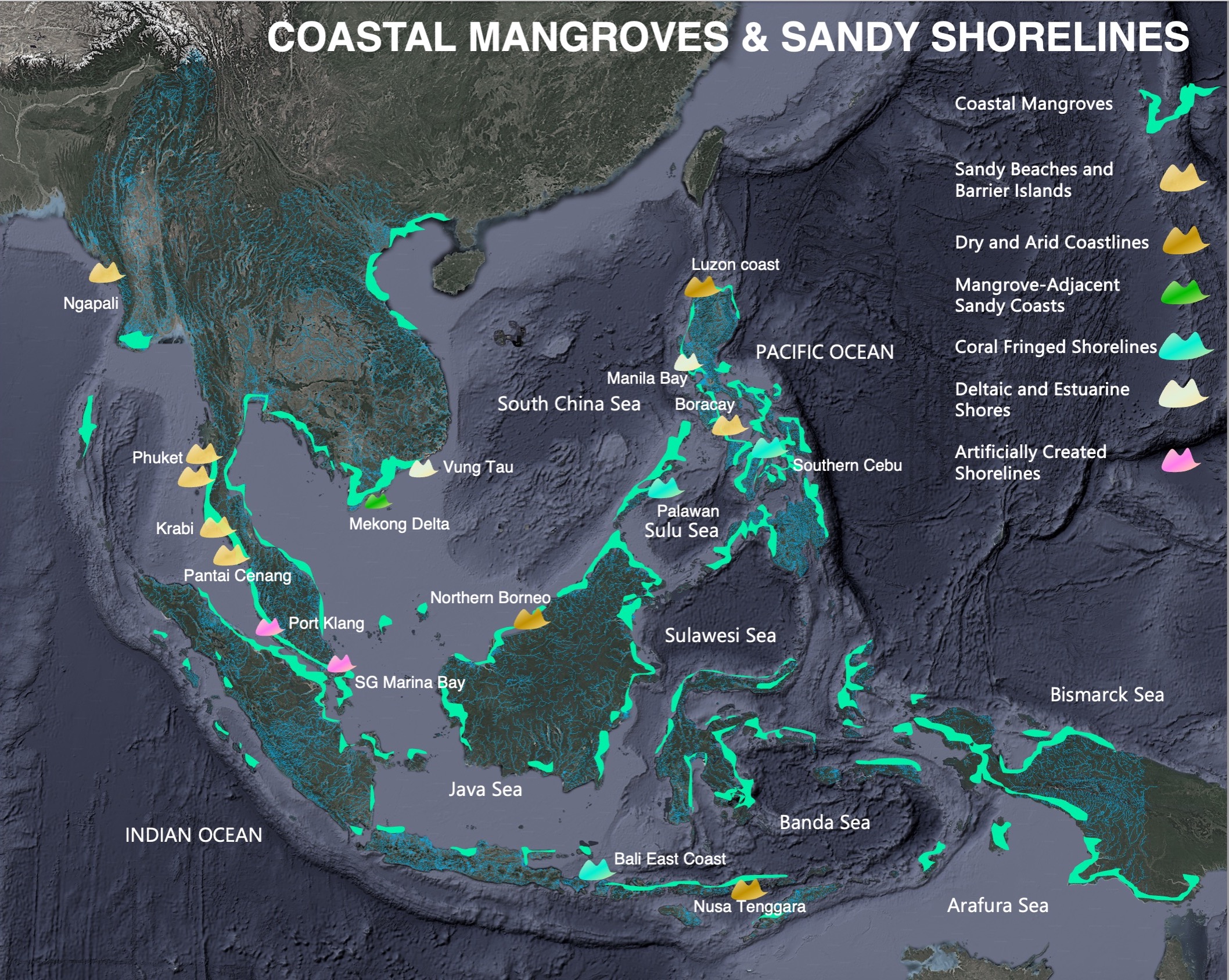
Coastal Mangroves and Sandy Shorelines
In Southeast Asia, sandy shorelines such as those in Ilocos Norte (Philippines) and Koh Samet (Thailand) face growing risks from erosion, drought, and pollution. In contrast, mangrove and peatland coasts like those in the Mekong Delta and Central Kalimantan (Indonesia) serve as vital buffers against tides and storms but are threatened by land conversion and rising seas. Restoring mangroves and peatlands is key to strengthening climate resilience and protecting coastal communities.
-
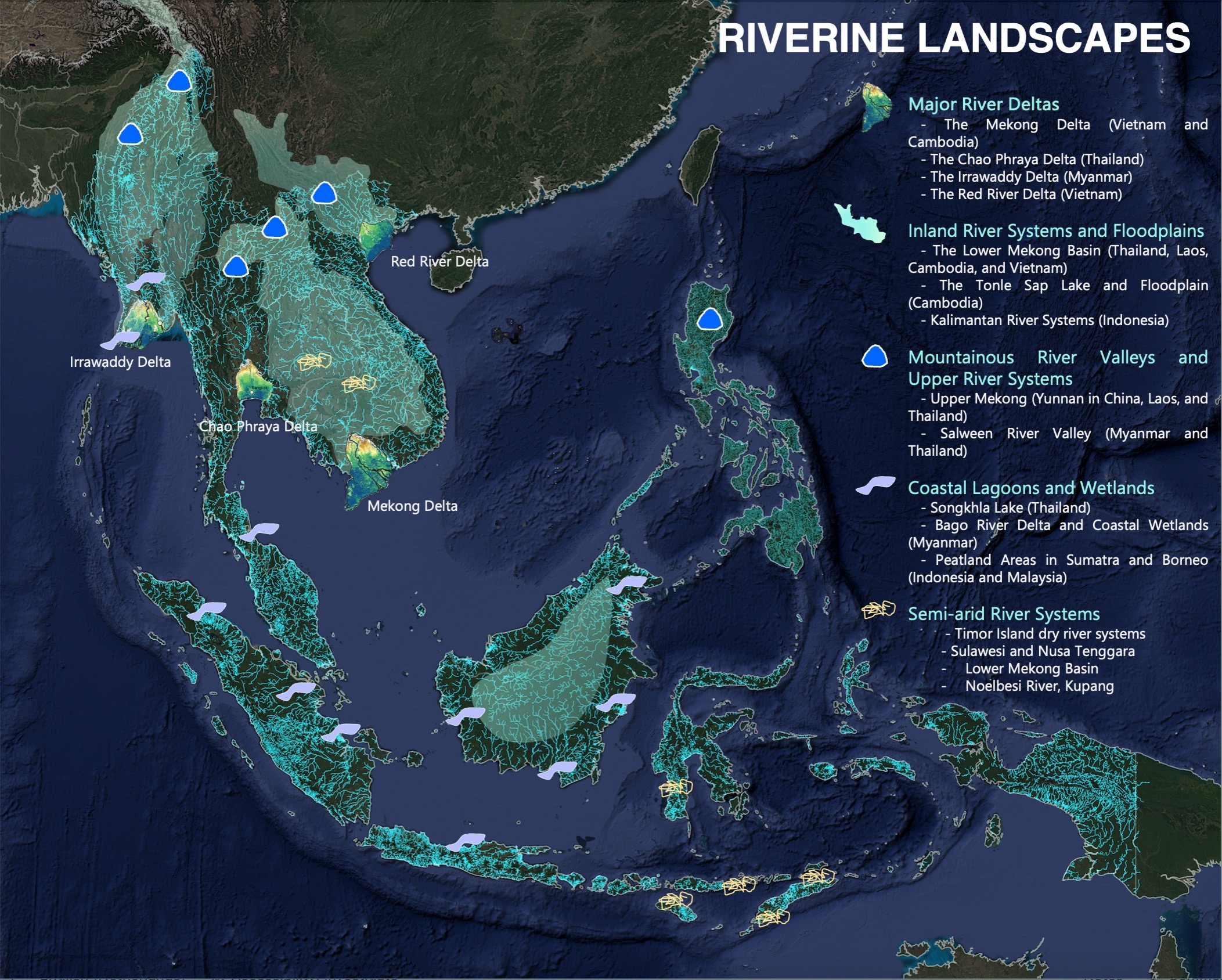
Riverine Landscapes
Across Southeast Asia, riverine and delta landscapes are experiencing shifts in both natural processes and human-driven activities. The integration of these NbS along the Mekong, Chao Phraya, and Red River Deltas exemplifies the potential of using nature’s own mechanisms to restore ecological balance while ensuring long-term sustainability.
-
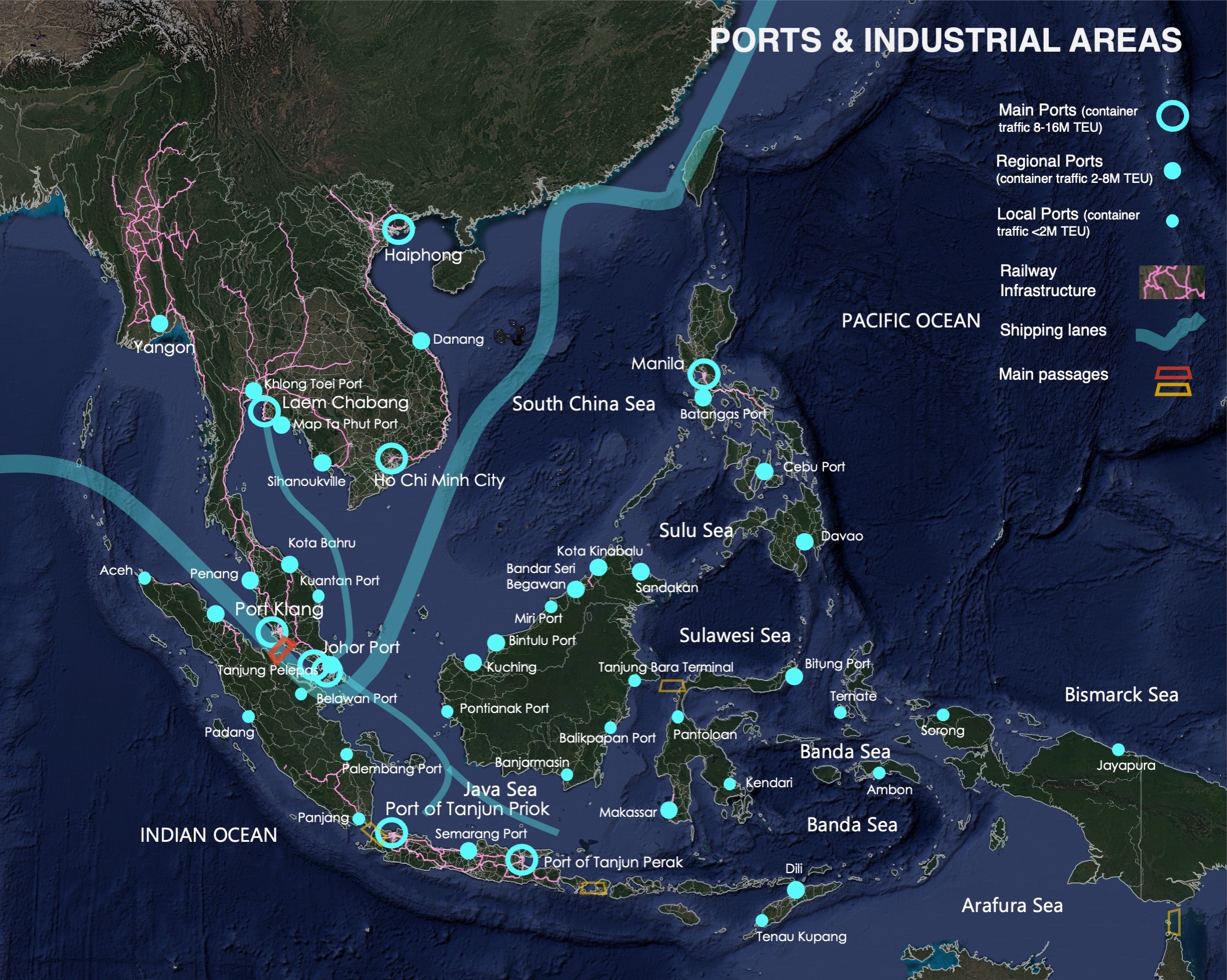
Ports & Industrial Areas
Industrial areas and ports in Southeast Asia need a better integration of green and blue infrastructure, as it’s essential for building resilient, sustainable environments that balance economic growth with environmental protection. With the region’s rapid industrialisation, effective management of industrial pollution, waste, and climate impacts is critical. By combining NbS that leverage the region’s rich ecosystems, we can transform industrial zones and ports into climate-resilient spaces that support both industrial productivity and ecological health.
-
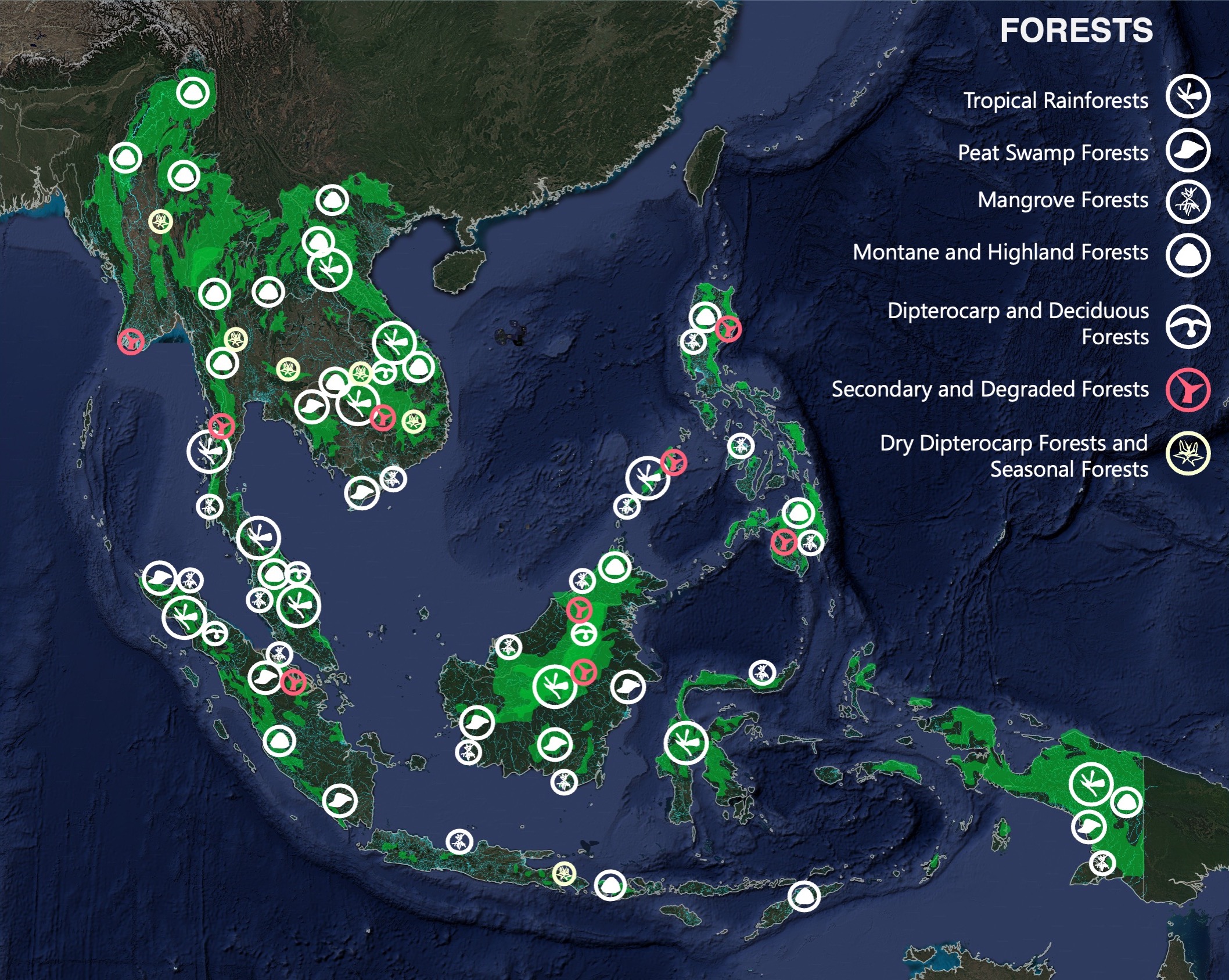
Forests
The diverse forest types in Southeast Asia share common numerous threats such as deforestation, biodiversity loss, landslides, floods, droughts, and forest fires. These threats have prompted numerous reforestation, afforestation, and conservation projects that involve communities and aim to bolster local economies.
-
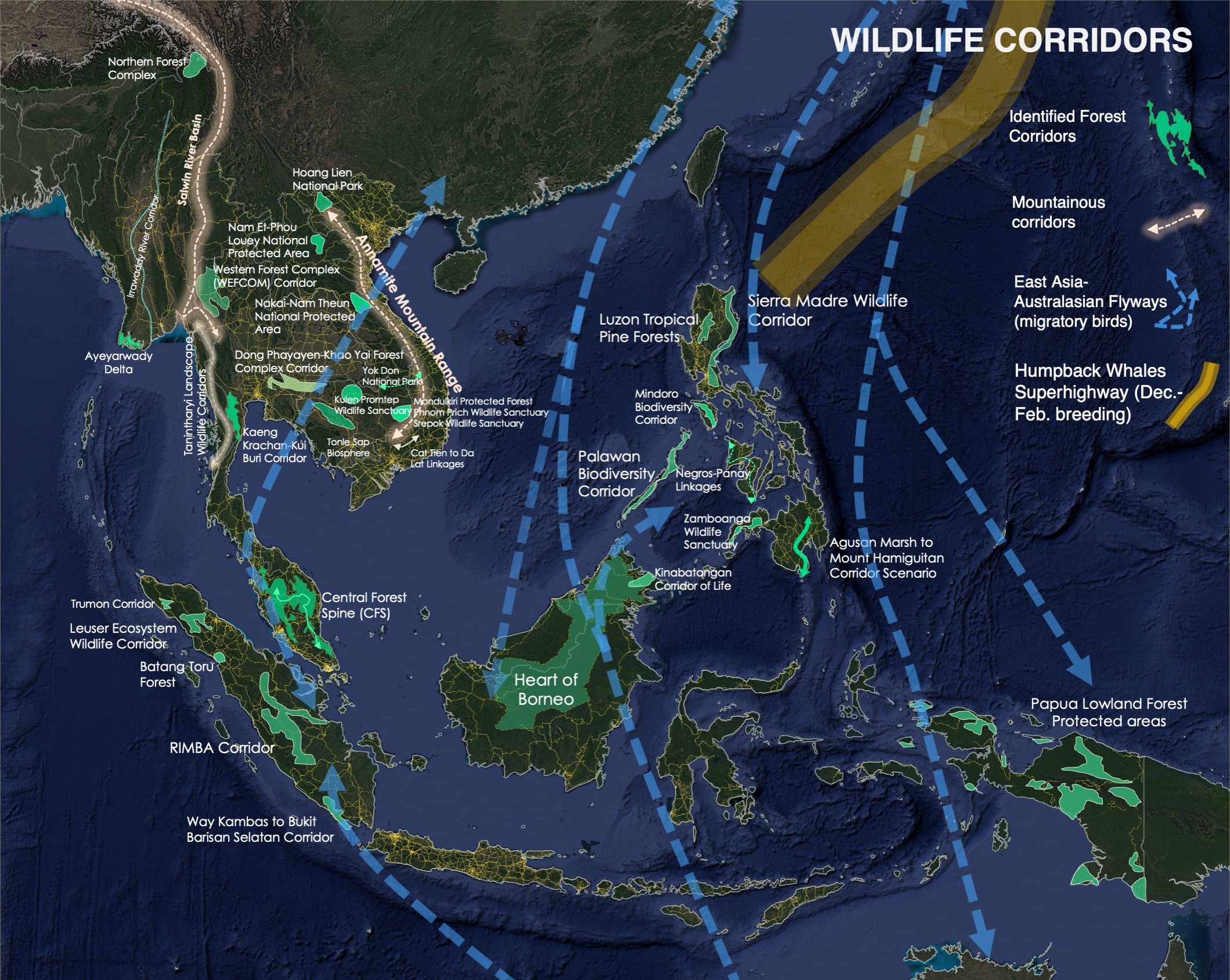
Wildlife Corridors
Southeast Asia is shaped by rapidly expanding urbanisation, agriculture, and infrastructure development, and this development model poses a growing threat to biodiversity and the integrity of ecosystems. Maintaining ecological connectivity is vital for the survival of many species. The fragmentation of natural habitats disrupts migratory paths, isolates populations, and intensifies the challenges species face in adapting to climate change.