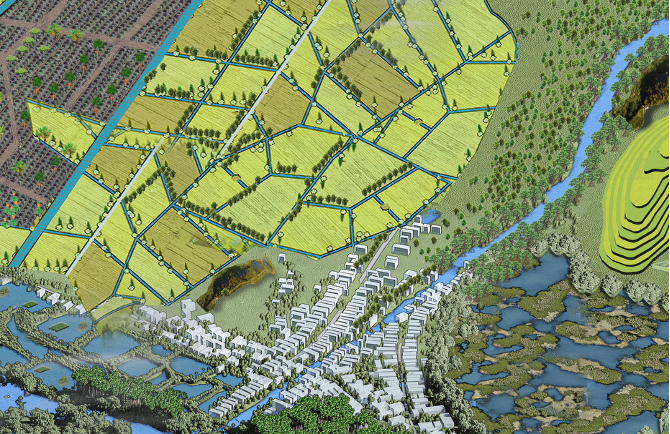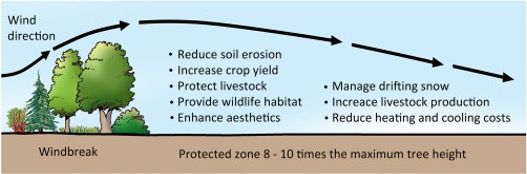

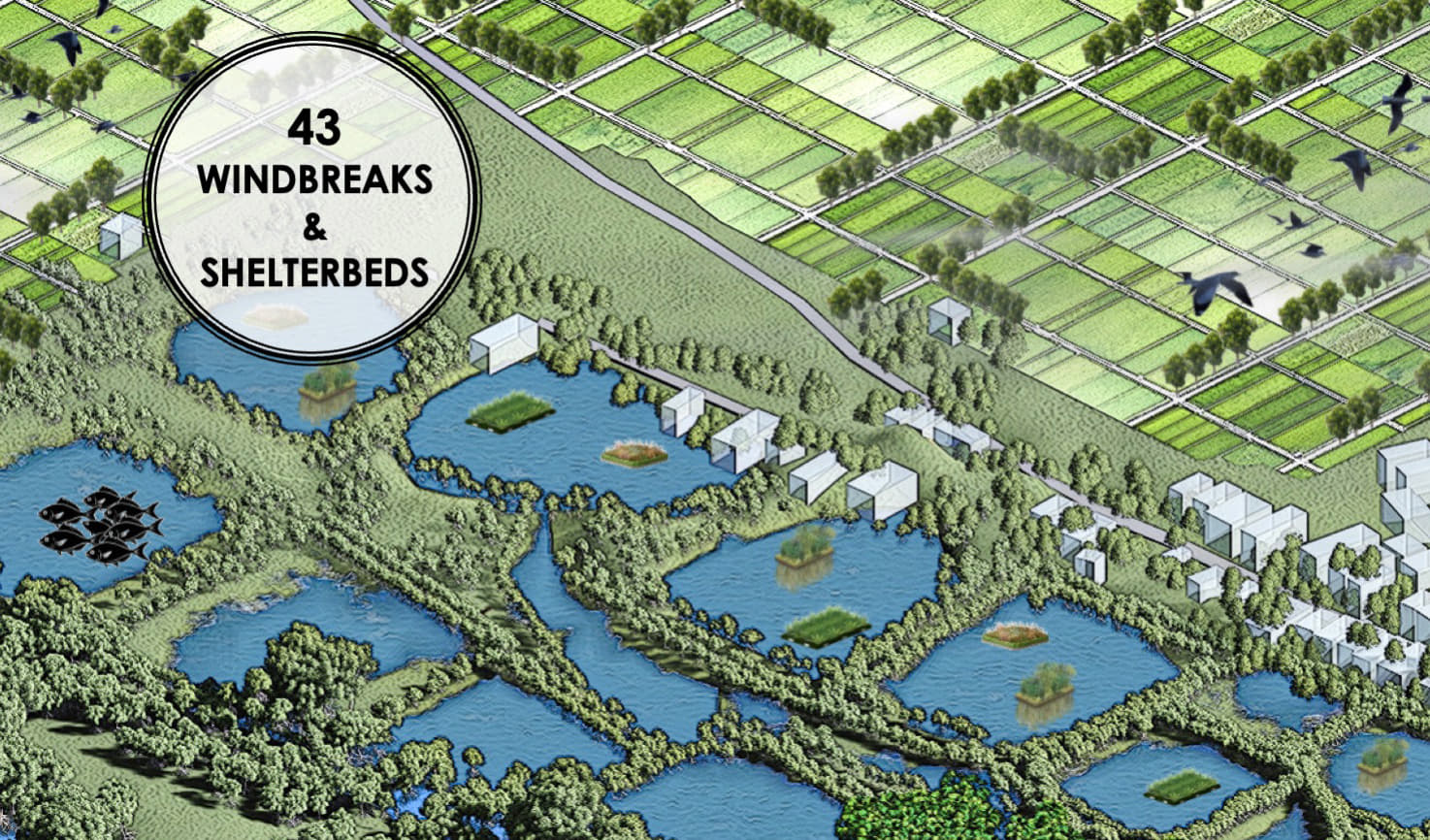
Windbreaks and shelterbelts are strategically planted rows of trees, shrubs, or vegetation designed to reduce wind speed, manage soil erosion, and enhance microclimates in rural farmlands and sandy shorelines.
In agricultural settings, windbreaks protect crops from wind damage, reduce evapotranspiration, and improve soil fertility through organic matter accumulation, supporting regenerative agriculture and sustainable yields.
On sandy shorelines and dunes, shelterbelts stabilize sediments, prevent coastal erosion, and create natural barriers against storm surges. Types include single-row windbreaks (effective for smaller farmlands), multi-row shelterbelts (ideal for broader climate resilience), and dune vegetation belts (adapted for coastal landscapes).
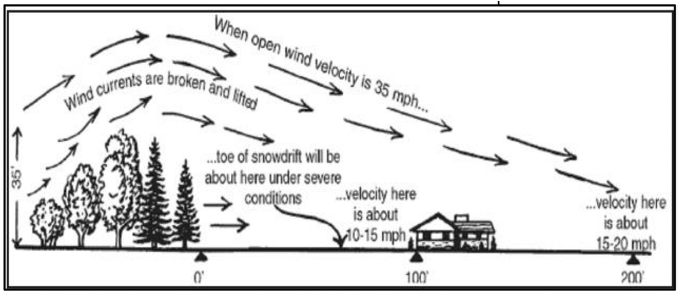
Technically, these structures reduce wind velocity by 30–50% and alter wind directions, fostering calmer microenvironments while serving as habitats for biodiversity.
Contextually, they provide multifunctional benefits, including carbon sequestration, enhanced water retention, and livelihoods through agroforestry or coastal eco-tourism.
With careful species selection (e.g., Casuarina, Acacia, and mangroves) and community engagement, windbreaks and shelterbelts contribute to climate resilience, sustainable landscapes, and socio-economic benefits for rural and coastal areas in Southeast Asia.