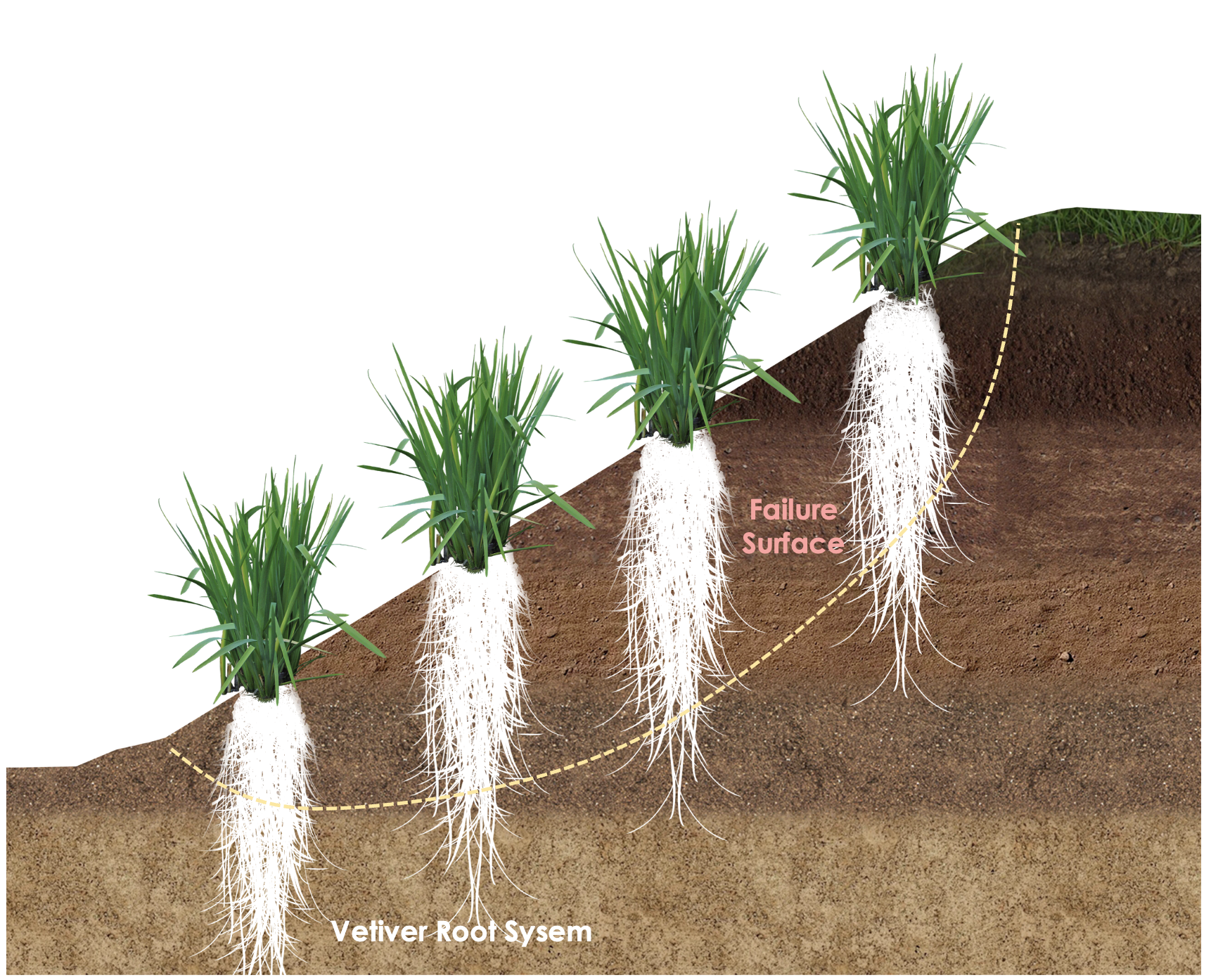

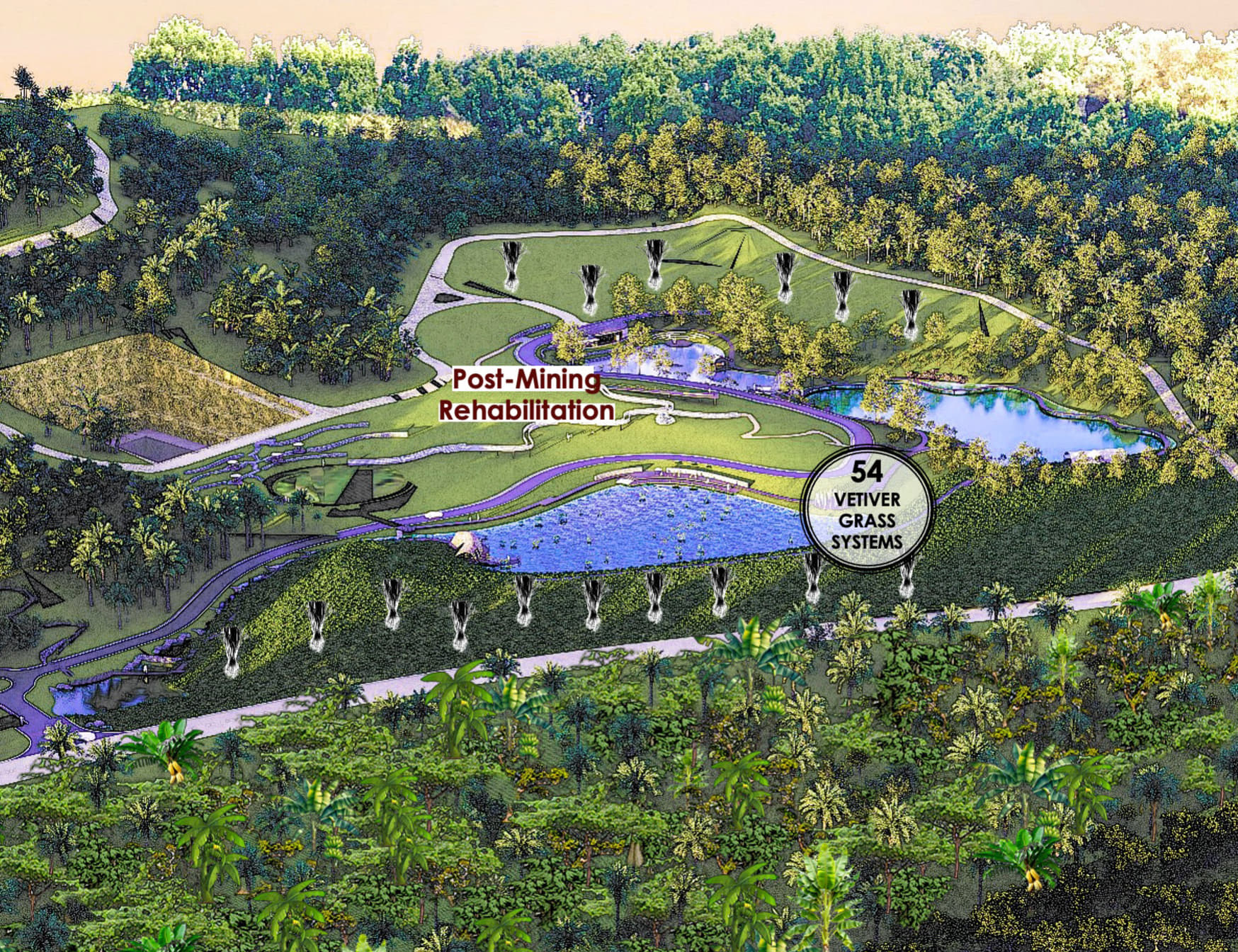
Vetiver Grass Systems (VGS) addresses landslide prevention, slope stabilization, post-mining soil recovery, and soil enrichment near agricultural areas in Southeast Asia.
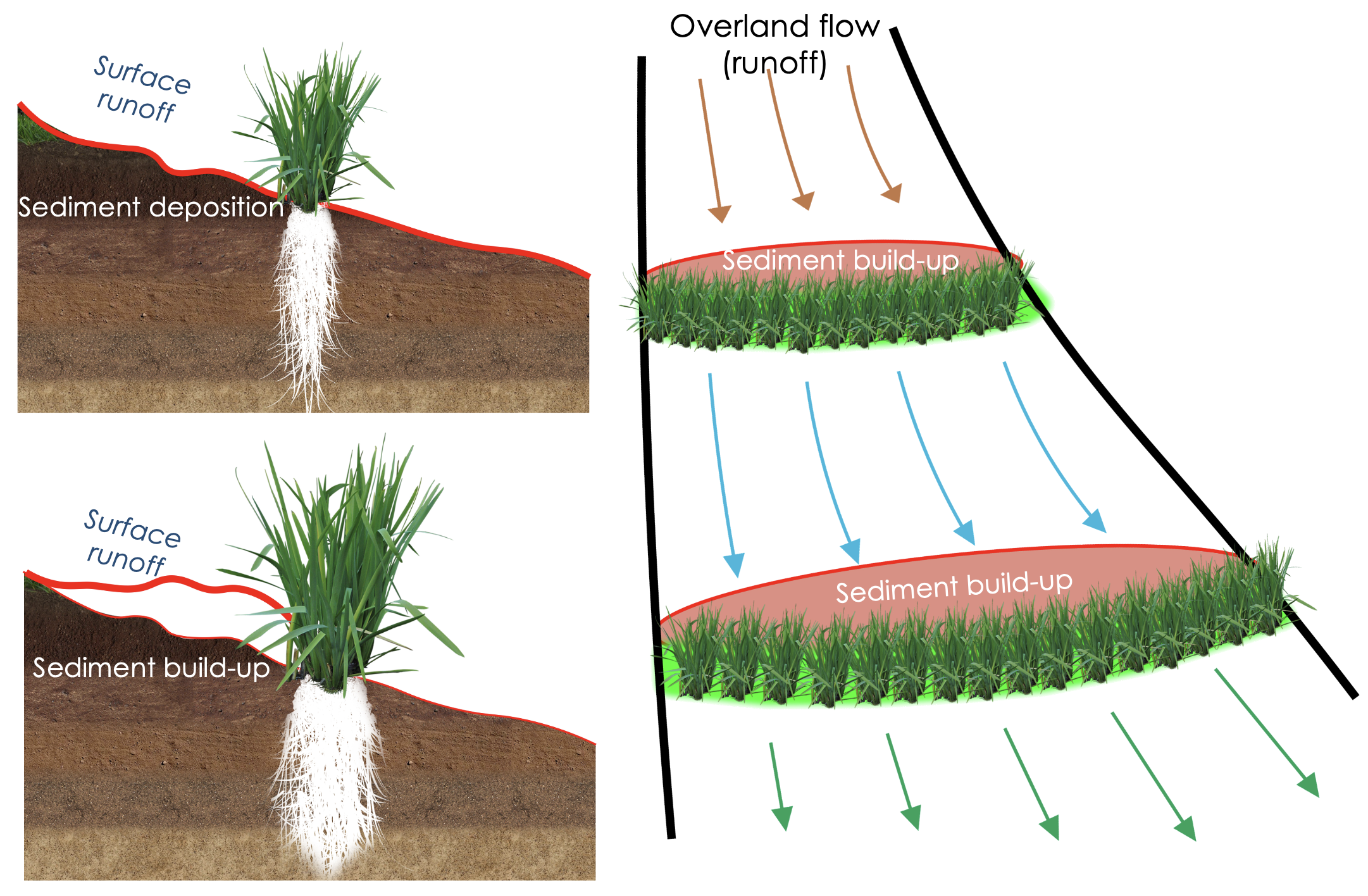
Vetiver grass (Chrysopogon zizanioides), known for its deep, dense, and vertical root system, binds soil effectively, reducing erosion and improving slope stability, even on steep terrains and degraded landscapes. Its adaptability to diverse climatic conditions, from tropical to sub-tropical environments, makes it ideal for the region’s diverse ecosystems.
VGS is often combined with agroforestry practices, integrating native tree species such as teak (Tectona grandis), bamboo, and fruit-bearing trees to create multi-functional landscapes that provide additional ecological and economic benefits, such as wildlife habitat restoration, carbon sequestration, and livelihood support for local communities.By rehabilitating degraded lands, particularly in post-mining areas, VGS enhances soil fertility, water retention, and agricultural productivity, fostering climate resilience in flood- and drought-prone areas.
Its affordability, minimal maintenance requirements, and compatibility with traditional farming systems make VGS socially and economically viable for smallholder farmers and local governments.Existing lessons from Southeast Asia emphasize the importance of participatory approaches in implementing VGS, where community engagement ensures sustained maintenance and integration with local land-use practices.As such, VGS supports not only physical resilience to climate events like floods and landslides but also strengthens rural livelihoods and promotes sustainable land management across the region.