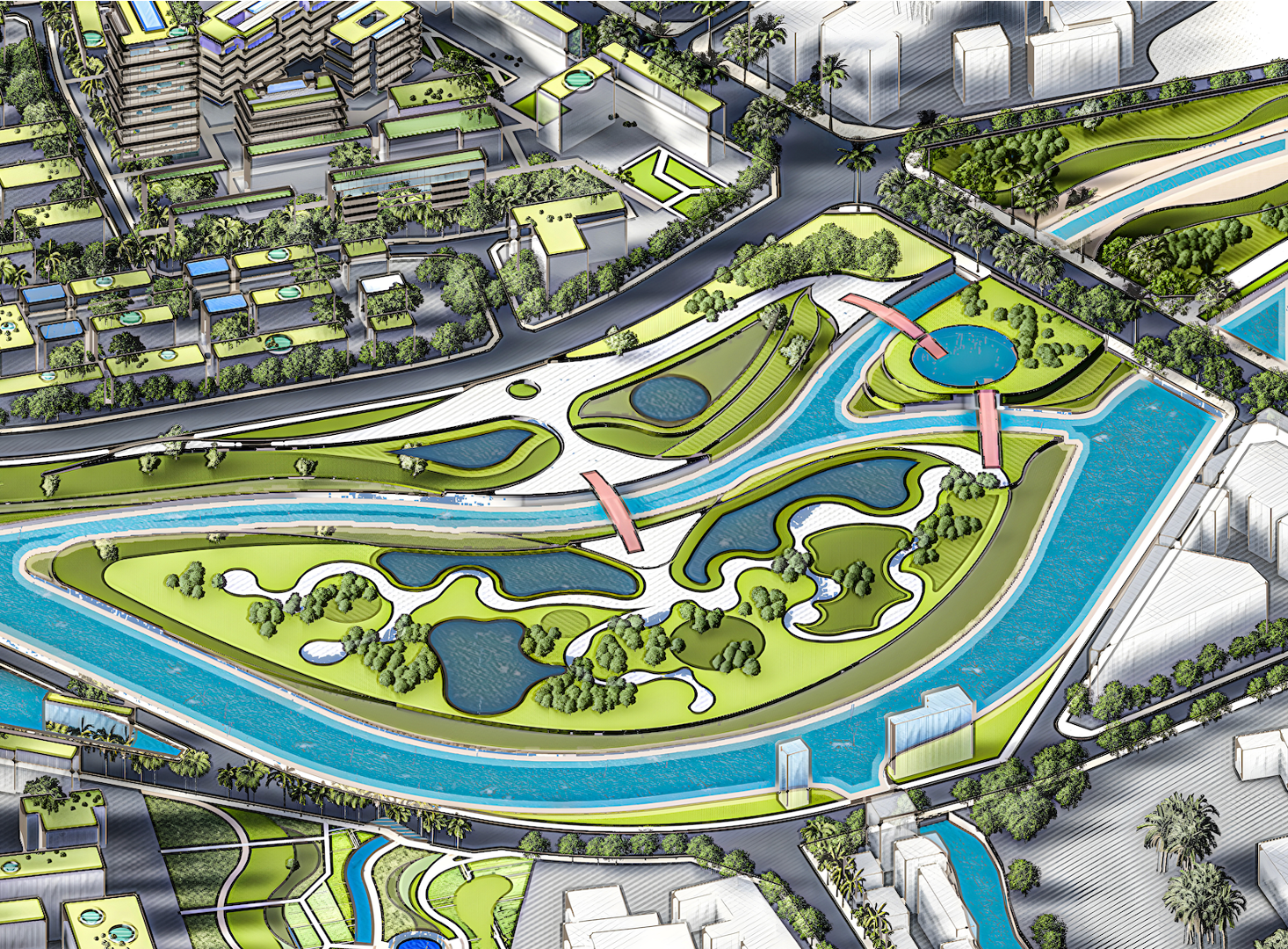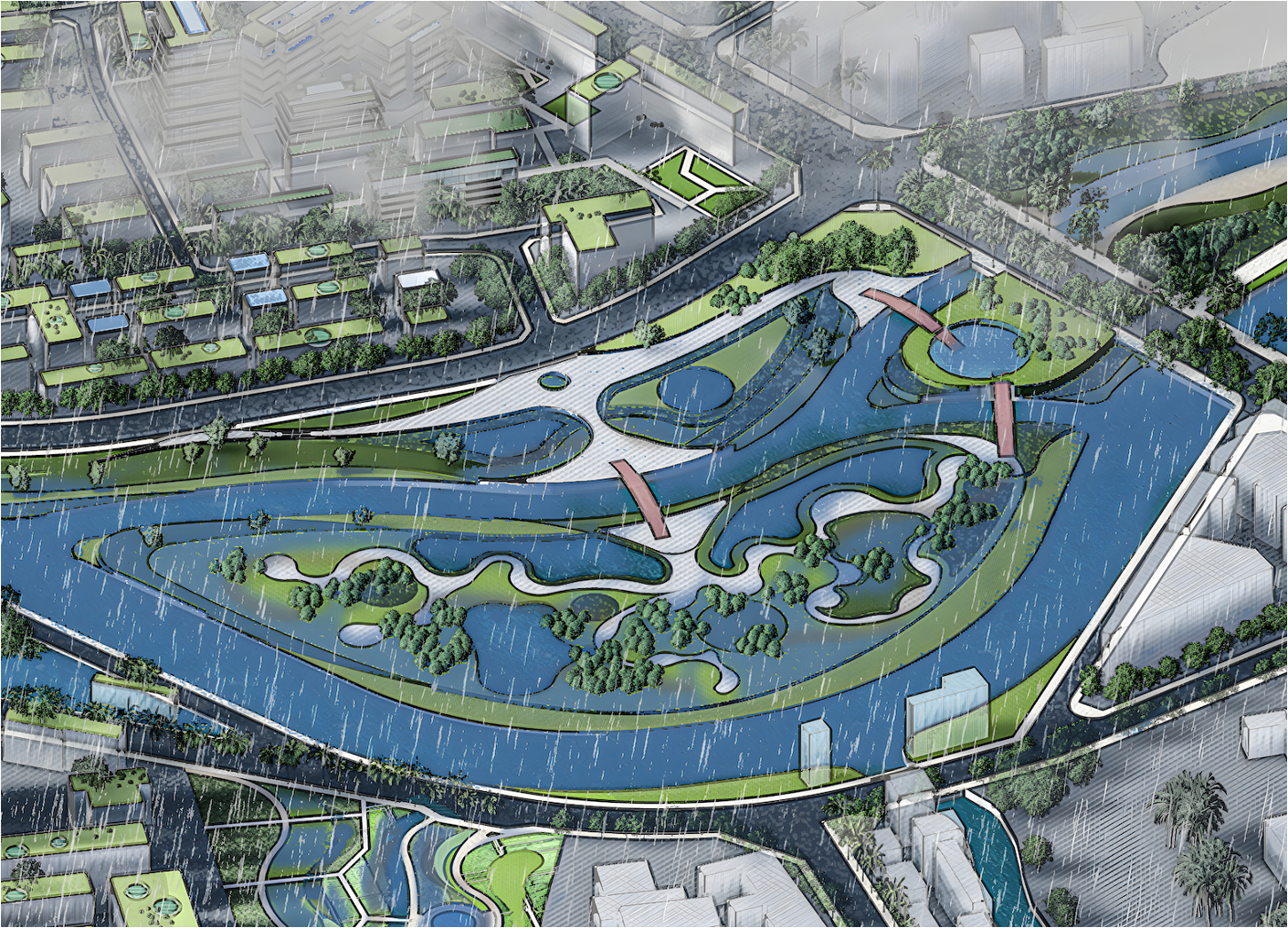

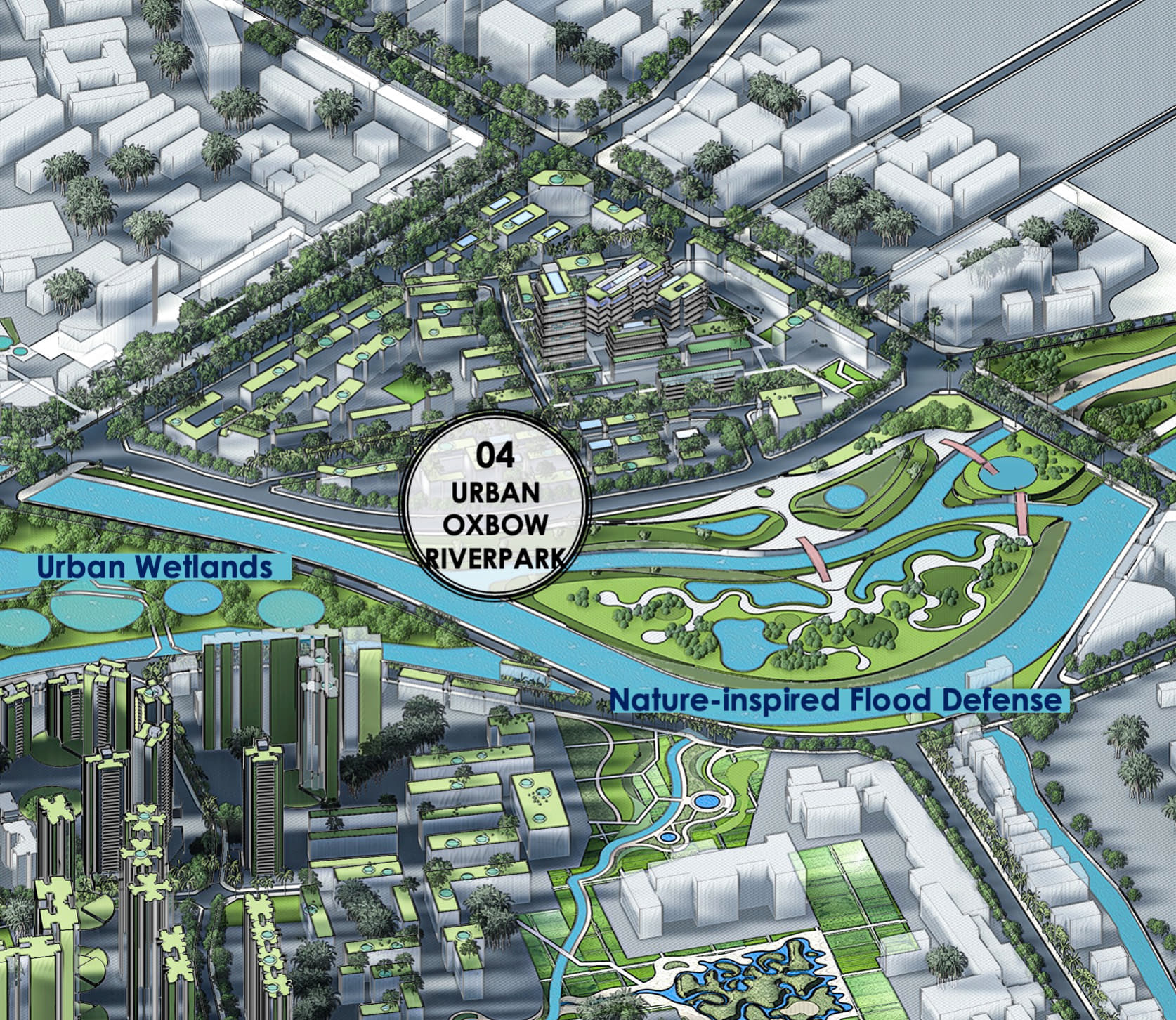
Sponge city parks and urban oxbows integrate green infrastructure to address urban flooding, water quality, and climate resilience.
Technically, they allow absorption and storing of rainwater through permeable surfaces, vegetation, and bioswales, reducing runoff and replenishing groundwater, while urban oxbows (natural or restored meandering river sections) act as water retention and filtration systems addressing riverine flood risks.
These solutions are particularly effective in cities facing rapid urbanization, such as Ho Chi Minh City or Jakarta, where traditional drainage systems are overwhelmed by heavy rains.
Landscape-wise, these NbS create green corridors that enhance urban biodiversity, provide recreational spaces, and improve air quality. They offer community benefits such as flood protection, improved public health through green spaces, and educational opportunities on sustainable urban water management.
Sponge city parks and urban oxbows represent holistic, multifunctional approaches to enhancing the resilience of cities in the face of climate change while improving the quality of life for residents.