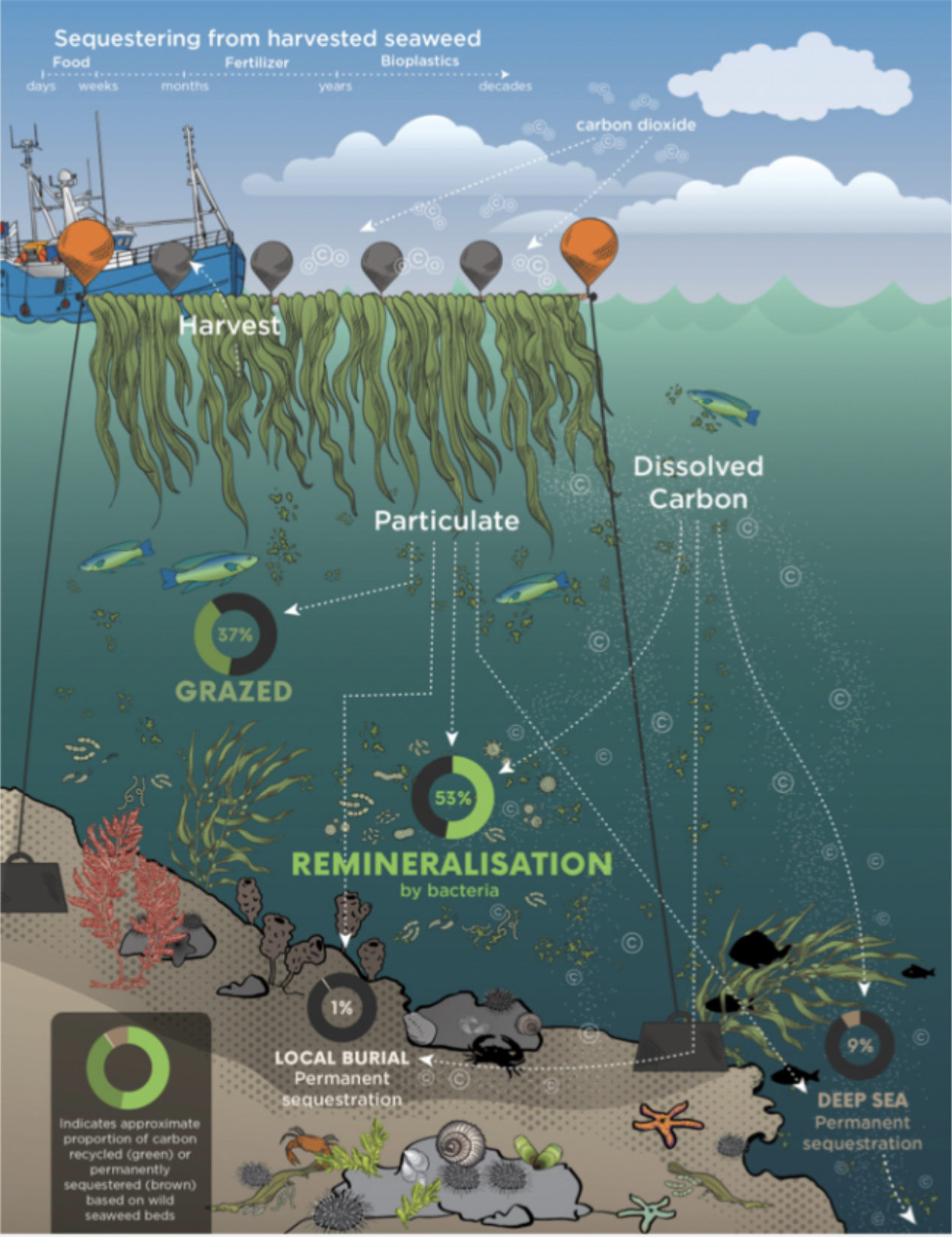

Seaweed aquaculture can contribute significantly to carbon
sequestration and marine ecosystem protection, as it naturally
absorbs CO2 during photosynthesis, helping mitigate the impacts of
climate change by sequestering carbon in their biomass and the
surrounding waters.
Additionally, seaweed cultivation promotes the
remineralisation of nutrients by bacteria, enhancing nutrient cycling
and water quality in coastal zones.
As a biodegradable product,
seaweed can be used in various industries, including food, biofuels,
and pharmaceuticals, creating sustainable economic opportunities
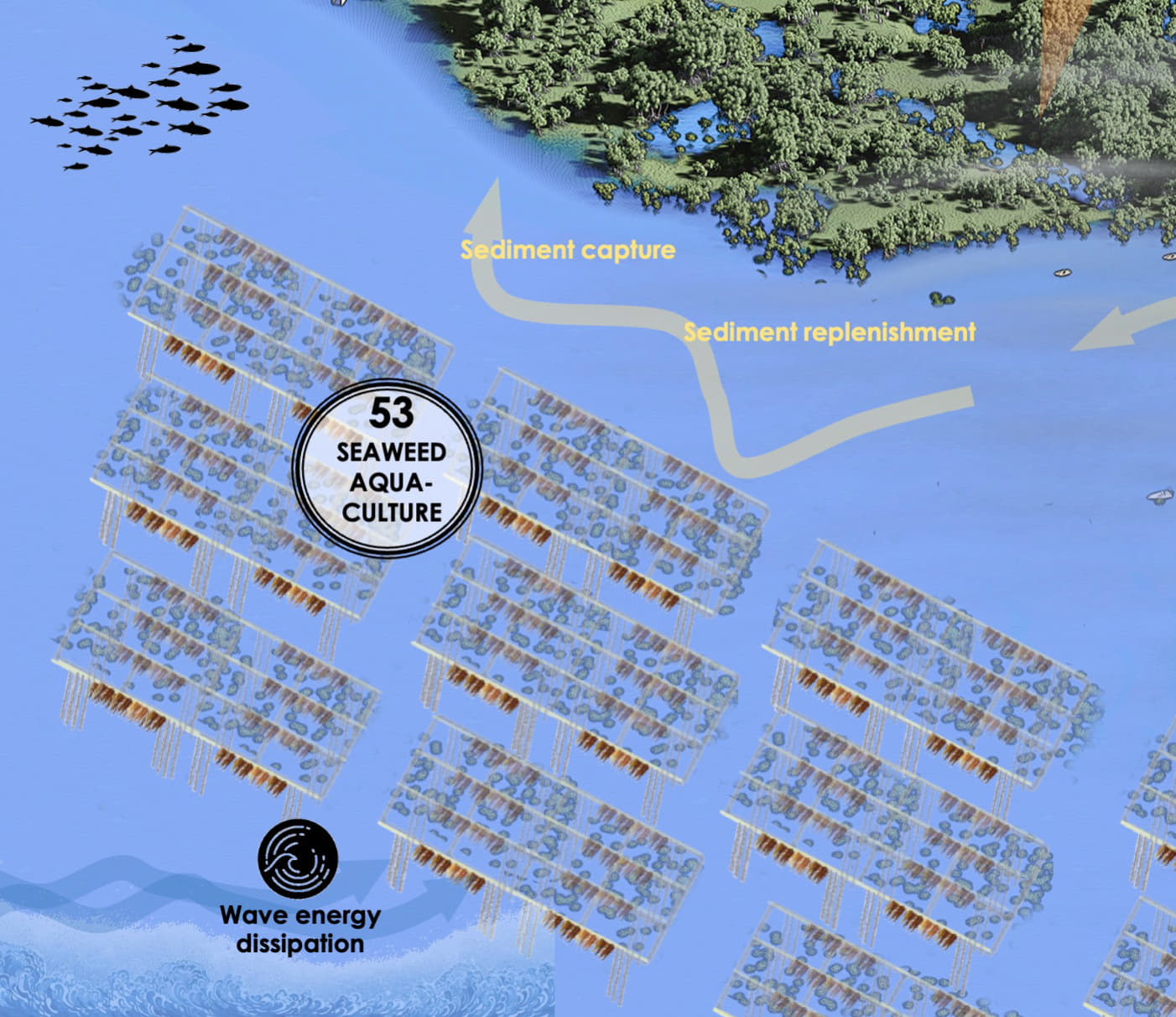
for local communities. Seaweed aquaculture also provides habitat
for marine life, supporting biodiversity, while helping to protect
coastal areas from erosion by stabilizing sediments.
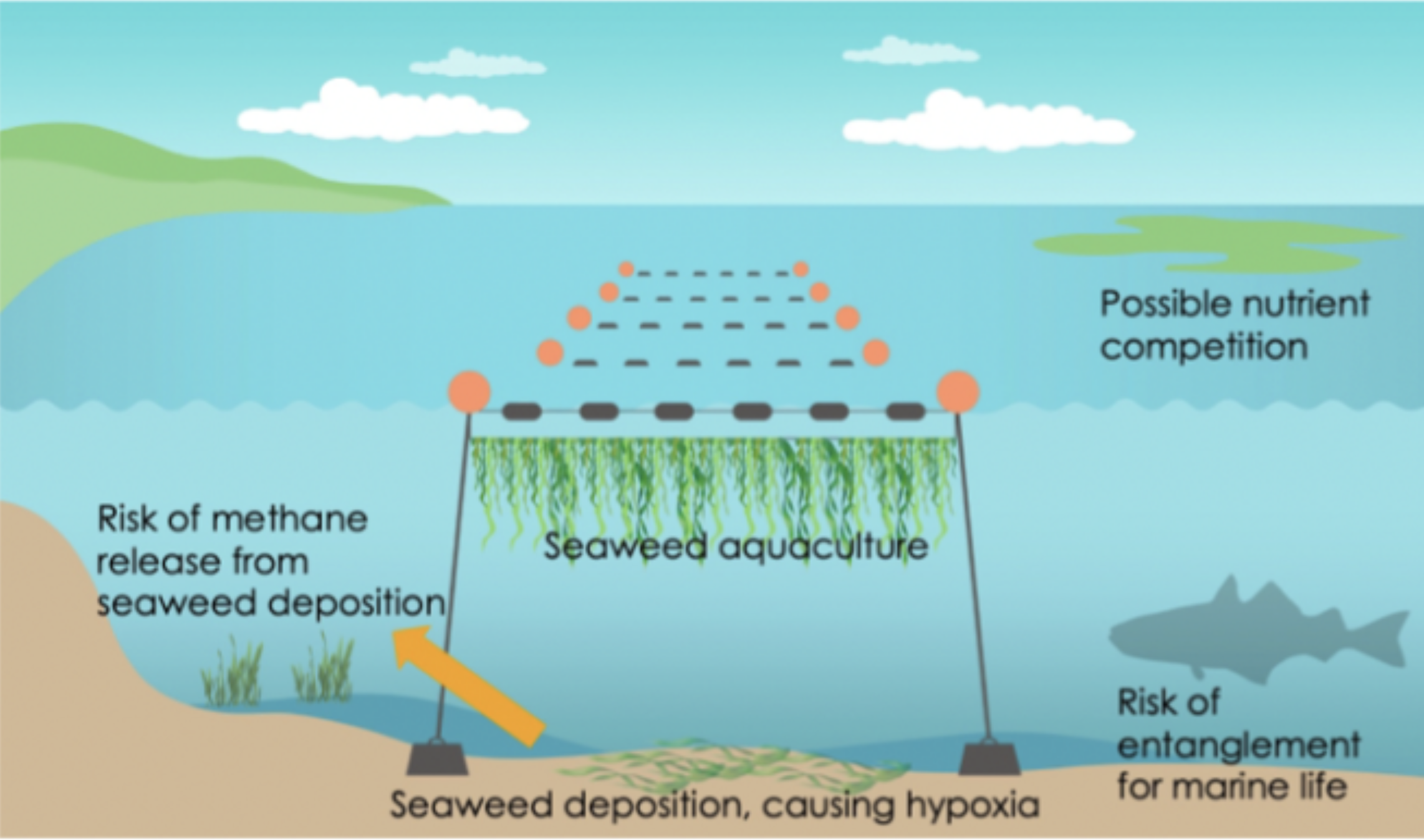
However, the size and scale of seaweed farming are crucial to
ensure it remains a beneficial NbS. If managed poorly or cultivated
at too large a scale, seaweed farms could alter local ecosystems,
cause shading that reduces light penetration, and potentially
interfere with native species.
Optimizing the density and location of
seaweed cultivation is essential to avoid negative impacts on
marine wildlife, including fish and coral reefs. Ideal locations are
sheltered coastal zones with high nutrient availability but low risk of
excess eutrophication, and farms should be carefully monitored to
ensure sustainable productivity without disrupting the balance of
marine ecosystems.