
Sand Trapping Fences

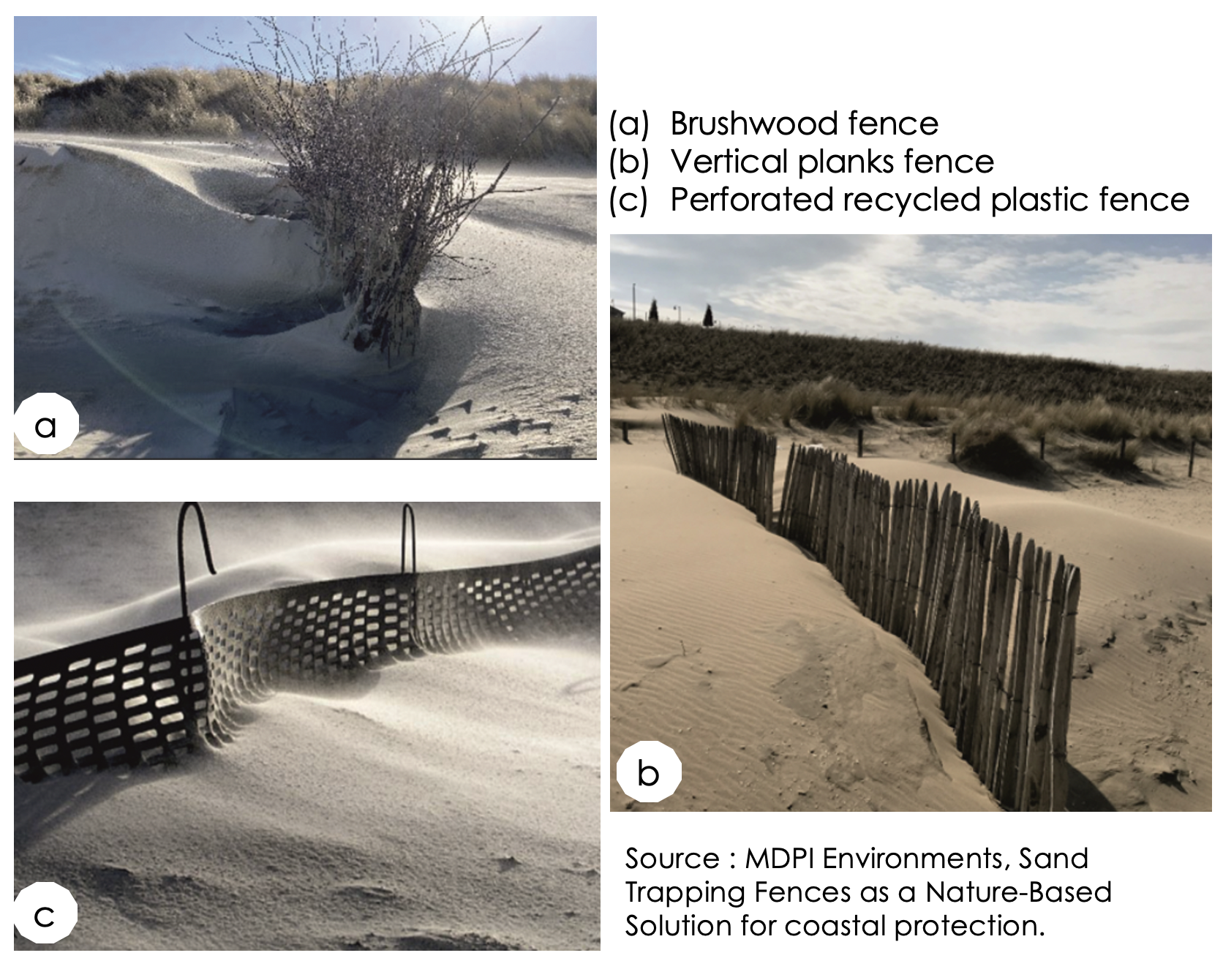
Sand trapping fences in coastal areas use eco-friendly materials like coconut fibbers, bamboo, and recycled plastics to stabilize sandy beaches and reduce erosion.

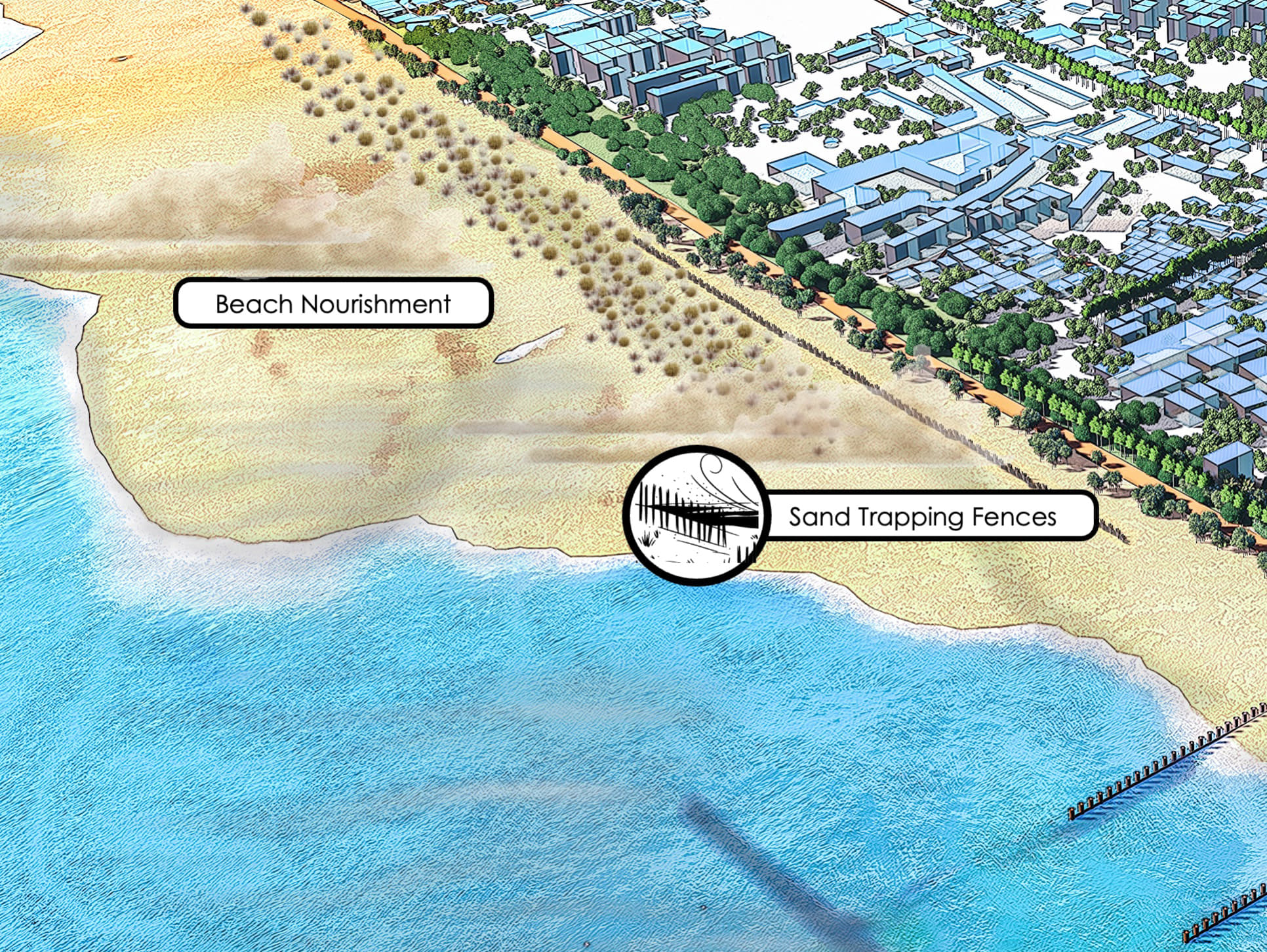
The fences are placed along the beach in strategic locations to trap windblown sand and promote dune formation.

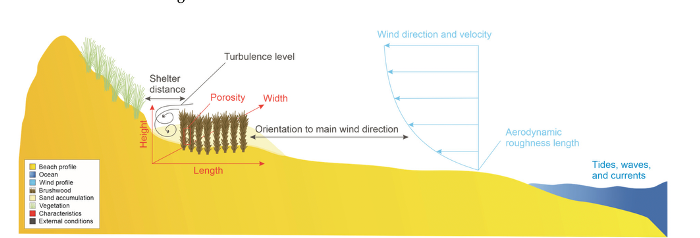
They are usually installed at angles to maximize sand accumulation and may be spaced at intervals to allow for effective trapping. These fences allow vegetation to grow, further securing the soil.

Integrated with native plants, they create natural barriers against storm surges and rising sea levels, while enhancing local biodiversity.

When combined with other sustainable practices like mangrove restoration, these fences help build resilient coastal ecosystems that protect both land and marine habitats, serving as refuges for marine and terrestrial fauna while fostering biodiversity.


  • Ecosystem based adaptation
  • Ecosystem based disaster risk reduction
  • Ecosystem restoration
  • Integrated coastal zone management
  • Green infrastructure
Soil Erosion Soil Erosion
Biodiversity Loss Biodiversity Loss
Flood Control Flood Control
Disaster Risk Reduction Disaster Risk Reduction

SUPPORTING

  • By stabilizing the sand and supporting native plant growth, the fences help create habitats for various species of plants and animals, increasing local biodiversity.
  • The accumulation of sand and organic material supported by the fences contributes to soil formation.

REGULATING

  • Reduce coastal erosion by trapping sand, stabilizing dunes, and protecting shorelines from wind and water forces.
  • Help reduce the impact of storm surges and rising sea levels by creating natural barriers that absorb wave energy and buffer coastal areas.

PROVISIONING

  • The fences, made from materials like bamboo and coconut fibers, provide raw materials that can be sustainably harvested for construction, crafts, and other uses.

SOCIAL BENEFITS

  • Help secure coastal areas by reducing erosion and enhance protection against storm damage, ensuring the safety and livelihood of local communities.
  • Stabilized, healthy coastal ecosystems can attract eco-tourism, providing economic benefits to local communities.
NbS42_Brushwood and Planks Fences
NbS42_Fences and Wind Conditions on Sandy Beach

Material Durability and Degradation : Biodegradable materials may degrade too quickly requiring frequent maintenance or replacement.

Effectiveness in Extreme Weather: Severe storms or strong wave action could damage or displace the fences, especially if they are not properly anchored or positioned.

Impact on Local Wildlife: If not carefully planned, the fences could disrupt local wildlife habitats. The presence of fences might limit access to nesting sites or migration routes.

Erosion Around the Fences : While they are designed to reduce erosion, fences can sometimes cause sand accumulation in certain areas.

Disaster Risk Reduction

Frequency of coastal erosion events, reduction in storm surge impact, coastal flood risk assessments.

Soil Erosion

Erosion rate (soil loss per unit area), sediment deposition rates in coastal areas.

Flood Control

Coastal flood frequency and intensity, dune height and stability, reduction in wave energy impact.

Biodiversity Loss

Species diversity (plant and animal populations), habitat quality assessments (vegetation cover), presence of endangered or threatened species.

Direct Costs

Materials, labour, transportation, permits, monitoring, annual maintenance : $50–$200/m.

Indirect Costs

Training, ecosystem management :$10,000–$30,000 per project.

Time Horizon

Short-Term (1–3 Years) : Installation and initial vegetation growth. Long-Term (10+ Years) : Full ecosystem restoration with mature vegetation.

Direct Benefits

Coastal protection, biodiversity, tourism.

Indirect Benefits

Climate resilience, community income.

Risk Assessment

Poor-quality materials or improper installation, rising sea levels or intensified storms exceeding the protective capacity of fences.

REFERENCES

Germany, East Frisian Islands: island of Langeoog (fences made from brushwood, help to stabilize dunes and reduce the risk of coastal erosion).

Netherlands, Callantsoog, coastal village in the province of North Holland.

IMPLEMENTATION OPPORTUNITIES

Philippines, Dumaguete, coastal city in Negros Oriental (coastline vulnerable to erosion).

Vietnam, Vung Tau (to protect the beach and stabilize the dunes).