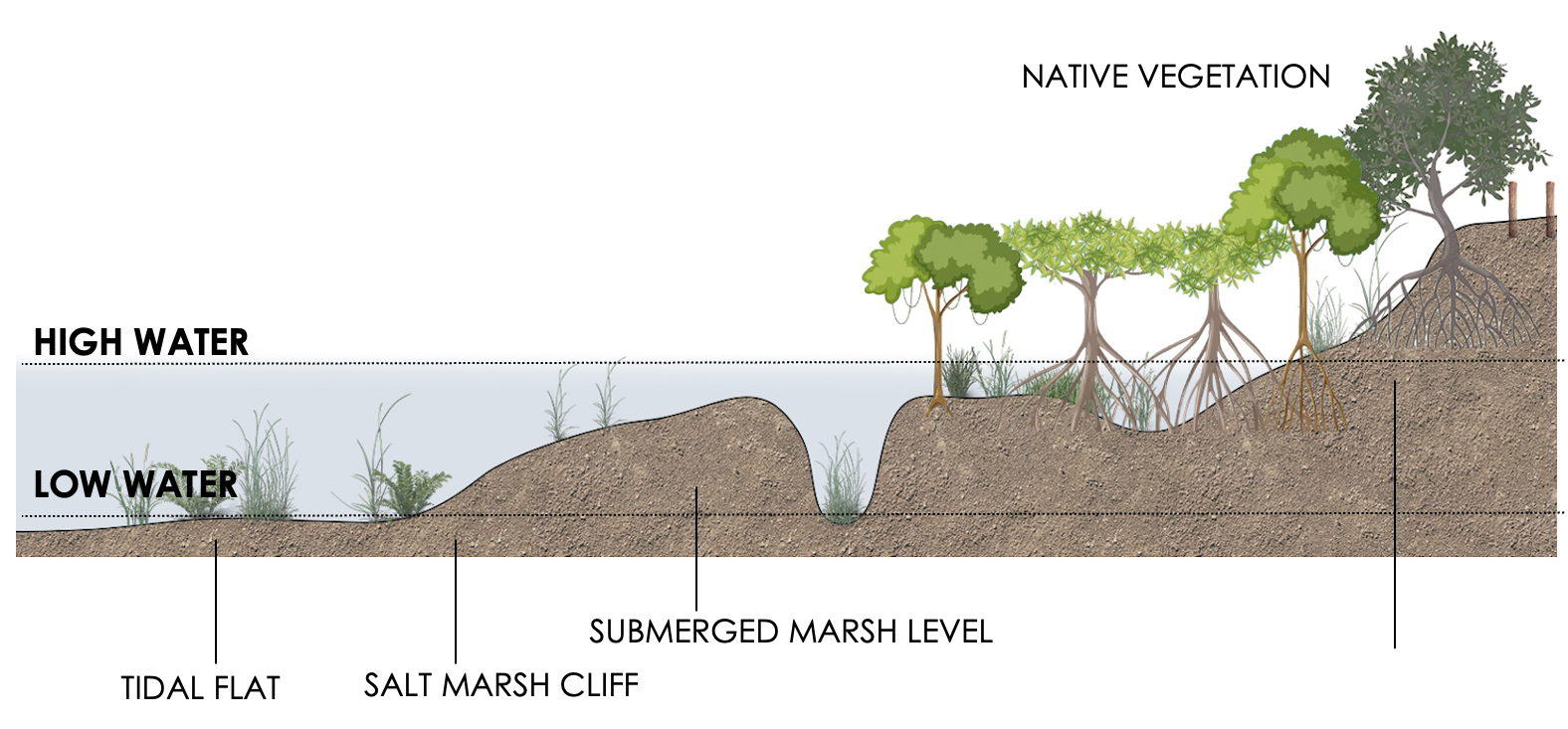

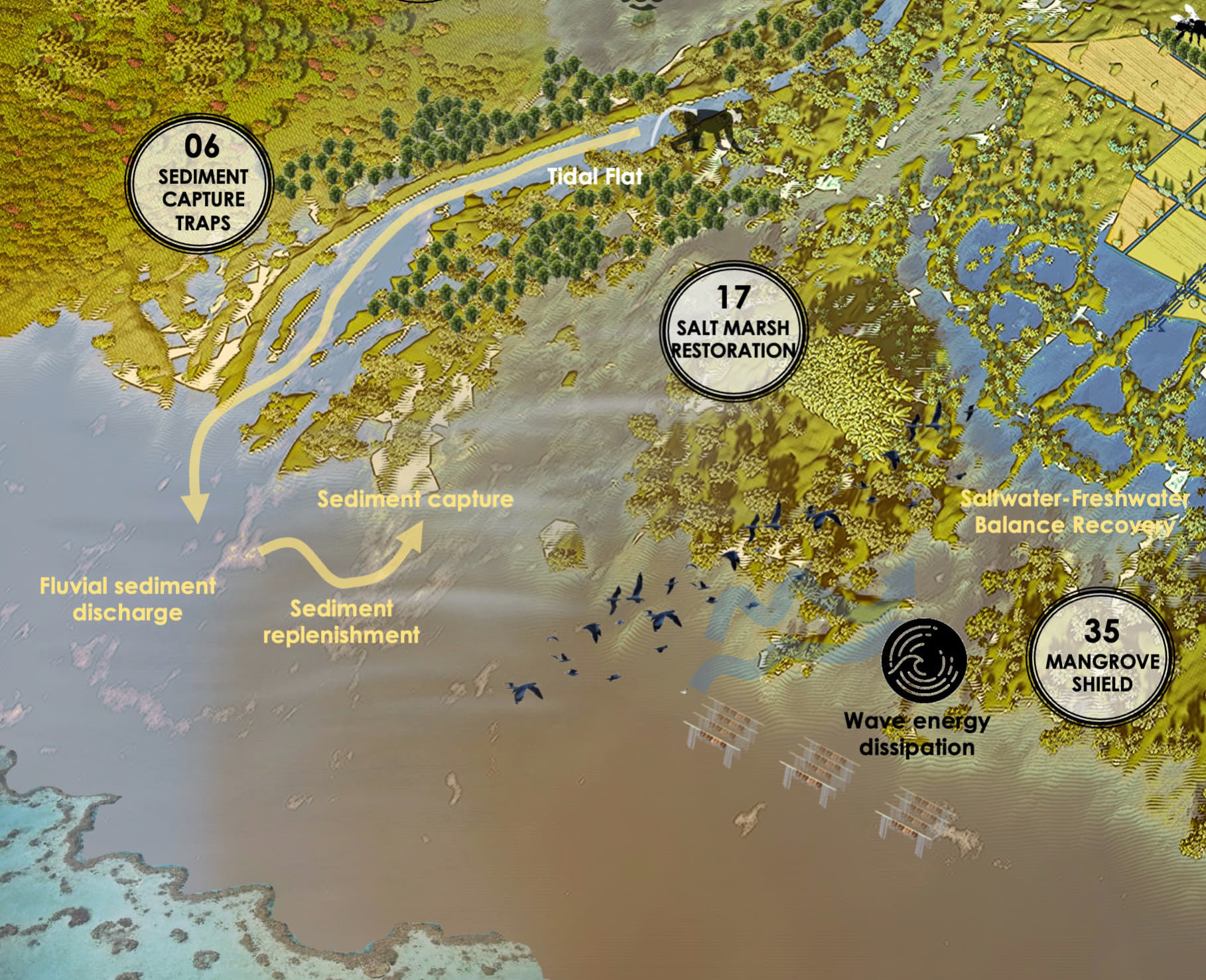
Salt Marsh Restoration focuses on rehabilitating tidal wetlands in coastal and port areas to restore their ecological functions and benefits.
These habitats, characterized by salt-tolerant vegetation such as grasses, sedges, and mangrove-associated plants, are vital for supporting biodiversity, buffering against storm surges, improving water quality, and capturing carbon.
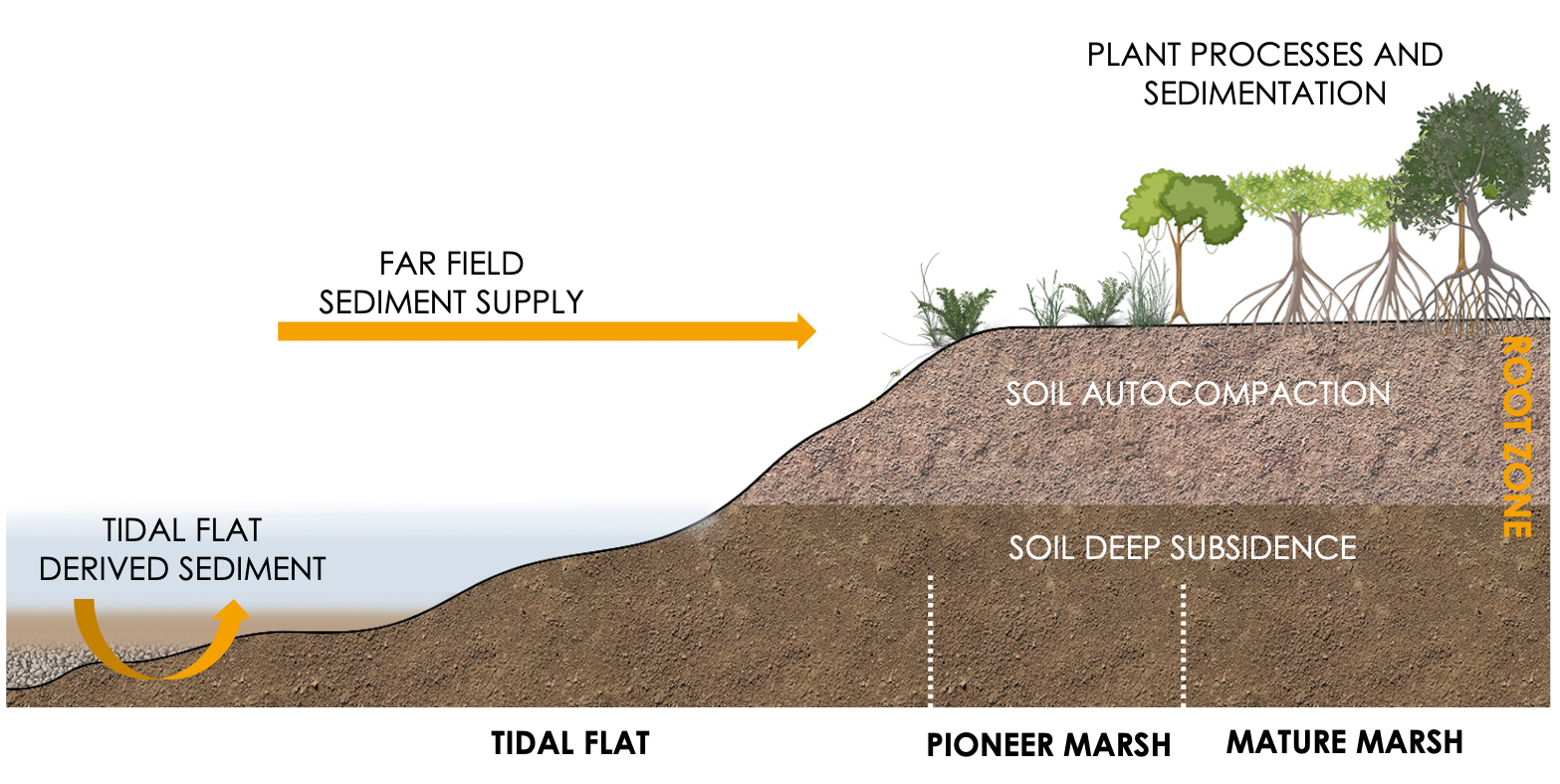
Restoration efforts often include re-establishing natural tidal flows, removing invasive species, and planting native vegetation suited to local conditions. In areas with degraded or subsided land, sediment nourishment or the strategic use of dredged materials can rebuild marsh platforms and enhance their functionality.
Projects frequently adopt a holistic approach by integrating salt marshes with nearby habitats, such as mangroves, mudflats, and seagrass beds, to create interconnected ecological networks.