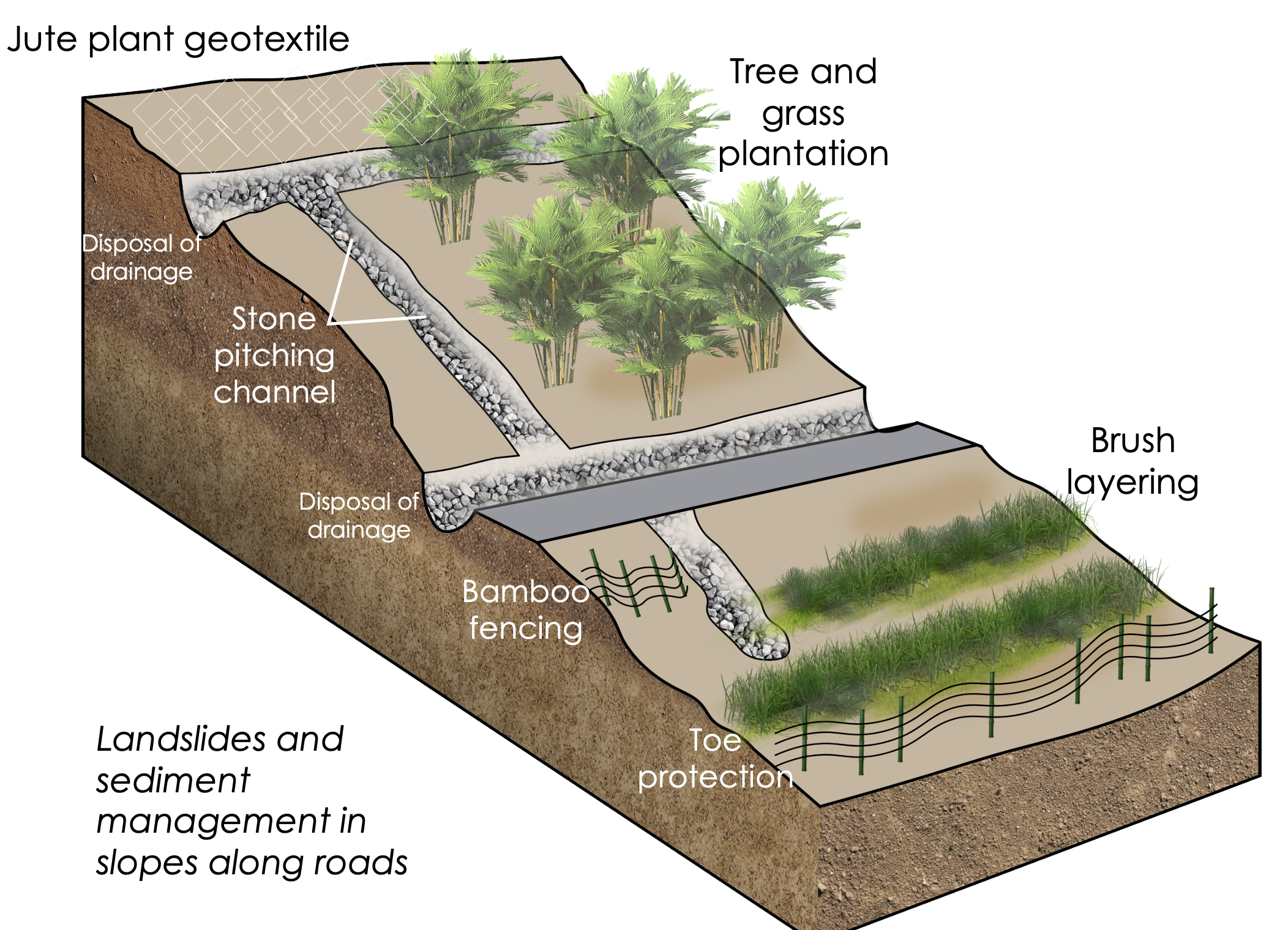

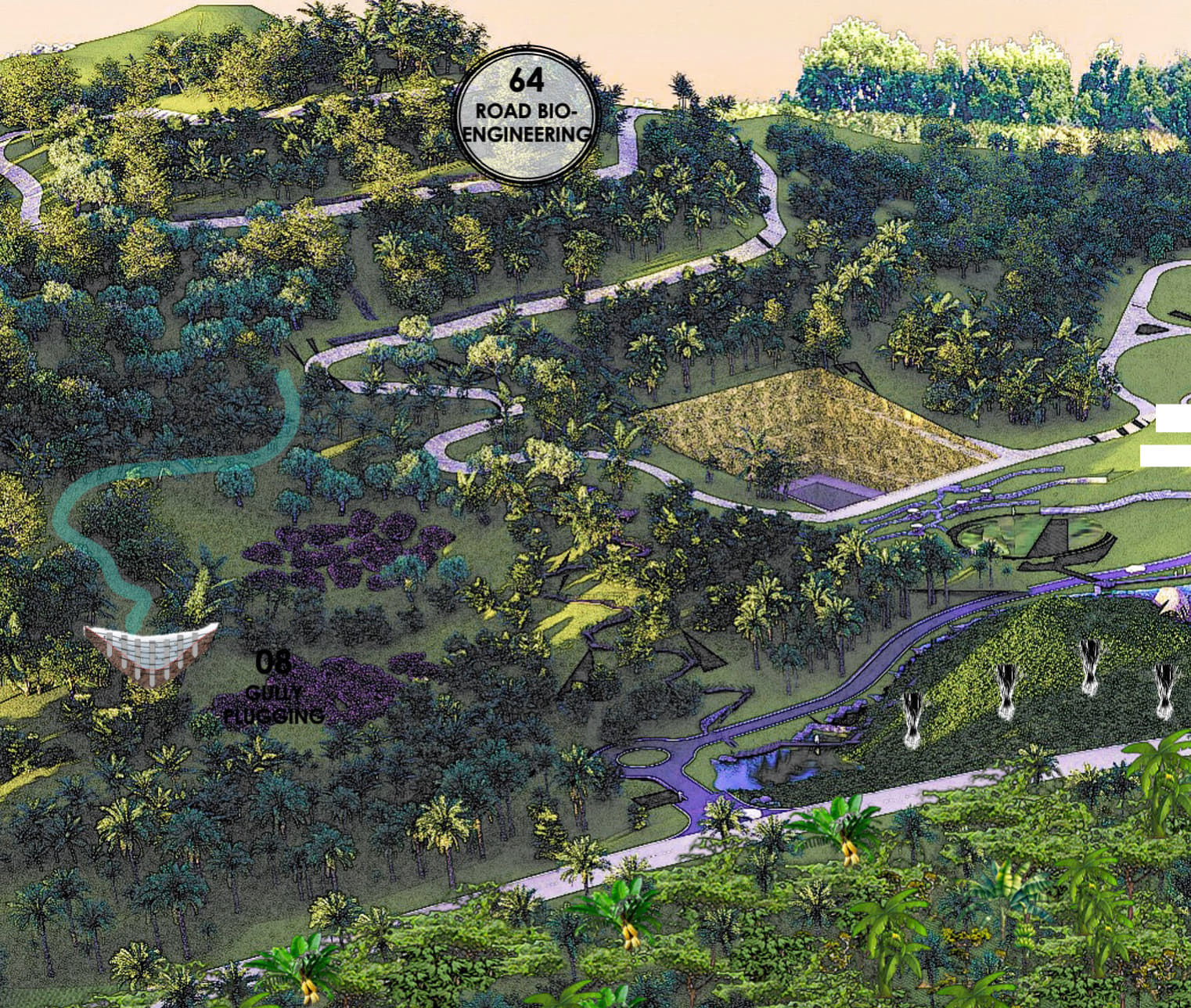
Ecosystem-based roadside bioengineering and slope management address flood control, slope stabilization against landslides, and road infrastructure protection by integrating vegetation, geotextiles, and natural materials into engineered slopes.
This approach reduces erosion, enhances soil stability, and mitigates landslide risks in areas prone to cloudbursts and heavy rainfall. It incorporates soil bioengineering techniques such as live staking, vegetative wattles, and green retaining walls, which not only provide structural support but also promote natural water infiltration and reduce surface runoff. For instance, vegetation cover stabilizes slopes while serving as a barrier against sediment flow into water bodies, contributing to improved water quality and reduced downstream flooding risks.
Benefits include cost-effective and sustainable alternatives to hard engineering for managing steep slopes and reducing landslide hazards. Vegetation used in bioengineering enhances soil structure, increases root cohesion, and improves slope drainage.
By integrating well with low-impact road design, preserving natural landscapes and reducing construction-related ecological disturbances, it safeguards communities residing in landslide-prone regions, enhances road safety, and creates employment opportunities in planting, maintaining vegetation, and reduces costs of repairs and maintenance compared to traditional retaining walls highlight its value.