
Riverbank Stabilisation

Riverbank stabilization prevents erosion and protects riverbanks from further degradation, while maintaining the natural integrity of the river system. This process is essential for preserving soil, reducing sedimentation in water, and preventing the loss of valuable land or infrastructure.

Stabilization techniques are employed to reinforce and protect riverbanks from the erosive forces of flowing water, especially during high-water events.

Efforts often involve a combination of structural and vegetative approaches. Structural methods can include the installation of large rocks or gravel, retaining walls, or engineered mats to physically support the riverbank.

Native, flood-tolerant plants such as grasses, shrubs, and trees are planted to anchor the soil with their root systems, reducing the impact of water flow and promoting soil cohesion. These plants also help filter excess nutrients, improve water quality, and provide habitat for various species.


  • Forest landscape restoration
  • Ecosystem based disaster risk reduction
  • Ecosystem based adaptation
  • Green infrastructure
Soil Erosion Soil Erosion
Biodiversity Loss Biodiversity Loss
Flood Control Flood Control
Disaster Risk Reduction Disaster Risk Reduction

SUPPORTING

  • Stabilized riverbanks create and maintain habitats for aquatic and riparian species, including fish, amphibians, birds, and insects.
  • Riparian vegetation aids in nutrient uptake and cycling, reducing nutrient runoff into rivers.
  • Vegetation on riverbanks prevents soil erosion, helping maintain soil health and fertility over time.

REGULATING

  • Reduces the risk of riverbank collapse and sedimentation.
  • Stabilized banks with healthy vegetation slow down water flow, reducing flood risks downstream.
  • Riparian vegetation acts as a natural filter, trapping pollutants, sediments, and nutrients before they enter the river

PROVISIONING

  • Produce renewable materials such as reeds, bamboo, and timber.
  • Ensure better water retention and quality for human consumption, agriculture, and industrial use.
  • Support fish populations.

SOCIAL BENEFITS

  • Enhance access to safe areas for activities like fishing, boating, hiking, and birdwatching.
  • Green, stabilized riverbanks contribute to scenic landscapes, improving quality of life and attracting tourism.
  • Many communities consider rivers and their banks sacred and central to their cultural identity.
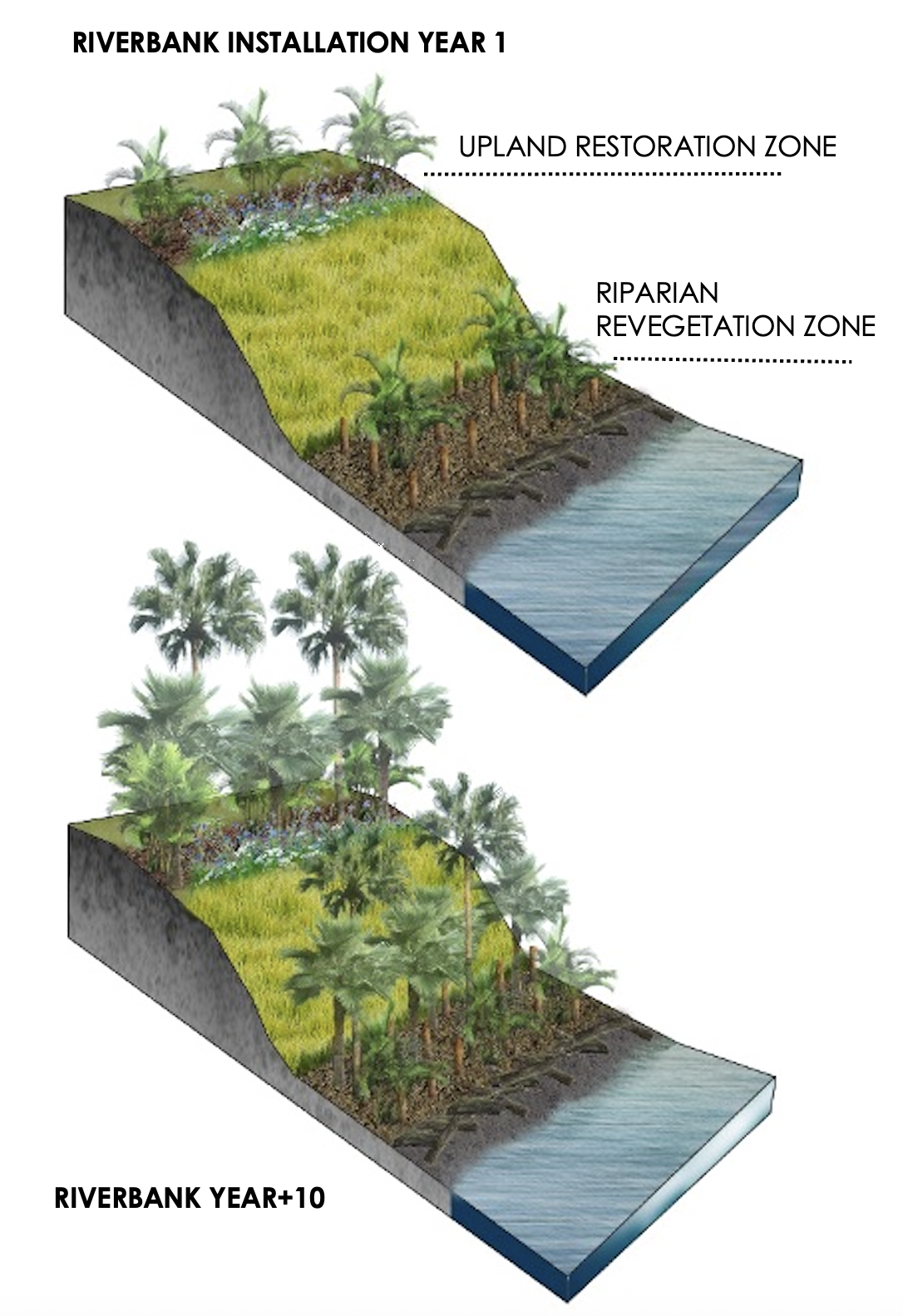
NbS5_Riverbank Installation Revegetation Zone
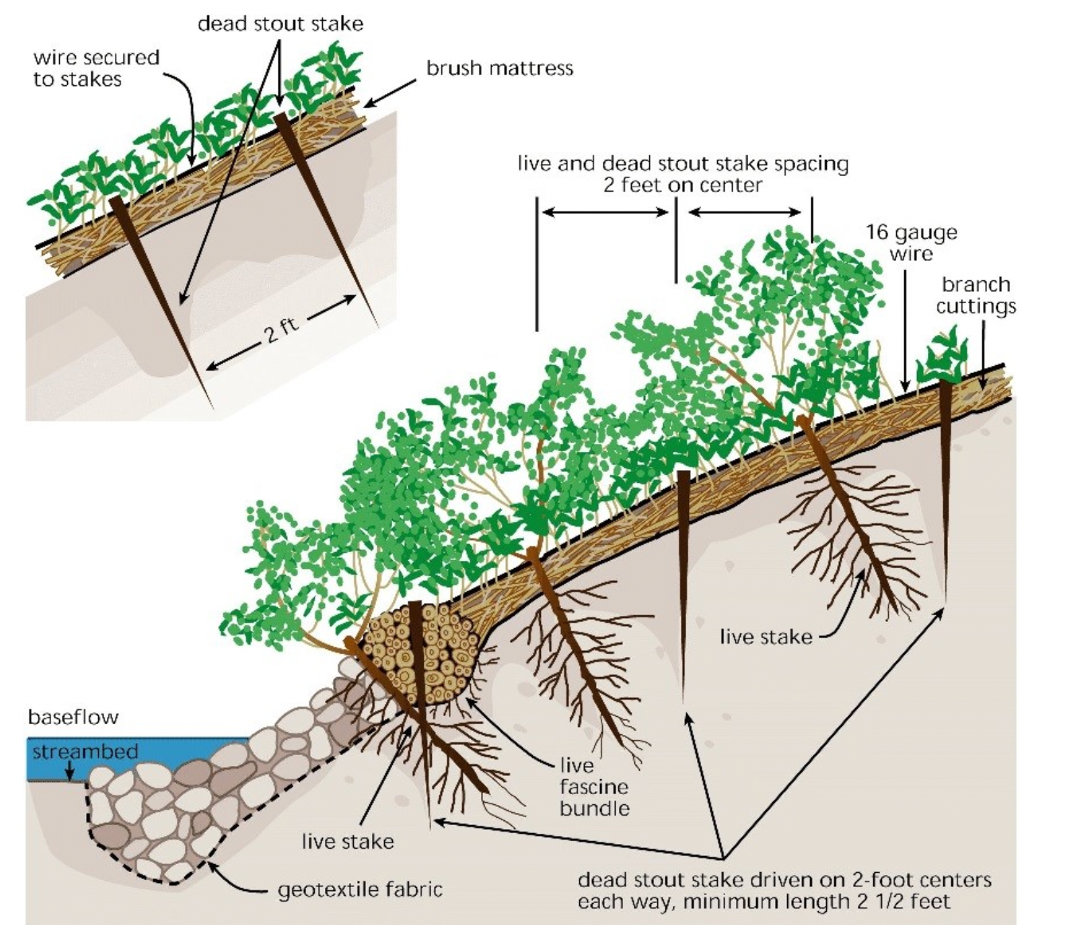
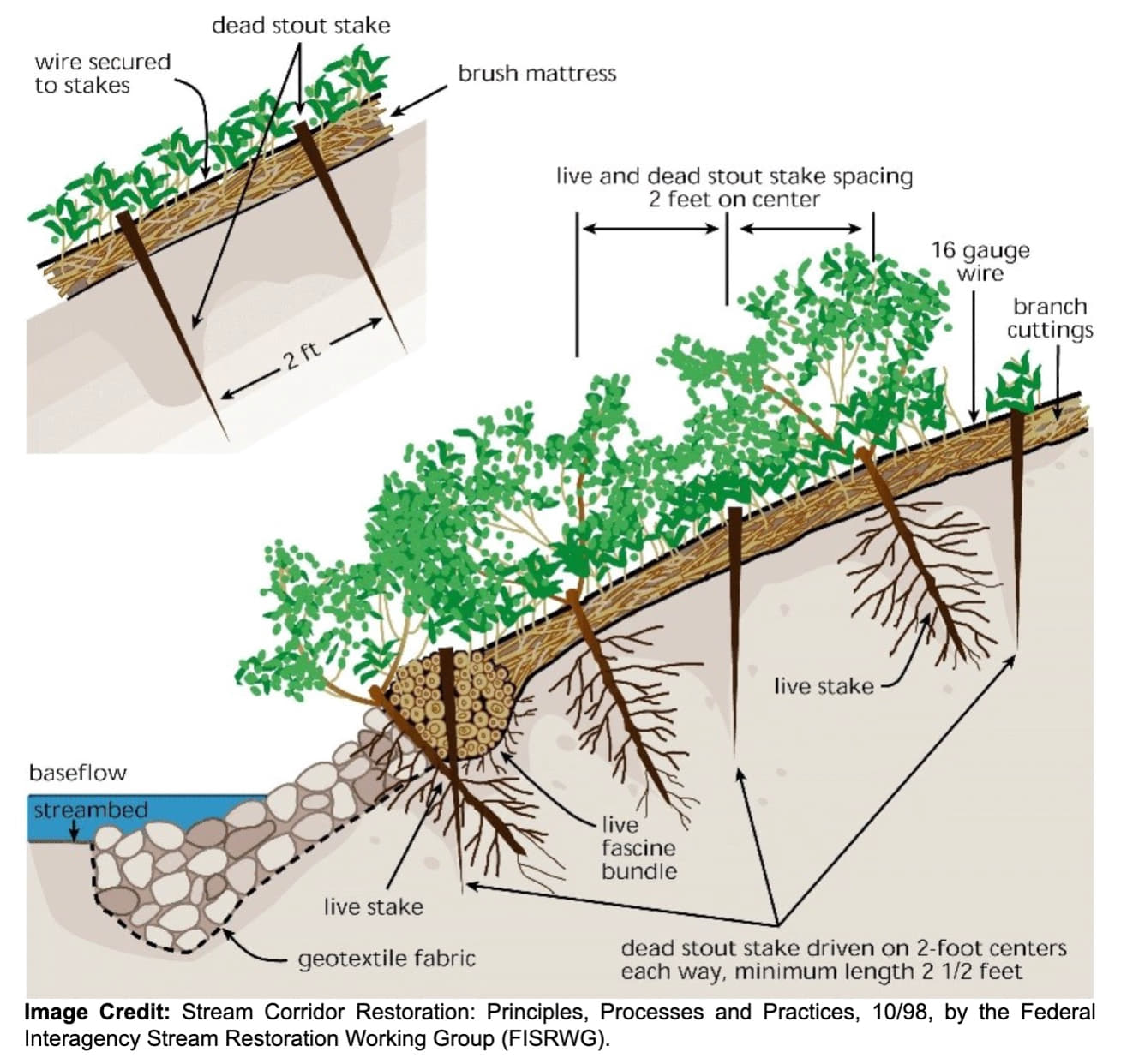
NbS5_Riverbank Stabilisation Cross section

Loss of Biodiversity: Poorly planned stabilization methods (e.g., excessive use of hard structures) can destroy habitats instead of restoring them.

High Initial Costs: Stabilization projects, especially those involving green infrastructure or reforestation, can have significant upfront costs

Unpredictable Events: Extreme weather events like floods or storms may damage or overwhelm stabilization structures.

Maintenance Requirements: Vegetation-based solutions require ongoing management, such as replanting or clearing debris.

Improved Water Quality

Decrease in turbidity levels, lower nutrient concentrations (e.g., nitrogen and phosphorus).

Habitat Restoration

Increase in biodiversity indices, presence of key species, area of restored habitat.

Biodiversity conservation

Growth of endangered species, number of species present.

Disaster Risk Reduction

Reduction in flood-related damages and losses, fewer evacuation incidents.

Enhanced Livelihoods

Income generated from riparian resource use, community surveys of resource availability.

Direct Costs

Planning, materials, construction, monitoring $20,000–$1,000,000

Indirect Costs

Opportunity Costs (loss of land for agriculture). Governance and coordination.

Time Horizon

Short-Term costs, planning, construction, and initial vegetation establishment (1–3 years)

Long-term benefits (10+ years)

Direct Benefits

reduced infrastructure repair costs, water quality improvement, increased agricultural productivity

Indirect Benefits

Enhanced biodiversity, resilience to floods, Improved aesthetics and tourism

Risk Assessment:

Delays or cost overruns due to weather, regulatory issues, or unforeseen technical challenges, climate change impacts

REFERENCES

Singapour, Bishan-Ang Mo Kio Park , Kallang river.

USA, Oregon, Willamette River Riparian Restoration

UK, London, Thames Riverbank Restoration


IMPLEMENTATION OPPORTUNITIES

Malaysia, Sabah, Kinabatangan River, key biodiversity hotspot, erosion has impacted the surrounding floodplain and wildlife.

Indonesia, West Java, Bandung region, Citarum River , severe pollution and erosion.