
River Levee Setbacks & Secondary Channels

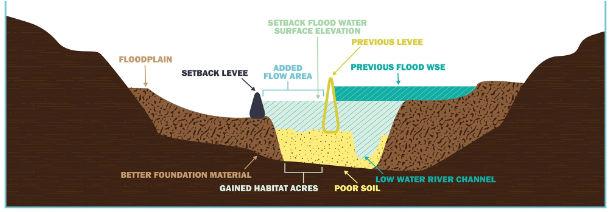
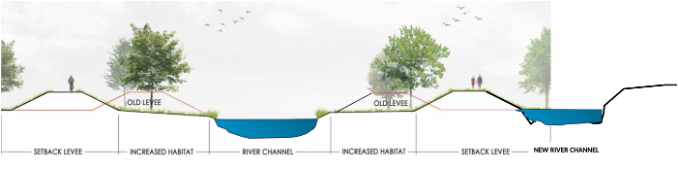
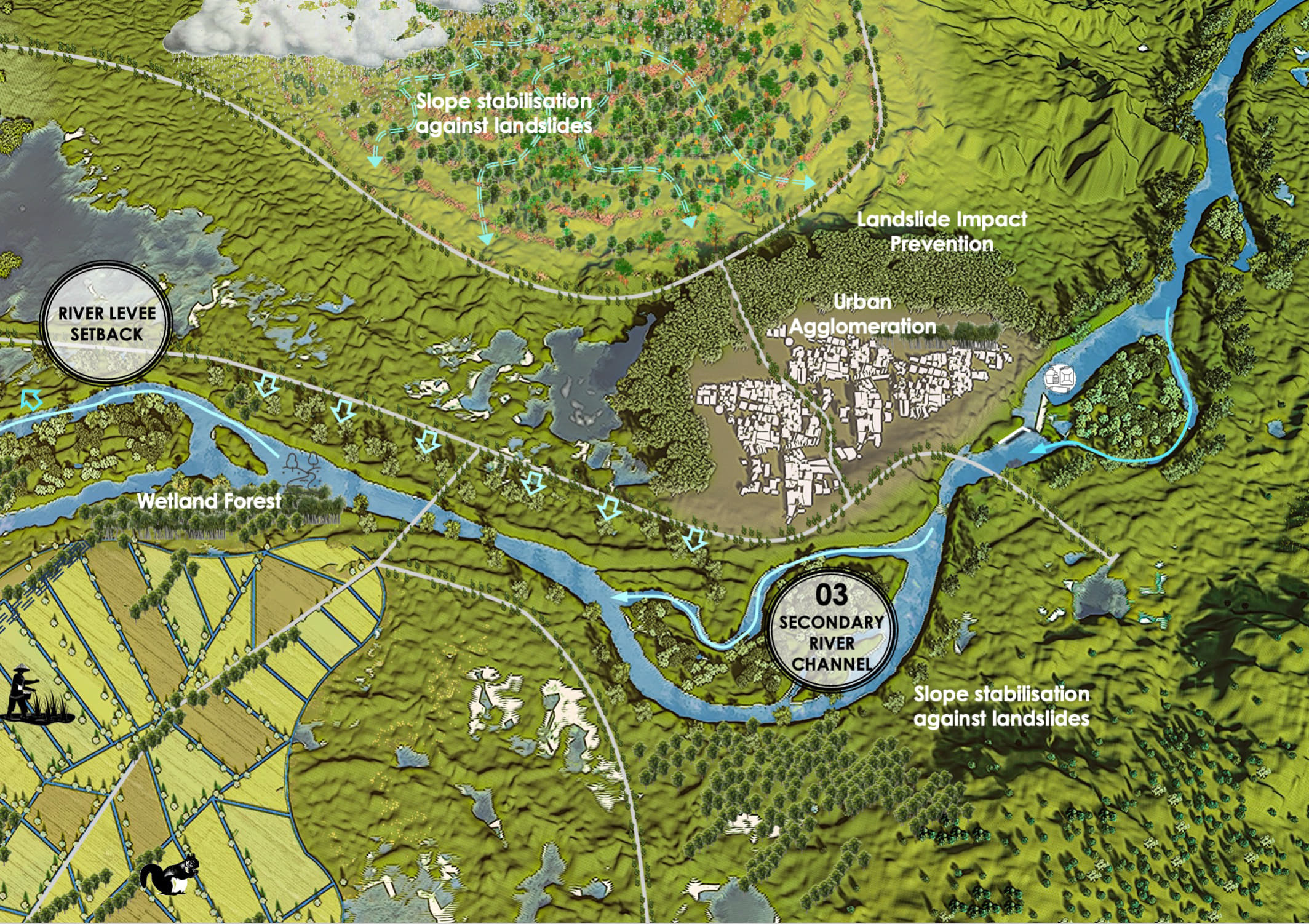
River Levee Setbacks focus on restoring natural river dynamics by relocating levees away from the river’s floodplain, creating space for the river to flood naturally during high-water events.

This process reconnects floodplains with rivers, promoting sediment deposition, nutrient cycling, and ecosystem regeneration. It includes breaching or moving levees and regrading the area to encourage natural flooding, which revitalizes the landscape by creating meanders and pools that support biodiversity.

Native flood-tolerant plants are then introduced to stabilize soils, filter water, and provide habitat for aquatic species like fish, amphibians, and invertebrates. These efforts improve water quality, mitigate flood risks, and restore vital riverine ecosystems.

Secondary river channels are natural or restored waterway branching off from a primary river, designed to mimic or enhance natural hydrological processes. These channels can reduce flood risks by diverting excess water during heavy rains, improve sediment flow to prevent siltation, and restore habitats for aquatic and riparian biodiversity. Integrating secondary river channels into regional water management strategies not only mitigates disaster risks but also promotes sustainable development and resilience for vulnerable communities.


 

  • Ecosystem based disaster risk reduction
  • Ecosystem restoration
  • Ecosystem based adaptation
  • Green infrastructure
  • Sustainable land management
Soil Erosion Soil Erosion
Biodiversity Loss Biodiversity Loss
Flood Control Flood Control
Disaster Risk Reduction Disaster Risk Reduction
Carbon Sequestration Carbon Sequestration

SUPPORTING

  • Creates habitats for diverse species.
  • Supports soil formation.
  • Enhances nutrient cycling for ecosystem productivity.

PROVISIONING

  • Provides clean water.
  • Supplies renewable materials like wood and reeds.

REGULATING

  • Reduces flood risks by absorbing overflow .
  • Purifies water through sediment filtration.
  • Stabilizes riverbanks to prevent erosion.
  • Recharges groundwater, and sequesters carbon in soil.

SOCIAL BENEFITS

  • Offers recreation and tourism opportunities.
  • Protects the community against floods.
NbS3_Cross Section River Setback Levee Missouri River
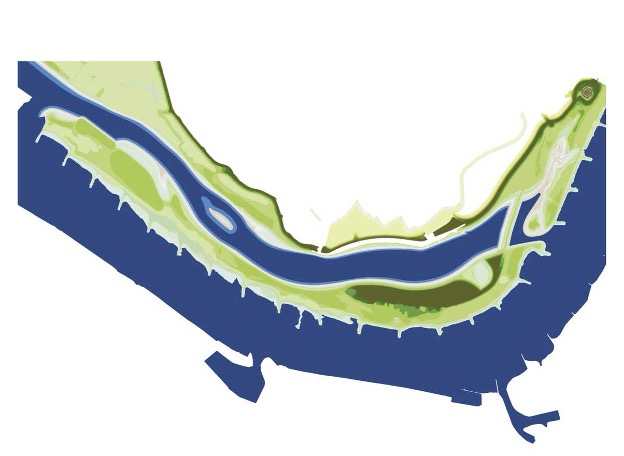
NbS3_Nijmegen Room for the River Plan

Land Use Conflicts: Moving levees away from rivers often requires land acquisition or repurposing

High initial costs: The upfront costs of planning, acquiring land, and constructing levee setbacks are substantial

Displacement: The creation of setback areas may displace people, wildlife, or existing ecosystems.

Maintenance and Monitoring Needs: Although levee setbacks offer long-term benefits, they may require ongoing monitoring and maintenance to ensure they continue functioning as intended.

Carbon sequestration

Amount of carbon sequestered per hectare.Increased biomass cover in the setback area.

Soil Fertility and Agricultural Productivity

Organic soil matter and nutrient levels in floodplain soils. Crop yields improvement in surrounding agricultural areas.

Water Quality Enhancement

Reduction in sediment, nutrient, and pollutant levels (nitrogen, phosphorus).

Groundwater Recharge

Aquifer recharge rates. Water quality of groundwater sources.

Disaster Risk Reduction

Frequency or severity of downstream flooding events.

Direct costs

Land acquisition, construction, monitoring, and ecosystem restoration costs.

Indirect costs

Displacement, legal costs and uncertainty in flood protection.

Time Horizons

50–100 years for ecosystem recovery and long-term flood mitigation.

Direct Benefits

Flood risk reduction, biodiversity restoration, carbon sequestration, water quality improvement

Indirect Benefits

Groundwater recharge, recreation, reduced urban heat, and climate resilience.

Risk Assessment

Environmental, social, financial, and climate-related risks that could affect project success.

REFERENCES

Room for the river project, Nijmegen, The Netherlands

Reconnecting the Missouri River Floodplain, US


IMPLEMENTATION OPPORTUNITIES

Thailand, Chao Phraya River basin, Upper and central floodplain areas outside of urbanized zones.

Indonesia, Jakarta, Ciliwung River, Upstream and midstream areas