
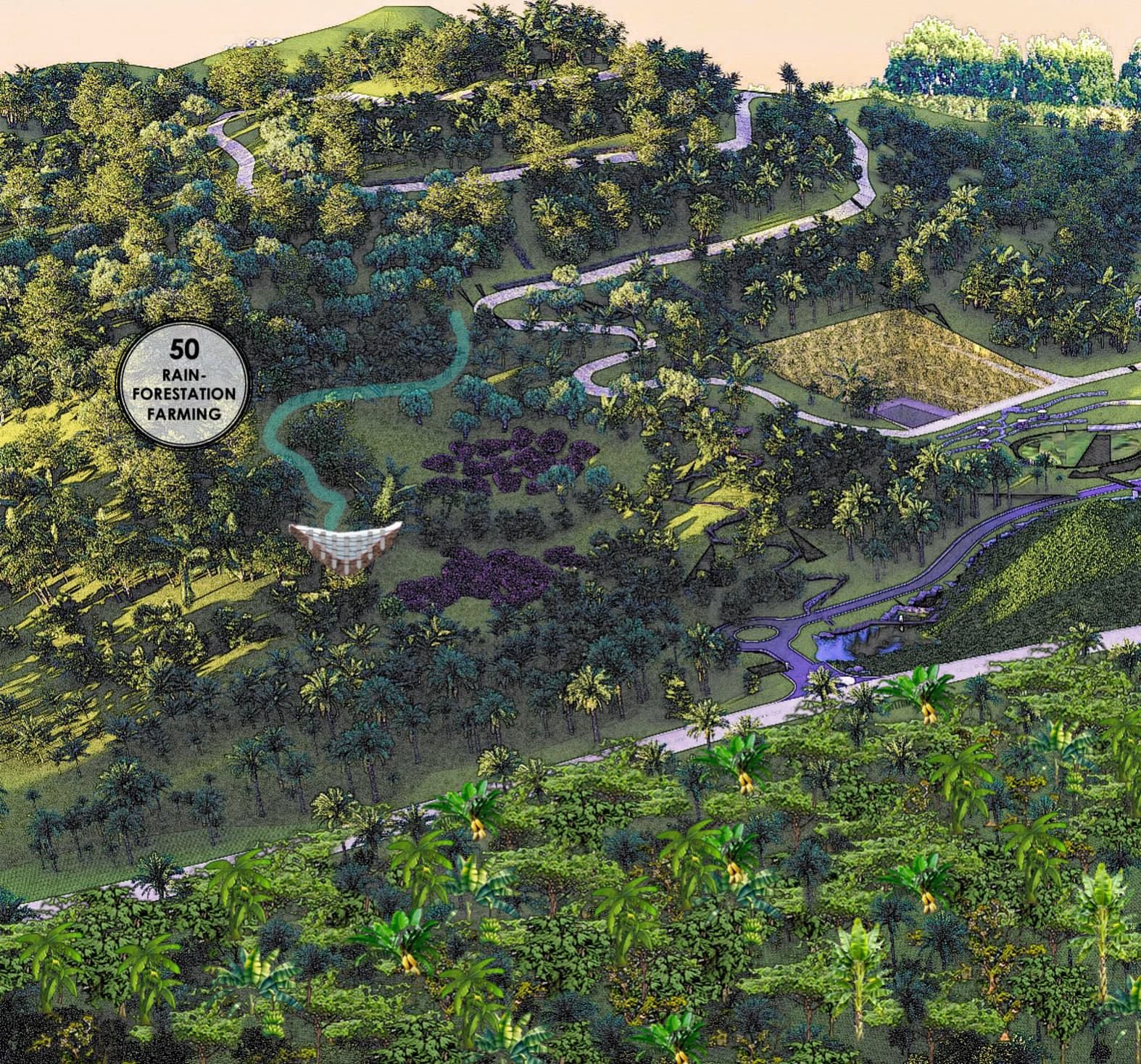
Rainforestation Farming is an innovative NbS that integrates reforestation with agroforestry to address landslides, soil erosion, and slope stabilization while enhancing biodiversity and supporting local livelihoods in Southeast Asia.
Unlike conventional reforestation, it prioritizes the use of native tropical tree species to restore ecological balance while incorporating shade-tolerant crops for economic benefits, making it highly adaptable to sloped and degraded landscapes.
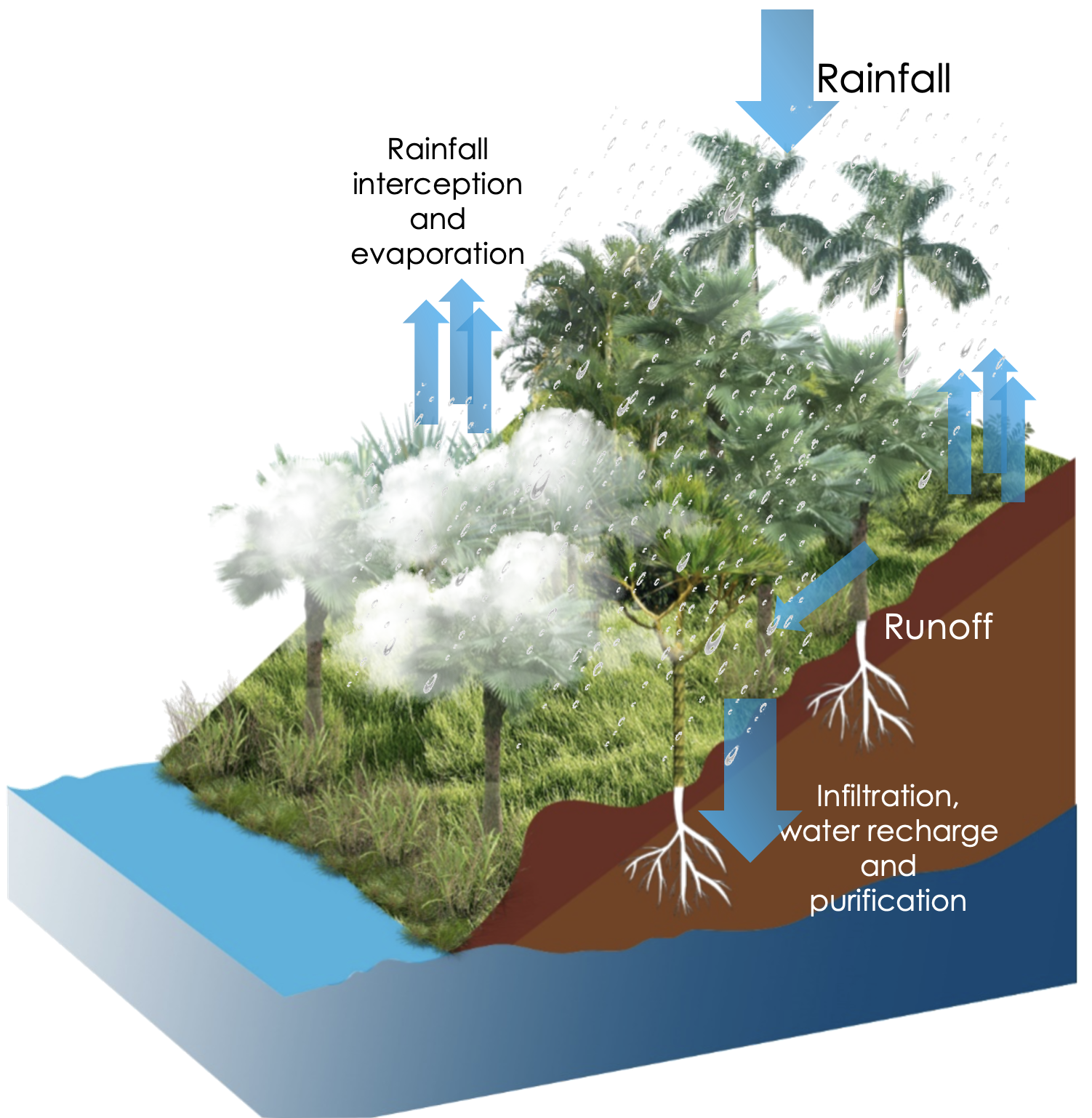
Rainforestation farming systems replicate natural forest structures, with multiple canopy layers that stabilize slopes, enhance soil water retention, and reduce surface runoff, thereby mitigating the risk of landslides and flash floods.
In the Philippines, where the approach was pioneered, species such as Narra (Pterocarpus indicus), Dao (Dracontomelon dao), and Rattan have proven effective in combining ecological restoration with economic outputs.
The system not only promotes reforestation but also ensures sustainable agricultural productivity, fostering food security, and reducing the dependency of communities on monoculture farming.
Technically and socially, it delivers a triple win: ecological resilience, economic opportunity, and disaster risk reduction, making it a holistic solution for the challenges faced in Southeast Asia’s forested and agricultural landscapes.