
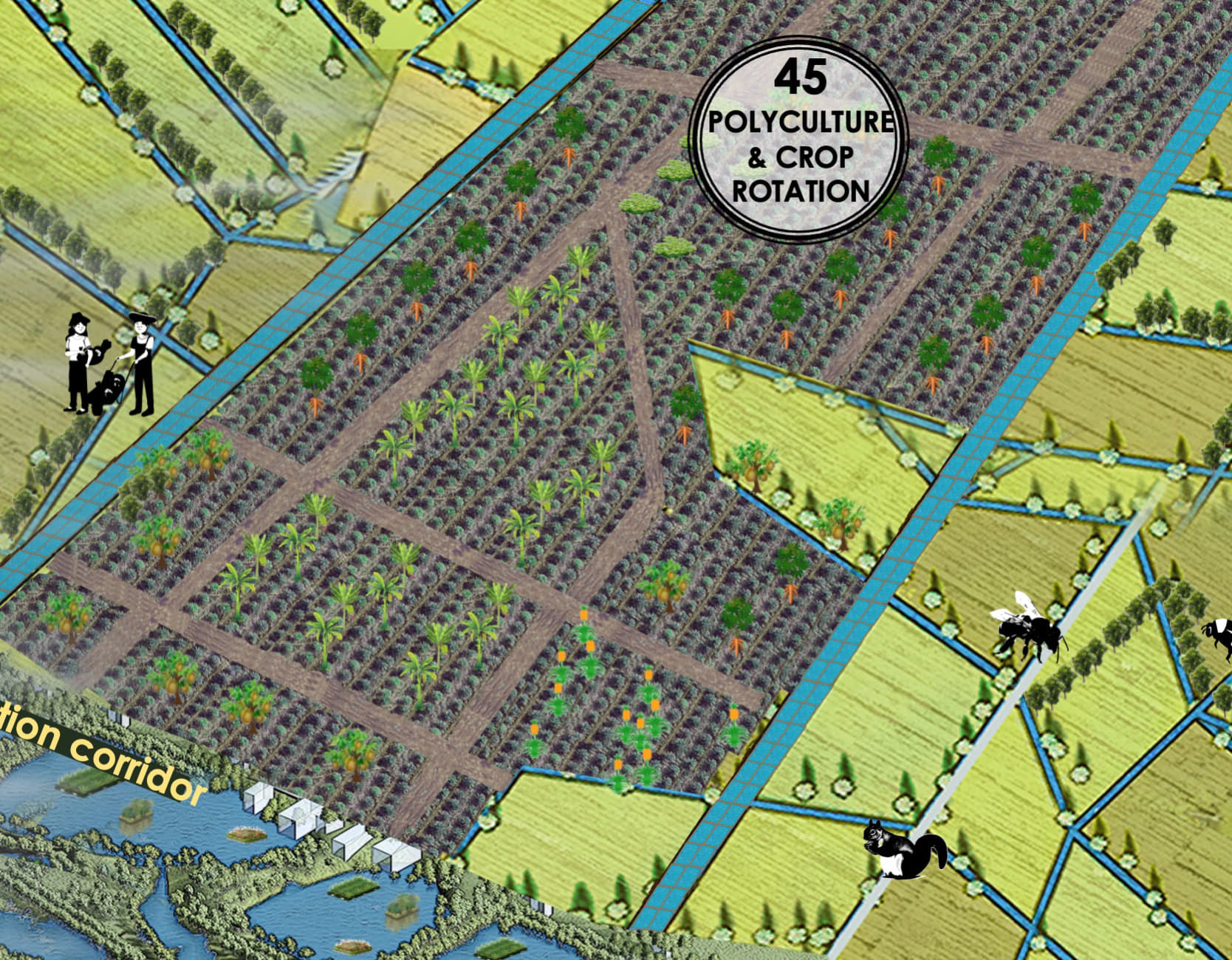
Polyculture and crop rotation promote regenerative agriculture by improving soil health, increasing biodiversity, and reducing dependence on chemical inputs.
Polyculture involves planting diverse crops in the same area, mimicking natural ecosystems to reduce pest outbreaks and enhance resource efficiency.
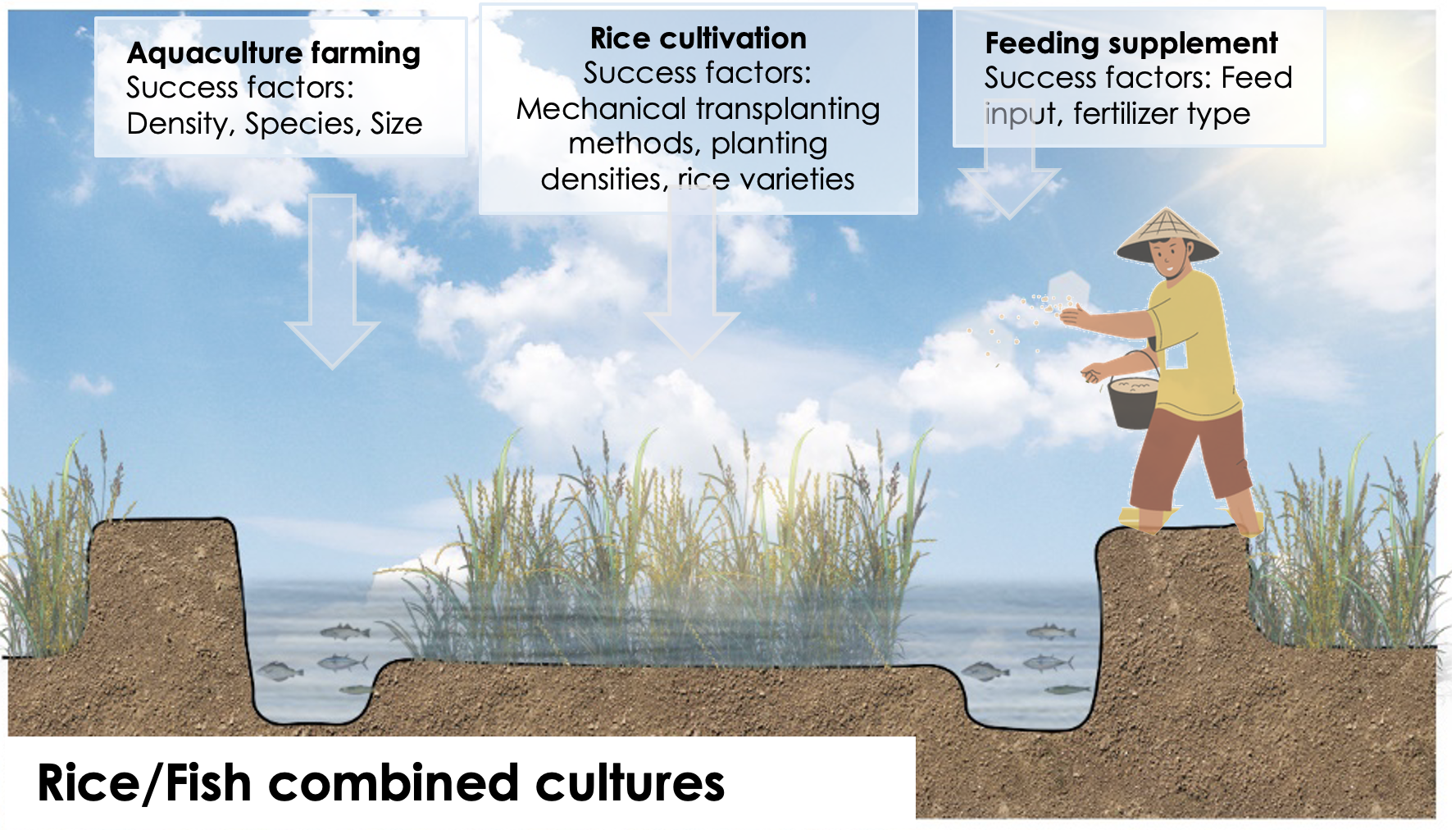
In Southeast Asia, rice-fish farming is a prominent example of polyculture, where rice paddy fields are integrated with aquaculture.
This system, widely practiced in countries like Vietnam, supports sustainable rice production while providing fish and improving soil fertility through nutrient cycling.
Crop rotation alternates different crops in the same field across seasons, helping to break pest and disease cycles, restore soil nutrients, and improve water retention.
In the Philippines, crop rotation with legumes such as mung beans and soybeans has been used in rice paddies to fix nitrogen, which replenishes soil nutrients and reduces the need for chemical fertilizers.
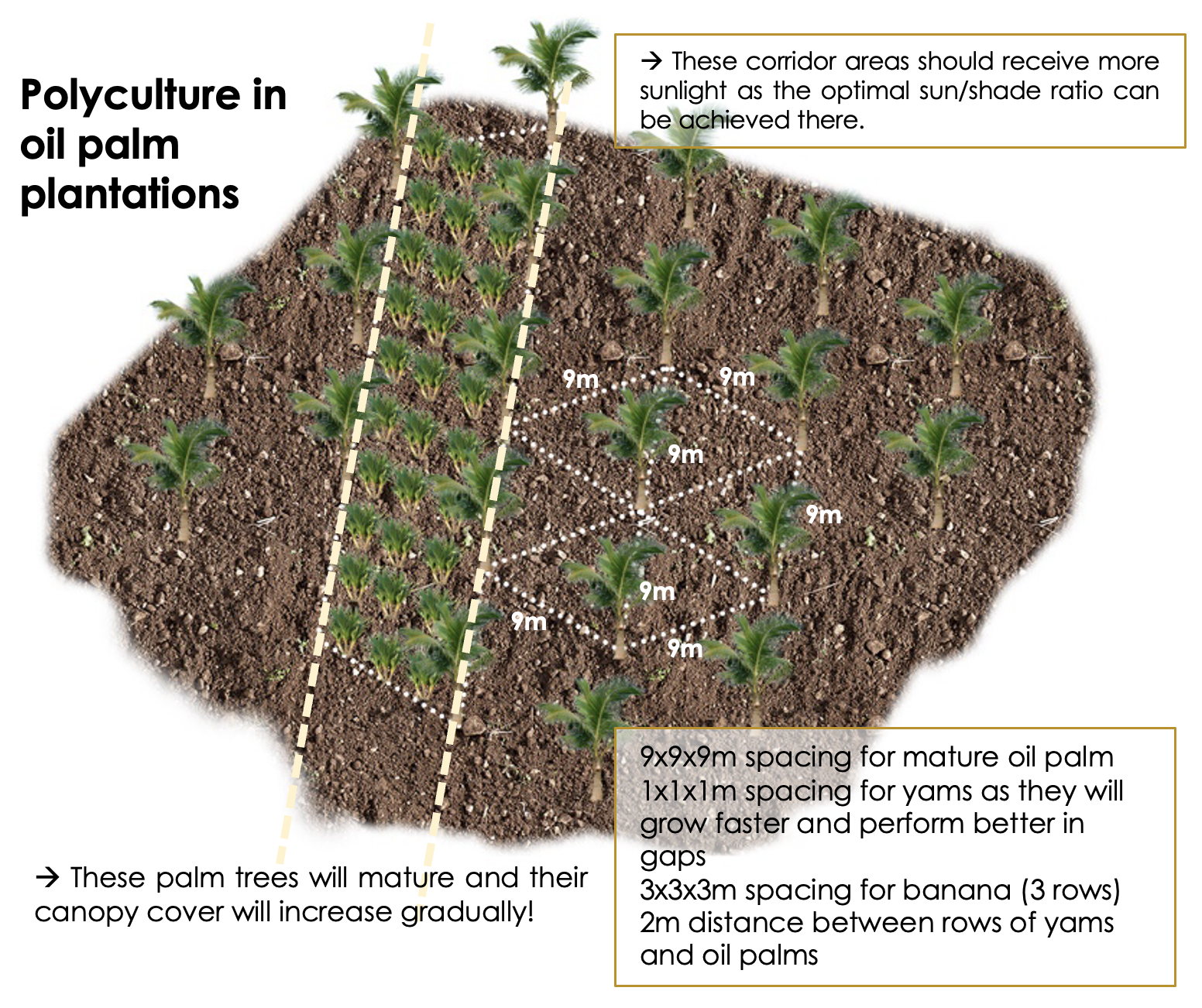
In Indonesia, polyculture systems are being integrated into palm oil plantations, where companion crops like legumes, vegetables, and fruit trees are intercropped with palm oil. This helps to increase soil fertility, reduce erosion, and enhance biodiversity in the palm oil landscape.
In the Mekong Delta in Vietnam, crop rotation is widely practiced to rejuvenate soils after intensive rice farming. By rotating rice with crops like peanuts or maize, farmers help restore soil health and improve water retention, reducing dependency on chemical fertilizers.
These systems combine technical benefits, such as improved yields and lower input costs, with landscape and socio-economic co-benefits, including improved rural livelihoods, food security, and conservation of ecosystems that are critical for biodiversity, water retention, and climate resilience.