
Phytoremediation Forest Corridors

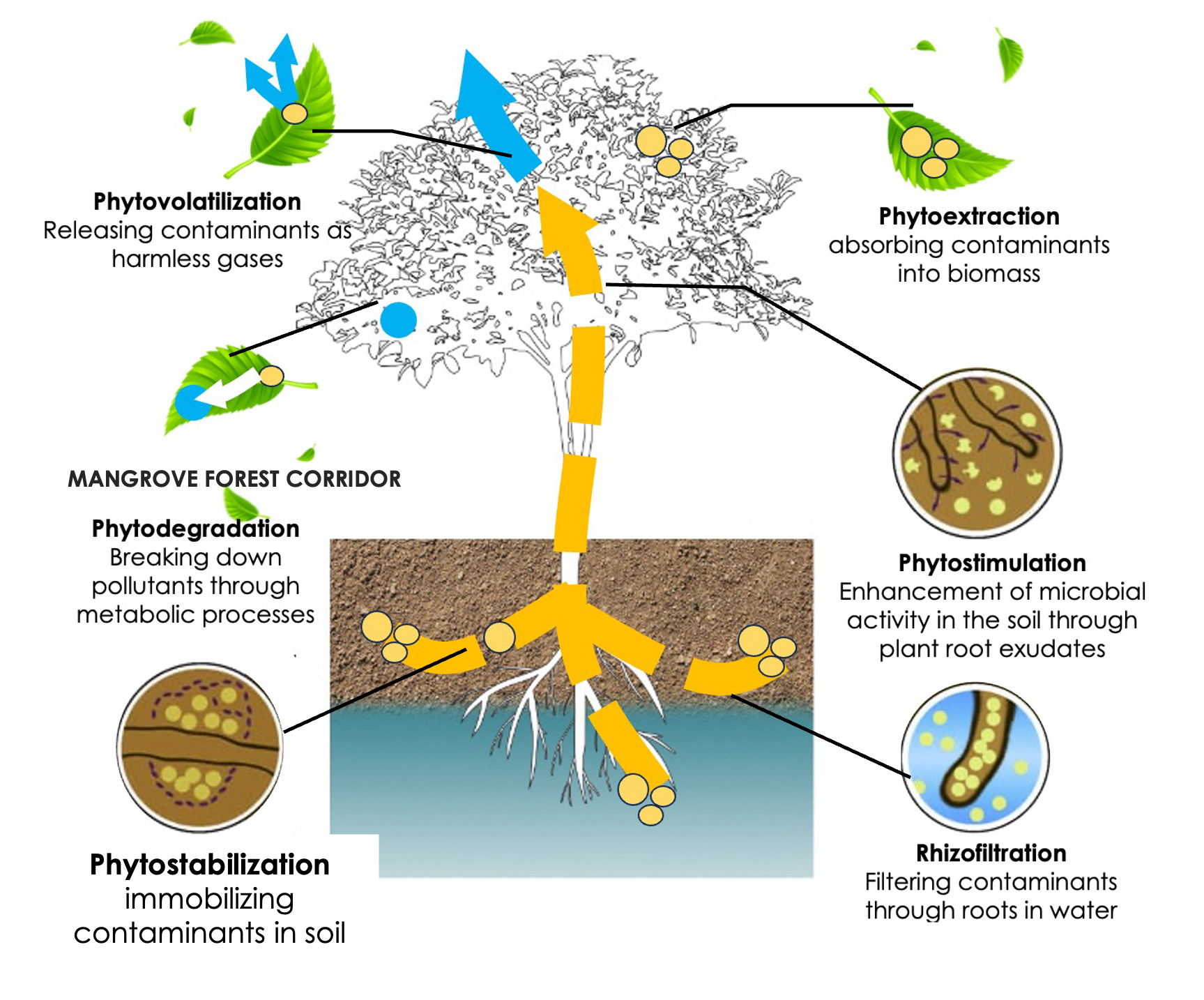
Phytoremediation forest corridors use plants and trees to remove, stabilize, or degrade contaminants in soil, water, and air, aiding in ecosystem restoration. Hyperaccumulator plants play a key role through processes like phytoextraction (absorbing contaminants), phytostabilization (immobilizing pollutants), phytodegradation (breaking down toxins), and rhizofiltration (filtering water contaminants).

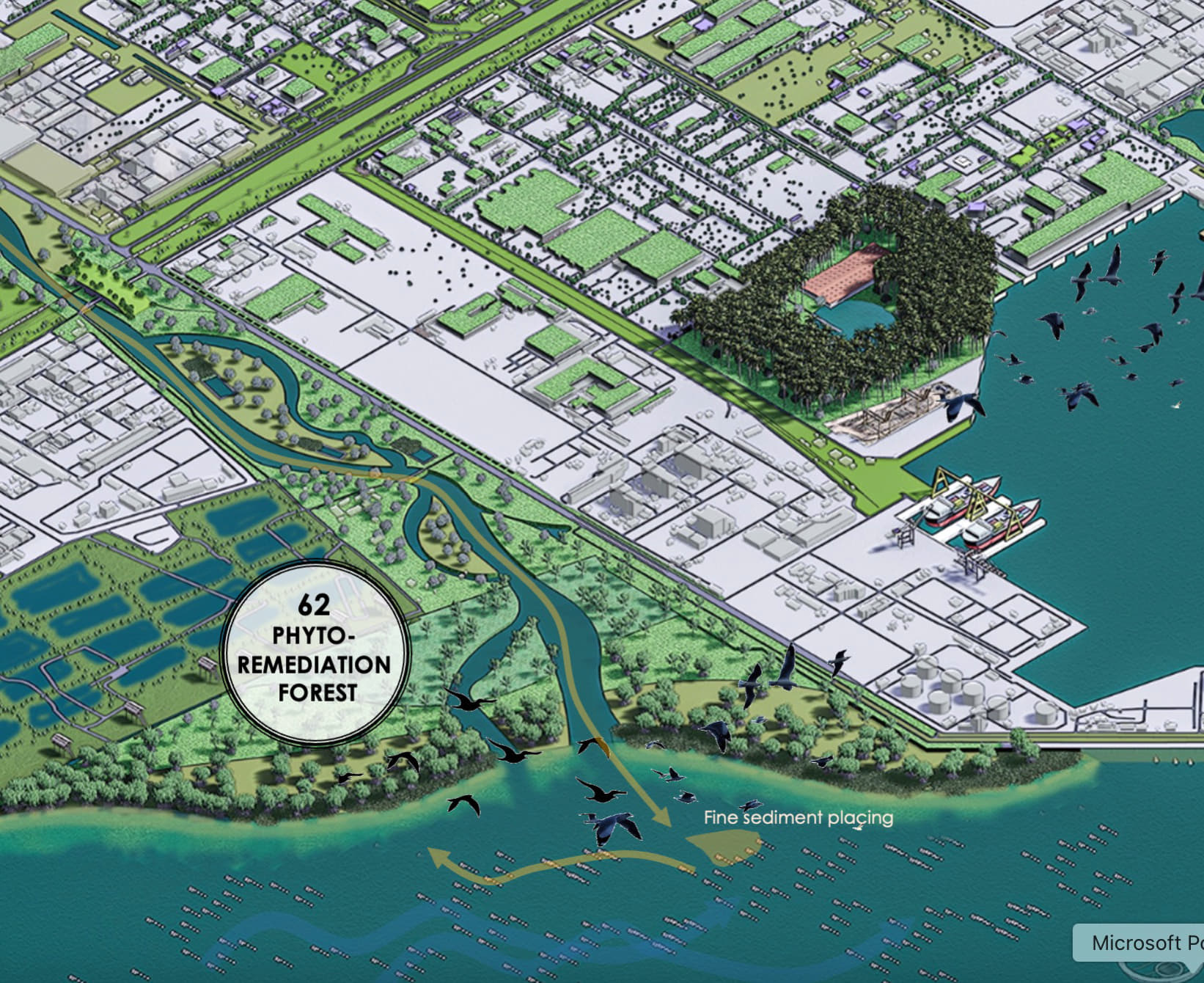
Mangrove forests, especially along coastlines and estuaries, are highly effective in trapping sediments, reducing soil toxicity, and enriching landscapes with nutrients. These corridors not only address pollution but also promote biodiversity, carbon sequestration, and soil health.

They provide essential ecosystem services like flood control, coastal protection, and the restoration of degraded lands (e.g., post-mining areas or agricultural soils). Additionally, they enhance local livelihoods by supporting sustainable resource use, making them valuable for both environmental and community resilience.


  • Pollution control & remediation
  • Soil & water quality improvement
  • Erosion & sediment control
  • Biodiversity conservation
  • Climate resilience
  • Community based co benefits
Soil Erosion Soil Erosion
Biodiversity Loss Biodiversity Loss
Flood Control Flood Control
Disaster Risk Reduction Disaster Risk Reduction
Carbon Sequestration Carbon Sequestration

SUPPORTING

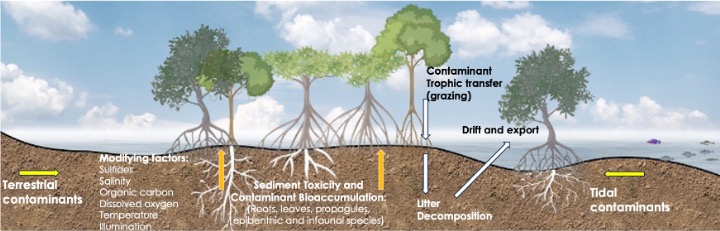
  • Enhance soil formation and microbial activity by fostering nutrient cycling and organic matter buildup through phytostimulation and litter decomposition.

REGULATING

  • Filter pollutants and improve water quality through rhizofiltration and phytostabilization, reducing sediment toxicity in wetlands and coastal areas.

PROVISIONING

  • Provide biomass resources, including wood, fodder, and non-timber forest products from phytoremediative vegetation.

SOCIAL BENEFITS

  • Improve community health by mitigating soil and water contamination and creating green spaces for recreation and cultural value.
NbS62_Phytoremediation principles
NbS62_Phytoremediation of terrestrial and tidal contaminants_Section with legends

Limited species adaptability: Selecting the right hyperaccumulator plants for local soil, climate, and pollution conditions.

Long-term effectiveness: Phytoremediation processes, such as phytoextraction and stabilization, often require extended timeframes to significantly reduce contaminants, delaying visible ecosystem benefits.

Contaminant re-release risks: Improper management of harvested biomass from hyperaccumulators can lead to the re-release of toxic elements back into the environment.

Socioeconomic conflicts: Balancing land use for phytoremediation corridors with community needs for agriculture, infrastructure, or resource extraction can cause disputes and hinder project implementation.

Enhanced Soil Health

Phytoextraction reduces toxic heavy metals, indicated by a measurable 20-50% decrease in soil contamination levels over 5 years.

Erosion Control

Stabilized soil reduces sediment loss, indicated by a 30-50% reduction in annual soil erosion rates in treated areas.

Biodiversity Conservation

Restored habitats support native species, indicated by a 15-30% increase in flora and fauna diversity within 3 years.

Carbon Sequestration

Forest corridors absorb atmospheric CO₂, indicated by 5-10 tons of carbon stored per hectare annually.

Improved Water Quality

Rhizofiltration reduces pollutants in runoff, demonstrated by a 30-60% decline in waterborne heavy metals and nitrates near project sites.

Community Livelihood Support

Agroforestry or forest-based products generate income, indicated by a 10-20% increase in household earnings from sustainable forest resources.

Direct Costs

Establishment costs for phytoremediation species and planting range from $1,500–2,500/ha depending on site conditions.

Indirect Costs

Monitoring, maintenance, and capacity-building programs can cost an additional $500–800/ha/year.

Time Horizon

10–20 years, using a 4–7% discount rate to account for long-term environmental benefits.

Direct Benefits

Saving of $2,000–5,000/ha in future land rehabilitation and clean-up costs.

Indirect Benefits

Enhanced biodiversity, carbon sequestration, and community livelihoods provide ecosystem service values of $5,000–8,000/ha/year.

Risk Assessment

Costs related to potential plant failure, pest outbreaks, or stakeholder disputes are estimated at $200–500/ha/year as contingency planning.

REFERENCES

Indonesia, East Kalimantan mining sites reclamation using hyperaccumulator plants for nickel, lead, and mercury detoxification.

Philippines, Palawan Forest and Coastal Restoration Phytoremediation corridors.

IMPLEMENTATION OPPORTUNITIES

Indonesia, Sumatra Palm Oil plantations.

Laos, Bolaven Plateau post-mining region.

Malaysia, Sarawak degraded peatland forests from mining.