
Permeable Green Streets And Roads

Permeable green streets in urban and industrial environments are designed to address flood control, to mitigate urban heat stress, and to reduce land subsidence in cities prone to heavy rainfall, high temperatures, and over-extraction of groundwater.

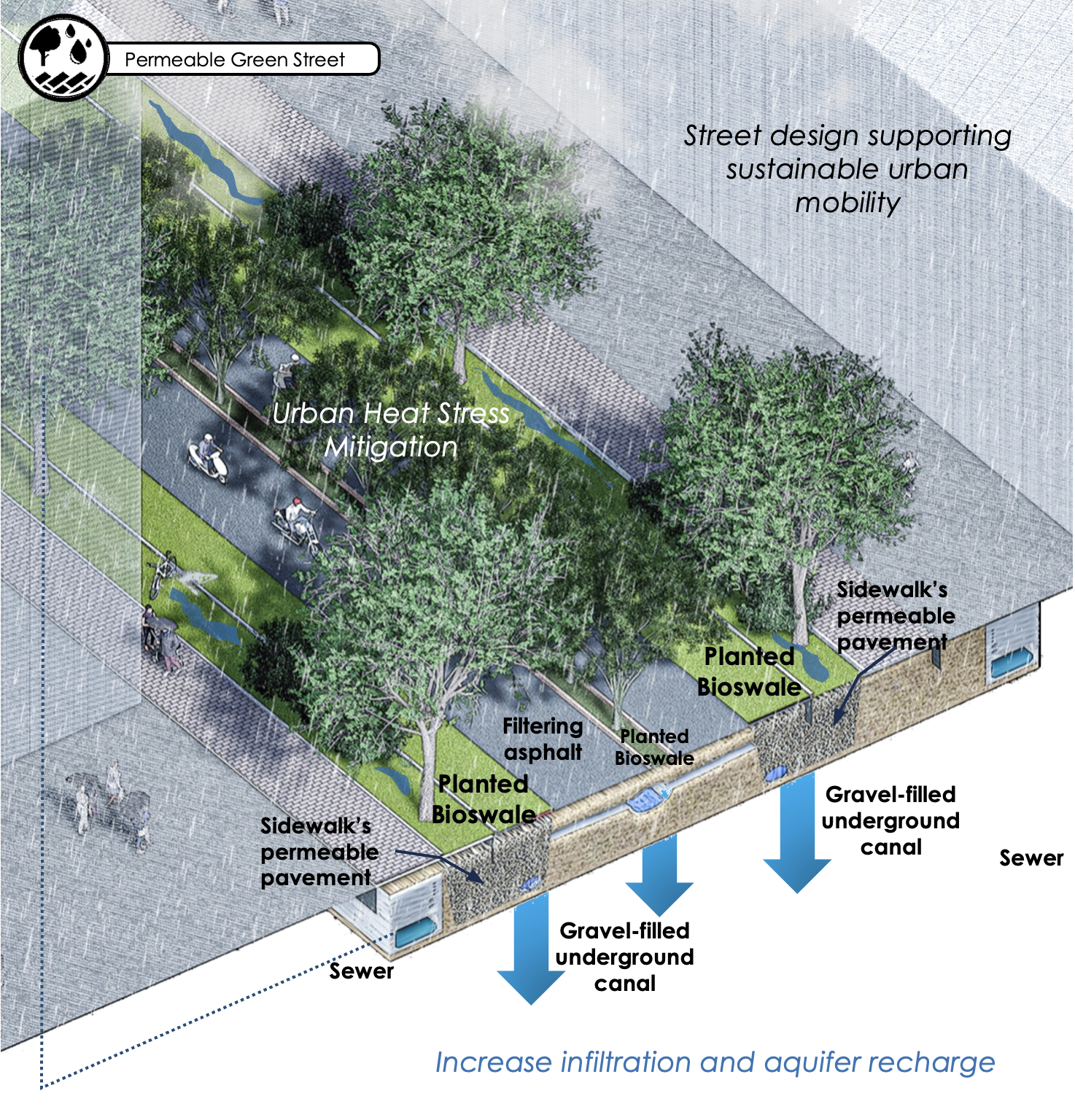
These streets integrate permeable pavements, bioswales, and urban greenery, allowing rainwater to infiltrate the ground, recharge aquifers, and reduce surface runoff, thereby alleviating urban flooding.

The green coverage provided by street trees and vegetation enhances shade and evapotranspiration, lowering ambient temperatures and improving air quality.

These streets also contribute to healthier urban mobility by promoting walkability and cycling, creating more liveable and visually appealing urban spaces. Technically, they combine stormwater management with urban landscape design, while socially, they foster community well-being and climate resilience by improving public spaces and reducing disaster risks.


  • Urban water management
  • Climate regulation
  • Biodiversity enhancement
  • Soil and land conservation
  • Community resilience
  • Sustainable urban design
Flood Control Flood Control
Air Quality Improvement Air Quality Improvement
Urban Heat Island Urban Heat Island

SUPPORTING:

  • Soil health improvement: Facilitates nutrient cycling and soil aeration through enhanced water infiltration.

REGULATING

  • Flood mitigation: Reduces stormwater runoff and prevents urban flooding by increasing water infiltration.
  • Urban cooling: Lowers ambient temperatures by reducing heat island effects through greenery and water retention.

PROVISIONING

  • Groundwater recharge: Replenishes local aquifers by allowing rainwater to percolate into the ground.

SOCIAL BENEFITS

  • Improved walkability and liveability: Enhances urban aesthetics and encourages pedestrian-friendly environments.
  • Disaster resilience: Builds community resilience against climate impacts like floods and heatwaves.
NbS26_Permeable Green Street Section with Legend

High initial costs: Permeable paving, integrated drainage systems, and green infrastructure can be costly, deterring widespread adoption in resource-constrained cities.

Limited maintenance capacity: Many cities lack the expertise and resources to maintain permeable surfaces.

Space constraints in dense urban areas: Retrofitting green streets with limited land availability can be challenging without disrupting existing infrastructure.

Uncertain hydrological performance: When high rainfall intensity exceed the infiltration capacity of permeable surfaces, several flood prone NbS should be combined to support each other.

Improved Flood Management

Reduced surface runoff by at least 30% during peak rainfall events.

Mitigation of Urban Heat Islands

Lower surrounding temperatures by 2–3°C through increased green cover and shaded streets.

Enhanced Grondwater Recharge

Increased infiltration rates, contributing to a 20% rise in local aquifer levels annually.

Air Quality Improvement

Reduction in particulate matter (PM2.5) levels by 10% due to vegetation filtering pollutants.

Improved Pedestrian Safety and Mobility

15% increase in walkability scores due to shaded, cooler, and greener streets.

Increased sightings of urban wildlife, such as pollinators and birds, by 25% in project areas.

Direct costs

Permeable pavements and green infrastructure costs around $300k–500k per km, depending on materials and urban density.

Indirect costs

Maintenance costs range between $10k–20k per km annually.

Time Horizons

20–30 year lifespan with a discount rate of 3–5% for economic feasibility assessments.

Direct Benefits

Flood damage reduction and water savings valued at $100k–200k annually per km in high-risk urban areas.

Indirect Benefits

Heat stress mitigation, improved walkability, and increased property values

Risk Assessment

Moderate risk of clogged permeable surfaces, requiring timely maintenance costing an additional $5k–10k annually.

REFERENCES

Thailand, Bangkok, Chulalongkorn University Centenary Park.

Singapore, Kallang River Bishan-Ang Kio Park.

Indonesia, Jakarta, Pluit City Integrated Urban Development.

IMPLEMENTATION OPPORTUNITIES

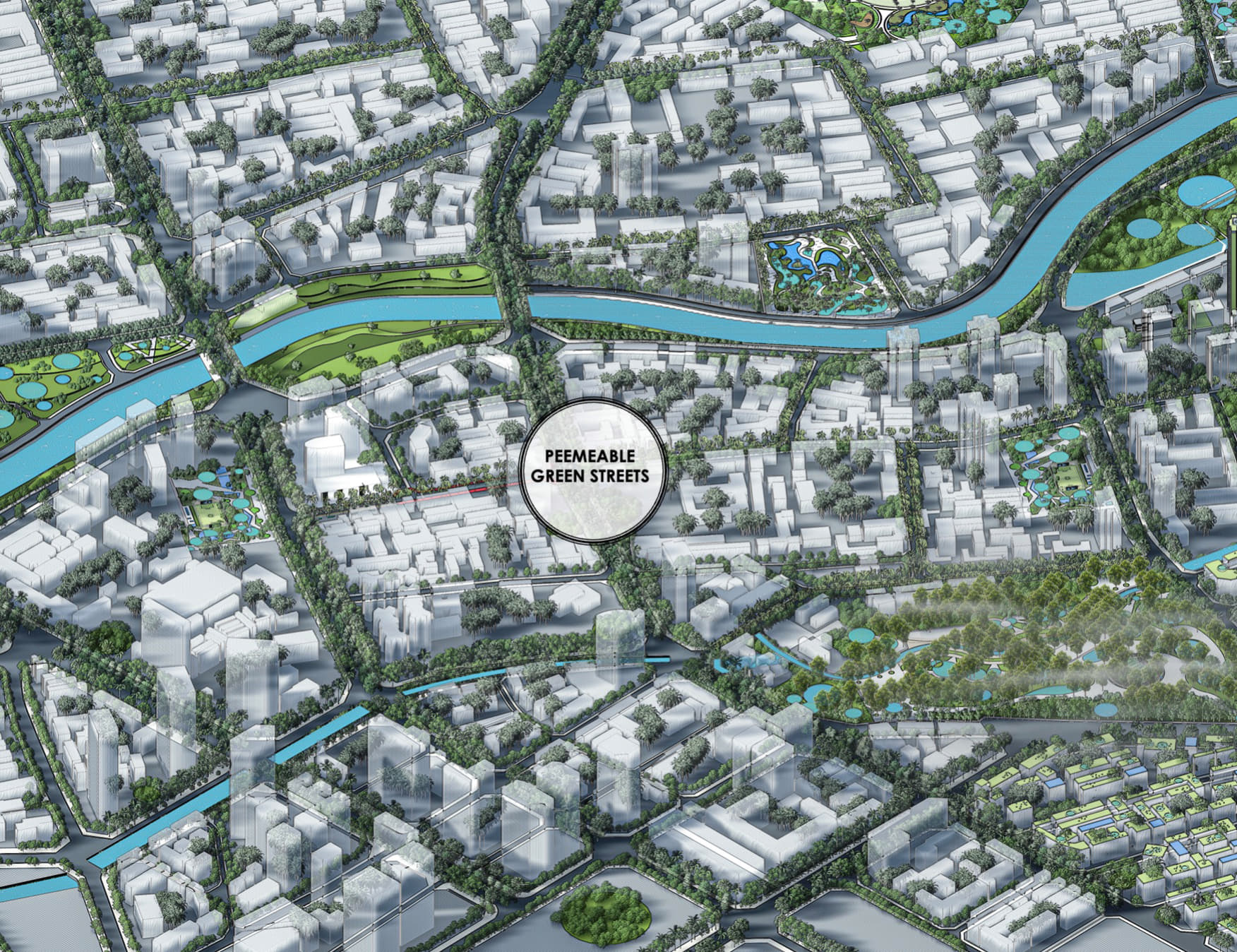
Most of urban agglomerations in ASEAN require such approach with tactical pilot projects.