
Natural Timber Groyne

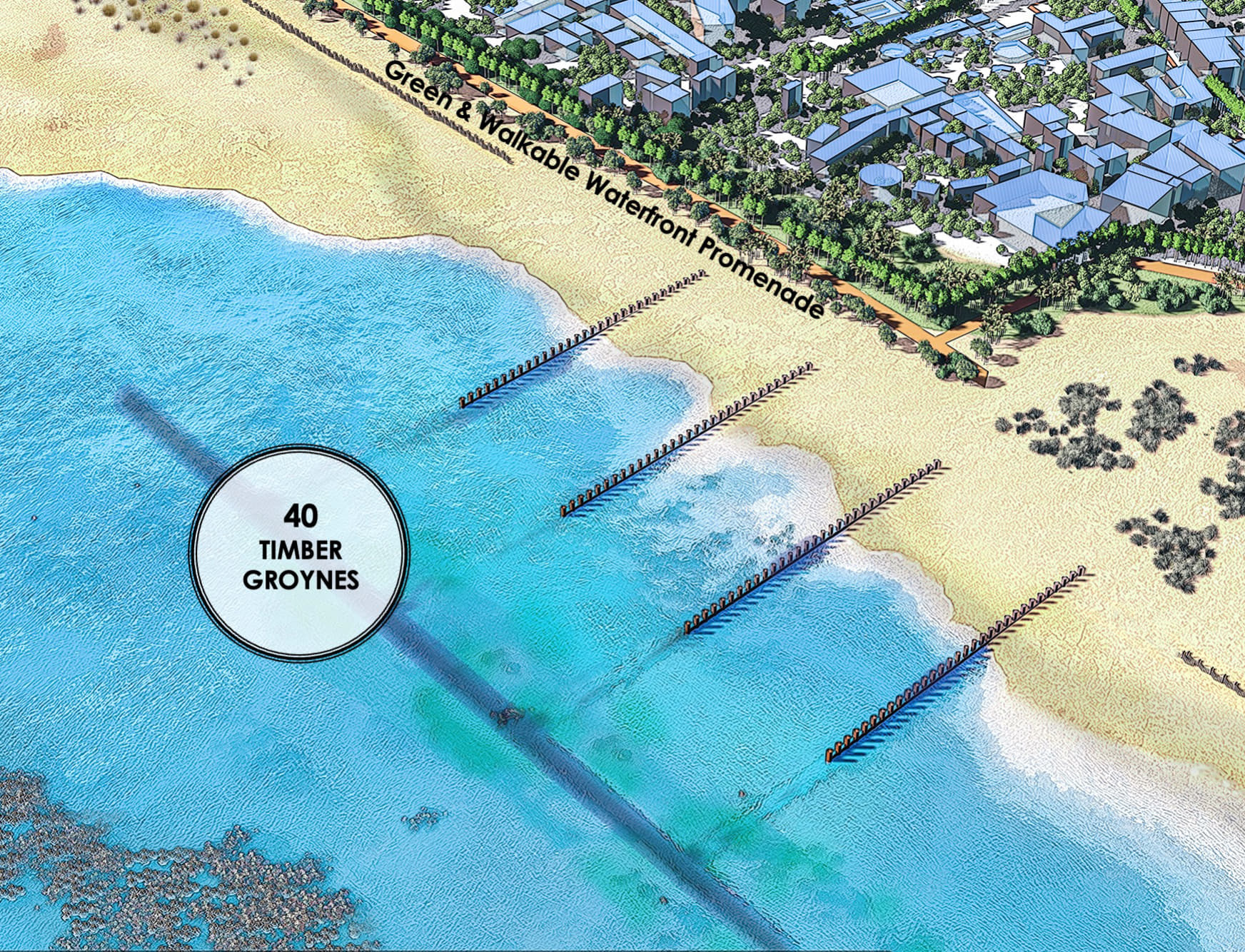
Natural timber groynes are soft solutions that use eco-friendly and locally-sourced hardwood, designed to manage erosion and stabilize shifting sands.

These structures are installed perpendicular to the shore, interrupting wave action and reducing sand movement along the beach. By integrating biodegradable mats or mesh, timber groynes provide additional stabilization, helping accumulate sand and support dune growth, while blending harmoniously with the coastal environment.

Similar to reef restoration, these projects can take a “coast-scape” approach, linking groyne systems with nearby seagrass and mangroves to form an interconnected habitat that limits sediment runoff, improves water clarity, and enhances biodiversity.


  • Ecosystem based adaptation
  • Ecosystem based disaster risk reduction
  • Integrated coastal zone management
  • Green infrastructure developement
Soil Erosion Soil Erosion
Biodiversity Loss Biodiversity Loss
Flood Control Flood Control
Disaster Risk Reduction Disaster Risk Reduction

SUPPORTING

  • Creates structured habitats on sandy beaches that support coastal vegetation, invertebrates, and shorebirds.
  • Links beach habitats with adjacent ecosystems, like seagrass beds and mangroves, enhancing nutrient flow and species movement.

REGULATING

  • Acts as natural barriers, reducing wave energy, stabilizing sand, and preventing shoreline erosion.
  • Helps trap sediments and reduces sediment runoff into coastal waters, improving water clarity.
  • Vegetation around groynes captures carbon, supporting climate mitigation.

PROVISIONING

  • Provides shelter and breeding grounds for coastal species and stabilizes dune plants crucial for beach resilience.
  • Groynes made from sustainably harvested timber contribute to renewable resource use.

SOCIAL BENEFITS

  • Enhances scenic beauty, supporting beach-based tourism and recreational activities.
  • Reduces risk of storm surge damage, contributing to the resilience of coastal settlements.
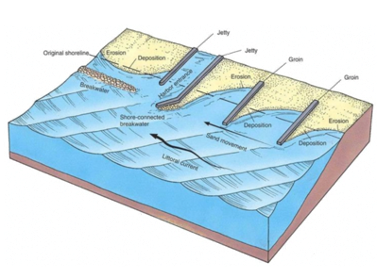
NbS40_Coastal Groins California
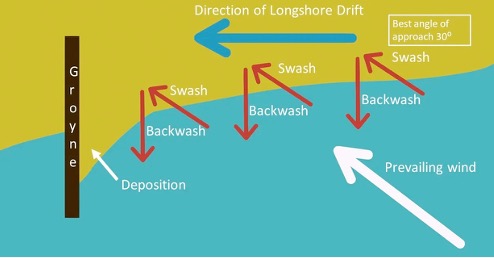
NbS40_Groyne Scheme
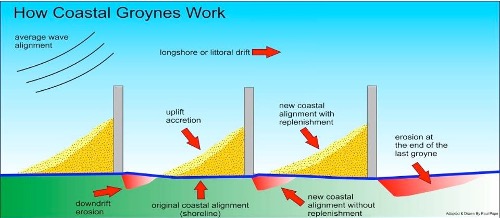
NbS40_How Coastal Groynes Grow Work
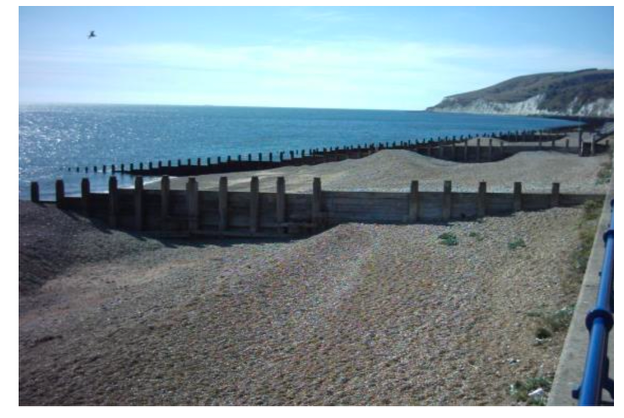
NbS40_Timber Groynes Eastbourne

Timber Degradation: Exposure to saltwater and marine organisms can quickly degrade timber, shortening the groyne’s lifespan and necessitating regular maintenance and repair.

Wave and Storm Damage: High-energy waves and storm surges can displace or damage timber groynes, especially in unprotected areas.

Sand Accumulation Imbalance: Groynes can cause uneven sand buildup, potentially leading to erosion in adjacent areas, requiring precise design and placement to avoid negative impacts on nearby shorelines.

Biodiversity Conservation

Measure the variety and population of coastal species (such as fish, invertebrates, and birds) in areas with timber groynes compared to unprotected beaches.

Coastal Protection

Reduction in coastal erosion over time by comparing areas with and without timber groynes.

Water Quality Improvement

Measure the reduction in sedimentation and improvement in water clarity in the vicinity of groynes.

Habitat Connectivity

Assess the movement of species between groynes and adjacent ecosystems like seagrass beds or mangroves.

Community Engagement

Income generated from eco-tourism activities such as nature walks, birdwatching, or beach visits.

Direct Costs

Materials, labor, equipment, permits : $4,000–$10,000 per groyne.

Indirect Costs

Studies, maintenance, disruptions : $6,500–$19,500 (initial), $500–$1,500 annually.

Time Horizon

3–6 months for planning and installation. 10–20 years (depending on timber durability and environmental conditions).

Direct Benefits

Erosion control, flood protection.

Indirect Benefits

Biodiversity support, tourism and recreation, enhanced ecosystem services.

Risk Assessment

Potential for altering sediment dynamics downstream, high maintenance costs due to timber degradation in tropical climates.

REFERENCES

Netherlands,Zeeland coast.

UK, Cley Next the Sea, Norfolk South Walney, Cumbria Eastbourne

IMPLEMENTATION OPPORTUNITIES

Philippines, Luzon: Particularly around areas that are vulnerable to coastal erosion.

Indonesia, Bintan Island: areas around Trikora Beach could benefit from timber groynes.