
Mangrove Forest Restoration

Mangrove Forest Restoration focuses on rehabilitating tropical and subtropical coastal ecosystems dominated by salt-tolerant mangrove trees.

These forests are critical for supporting biodiversity, providing nursery habitats for marine life, protecting coastlines from erosion and storm surges, improving water quality, and storing significant amounts of carbon.

Restoration efforts often involve replanting native mangrove species, restoring natural tidal hydrology, and removing barriers such as dikes or seawalls that hinder water flow. In areas where soil degradation or erosion has occurred, sediment enhancement or stabilization techniques may be employed to create suitable conditions for mangrove regrowth.

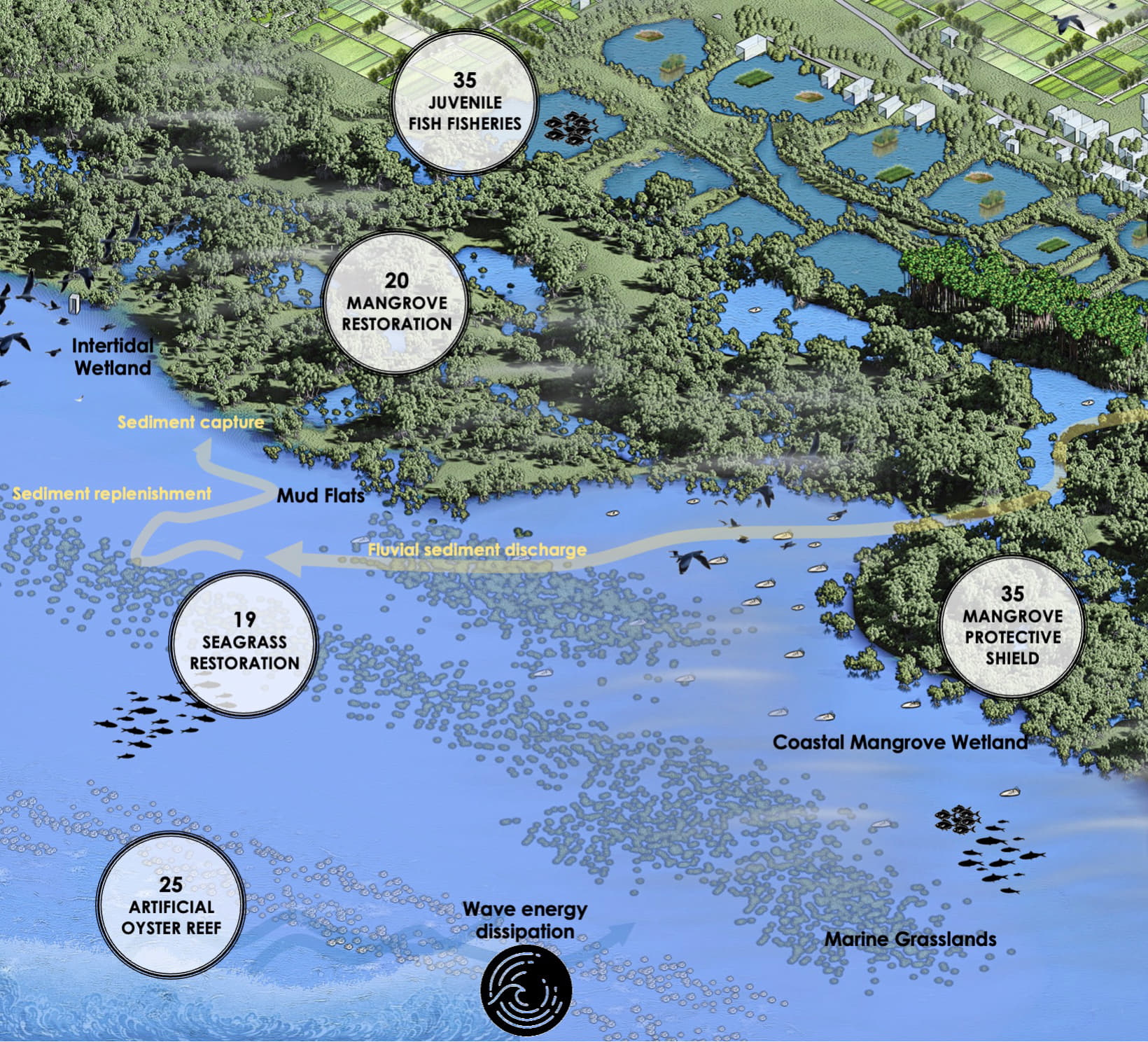
Successful projects typically adopt a holistic approach, connecting mangroves with adjacent ecosystems like salt marshes, seagrass beds, and coral reefs to establish resilient and interconnected coastal landscapes.


  • Ecosystem based adaptation
  • Ecosystem based disaster risk reduction
  • Ecosystem restoration
  • Integrated coastal zone management
  • Forest landscape restoration
Disaster Risk Reduction Disaster Risk Reduction
Biodiversity Loss Biodiversity Loss
Flood Control Flood Control
Carbon Sequestration Carbon Sequestration
Food Security Food Security

SUPPORTING

  • Serve as nurseries and breeding grounds for fish, crustaceans, and other marine species.
  • Play a key role in nutrient cycling, recycling organic matter and maintaining soil fertility in coastal areas.
  • Contribute to high rates of carbon sequestration and biomass production.

REGULATING

  • Act as natural barriers against storm surges, tsunamis, and coastal erosion.
  • Sequester large amounts of carbon, reducing greenhouse gas emissions.
  • Filter pollutants, sediments, and nutrients, improving water quality and reducing eutrophication in coastal waters.
  • Regulate tidal flows and reduce the risk of coastal flooding during extreme weather events.

PROVISIONING

  • Source of wood for construction, firewood, and traditional practices.
  • Harvest of honey, medicinal plants, and tannins derived from mangrove bark.
  • Enhances productivity of nearby aquaculture farms by maintaining water quality and providing habitat for aquaculture species.

SOCIAL BENEFITS

  • Support traditional fishing communities and local economies dependent on mangrove resources.
  • Serve as living laboratories for environmental education, promoting awareness of coastal conservation and climate resilience.
NbS20_Mangrove Forest Restoration and Growth
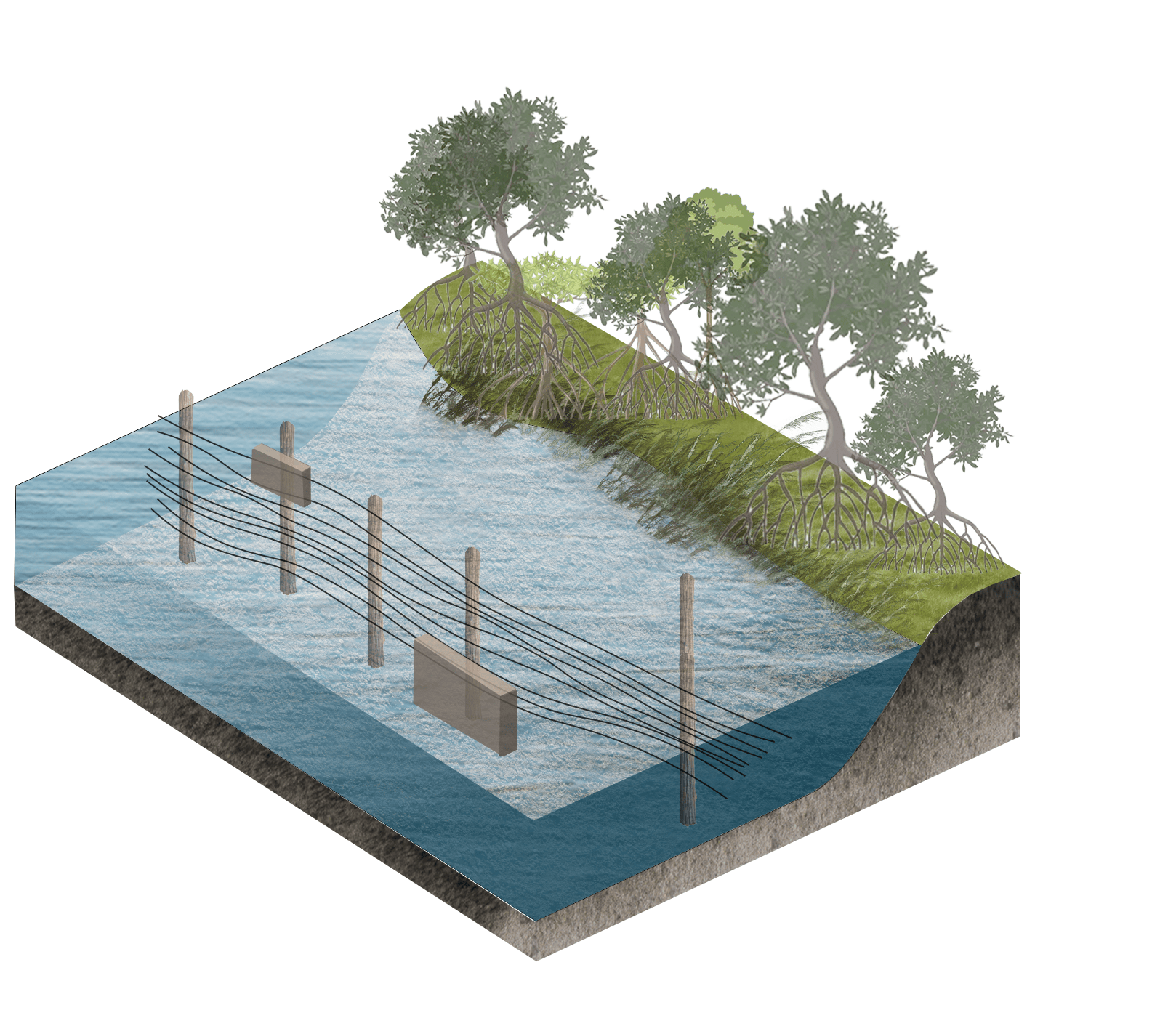
NbS20_Water Permeable Dam for Sediment Filtering

Site Unsuitability: Restoring mangroves in areas with altered hydrology, poor soil conditions, or excessive erosion can lead to project failure.

Biodiversity Imbalance: Poor species selection or monoculture planting can lead to reduced ecological diversity and functionality.

Conflicting Land Use: Mangrove restoration often competes with other land uses such as aquaculture, agriculture, or urban development.

Overreliance on Planting: Some projects focus too heavily on planting mangroves without addressing underlying ecological issues, such as hydrology or sediment flow.

Biodiversity Enhancement

Increased species richness and abundance of flora and fauna, presence of indicator species such as mangrove crabs, fish, or birds.

Carbon Sequestration

Rate of carbon dioxide absorption by restored mangroves, reduction in greenhouse gas emissions from adjacent degraded areas.

Improved Ecosystem Connectivity

Movement patterns of marine species across restored habitats.

Disaster Risk Reduction

Decrease in damages caused by storm surges and tidal flooding, reduced coastal erosion and land loss.

Sustainable Fisheries and Aquaculture

Increased fish and shellfish catch volume and diversity, improved yields from aquaculture farms near mangrove areas.

Direct Costs

Planning, planting, restoration, hydrological improvements, maintenance : $26K to $160K/ha.

Indirect Costs

Opportunity costs, community engagement and education, governance.

Time Horizon

Short-term (1-5 years): Initial planting, monitoring, and immediate community benefits. Long-Term (20+ years): Full ecosystem services.

Direct Benefits

Biodiversity recovery, coastal protection, carbon sequestration.

Indirect Benefits

Improved livelihoods, climate resilience, air quality improvement.

Risk Assessment

Hydrological risks, storms and natural disasters, invasive species, financial risks.

REFERENCES

Indonesia, Mahakam Delta, Total E&P

Indonesia planted over 3.5 million mangrove trees, covering an area of 646 hectares.

Singapore, Pulau Tekong, The National Parks Board (NParks) initiated coastal protection and restoration works.

IMPLEMENTATION OPPORTUNITIES

Philippines, Palawan, UNESCO Biosphere Reserve.

Myanmar, the Ayeyarwady Delta has lost extensive mangrove cover due to agriculture, shrimp farming, and timber extraction.