
Managed Aquifer Recharge (mar)

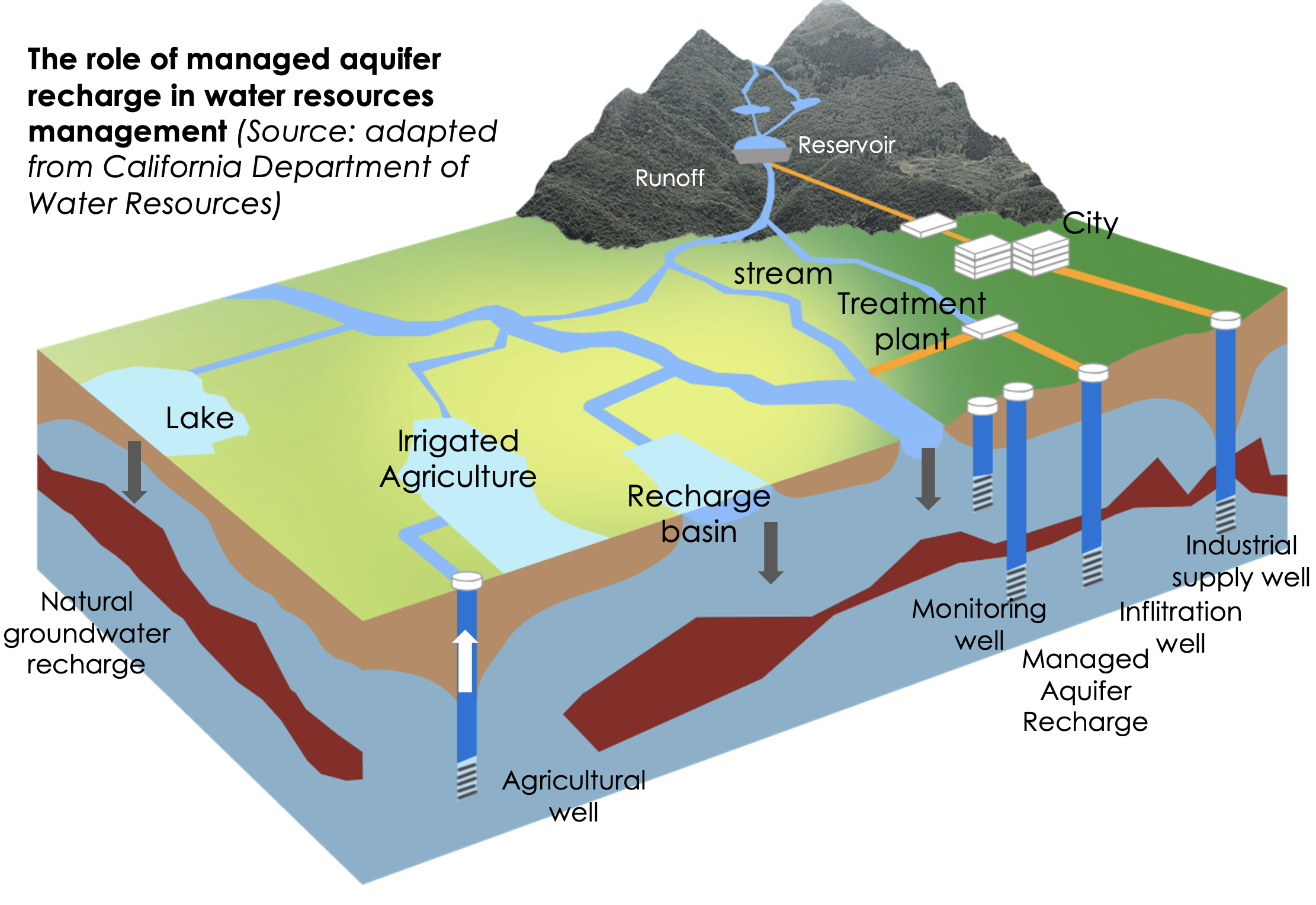
Managed Aquifer Recharge (MAR) is a nature-based solution (NbS) that uses surface water to replenish aquifers, enhancing water availability and providing environmental benefits.

In Southeast Asia, where challenges like seasonal rainfall variability, groundwater overuse, saltwater intrusion, and water quality issues are common, MAR offers a sustainable approach. By storing water underground, MAR minimizes evaporation losses and ensures reliable water supplies, especially in drought-prone regions.

MAR restores depleted aquifers, prevents land subsidence, and mitigates saltwater intrusion. It also improves water quality through methods like bank filtration and surface infiltration. Ecologically, MAR supports aquatic ecosystems and preserves natural hydrological cycles.

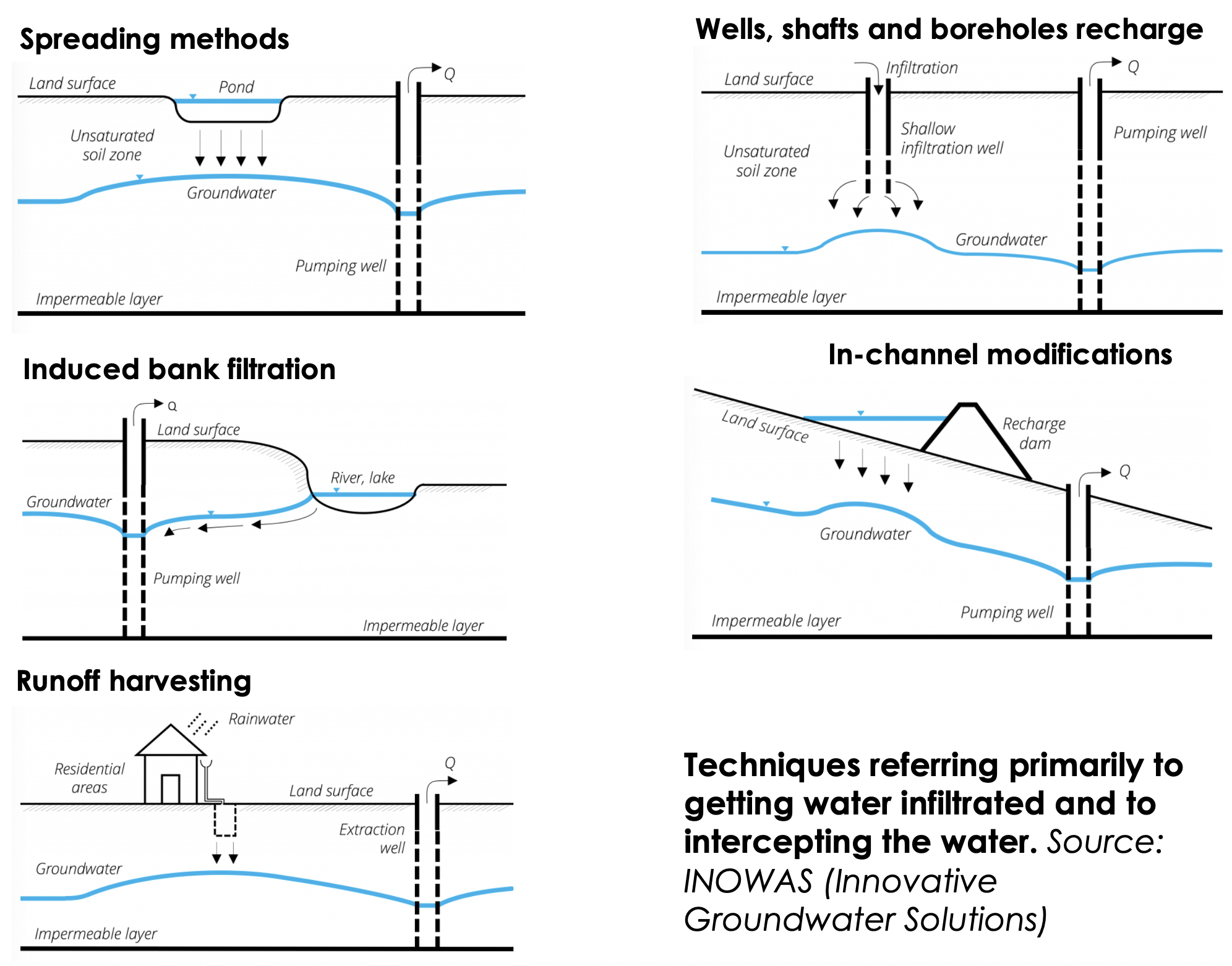
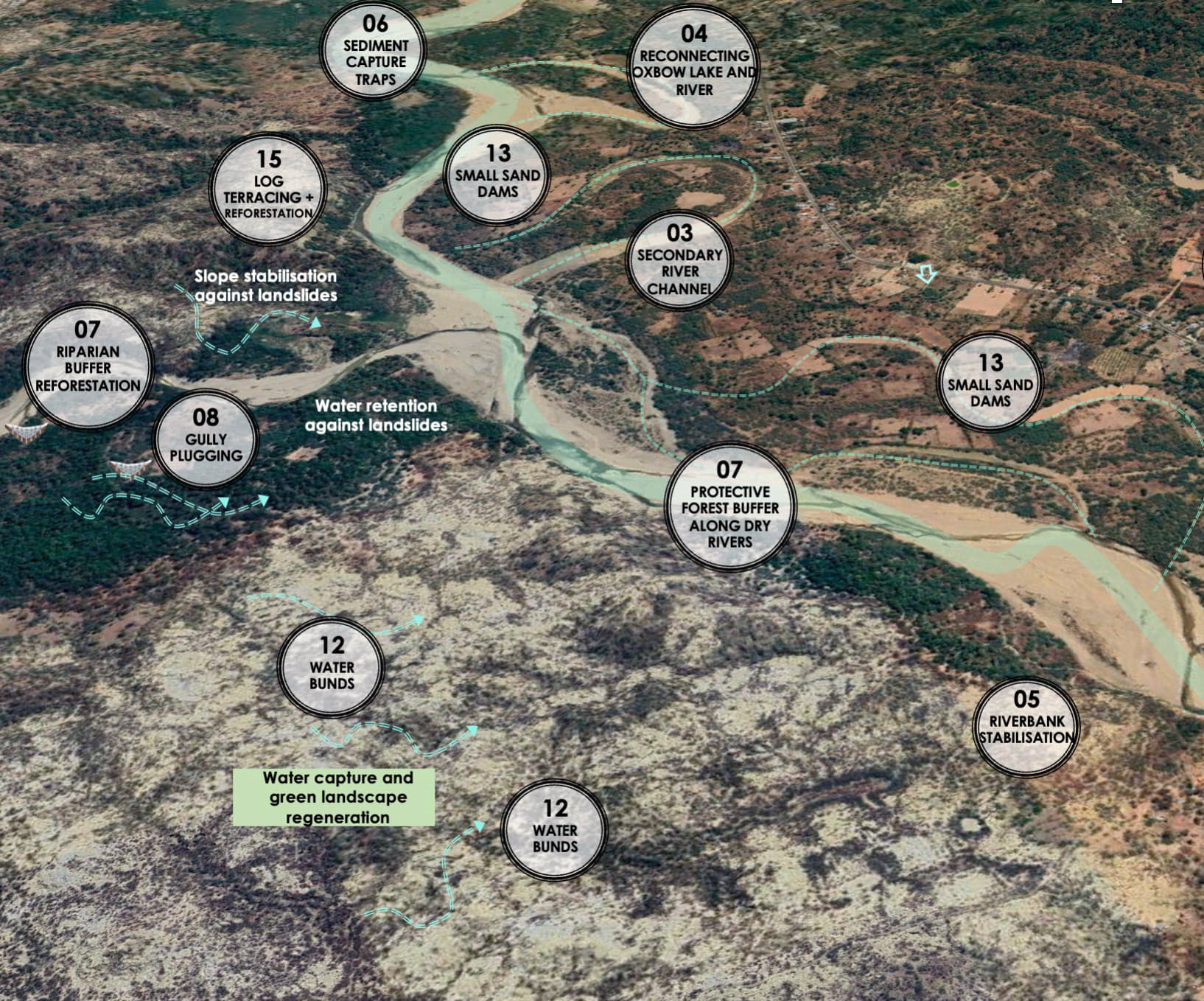
Techniques include infiltration ponds, recharge dams, and runoff harvesting to enhance water infiltration and manage stormwater. For areas with low-permeability soils, direct injection via wells or boreholes replenishes aquifers. MAR reduces reliance on surface reservoirs, cutting infrastructure costs while securing water for agriculture, industry, and households.




  • Flood and stormwater management
  • Water storage and regulation
  • Soil & water regeneration
  • Water quality improvement
  • In stream flow maintenance
Soil Erosion Soil Erosion
Biodiversity Loss Biodiversity Loss
Flood Control Flood Control
Disaster Risk Reduction Disaster Risk Reduction
Food Security Food Security

SUPPORTING

  • Soil and Water Regeneration: MAR supports soil moisture retention and prevents erosion, which enhances soil fertility and agricultural productivity.

REGULATING

  • Flood and Stormwater Management: By intercepting runoff and enhancing infiltration through recharge dams and sand dams, MAR helps reduce flood risks and improves water quality by filtering stormwater.

PROVISIONING

  • Water Storage and Supply: MAR provides a reliable underground water storage system, ensuring water availability during dry seasons and supporting agriculture, industry, and domestic water use.

SOCIAL BENEFITS

  • Community Engagement: MAR promotes local participation in water management, creating opportunities for community involvement and strengthening resilience.
NbS10_Role of Managed Aquifer Recharge in Water Resources Management
NbS10_Techniques-of-Water-Infiltration-and-Interception

Hydrological Uncertainty: Variability in regional hydrogeology and rainfall patterns can complicate the accurate assessment of recharge potential and long-term effectiveness of MAR systems.

Water Quality Risks: Inadequate monitoring and treatment of water used for recharge may lead to the contamination of aquifers with pollutants or pathogens, affecting water quality.

Clogging and Maintenance Issues: Over time, clogging of recharge infrastructure, such as wells and infiltration ponds, can reduce efficiency, requiring regular maintenance and intervention.

Improved Water Security

Increased groundwater levels and sustained water supply during dry seasons.

Enhanced Agricultural Productivity

Increased crop yield due to improved soil moisture availability from groundwater recharge.

Flood Mitigation

Reduced flood events and damage in areas with MAR interventions like recharge dams and sand dams.

Water Quality Improvement

Decreased levels of pollutants and improved water clarity in recharged aquifers.

Coastal Resilience

Reduced incidences of saltwater intrusion in coastal aquifers, improving freshwater availability.

Climate Change Adaptation

Increased resilience to droughts and extreme weather events as a result of enhanced groundwater storage.

Direct Costs

Wells, recharge ponds, and pumps have an average cost range of $100k to $300k per project (depending on scale).

Indirect Costs

Maintenance costs, monitoring, and long-term management, estimated at $10k to $50k/year.

Time Horizon

Typical time horizon is 20-30 years, with a discount rate ranging from 3% to 7% based on local economic conditions.

Direct Benefits

Increased water availability.

Indirect Benefits

Enhanced agricultural productivity and flood mitigation

Risk Assessment

Risks of clogging, water quality degradation, and hydrological uncertainty.

REFERENCES

Vietnam, Mekong Delta Integrated Climate Resilience and Sustainable Livelihoods Project.

Indonesia, The Mara River Basin Groundwater Recharge Project.


IMPLEMENTATION OPPORTUNITIES

Vietnam, coastal regions, Mekong Delta.

Indonesia, Bali.

Philippines, Mindanao.

Southeast Thailand, Chonburi, Rayong.