
Gully Plugging

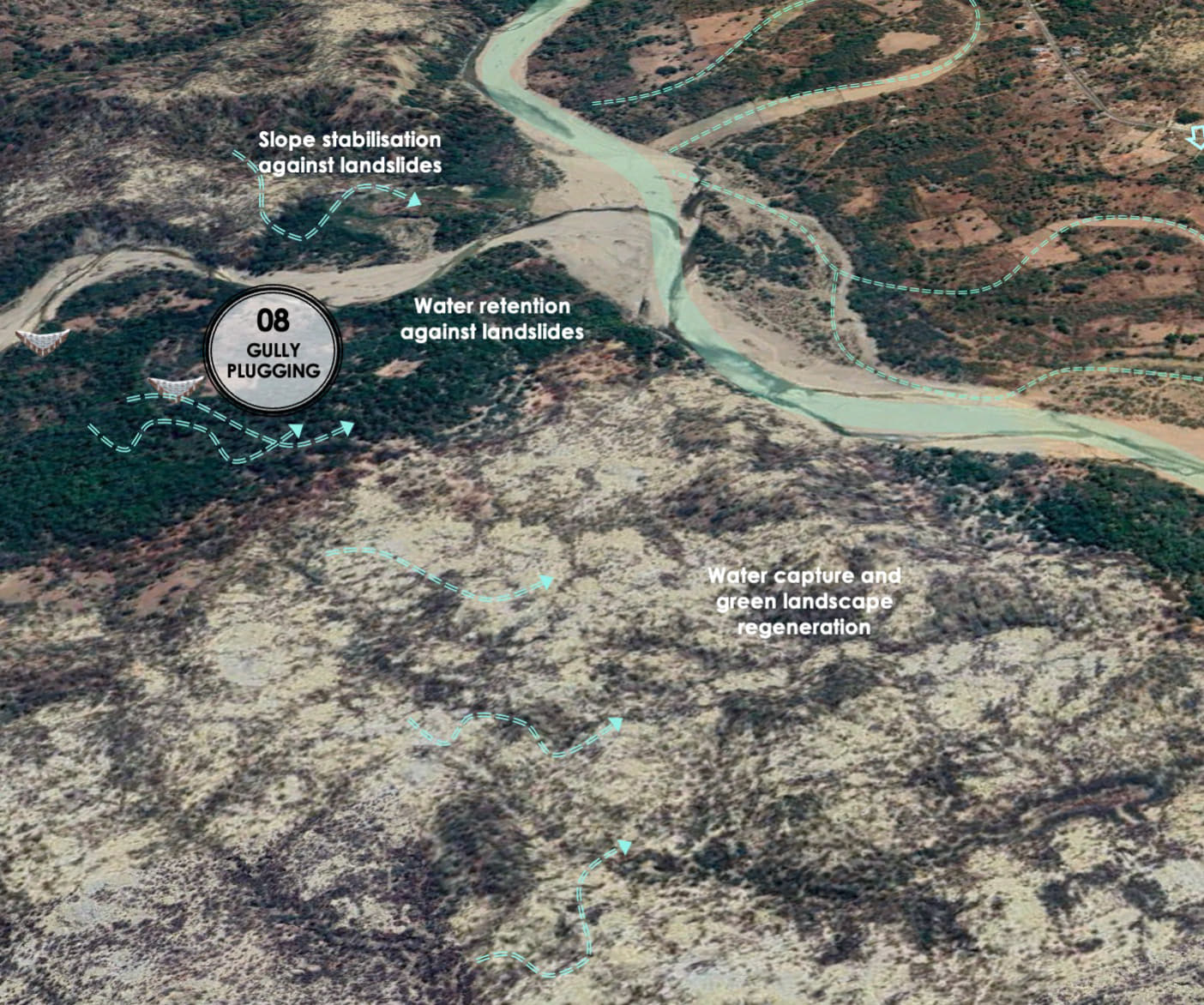
Gully plugging is a low-cost, nature-based solution (NbS) designed to slow water flow, reduce erosion, and promote sediment deposition, particularly in hilly or mountainous regions.

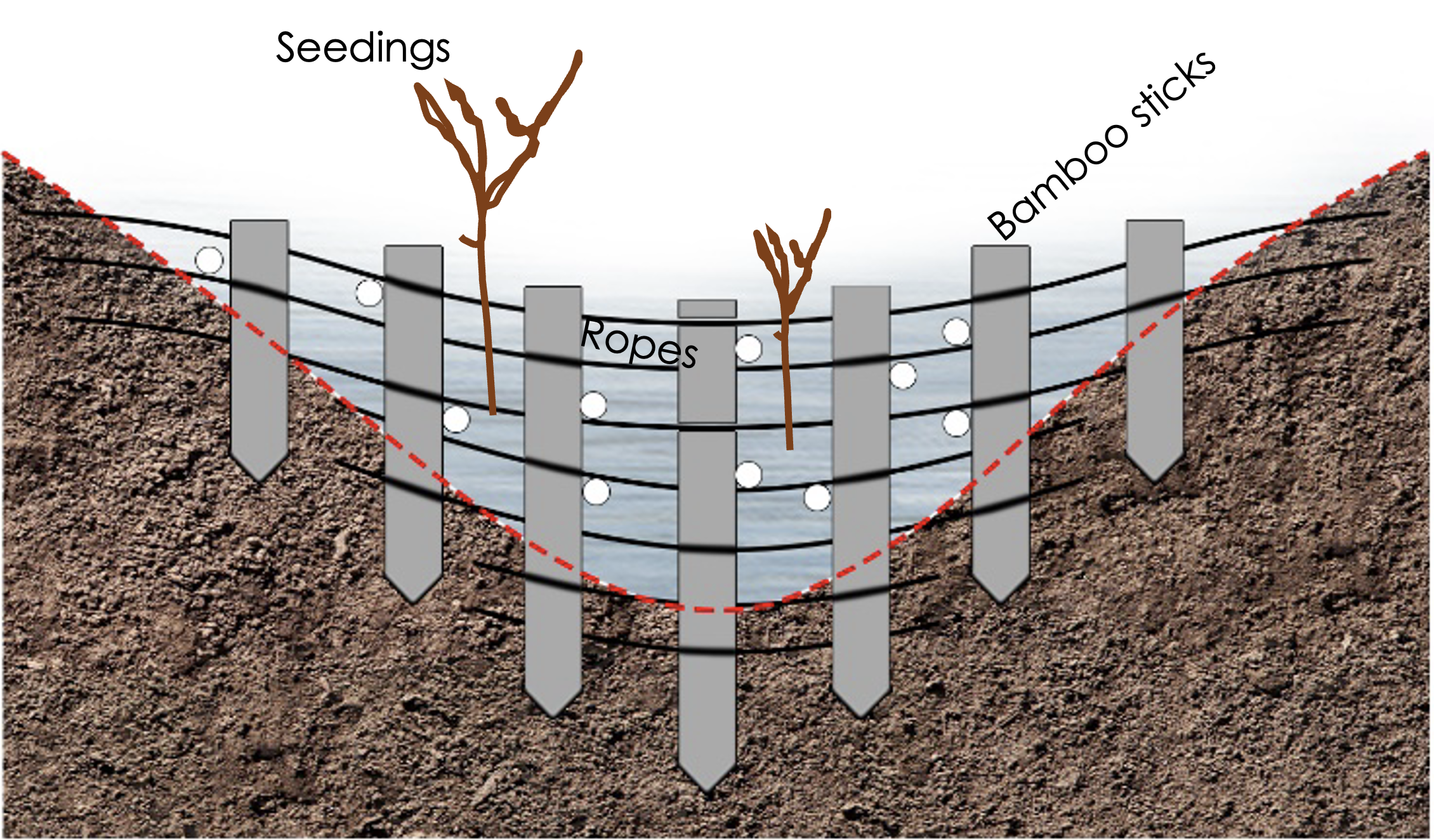
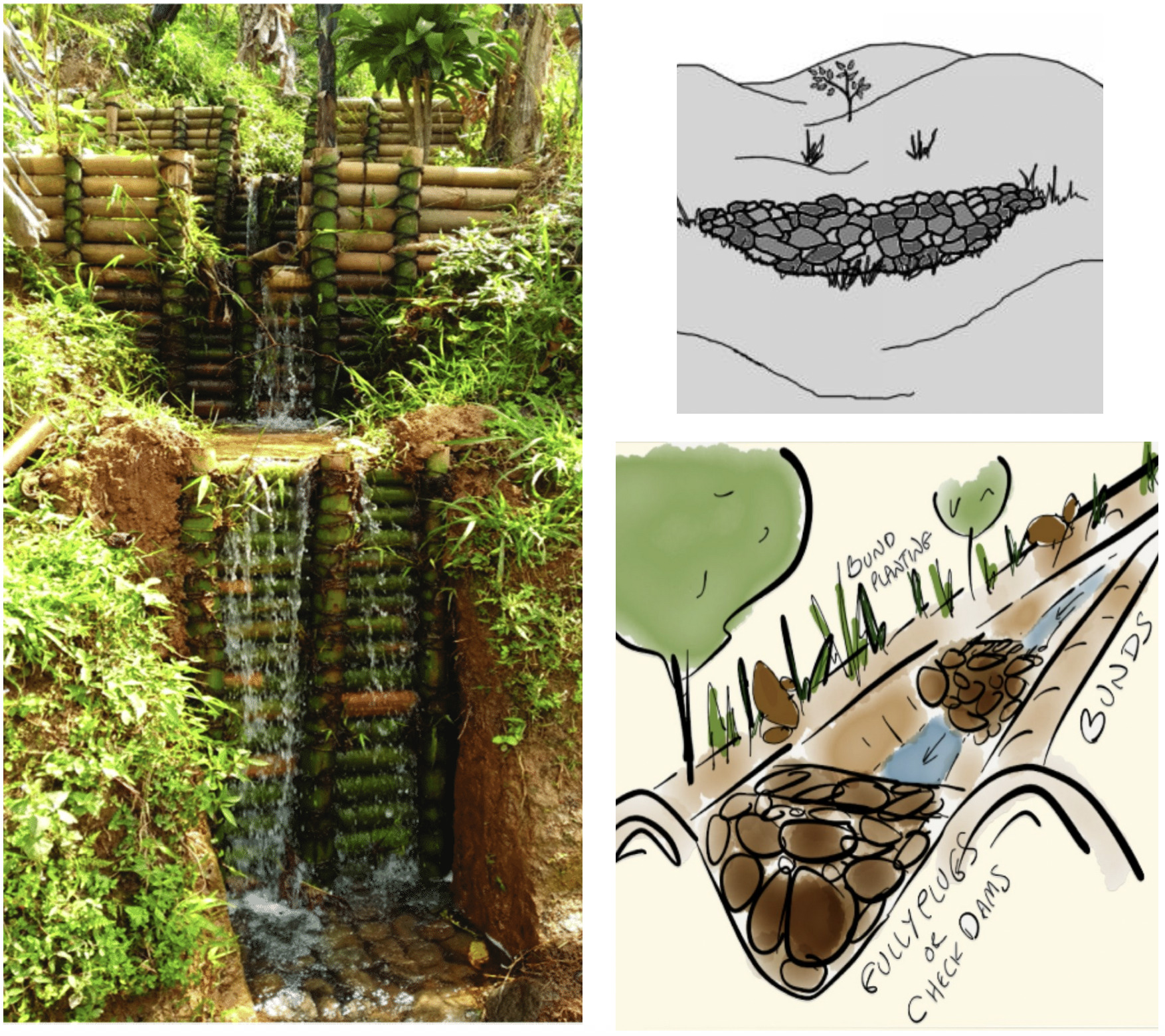
It involves constructing small barriers across gullies using locally sourced materials like bamboo and stones, which are abundant and sustainable. Bamboo gully plugs are lightweight, biodegradable, and effective in trapping sediment and fostering vegetation growth, though they require periodic maintenance due to material degradation.

Stone gully plugs, on the other hand, are more durable, handle higher water flows, and provide a semi-permeable barrier that allows water infiltration while retaining soil upstream.

Both approaches are often complemented by planting vegetation on slopes to further stabilize soil, enhance water retention, and increase long-term resilience. Similar NbS, such as check dams and contour bunding, also address erosion control and water management, making them applicable in regions like Indonesia and the Philippines, where heavy rainfall and steep slopes exacerbate soil degradation. Gully plugging supports regenerative agriculture by restoring degraded land, reducing sedimentation in downstream waterways, promoting groundwater recharge, and improving the sustainability of rural livelihoods.


 

  • Erosion control & soil conservation
  • Integrated watershed management
  • Sustainable water management
  • Agroecological restoration
Soil Erosion Soil Erosion
Flood Control Flood Control
Disaster Risk Reduction Disaster Risk Reduction
Food Security Food Security

SUPPORTING

  • Enhances soil formation and fertility by reducing erosion and promoting sediment deposition.

REGULATING

  • Regulates water flow, reducing runoff velocity and increasing groundwater recharge.

PROVISIONING

  • Provides improved soil conditions for agriculture, increasing crop productivity in downstream areas.

SOCIAL BENEFITS

  • Reduces the risk of floods and landslides, improving community resilience to climate extremes.
NbS8_Gully plug section with text
NbS8_Gully plug section

Material degradation: Bamboo gully plugs may degrade quickly in tropical climates, requiring frequent maintenance and replacement.

Extreme weather events: Intense rainfall or flash floods can overtop or destroy gully plugs, reducing their effectiveness.

Sediment clogging: Accumulated debris and sediment can block water flow, necessitating regular cleaning and monitoring.

Community engagement: Lack of local awareness or involvement in construction and maintenance can lead to project neglect or failure.

Erosion control

Reduction in annual soil loss by up to 50% in treated gullies.

Groundwater

Increased water table levels by 10–20% in adjacent areas.

Biodiversity enhancement

Growth of native vegetation and habitat restoration along gullies within 1–2 years.

Flood mitigation

Reduction in peak runoff flow during heavy rainfall events by 30–40%.

Agricultural productivity

Improved crop yields by 15–25% in downstream areas due to better soil quality.

Community benefits

Engagement of 50–100 households in gully plugging projects, creating jobs and raising environmental awareness.

Direct Costs

Gully plugging construction costs range from $2000 per structure, depending on materials like bamboo or stones.

Indirect Costs

Maintenance, monitoring, and community training can add $500–$1,000 per year per site.

Time Horizon

Benefits typically accrue over 10–20 years with a discount rate of 5–7% for cost-benefit analyses.

Direct Benefits

Soil retention and improved land productivity.

Indirect Benefits

Groundwater recharge and biodiversity enhancement contribute to long-term ecosystem services.

Risk Assessment

Potential failure under extreme floods.

REFERENCES

India, Maharashtra, Integrated Watershed Management Program.

Indonesia, Yogyakarta, GunungkidulRainwater Harvesting and Gully Plugging Project.

IMPLEMENTATION OPPORTUNITIES

Northern Thailand (Chiang Mai and Mae Hong Son Provinces).

Philippines, Central Luzon.

Southern Laos, Bolaven Plateau.