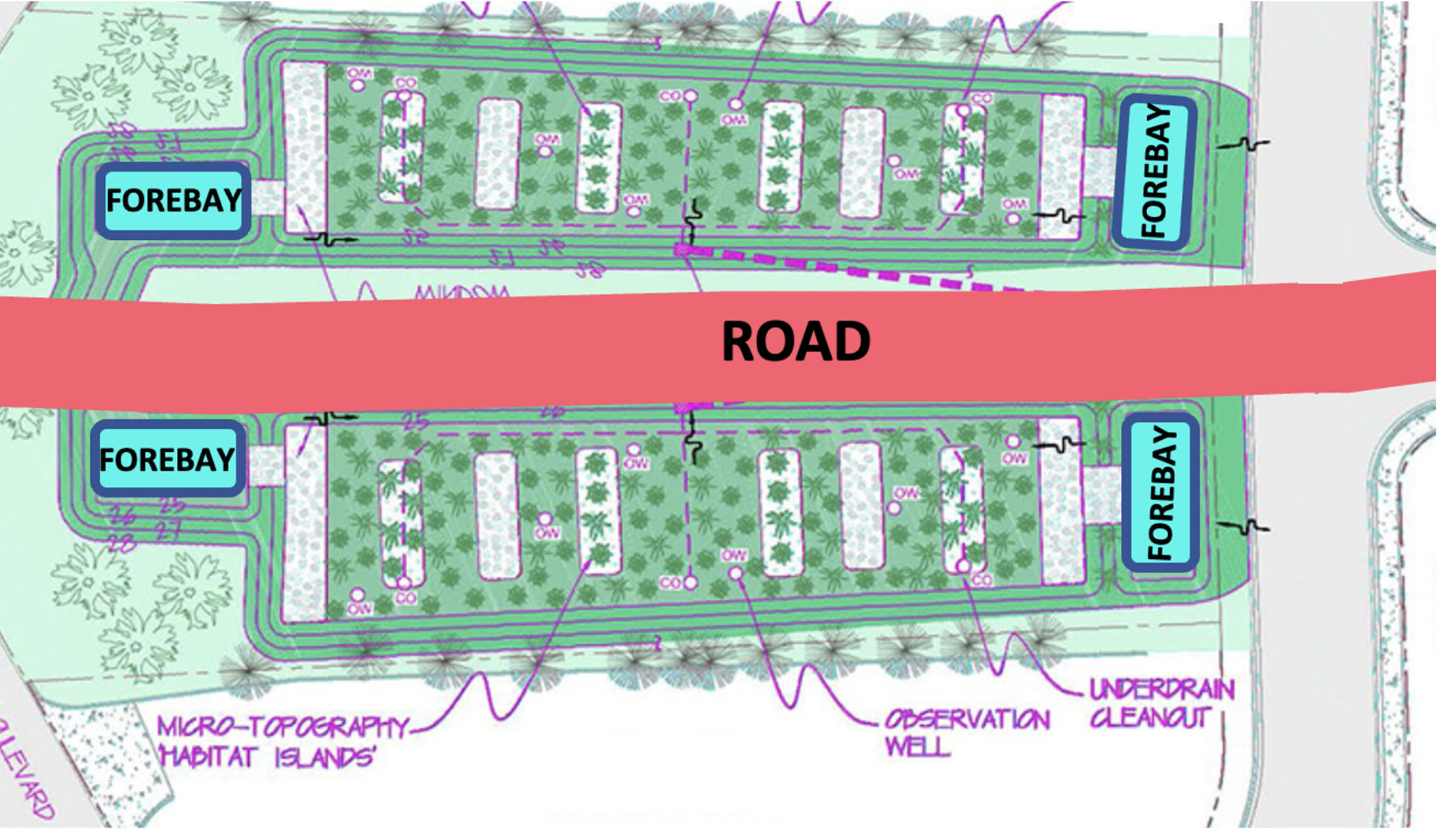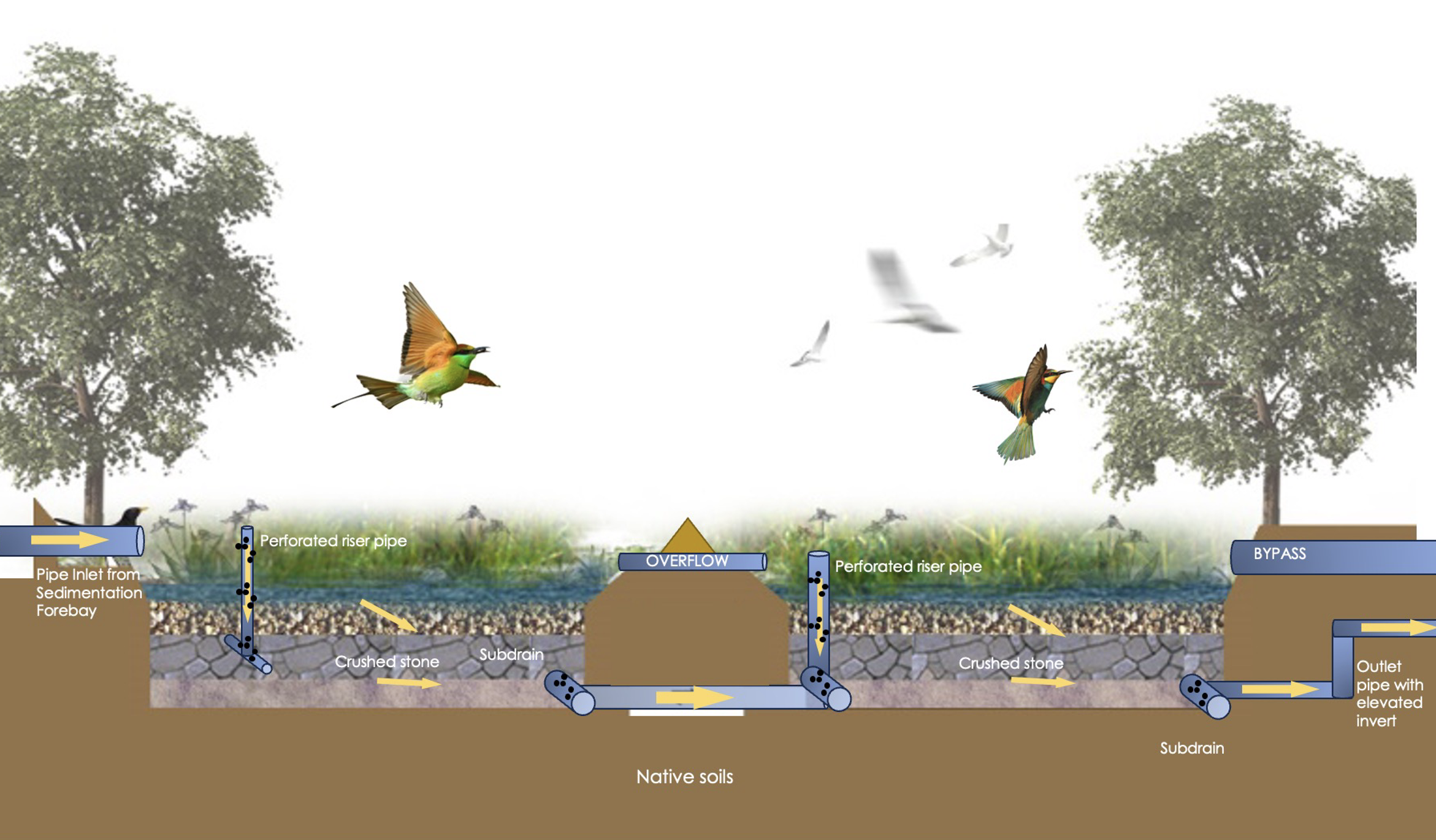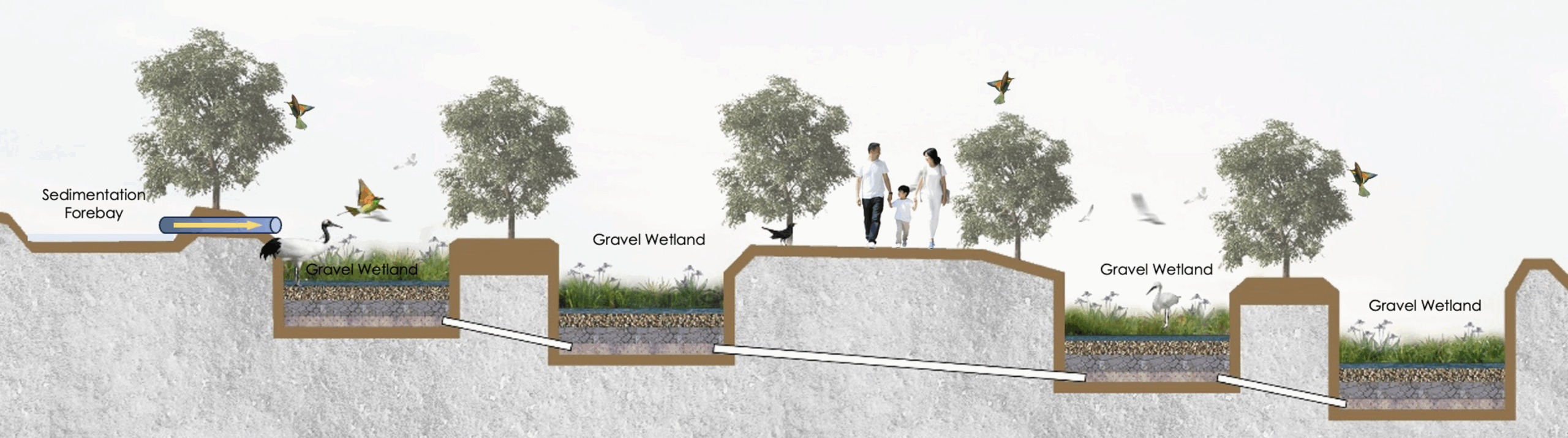

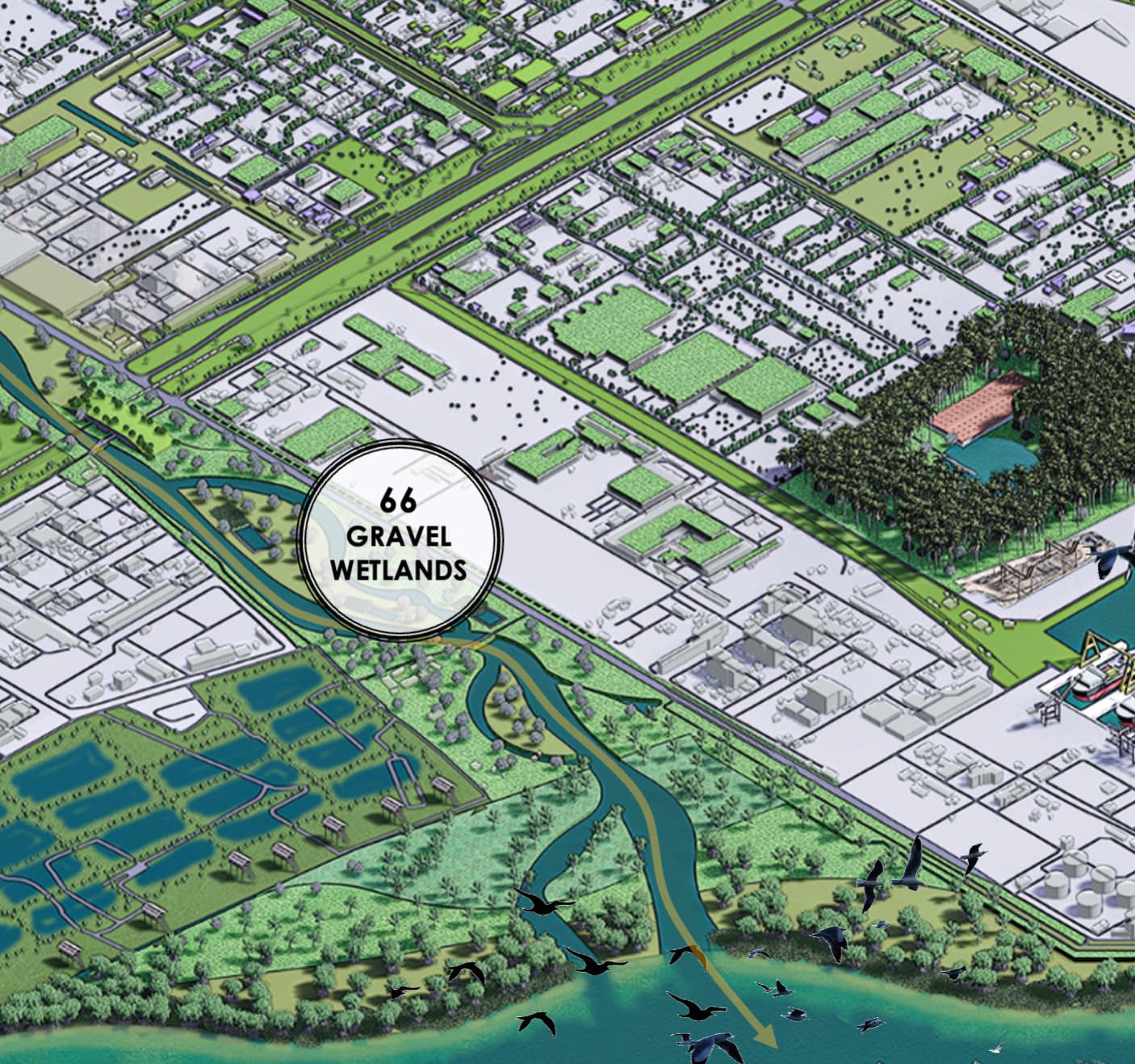
Gravel wetlands are engineered systems designed to mimic the functions of natural wetlands by using gravel substrates, vegetation, and microbial activity to manage stormwater, treat wastewater, and enhance biodiversity.
These systems are particularly suited for implementation along roadsides in urban, industrial, and rural areas of Southeast Asia, where rapid urbanization and industrial expansion have increased water pollution and flood risks.
Technically, gravel wetlands filter pollutants, trap sediments, and remove nutrients such as nitrogen and phosphorus, making them effective for water quality improvement.They enhance urban and rural aesthetics, create green buffers along roads, and stabilize soils to prevent erosion. Socially, gravel wetlands provide co-benefits such as recreational spaces, educational opportunities, and improved resilience against climate impacts like flooding and heat stress.
By combining ecological functionality with landscape and community benefits, gravel wetlands offer a sustainable, low-maintenance solution that supports the region’s environmental and social priorities.