
Floating Treatment Wetlands (ftw) & Phytofiltration

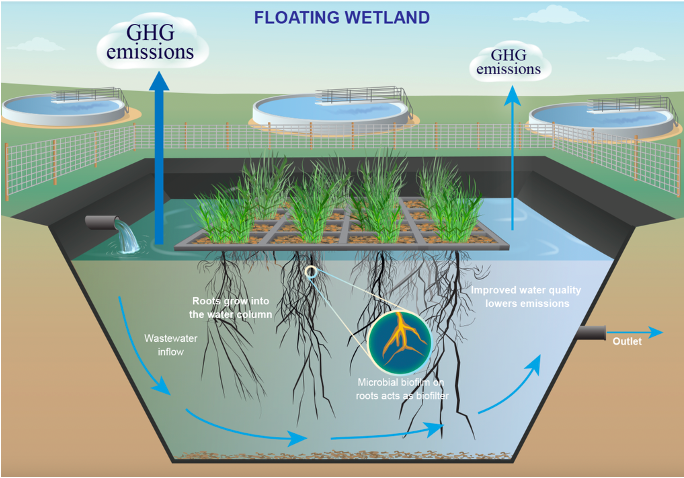
Floating Treatment Wetlands (FTWs) are a versatile NbS that excels in phytofiltration, providing effective water depollution, wastewater treatment, and ecosystem regeneration.

These systems feature buoyant platforms that support aquatic plants like reeds and vetiver grass, whose roots extend into the water to perform phytoremediation by absorbing excess nutrients, heavy metals, and organic pollutants.

In addition to their phytofiltration capabilities, FTWs enhance water quality by promoting biofilm activity, which breaks down contaminants, and by physically filtering suspended solids, improving water clarity.

Their application is particularly effective in post-mining landscapes, where they treat metal-laden wastewater and stabilize degraded aquatic ecosystems. FTWs also address agricultural runoff, mitigate eutrophication in urban waterways, and support regenerative aquaculture practices.

Beyond water treatment, FTWs contribute to the regeneration of soil and water systems, foster biodiversity, and provide sustainable uses for waste biomass in bioenergy or compost, promoting a circular economy.

Their low cost, adaptability to various environments, and potential for community participation make FTWs an attractive solution for restoring ecological balance, enhancing aesthetic value, and supporting livelihoods.

This holistic approach underscores their value as a Nature-based Solution for addressing Southeast Asia’s environmental and socio-economic challenges.


  • Phytoremediation & ecosystem restoration
  • Water quality management
  • Nutrient cycling
  • Sedimentation management
  • Integrated wastewater treatment
Soil Erosion Soil Erosion
Biodiversity Loss Biodiversity Loss
Flood Control Flood Control
Disaster Risk Reduction Disaster Risk Reduction
Carbon Sequestration Carbon Sequestration
Food Security Food Security

SUPPORTING

  • Enhance biodiversity by creating habitats for aquatic species, birds, and beneficial insects.
  • Support nutrient cycling through biofilm activity and plant-microbe interactions.

REGULATING

  • Improve water quality by removing nutrients (nitrogen, phosphorus), heavy metals, and pollutants through phytoremediation.
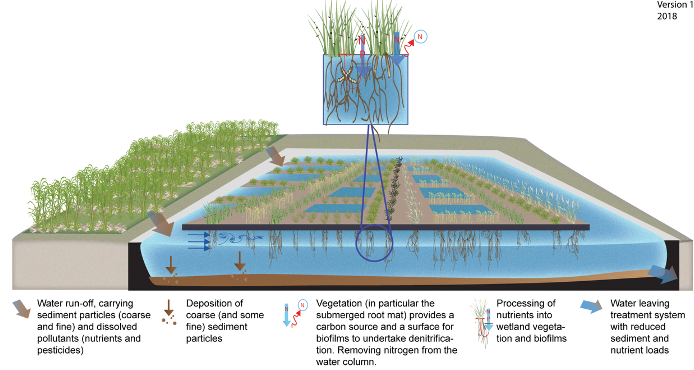
  • Reduce turbidity and sedimentation by trapping suspended solids and particulate matter in dense root networks.

PROVISIONING

  • Provide harvested biomass for use in bioenergy, compost, or sustainable agricultural practices.
  • Offer cleaner water for downstream agricultural, aquacultural, and industrial applications.

SOCIAL BENEFITS

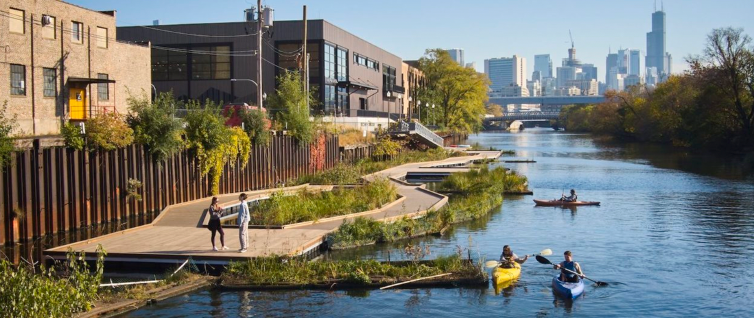
  • Enhance landscape aesthetics, contributing to urban and rural beautification and increased recreational value.
  • Promote community involvement in water quality management and ecosystem restoration, fostering environmental stewardship.
NbS51_FWT Section
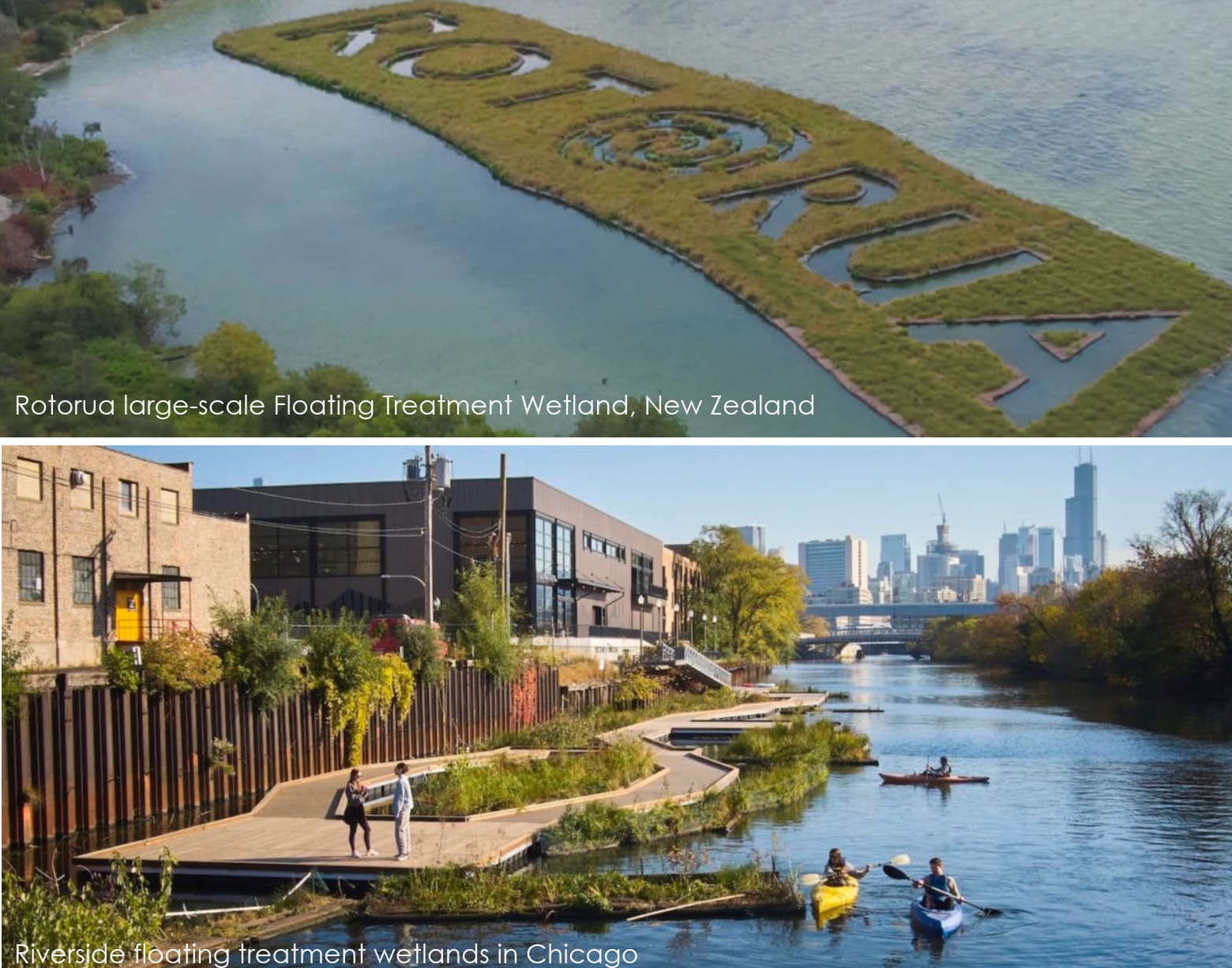
NbS51_Riverside FTW_Chicago
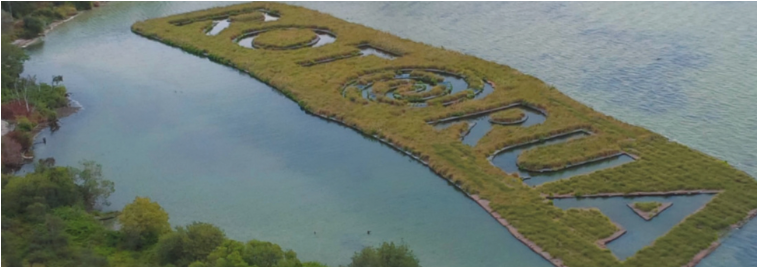
NbS51_Riverside Rotorua FTW_NZ
NbS51_Sediment and Nutrient Load Management

Climate Vulnerability: Extreme weather events such as typhoons and heavy rains can damage floating platforms and disrupt their functionality.

Heavy Metal Accumulation: Harvested biomass from phytoremediation may contain concentrated toxins, requiring careful disposal or reuse strategies to avoid secondary contamination.

Maintenance and Monitoring: Ensuring long-term performance requires consistent maintenance, monitoring, and community engagement, which may be resource-intensive in some regions.

Site Suitability: Inappropriate site selection, such as areas with strong currents or unstable water levels, can limit the effectiveness and stability of FTWs.

Biodiversity Enhancement

Increased species richness and abundance of aquatic organisms, birds, and insects in areas with FTWs.

Water Quality Improvement

Reduction in nutrient concentrations (e.g., nitrogen and phosphorus) and suspended solids in treated water.

Climate Resilience

Improved water quality and ecosystem stability during extreme weather events like floods and droughts.

Waste Recovery & Circular Economy

Amount of biomass harvested from FTWs repurposed for compost, bioenergy, or sustainable agriculture.

Aesthetic & Recreational Value

Increased community use and positive perceptions of water bodies enhanced with FTWs.

Community Engagement and Awareness

Number of local stakeholders participating in FTW installation, maintenance, or environmental education programs.

Direct Costs

Typically ranges from $40 to $100/m2, depending on materials, plant species, and site conditions.

Indirect Costs

Maintenance and monitoring costs can add $10 to $20/m2/year, including labor, biomass harvesting, and periodic repairs.

Time Horizon

FTWs could have a lifespan of 10–15 years with a typical discount rate of 5–10%

Direct Benefits

Water treatment cost savings can be valuable, especially in areas with high nutrient loads.

Indirect Benefits

Enhanced ecosystem services and biodiversity can lead to economic gains through tourism, fisheries, and improved agricultural productivity.

Risk Assessment

Possible damage from extreme weather events.

REFERENCES

FTWs in Bishan-Ang Mo Kio Park, Singapore

Pond Restoration in Kunshan, China

Large-scale FTWs deployed to mitigate eutrophication, effectively reducing nutrient loads, Lake Rotorua, New Zealand

IMPLEMENTATION OPPORTUNITIES

Citarum River, Indonesia (highly polluted river system) Tonle Sap Lake,

Cambodia: FTWs can address water quality degradation caused by agricultural runoff. Mekong Delta,

Vietnam: FTWs can improve water quality in aquaculture ponds and mitigate pollution from agricultural activities.