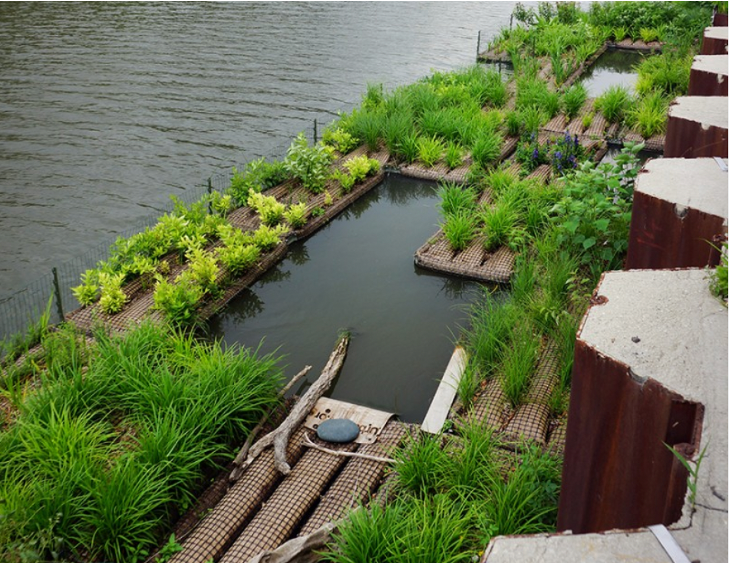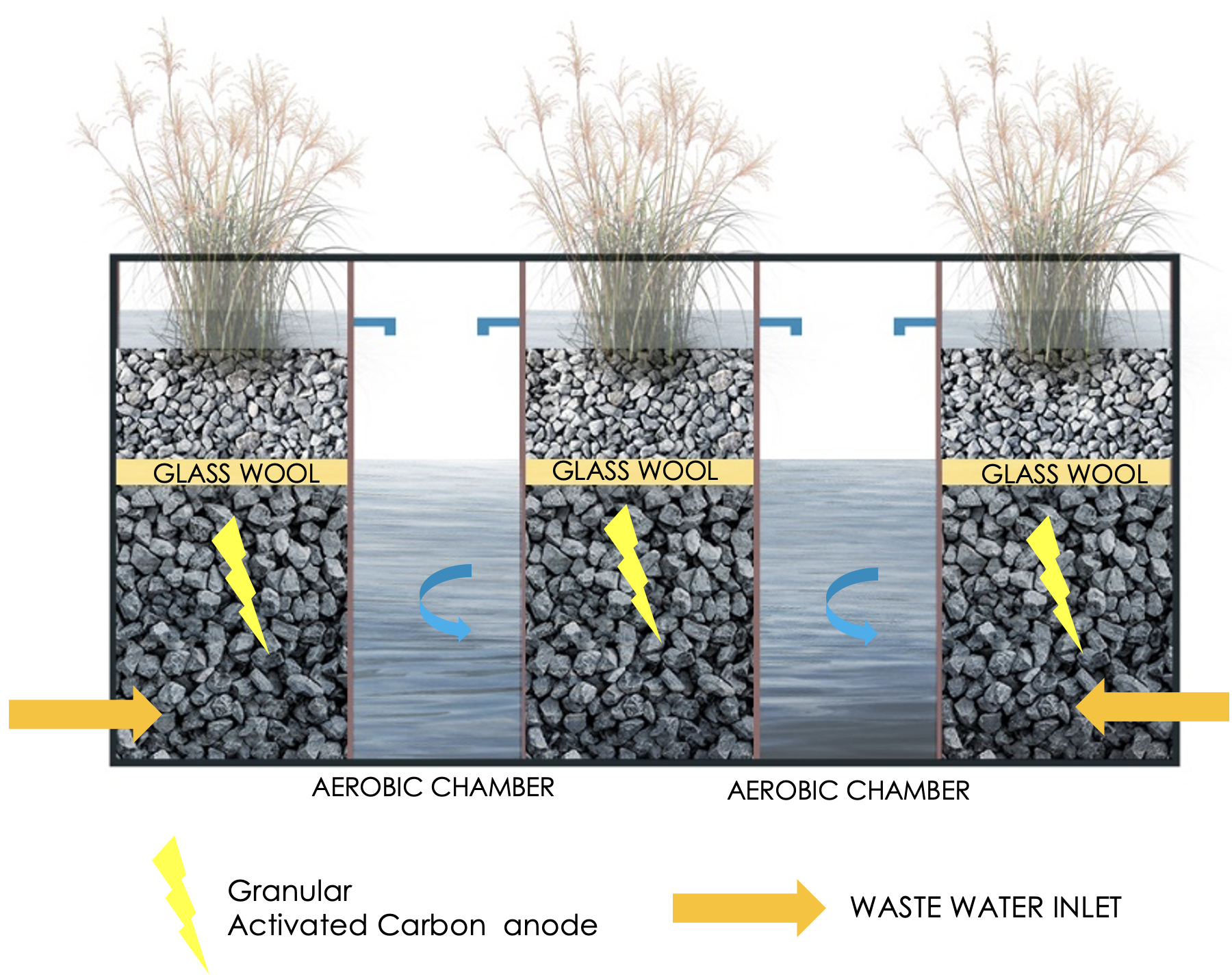

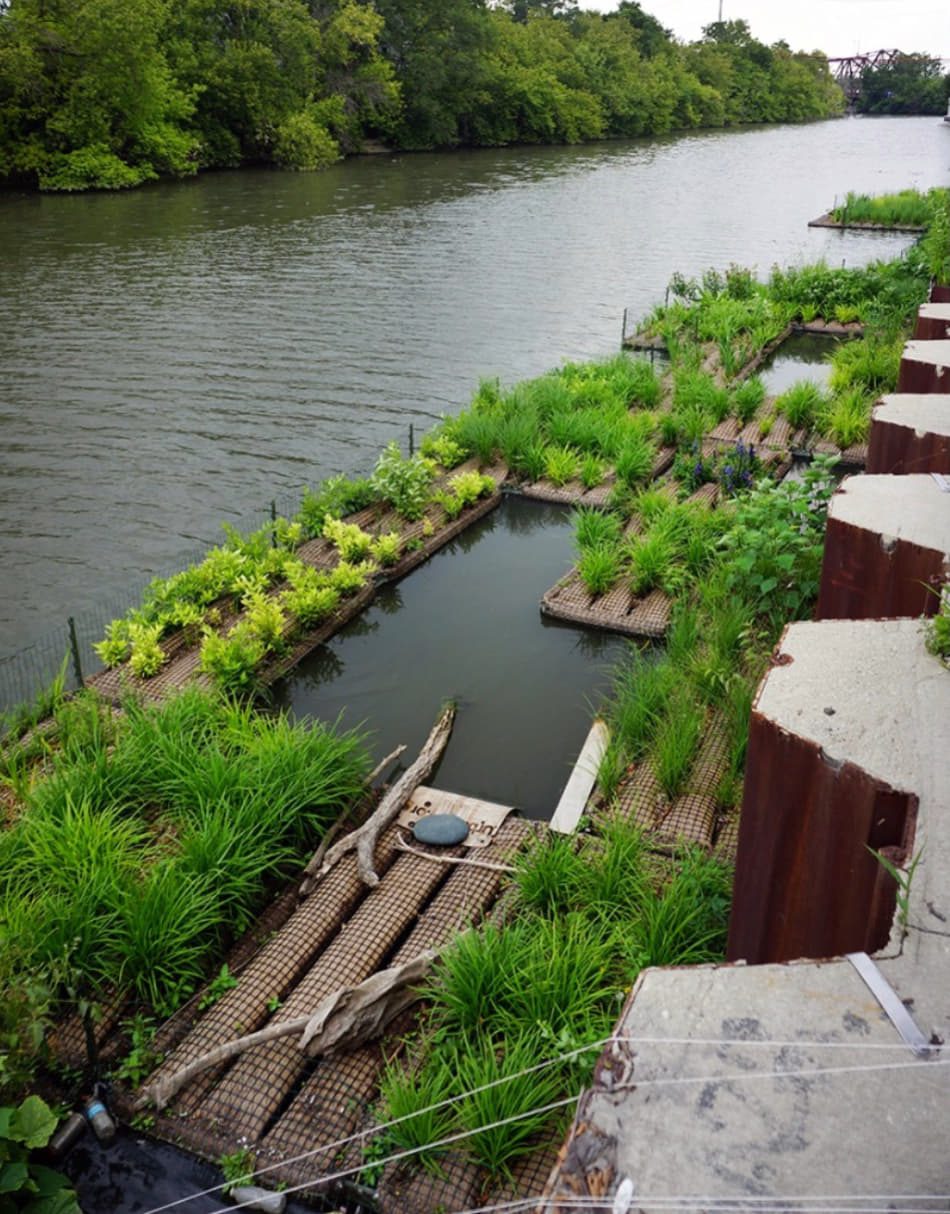
Electrowetlands are a combination of constructed wetlands with bioelectrochemical systems to support energy production, stormwater filtering, water depollution, and regenerative agriculture in Southeast Asia.
By harnessing microbial fuel cells, electrowetlands generate electricity from organic waste decomposition while simultaneously removing pollutants like nitrogen, phosphorus, and heavy metals from stormwater and wastewater. These systems enhance agricultural productivity by recycling nutrient-rich treated water for irrigation and reducing chemical input reliance. Technically, they offer efficient pollutant breakdown and renewable energy generation.
Socially and economically, they improve rural livelihoods through decentralized energy access, lower water treatment costs, and enhanced food security. The Bioelectrochemical Wetland System (BEWS) in Kunming, China integrates constructed wetlands with microbial fuel cells to treat wastewater and generate electricity. This system effectively removes over 85% of nitrogen and phosphorus and up to 95% of organic pollutants, while producing electricity (up to 0.5 watts per square meter) through microbial activity.
The treated water is reused in agriculture, reducing fertilizer costs and improving water quality, making it a sustainable and low-maintenance solution for water pollution, energy production, and agricultural support, particularly suitable for rural areas in Southeast Asia.