
Eco-sensitive Railway Infrastructure

Eco-sensitive railway infrastructure is a design approach integrating transportation networks with biodiversity conservation, wildlife mobility, and ecosystem preservation.

In Southeast Asia, where railways often cut through biodiverse landscapes, this approach involves designing railway embankments and passages that allow wildlife corridors to remain intact, ensuring safe passage for species such as elephants, tigers, and deer. Eco-sensitive designs include grassways protecting pollinators, vegetated overpasses, culverts, and tunnel crossings that accommodate both large mammals and smaller fauna like amphibians and reptiles.

These features can be combined with native plant species, such as bamboo, mangroves, and grasses, to restore soil composition, enhance carbon sequestration, and improve local biodiversity along the tracks. Such infrastructure also minimizes soil erosion, reduces flooding by maintaining natural water flow, and stabilizes embankments during heavy rains, enhancing climate resilience.

Beyond ecological benefits, it improves human safety by reducing wildlife-vehicle collisions and supports community livelihoods by preserving the natural resources surrounding railway corridors. Existing lessons from projects in India’s Western Ghats and Thailand’s Khao Yai National Park highlight the importance of participatory planning with local communities and conservation experts to balance infrastructure development with ecological integrity.


  • Flood and water flow Management
  • Ecosystem restoration
  • Soil stabilisation
  • Biodiversity conservation
  • Erosion control
  • Human wildlife conflict mitigation
Soil Erosion Soil Erosion
Biodiversity Loss Biodiversity Loss
Carbon Sequestration Carbon Sequestration
Disaster Risk Reduction Disaster Risk Reduction
Flood Control Flood Control

SUPPORTING

  • Habitat Connectivity: Maintains wildlife corridors to support species migration and ecosystem functioning.

REGULATING

  • Flood and Climate Regulation: Maintains natural water flow and reduces flood risks. Sequesters carbon through reforestation and native vegetation along railway corridors.

PROVISIONING

  • Biodiversity Resources: Supports local flora and fauna, providing ecosystems for pollinators, seed dispersers, and other wildlife.

SOCIAL BENEFITS

  • Safety Enhancement: Reduces wildlife-vehicle collisions, improving safety for both humans and animals.
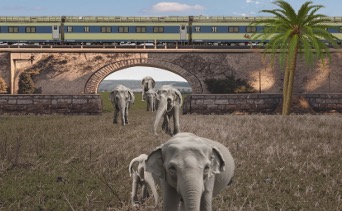
NbS61_Arched Culvert for Elephants
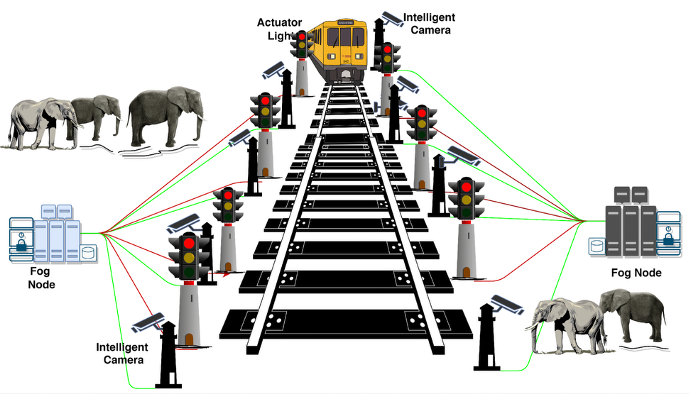
NbS61_Fog Assisted Elephant Corridor

High Initial Costs: Significant upfront investment for wildlife crossings, drainage systems, and vegetation restoration, which can strain project budgets.

Land Use Conflicts: Acquiring land for eco-friendly designs, such as wildlife corridors, may face opposition from local communities or compete with agricultural and development needs.

Maintenance Complexity: Ensuring long-term functionality of crossings, culverts requires regular monitoring and maintenance, which can be resource-intensive.

Wildlife Adaptation Challenges: Some species may not immediately use the provided crossings due to poor placement or design choices.

Soil Erosion Control

Reduced soil erosion rates, measured through sediment deposition and soil loss assessments.

Flood Mitigation

Decreased surface runoff, evaluated by water retention capacity and reduced flood frequency in adjacent areas.

Soil Fertility Restoration

Increased organic matter content and nutrient levels in the soil, measured by soil quality tests.

Carbon Sequestration

Amount of carbon stored in vetiver biomass and soil, quantified through carbon sequestration assessments.

Biodiversity  Enhancement

Increased species diversity, tracked by monitoring the presence of native flora and fauna in areas integrated with VGS.

Livelihood Improvement

Increase in local income, measured by sales of vetiver-based products or improved agricultural yields.

Direct Costs

Vetiver grass system establishment costs (e.g., seedlings, planting, irrigation) range from $500 to $2,000 per ha.

Indirect Costs

Costs related to monitoring, maintenance, and capacity building for local communities can amount to $200 to $500 annually per ha.

Time Horizon

10–20 years time horizon with a discount rate of 5–10% to account for long-term benefits and costs.

Direct Benefits

Increased agricultural productivity or reduced erosion.

Indirect Benefits

Indirect benefits, such as carbon sequestration, improved water quality, and biodiversity enhancement, can yield estimated savings or gains of $200 to $1,000 per hectare annually.

Risk Assessment

Risks include initial establishment failure, invasion by non-native species, or underperformance due to poor site selection.

REFERENCES

Sixiao-Xiaomengyang Expressway, Yunnan, China

Dohazari-Cox’s Bazar Railway, Bangladesh

Northeast Frontier Railway, India

IMPLEMENTATION OPPORTUNITIES

East Coast Rail Link (ECRL), Malaysia

Kanchanaburi “Death Railway”, Thailand

Bukit Barisan Selatan National Park, Indonesia (Sumatra)