
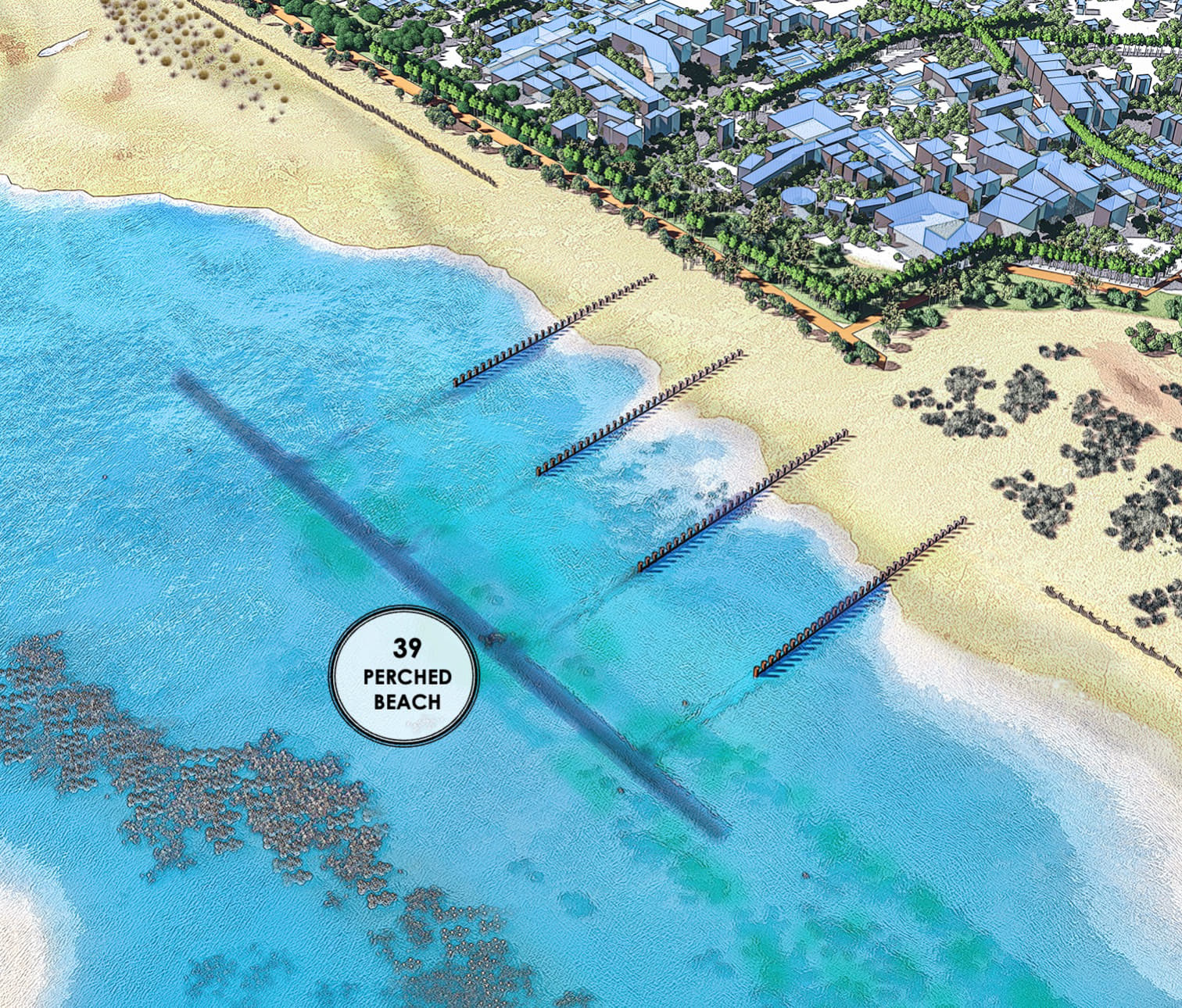
Constructed Pearched Beach With Seagrass

A constructed perched beach with seagrass is an eco-engineered coastal solution designed to address erosion, enhance biodiversity, and improve shoreline stability in sandy coastal areas.

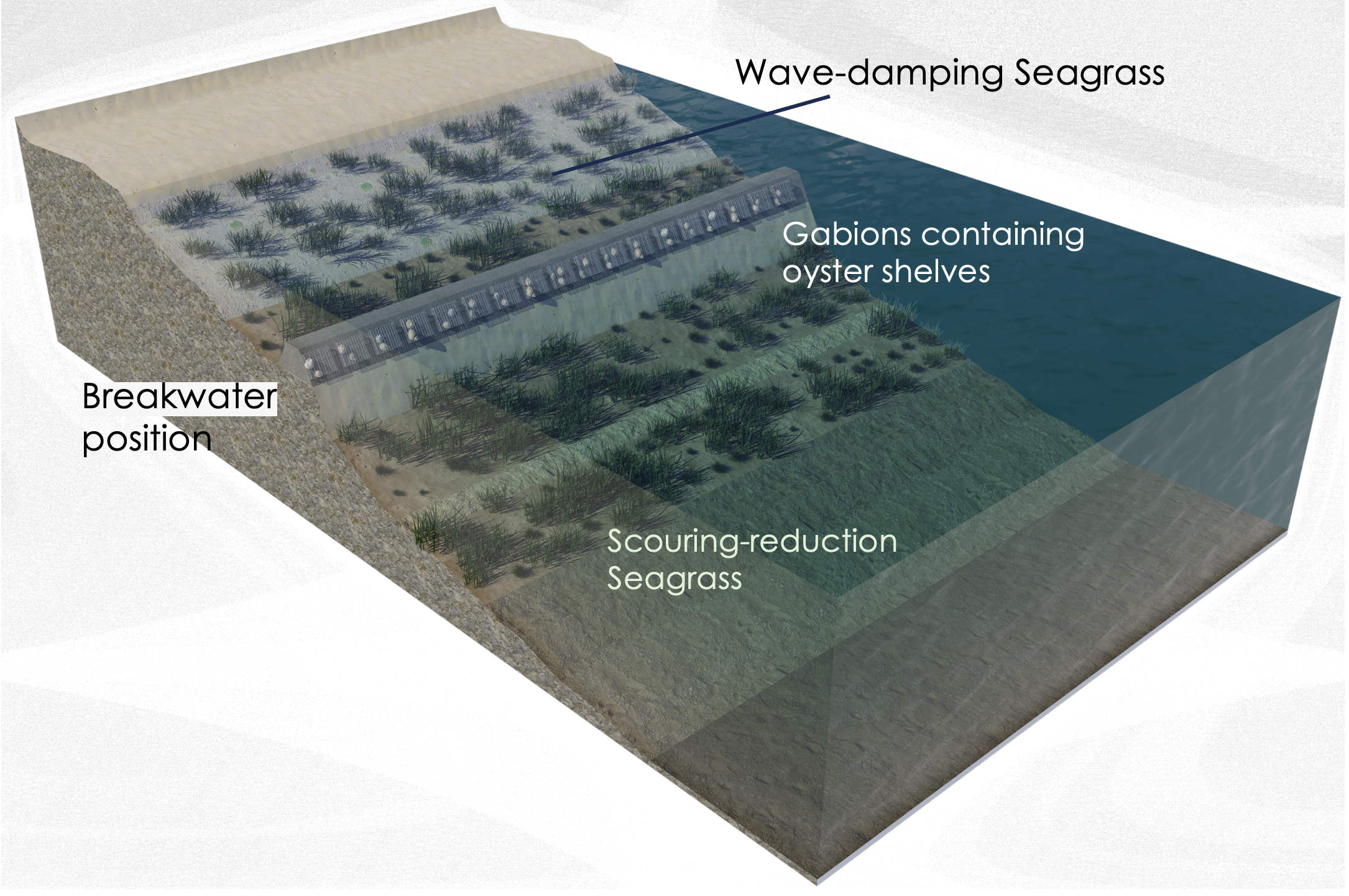
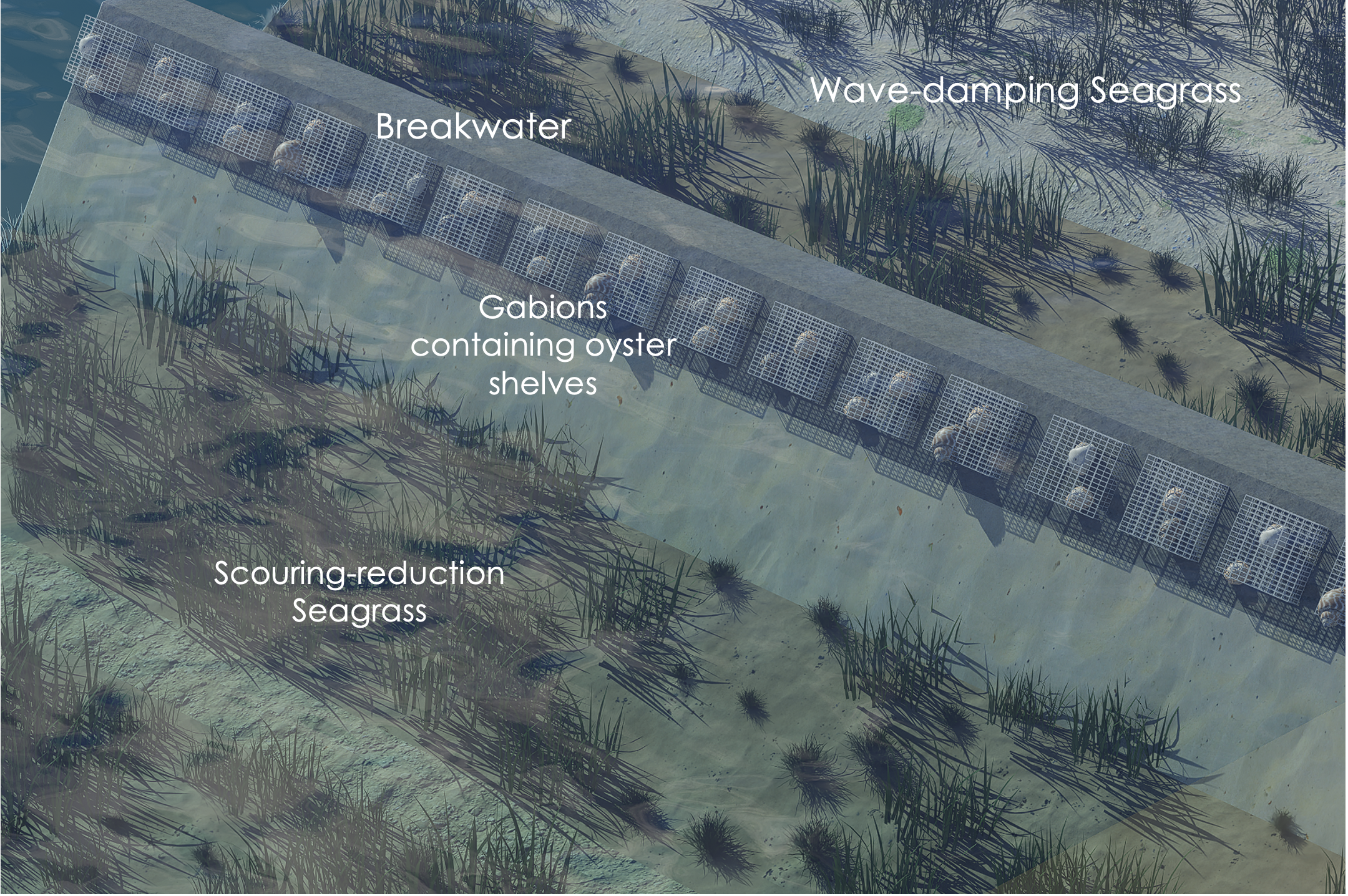
The perched beach is created by elevating the sandy shoreline using a subsurface structure such as a submerged berm or breakwater, which reduces wave energy and helps retain sand, mitigating coastal erosion and shoreline retreat.

Incorporating seagrass meadows into this system significantly enhances its ecological and protective functions. Seagrasses, with their dense root systems, stabilize the seabed, reduce sediment resuspension, and improve water clarity by trapping particles.

They also serve as carbon sinks, sequestering substantial amounts of carbon dioxide, and provide critical habitats for diverse marine species, including fish, shellfish, and sea turtles.


  • Ecosystem based adaptation
  • Ecosystem based disaster reduction
  • Ecosystem restoration
  • Integrated coastal zone management
  • Marine spatial planning
Soil Erosion Soil Erosion
Biodiversity Loss Biodiversity Loss
Flood Control Flood Control
Disaster Risk Reduction Disaster Risk Reduction
Carbon Sequestration Carbon Sequestration

SUPPORTING

  • Seagrass meadows provide essential habitats for marine species, contributing to the overall biodiversity of the coastal ecosystem.
  • Seagrass and coastal ecosystems help cycle nutrients, maintaining the health of marine food webs and supporting primary production.

REGULATING

  • The perched beach and seagrass act as buffers against coastal erosion and wave impacts, reducing the risk of damage from storms and sea-level rise.
  • Seagrass traps sediments and filters water, improving water quality by reducing turbidity and controlling nutrient levels.
  • Seagrasses sequester carbon, acting as carbon sinks and mitigating climate change.

PROVISIONING

  • The seagrass meadows provide breeding and nursery grounds for fish and shellfish, which support local fisheries.
  • Seagrass beds can be a source of sustainable materials, such as for bio-based products or as a resource for local communities.

SOCIAL BENEFITS

  • These systems provide opportunities for environmental education, research, and community engagement in coastal conservation efforts.
  • The improved coastal environment, with its biodiversity and beauty, attracts tourists and supports eco-tourism and leisure activities.
NbS39_Perched Beach 3D section_Legends
NbS39_Perched Beach Gabions_Legend

Sediment Dynamics: Ensuring that the perched beach maintain stability over time can be difficult due to changing coastal currents and sediment supply.

Seagrass Survival: Seagrass meadows are sensitive to environmental stressors and physical disturbances, and their establishment may fail if conditions are not ideal.

Structural Integrity: Ensuring the long-term stability of the submerged structures that support the perched beach can be challenging under high wave conditions.

Maintenance Costs: The ongoing need for maintenance and monitoring of both the perched beach and seagrass meadows can strain budgets.

Biodiversity Enhancement

Number and diversity of species, population of key marine species, health and coverage of seagrass beds over time.

Carbon Sequestration

Amount of carbon stored in seagrass meadows, rate at which carbon is absorbed and stored by seagrasses over time (tons of CO₂ per year).

Water Quality Improvement

Measurement of water clarity , levels of nutrients like nitrogen and phosphorus, dissolved oxygen levels.

Coastal Protection and Erosion Control

Rate of coastal erosion before and after implementation, reduction in wave height and energy near the shoreline.

Enhanced Livelihoods

Rate of coastal erosion before and after implementation, reduction in wave height and energy near the shoreline.

Direct Costs

Structure construction, seagrass planting, material, labour : $15 – $30/m²

Indirect Costs

Maintenance & Monitoring, water quality management.

Time Horizon

Short-Term monitoring & maintenance (1 to 3 years), long-Term monitoring & maintenance, adaptative management (3 to 10+ years).

Direct Benefits

Coastal protection, tourism revenue.

Indirect Benefits

Carbon sequestration, biodiversity enhancement, water quality improvement.

Risk Assessment

Technical and construction risks, Insufficient maintenance, natural disasters, erosion and sediment loss.

REFERENCES

Italy, Calabria region, Calabaia beach restoration.

IMPLEMENTATION OPPORTUNITIES

Thailand: Phuket, Krabi Koh Samui, Kho Phi Phi

Vietnam: Danang, Nha Trang, Phu Quoc Island

Indonesia: Lombok, Bali, Gili Islands