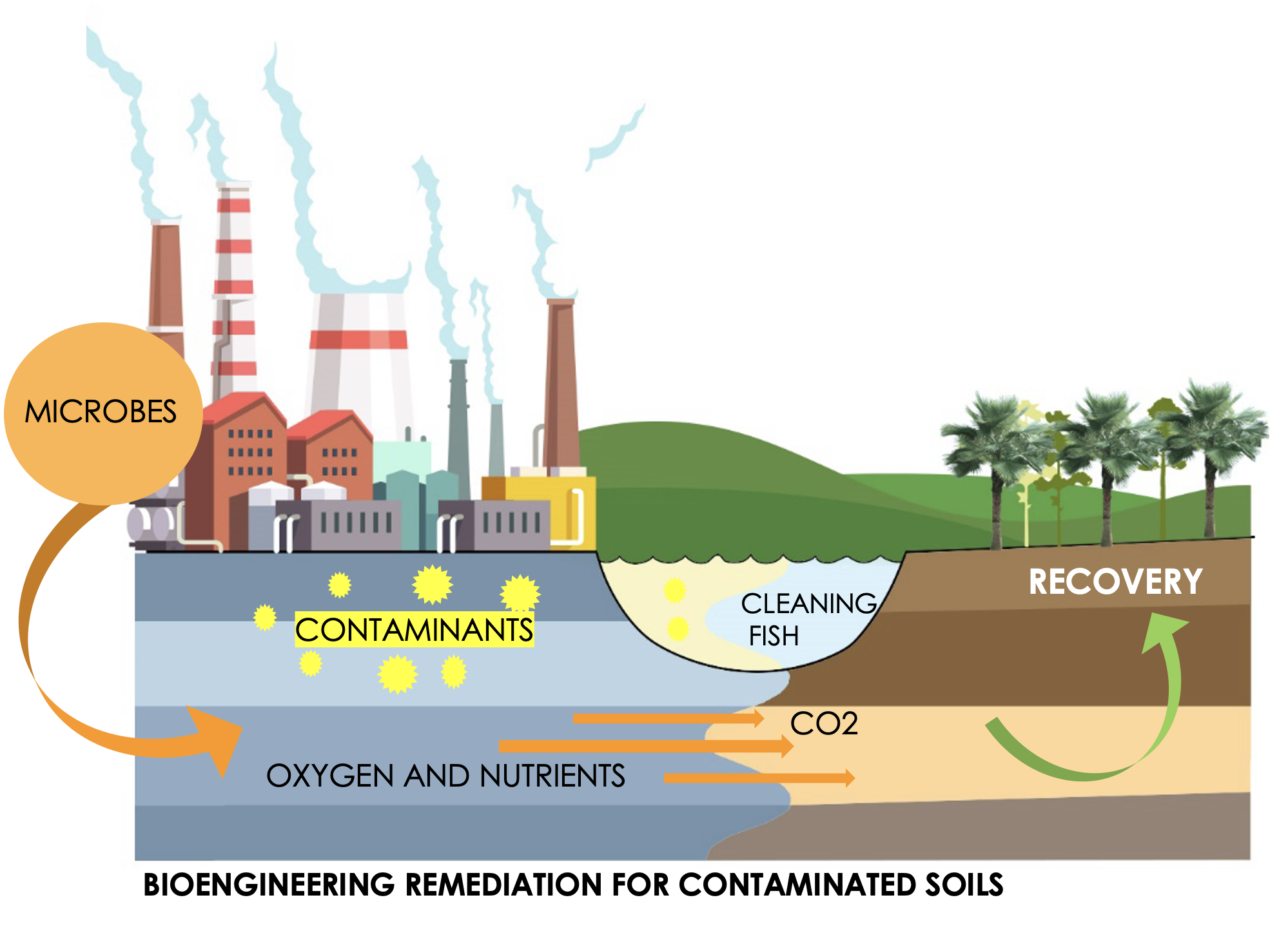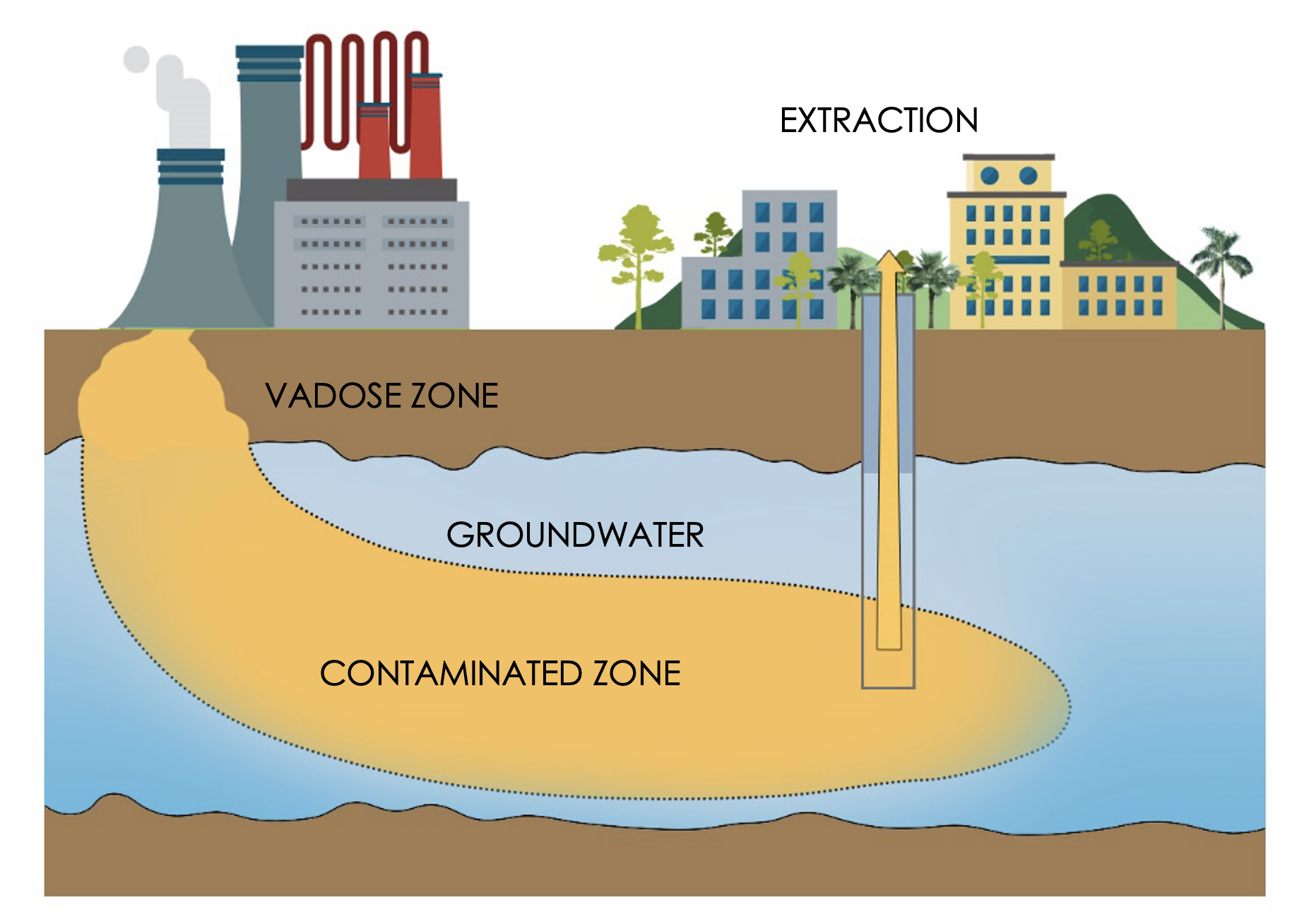

Bioengineering Remediation of Contaminated Soils involves the use of biological methods, such as plants, microbes, and soil organisms, to remediate soils contaminated by industrial waste, agrochemical overuse, mining activities, or urban runoff. Techniques like phytoremediation (using hyperaccumulator plants to extract heavy metals), microbial bioremediation (utilizing soil microbes to degrade pollutants), and mycoremediation (using fungi to break down organic contaminants) are employed to restore soil health.
These approaches are particularly relevant in Southeast Asia, where rapid industrialization, agricultural intensification, and poor waste management have led to widespread soil contamination. Technically, bioengineering remediation improves soil fertility and enhances ecosystem services, while also preventing pollutants from entering water systems.
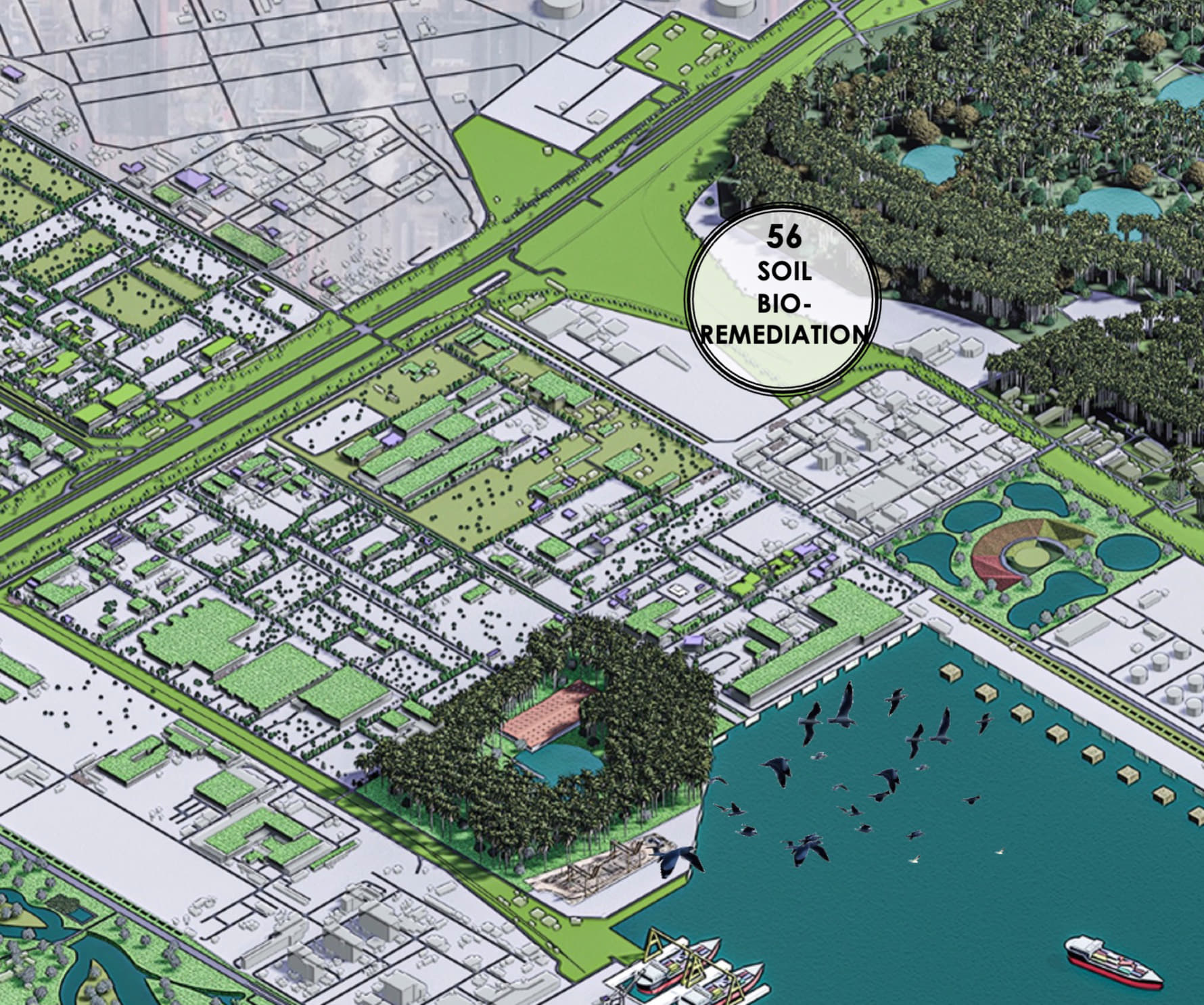
At the landscape level, it promotes the restoration of degraded lands for agriculture or forestry, contributing to adaptive land management in the face of climate change. Economically and socially, it provides cost-effective alternatives to conventional chemical remediation, engages local communities in restoration efforts, and creates opportunities for green jobs. By reducing greenhouse gas emissions from degraded lands and enabling carbon sequestration, this NbS supports both climate mitigation and adaptation, fostering sustainable and resilient landscapes across the region.