
Beach Nourishment

Beach nourishment involves replenishing sandy shorelines with materials compatible with the natural sediment, sourced from nearby areas.

Materials are carefully selected to match the native sand’s grain size and composition, minimizing ecological disruption and ensuring long-term stability.

This method addresses coastal erosion, stabilizes beaches, and maintains ecological balance. Techniques include using dredged sands, engineered dunes, and vegetative plantings to enhance resilience against waves, storms, and rising seas.

Measures, such as planting native vegetation and using geotextile tubes, minimize erosion while allowing natural sediment flow. Linking nourished beaches with coral reefs, seagrass beds, and mangroves creates interconnected habitats, reducing sediment runoff, supporting biodiversity, and strengthening coastal defences.

  • Ecosystem based adaptation
  • Ecosystem based disaster reduction
  • Ecosystem restoration
  • Integrated coastal zone management
Soil Erosion Soil Erosion
Biodiversity Loss Biodiversity Loss
Flood Control Flood Control
Disaster Risk Reduction Disaster Risk Reduction
Carbon Sequestration Carbon Sequestration

SUPPORTING

  • Provide habitats for various species, including shorebirds, crabs, and nesting sea turtles.
  • Filter and cycle nutrients, supporting marine and coastal food webs.

REGULATING

  • Reduce shoreline erosion, protecting inland ecosystems and human developments.
  • Wider and more stable beaches absorb wave energy, reducing the impact of storm surges and flooding.
  • Reduce sediment runoff into coastal waters, benefiting nearby coral reefs and seagrass beds.

PROVISIONING

  • Protects underlying freshwater aquifers from saltwater intrusion, ensuring a sustainable water supply for coastal settlements.
  • Protects agricultural land near the coast by reducing saltwater intrusion and flooding during storm events, ensuring the viability of farming in these areas.

SOCIAL BENEFITS

  • Attracts visitors, boosts local economies through tourism and leisure activities.
  • Offer spaces for relaxation, inspiration, and cultural activities, such as festivals or traditional fishing practices.
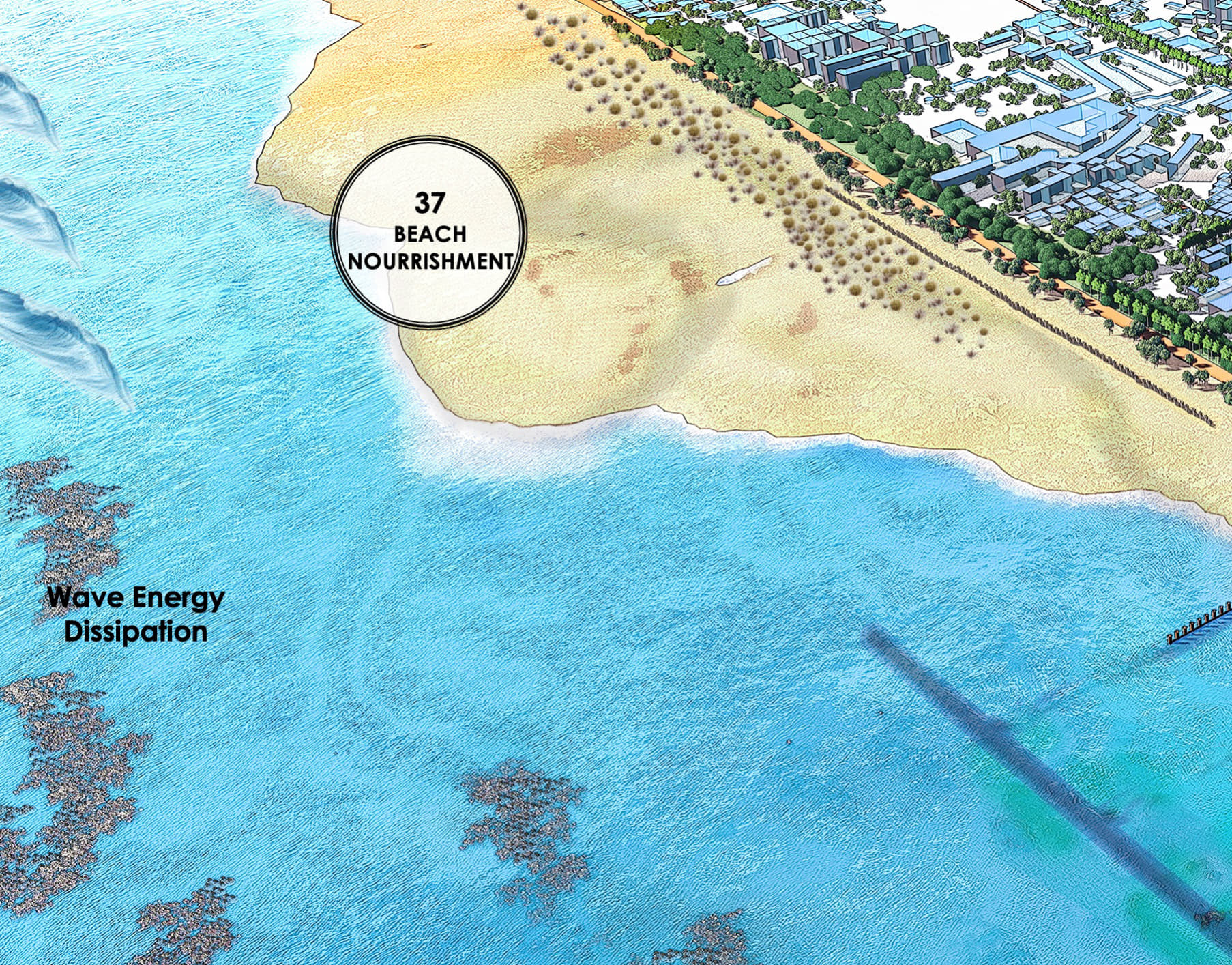
NbS37_Beach Nourishment Ecoshape
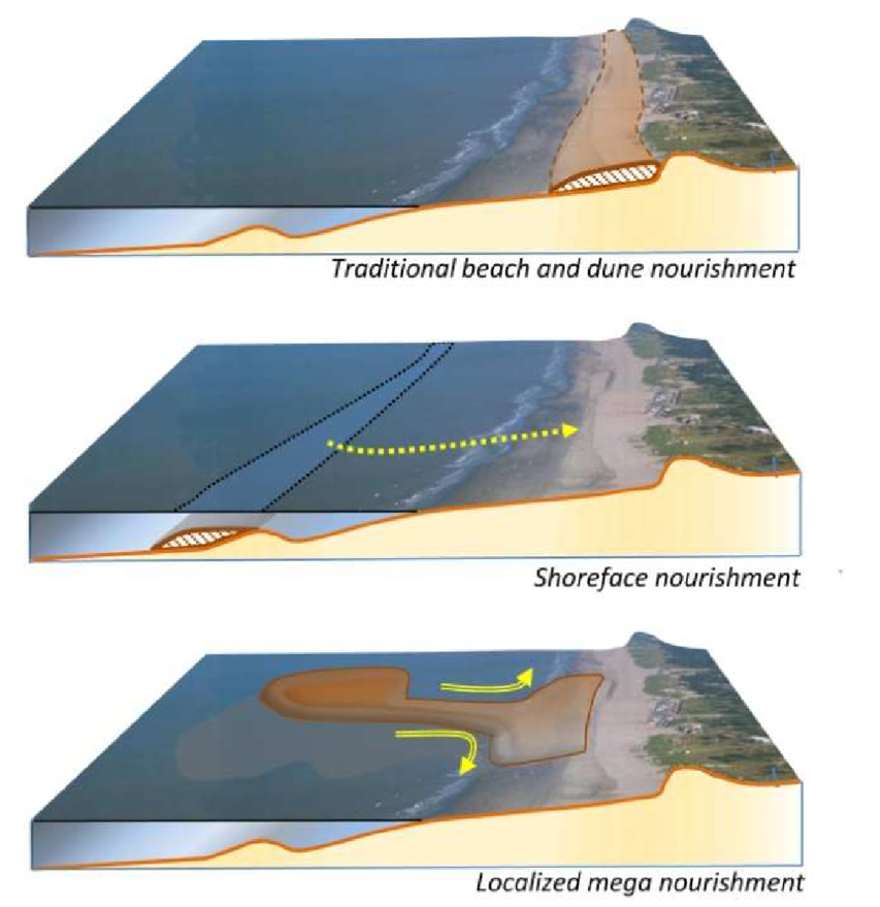
NbS37_Nourishment Strategies
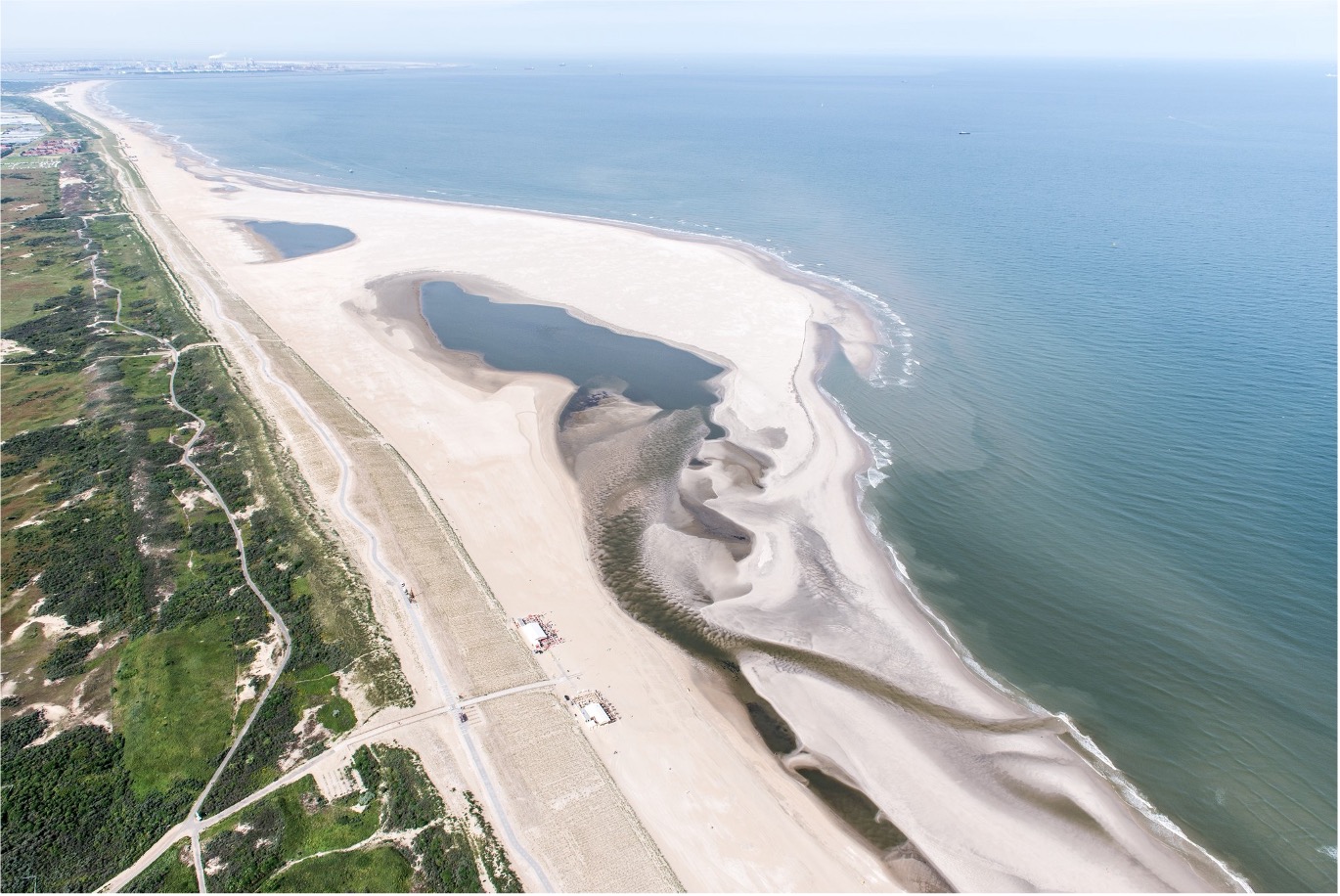
NbS37_Zand Motor Beach The Hague

Disruption of local ecosystems: Sand extraction and placement can disturb marine habitats, including seabeds, coral reefs, and benthic organisms.

Alteration of natural processes: Nourishment can interfere with natural sediment transport and coastal dynamics, potentially causing imbalances elsewhere along the coast.

Impact on adjacent ecosystems: Increased sediment runoff during nourishment can smother coral reefs, seagrass beds, and other habitats.

Frequent maintenance: Nourished beaches require periodic re-nourishment due to natural erosion, which can be logistically complex and costly.

Disaster Risk Reduction

Beach width and elevation stability over time. Frequency and severity of storm surge impacts. Reduction in wave height, changes in shoreline retreat or advance.

Erosion Control

Reduction in sediment runoff. Stability of inland soil (measured by erosion rates).

Improved Coastal Biodiversity

Species richness and abundance in nourished areas. Biodiversity indices in restored habitats.

Water Quality

Reduction in sedimentation and turbidity levels. Improved clarity of coastal waters. Decreased nutrient runoff affecting marine ecosystems.

Tourism Revenue

Increase in tourist numbers and spending on beach-related activities, revenue from local businesses. .

Direct Costs

Planning, sand procurement and transport, construction : USD 900,000 to 2,900,000 /km

Indirect Costs

Ecosystem disruption, tourism business interruptions, and environmental risks.

Time Horizon

Short-term (0-2 years), medium-term (3-10 years), long-term (10+ years) for replenishments and monitoring.

Direct Benefits

Coastal protection, tourism, biodiversity, and carbon sequestration.

Indirect Benefits

Increased property values, improved community resilience, long-term sustainability.

Risk Assessment

Environmental disruption, cost overruns, effectiveness decline over time, and continued need for replenishment.

REFERENCES

Singapore, East coast park beach nourishment.

Thailand, Pattaya Beach (use of sand dredged from nearby seabeds to expand the coastline).

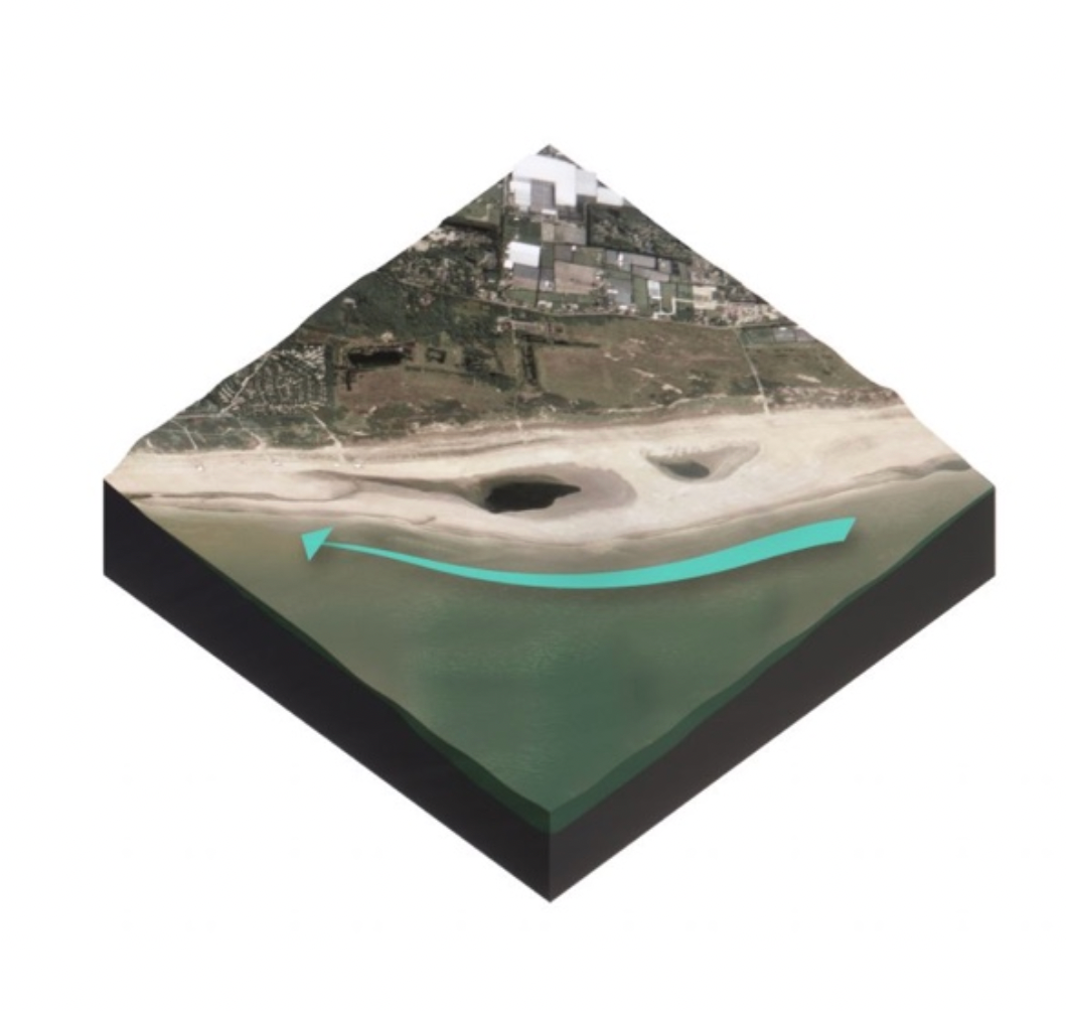
Netherlands, South-Holland, Zandmotor (deposits a massive volume of sand offshore, allowing natural currents to redistribute it.

IMPLEMENTATION OPPORTUNITIES

Vietnam : Ca Mau and Ben Tre provinces (intense coastal erosion), Hoi An beaches.

Cambodia: Sihanoukville, Ochheuteal Beach and Serendipity Beach.