
Artificial Seagrass Meadows

Artificial seagrass meadows aim to restore and enhance the ecological functions of marine ecosystems by establishing seagrass beds using both natural and engineered materials.

This approach involves planting or embedding seagrass species in areas where they have been depleted, using biodegradable substrates like coir mats, seed-containing bioengineered structures, or sediment-based inoculants.

These materials facilitate the establishment of seagrass by providing a stable substrate for growth, reducing erosion, and supporting the accumulation of organic matter. The artificial meadows improve water quality by increasing sediment stability, enhancing nutrient cycling, and reducing turbidity.

They also provide critical habitat for marine life, support biodiversity, and contribute to carbon sequestration, while boosting the resilience of coastal environments against storm surges and sea-level rise.


  • Ecosystem based adaptation
  • Ecosystem based disaster risk reduction
  • Ecosystem based mitigation
  • Ecosystem restoration
  • Integrated coastal zone management
  • Marine spatial planning
Biodiversity Loss Biodiversity Loss
Flood Control Flood Control
Carbon Sequestration Carbon Sequestration
Disaster Risk Reduction Disaster Risk Reduction

SUPPORTING

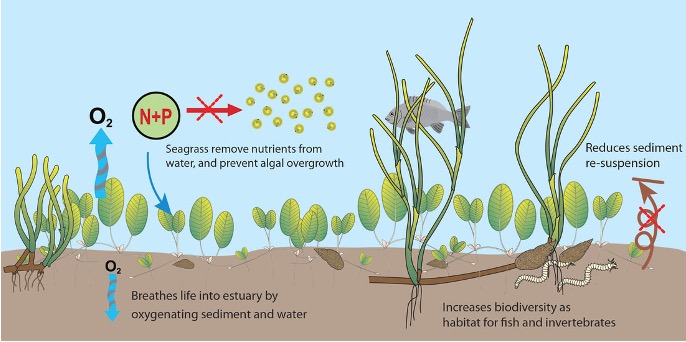
  • Provides shelter and breeding grounds for marine species.
  • Enhances nutrient exchange and cycling between water, sediment, and marine organisms.
  • Traps and binds sediments, reducing resuspension and promoting substrate stability.

REGULATING

  • Reduces turbidity by trapping sediments and filtering excess nutrients from the water column.
  • Acts as a carbon sink by absorbing CO₂ and storing it in biomass and sediments.
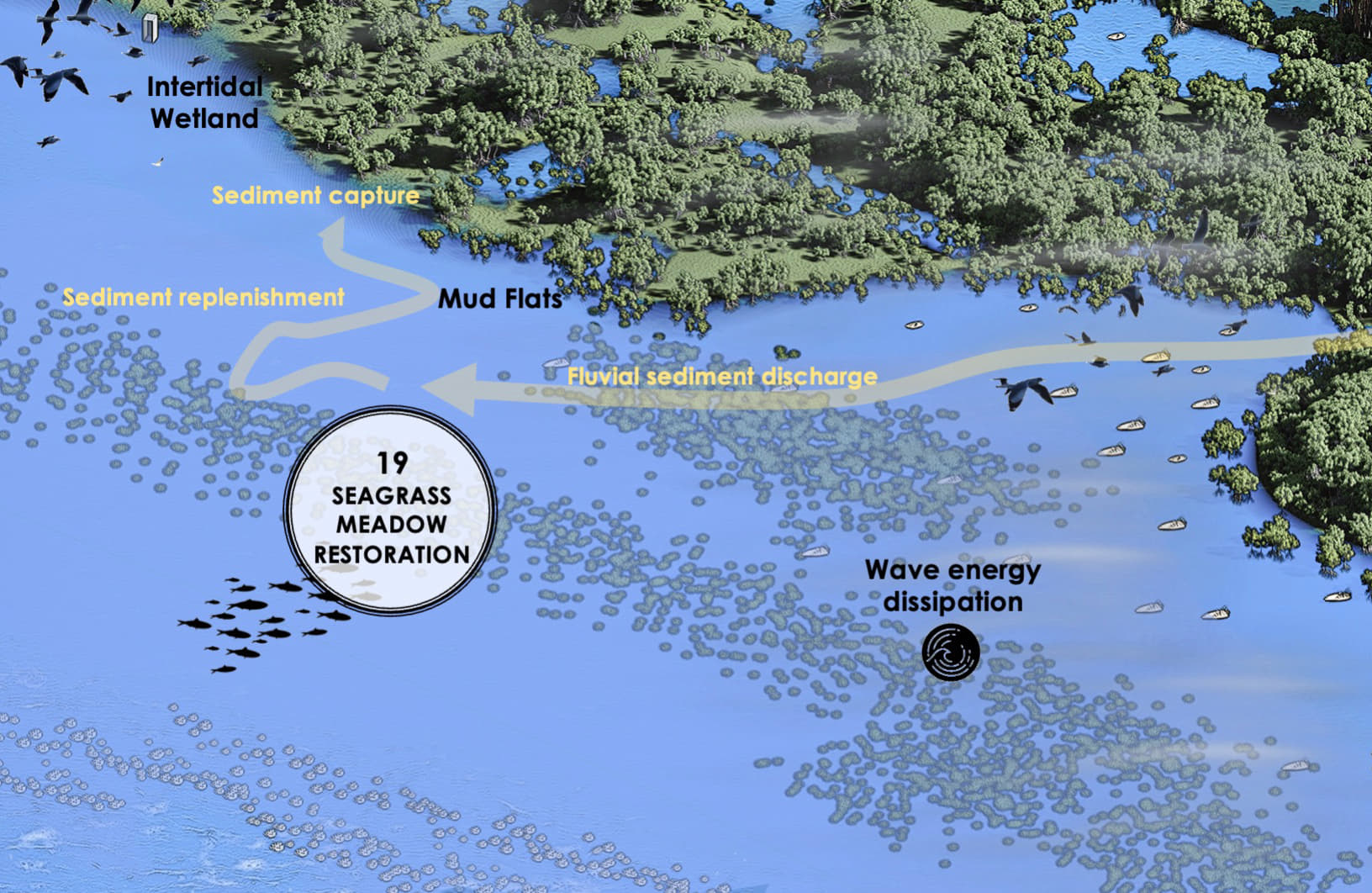
  • Stabilizes coastal sediment, reducing erosion and protecting shorelines from wave energy.
  • Buffers wave action, mitigating coastal flooding and reducing the impact of storm surges.

PROVISIONING

  • Enhances fishery productivity by providing habitats for commercially important fish and shellfish species.
  • Contribute to sustainable harvests of seagrass for certain local industries.
  • Supports biodiversity, preserving genetic material that may have potential for pharmaceuticals, food, or other uses.

SOCIAL BENEFITS

  • Offers a platform for research, environmental education, and raising awareness about marine conservation.
  • Enhances the visual appeal of underwater environments and provides opportunities for activities such as snorkelling, diving, and eco-tourism centred on marine ecosystems.
NbS19_Process of Seagrass Meadow supporting Marine Ecosystems

Incompatibility with native ecosystems: Artificial structures may disrupt the natural balance of local ecosystems.

Hydrodynamic forces: Strong currents, wave action, or storm events can dislodge artificial seagrass.

Invasive species: Artificial substrates can unintentionally create habitats for invasive species.

Rising sea levels and warming oceans: Climate change may alter the environmental conditions required for seagrass survival.

Water quality: Polluted or turbid waters can hinder the growth of seagrass or reduce light availability, impacting the success of the meadow.

Biodiversity Enhancement

Species richness and abundance, genetic diversity within restored areas.

Coastal Protection

Wave attenuation rates, sediment accretion rates, shoreline stability.

Water Quality Improvement

Turbidity levels, nutrient concentrations, reduction in harmful algal blooms.

Fisheries and Food Security

Fish biomass and catch rates in and around the meadow, economic value of fisheries supported by the meadow.

Recreational and Tourism Value

Economic benefits from tourism, number of visitors or tourists engaging in marine activities, ublic awareness levels about marine conservation.

Direct Costs

Materials, labor, permits and approvals : $70,000 to $200,000/ha.

Indirect Costs

Opportunity costs, long term maintenance, research and development : $130,000/ha (10y)

Time Horizon

Short-term (1–5 years): Initial implementation and stabilization of the artificial meadow. Long-term (>15 years): fully established.

Direct Benefits

Erosion control and coastal protection, increased fishery productivity, carbon sequestration, improved water quality.

Indirect Benefits

Biodiversity enhancement, food prevention, tourism revenue.

Risk Assessment

Failure due to poor site selection, invasive species colonization, stakeholder conflicts with fisheries or tourism.

REFERENCES

Singapore: Large-scale seagrass restoration project at Kusu island and Lazarus island.

Indonesia : Seagrass restoration in West Yensawai village, on the island of Batanta.

Malaysia : Kuala Selangor Nature Park.

IMPLEMENTATION OPPORTUNITIES

Philippines: The Tubbataha Reefs Natural Park.

Vietnam: The Ca Mau Peninsula in the Mekong Delta.

Indonesia: The Bali Strait, particularly around Tulamben.