
Anti-salt Bunds

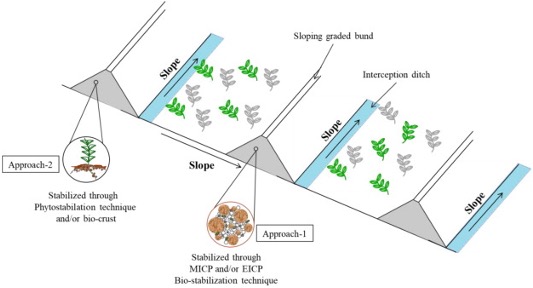
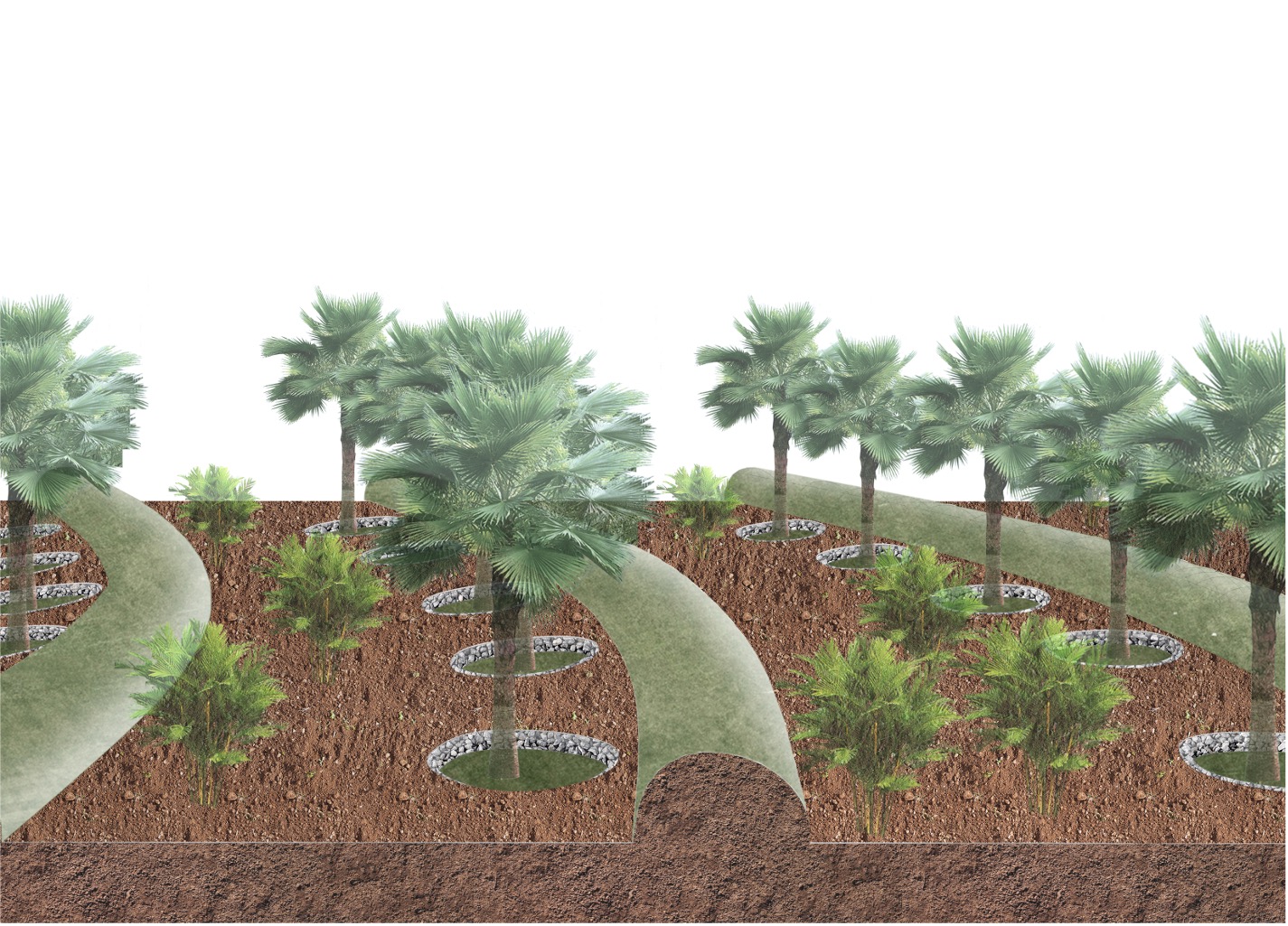
Anti-salt bunds are natural or man-made structures designed to prevent saltwater intrusion and protect agricultural lands, particularly rice paddies, from tidal flooding in coastal regions.

In Southeast Asia, these bunds are critical in areas where rising tides and salinization threaten local food security, as they act as barriers against the encroachment of seawater during high tides, preserving freshwater resources for irrigation.

Technically, they help maintain soil quality by preventing salinity buildup that can damage crops, particularly rice, which is sensitive to salt stress.

The bunds can also enhance water retention, regulate water flow, and help maintain soil fertility.

The landscape benefits include reducing coastal erosion, protecting habitats, and enabling farmers to continue cultivating land in saline-prone areas. Socially, these systems foster community involvement in environmental management and agriculture, ensuring sustainable livelihoods for local farmers who rely on healthy ecosystems for food production.

Similar to successful projects like the anti-salt bunds in Senegal, Southeast Asian adaptations can integrate local knowledge, support resilience to climate change, and enhance agricultural productivity while contributing to coastal ecosystem protection.

  • Integrated coastal zone management
  • Agroecological approaches
  • Community based ressource management
  • Flood risk reduction
  • Ecosystem restoration
Soil Erosion Soil Erosion
Flood Control Flood Control
Disaster Risk Reduction Disaster Risk Reduction

SUPPORTING

  • Soil formation and nutrient cycling: Anti-salt bunds help maintain soil health by preventing salinization.
  • Biodiversity support: By protecting coastal and wetland ecosystems, they support local biodiversity in rice paddies and adjacent ecosystems.

REGULATING

  • Saltwater intrusion control: They regulate the intrusion of saltwater into agricultural areas, protecting crops from salinity stress.
  • Flood and erosion control: The bunds help reduce the impacts of tidal floods, preventing coastal erosion and protecting agricultural fields from flood damage.

PROVISIONING

  • Water quality regulation: They help maintain freshwater quality by reducing the mixing of saline and freshwater.
  • Agricultural productivity: By protecting farmland from saltwater damage, they support sustained agricultural yields.

SOCIAL BENEFITS

  • Community resilience and empowerment: The involvement of local communities in the construction and maintenance of anti-salt bunds fosters collaboration and enhances their adaptive capacity to climate change.
NbS49_Biostabilisation of Soils
NbS49_Planting Pits and Upward Ties

High construction and maintenance costs: The initial investment and ongoing maintenance of anti-salt bunds can be financially burdensome for local communities or governments, especially in low-income regions.

Extreme weather vulnerability: Anti-salt bunds may be damaged during extreme weather events like typhoons.

Land and space limitations: In densely populated coastal areas, there may be limited space available for constructing bunds without displacing agricultural land or compromising other land uses.

Governance challenges: Coordination among stakeholders can be difficult, leading to conflicts over land and resources.

Improved Agriculture Productivity

Increased rice and crop yields due to reduced saltwater intrusion, leading to higher productivity and more reliable harvests in affected regions.

Increased Biodiversity

Restoration aof habitats for both aquatic and terrestrial species.

Water Quality Improvement

Improved freshwater quality in surrounding agricultural areas, measured by a decrease in salinity levels in groundwater and surface water.

Enhanced Coastal Resilience

Reduced coastal erosion and protection against tidal surges, demonstrated by the prevention of saltwater flooding in agricultural zones.

Community Empowerment

Active local community participation in the construction, monitoring, and maintenance of the bunds.

Climate Change Adaption

Reduced vulnerability of farming areas to saline soil conditions caused by sea-level rise, tracked by improved soil health.

Direct Costs

Estimated direct costs from $10,000 to $50,000 per km, including materials, labor, and equipment.

Indirect Costs

Indirect costs include maintenance costs for bunds, potentially around $1,000 to $3,000 annually per km for monitoring and repairs.

Time Horizon

Time horizon is 10-20 years, with a discount rate from 3% to 7% depending on project scale and local financial conditions.

Direct Benefits

Increased crop yields estimated at $500 to $2,000 /ha annually due to reduced saltwater intrusion and improved soil conditions.

Indirect Benefits

Improved water quality and coastal resilience, with long-term savings from avoided flood damage and water purification

Risk Assessment

Risks include potential failure due to poor construction or extreme weather events.

REFERENCES

Large scale anti-salt bund project in Mekong River Delta

Sundarbans anti-salt bunds in India and Bangladesh

Sine Saloum Delta anti-salt bunds in Senegal

IMPLEMENTATION OPPORTUNITIES

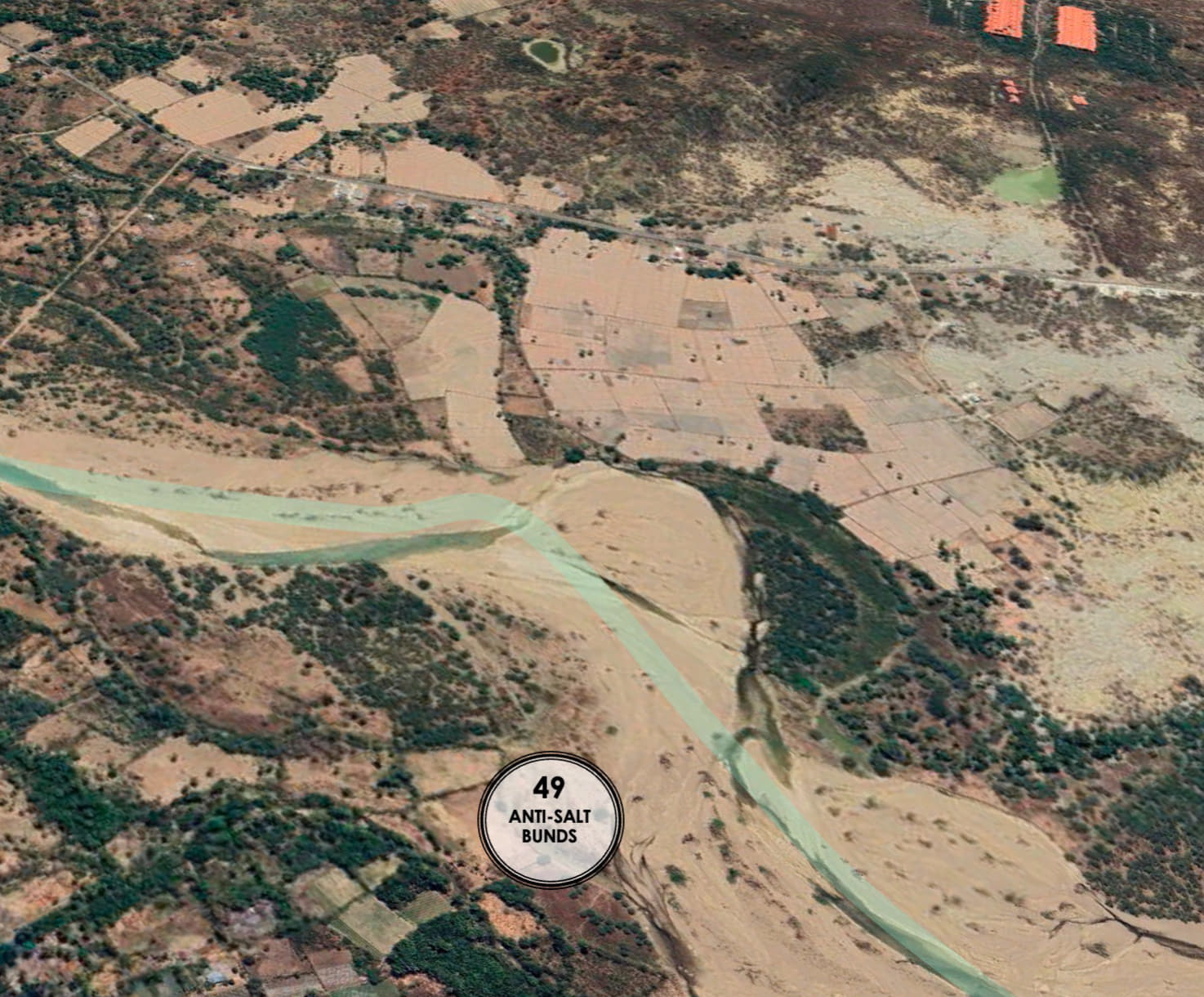
Western Timor, Indonesia Tonle Sap Lake region, Cambodia Songkhla Province, Thailand Mekong Delta, Vietnam