
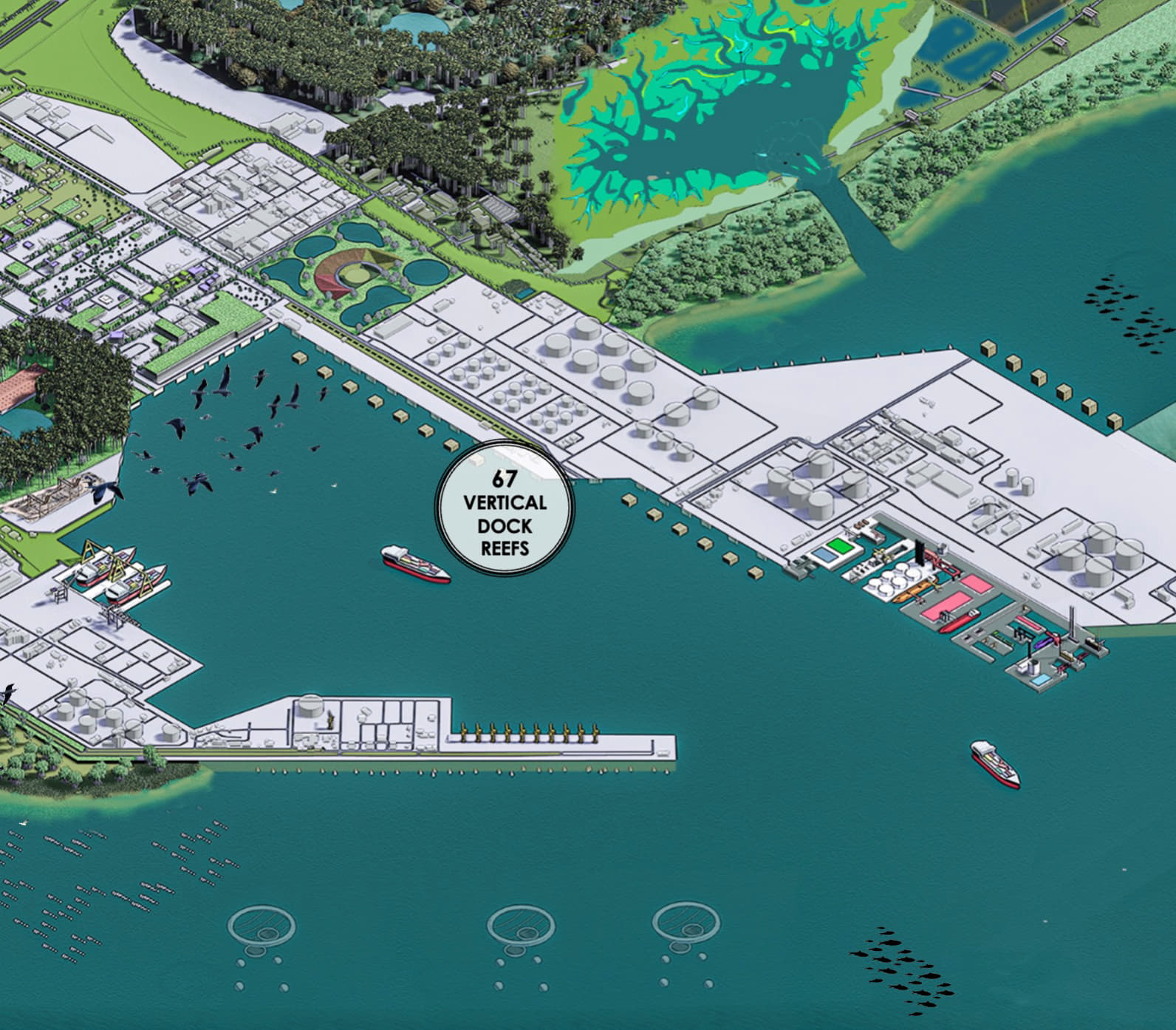
Vertical Dock Reefs

Vertical dock reefs enhance marine biodiversity and ecosystem functions along artificial coastlines, particularly in urbanized and industrial port areas. These structures are typically retrofitted onto vertical seawalls, docks, and other hard, smooth underwater surfaces that provide limited ecological value.

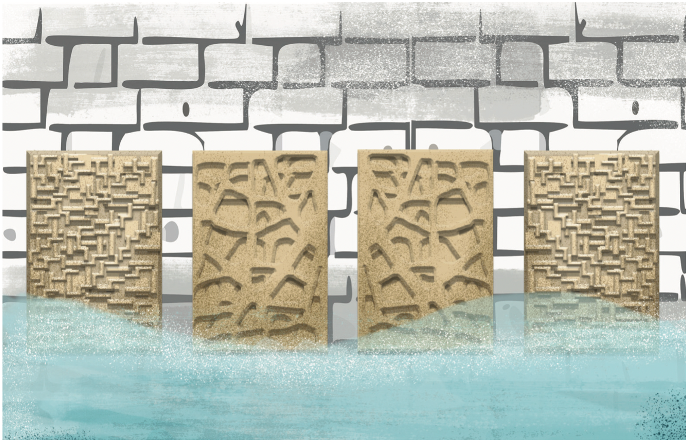
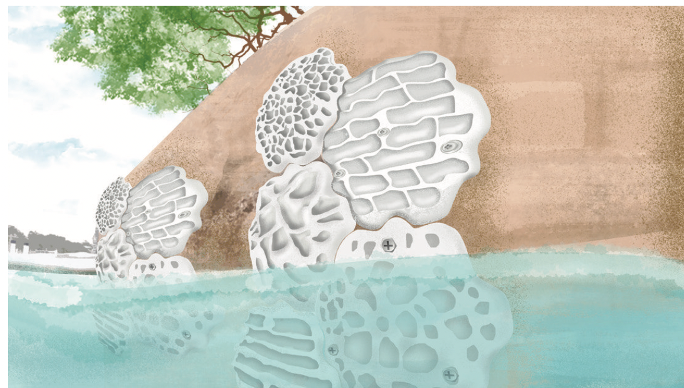
By incorporating eco-engineered materials, such as textured tiles or modular reef structures, vertical dock reefs create habitat complexity that promotes the settlement of marine organisms, such as algae, oysters, and mussels, while offering refuge and nursery areas for small fish, crabs, and other marine species. The design mimics natural reef ecosystems, improving the ecological function of otherwise artificial and sterile environments. Vertical dock reefs contribute to sediment stabilization, water filtration, and biodiversity restoration.

By enhancing sessile communities of filter feeders, such as mussels and oysters, these structures improve water quality by removing excess nutrients and particles. They also support fisheries by providing habitats for commercially important species, thus offering economic co-benefits for local communities. Socially, they raise awareness about urban marine conservation and promote sustainable practices in coastal infrastructure.

  • Ecological engineering
  • Marine habitat restoration
  • Sustainable fisheries management
  • Urban marine biodiversity conservation
  • Integrated coastal zone management
Biodiversity Loss Biodiversity Loss
Flood Control Flood Control
Soil Erosion Soil Erosion

SUPPORTING

  • Vertical dock reefs provide essential habitats for marine organisms.
  • Promoting diverse marine life by offering new surfaces for colonization, contributing to a more complex ecosystem.

REGULATING

  • Through biofiltration by mussels, oysters, and other filter feeders, it improves water clarity and reduce pollutants.
  • The structures contribute to stabilizing sediments and protecting shorelines from erosion caused by wave action and storms.

PROVISIONING

  • Providing breeding grounds and feeding habitats for various marine species.
  • Enhancing aquaculture by creating additional environments for shellfish.

SOCIAL BENEFITS

  • Enhancing the resilience of coastal areas to flooding, erosion, and sea-level rise.
  • Promoting environmental awareness and eco-tourism by creating visually appealing and biodiverse marine environments.
NbS67_Eco-Engineered Tiles HK

Environmental pollution: High levels of industrial and port-related pollution in Southeast Asia may hinder the establishment of healthy marine ecosystems on vertical dock reefs.

Biofouling competition: Invasive species may outcompete native organisms on vertical dock reefs, disrupting biodiversity and ecosystem stability.

Structural degradation: Harsh marine conditions, such as strong currents and storms, could cause physical damage to the vertical dock reef structures over time.

High maintenance costs: The need for periodic cleaning and repairs to maintain reef functionality can increase operational costs and require long-term investment.

Biodiversity Enhancement

Increase in species richness and abundance, with measurable growth in the populations of fish, mollusks, and other marine organisms.

Water Filtration

Improvement in water quality due to filter-feeding organisms, contributing to reduced sediment and nutrient levels.

Coastal Erosion Control

Reduction in wave energy impacting nearby shorelines, evidenced by decreased erosion.

Carbon Sequestration

Uptake of CO2 by marine organisms like corals and mussels, with measurable reductions in carbon levels in the water.

Economic Opportunities

Boost in local economies through sustainable fisheries and eco-tourism.

Education and Awareness

Increased public and community engagement in marine conservation.

Direct Costs

The installation of vertical dock reefs can range from USD 50k to 100k/project depending on the scale and location.

Indirect Costs

Monitoring, maintenance, and community outreach can range from USD 10k to 20k/year.

Time Horizon

Project lifespan of 20 years, discount rate of 3%.

Direct Benefits

The direct benefits include biodiversity restoration, with economic returns from fisheries and eco-tourism.

Indirect Benefits

Improvements in water quality and reduced erosion can lead to savings in port maintenance costs and improved local fisheries.

Risk Assessment

Risks include installation failures or environmental conditions that may hinder habitat growth.

REFERENCES

Netherlands, Port of Rotterdam Vertical Dock Reefs.

China, Hong Kong’s Eco-engineered Seawalls.

Singapore, Marina Bay Floating Wetlands.

IMPLEMENTATION OPPORTUNITIES

Indonesia, Jakarta Bay, Urban waterfront areas and industrial ports.

Vietnam, Ho Chi Minh City and Haiphong.

Philippines, Ports, Manila Bay.