
Roadside Bioengineering & Slope Management

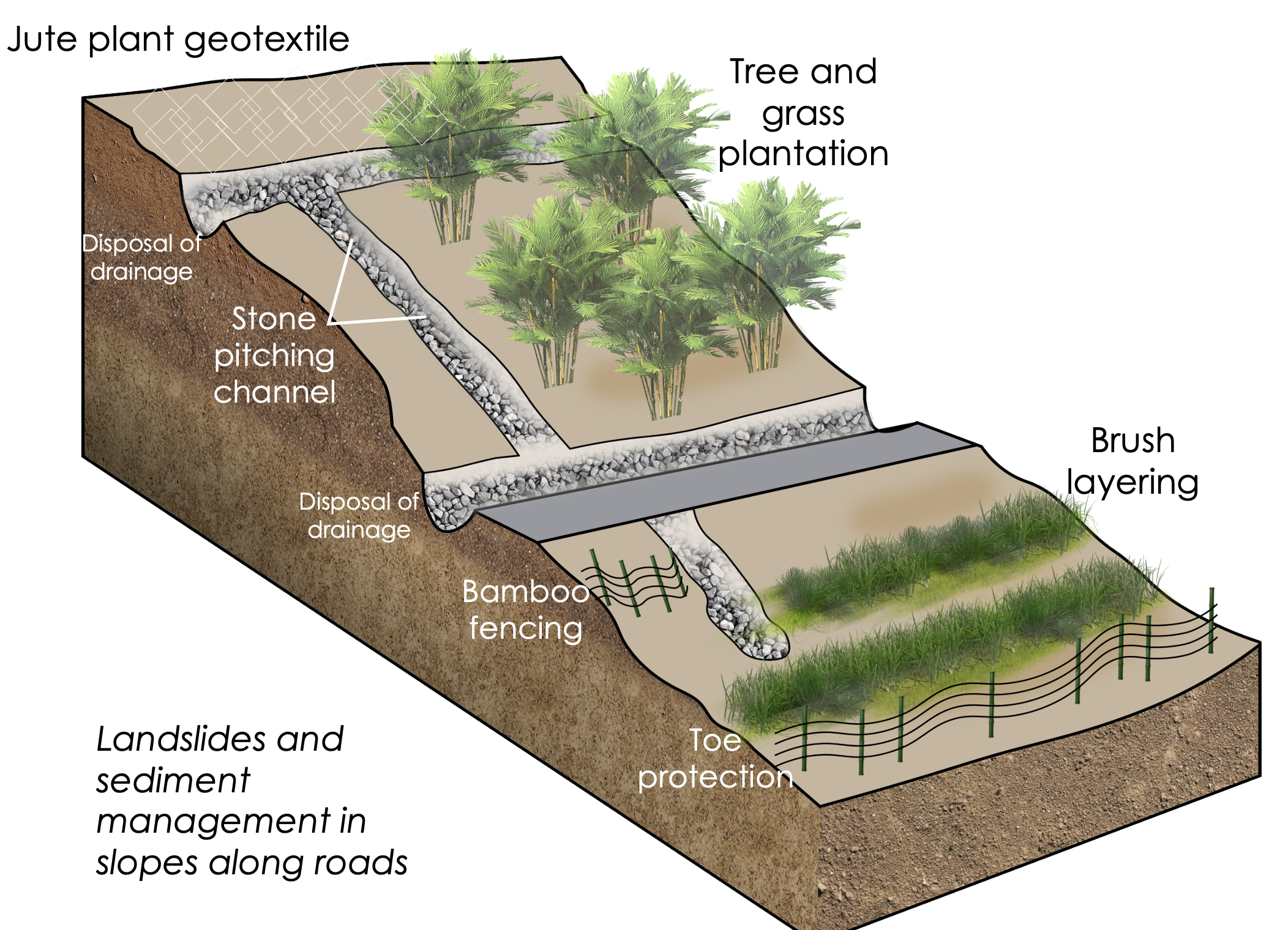
Ecosystem-based roadside bioengineering and slope management address flood control, slope stabilization against landslides, and road infrastructure protection by integrating vegetation, geotextiles, and natural materials into engineered slopes.

This approach reduces erosion, enhances soil stability, and mitigates landslide risks in areas prone to cloudbursts and heavy rainfall. It incorporates soil bioengineering techniques such as live staking, vegetative wattles, and green retaining walls, which not only provide structural support but also promote natural water infiltration and reduce surface runoff. For instance, vegetation cover stabilizes slopes while serving as a barrier against sediment flow into water bodies, contributing to improved water quality and reduced downstream flooding risks.

Benefits include cost-effective and sustainable alternatives to hard engineering for managing steep slopes and reducing landslide hazards. Vegetation used in bioengineering enhances soil structure, increases root cohesion, and improves slope drainage.

By integrating well with low-impact road design, preserving natural landscapes and reducing construction-related ecological disturbances, it safeguards communities residing in landslide-prone regions, enhances road safety, and creates employment opportunities in planting, maintaining vegetation, and reduces costs of repairs and maintenance compared to traditional retaining walls highlight its value.


  • Soil & slope stabilisation
  • Integrated water management
  • Green infrastructure
  • Wildlife corridor enhancement
  • Climate resilience
  • Ecosystem restoration
Soil Erosion Soil Erosion
Disaster Risk Reduction Disaster Risk Reduction
Flood Control Flood Control

SUPPORTING

  • Soil formation and stabilization through vegetative root systems that bind soil, preventing erosion and enhancing slope stability.

REGULATING

  • Mitigation of landslide risks and regulation of water flow by controlling runoff, reducing sedimentation, and enhancing natural water infiltration.

PROVISIONING

  • Provision of local resources, such as bamboo and native plants, used for bioengineering, supporting sustainable material sourcing.

SOCIAL BENEFITS

  • Improved road safety and reduced infrastructure maintenance costs, benefiting local communities and enabling safer access to markets, schools, and healthcare facilities.
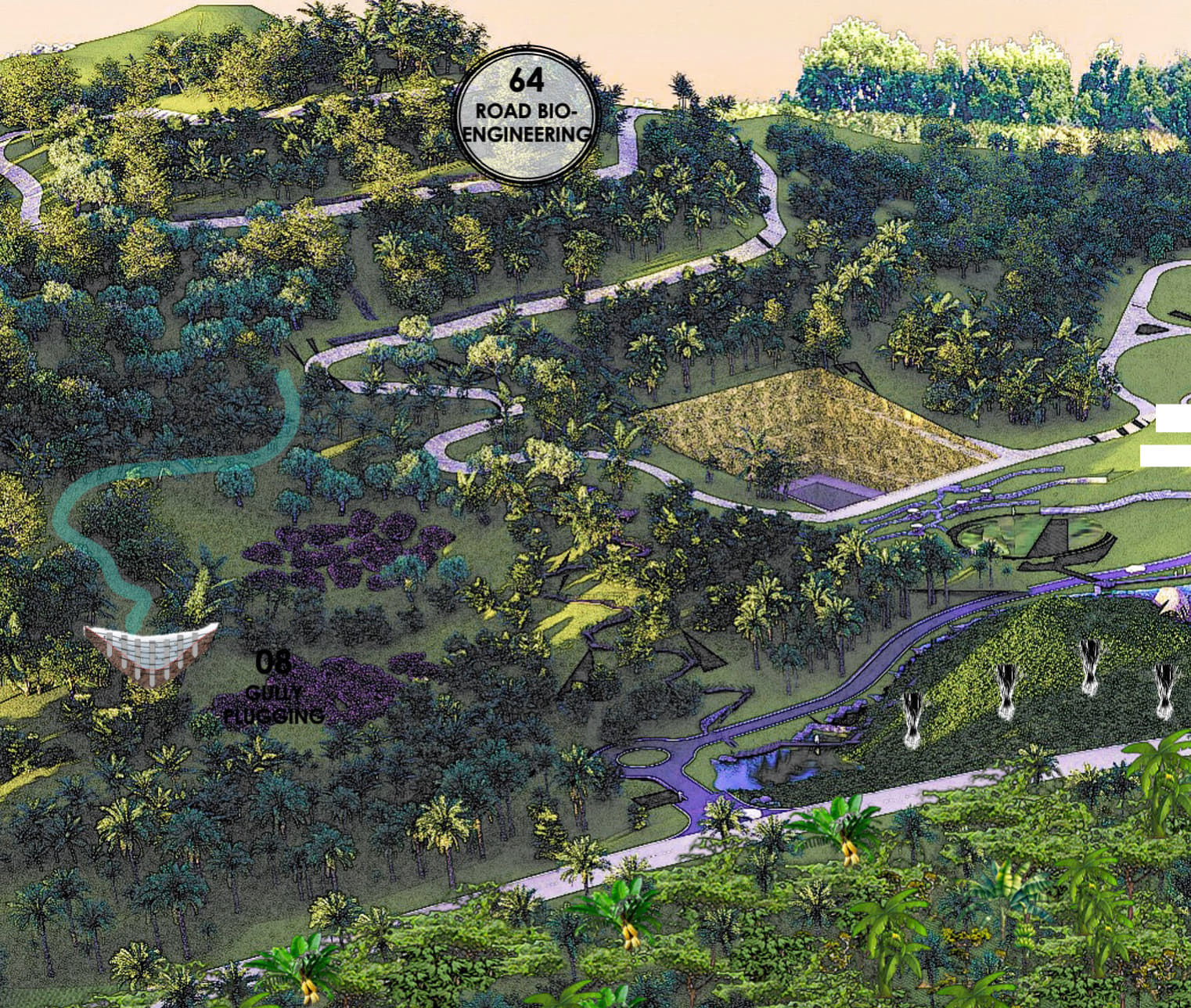
NbS64_Landslides and Sediment Management in Slopes along Roads_Legends

Limited Plant Suitability: Identifying native and fast-growing species that thrive in Southeast Asia’s diverse climates and soil conditions can be challenging.

High Initial Maintenance Needs: Newly established vegetation requires regular monitoring, irrigation, and protection from pests or grazing to ensure proper growth and slope stabilization.

Technical Expertise Gaps: A lack of trained professionals in bioengineering techniques may lead to improper implementation or failure of stabilization projects.

Climate Change Impacts: Increased frequency of extreme rainfall events may overwhelm bioengineered systems, causing erosion or landslides.

Erosion Control

Reduction in soil loss rates, measurable through decreased sediment deposition in nearby water bodies.

Biodiversity Support

Increase in native vegetation cover and habitat availability for local wildlife, tracked by species diversity surveys.

Carbon Sequestration

Enhanced carbon storage in vegetation and soils, quantifiable through biomass assessments.

Water Quality Improvement

Decrease in sediment and nutrient runoff into rivers, monitored by water quality testing.

Community Livelihood Support

Enhanced access to natural resources like fodder and medicinal plants, measured through community resource usage surveys.

Cost-effective Road Safety

Reduction in road maintenance and landslide repair costs, evaluated through annual infrastructure expenditure reports.

Direct Costs

Implementation costs range from $10k to $50k/km depending on slope complexity.

Indirect Costs

Maintenance and monitoring costs around $1k to $5k/km/year, covering vegetation upkeep and erosion checks.

Time Horizon

Typically evaluated over a 20–30 year period with a discount rate of 4–8%.

Direct Benefits

Prevented road damage and landslide repairs save significant investments in vulnerable site.

Indirect Benefits

Improved water retention, biodiversity, and community abenefits, based on ecosystem services.

Risk Assessment

Potential failures, such as improper vegetation establishment, could lead to remedial costs to restore slope stability.

REFERENCES

Nepal, Highway Slope Stabilization.

Philippines, Slope Management along the Pan-Philippine Highway.

Malaysia, Slope Stabilization at Cameron Highlands.

IMPLEMENTATION OPPORTUNITIES

Vietnam, Ho Chi Minh Road, mountainous area.

Northern Thailand (Chiang Mai to Chiang Rai Roads).

Indonesia, Sumatra Trans Roads.