
Ecological Airfield Buffer, Habitat Enhancement & Carbon Compensation System

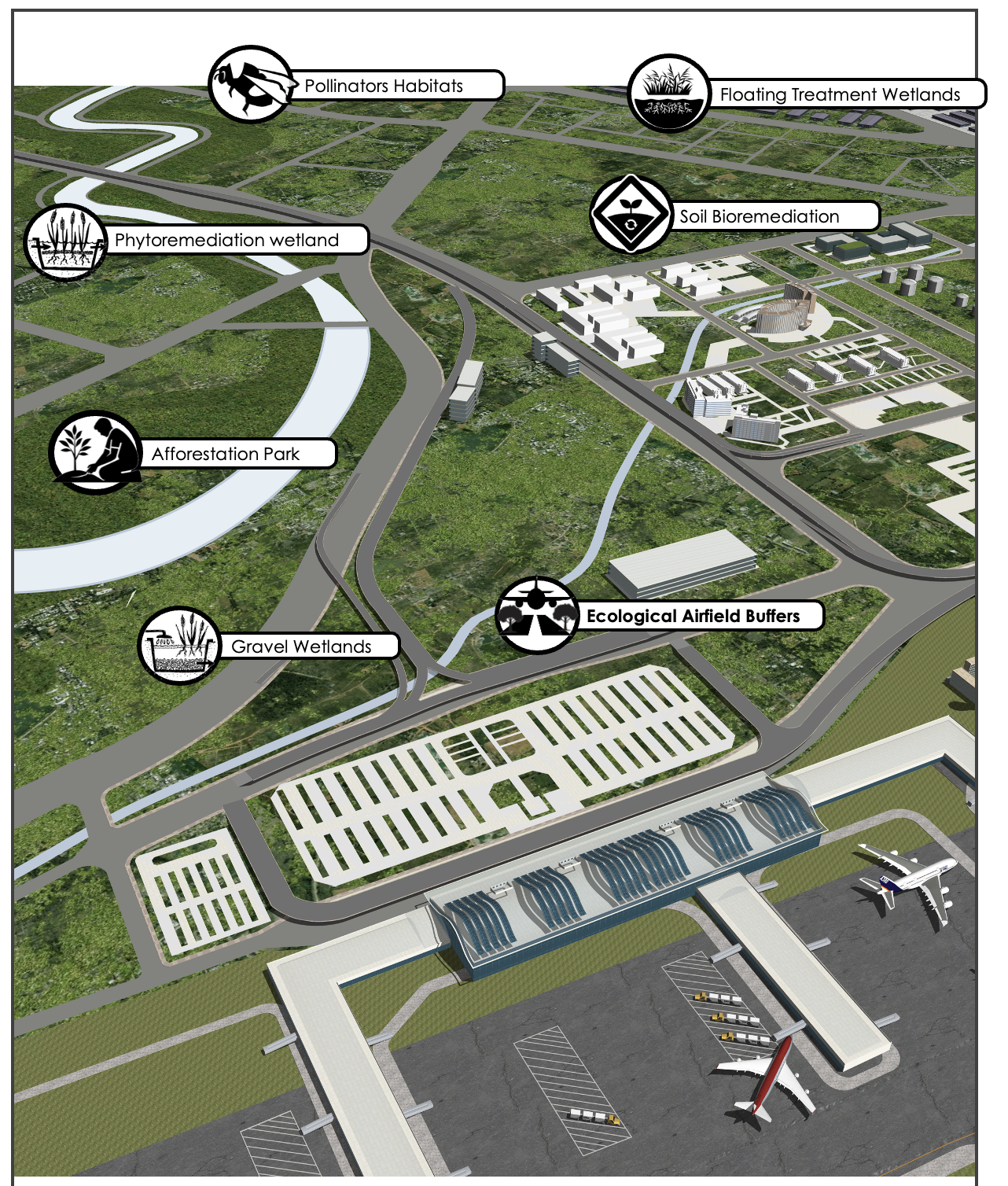
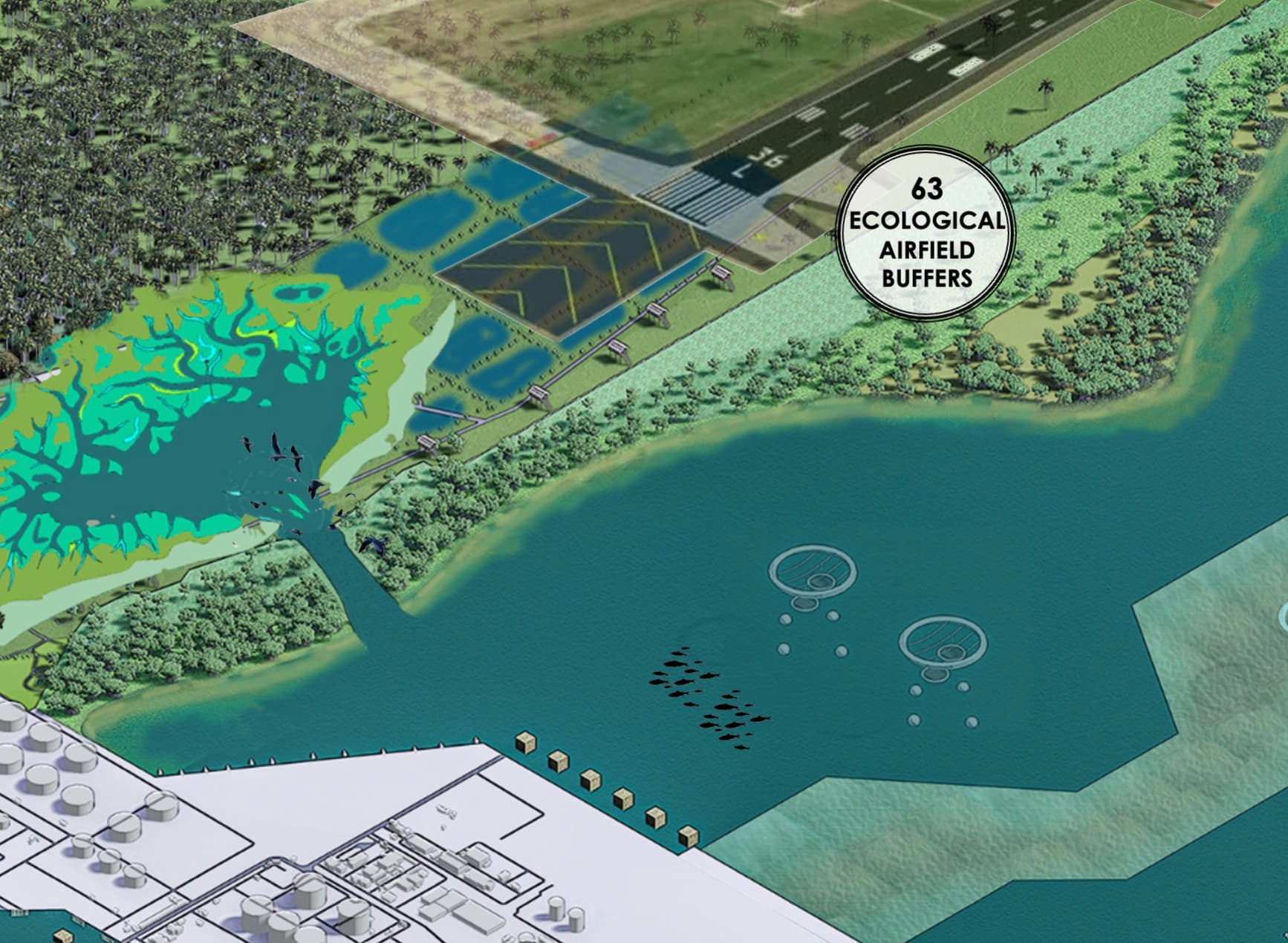
The Ecological Airfield Buffer, Habitat Enhancement, and Carbon Compensation System is a comprehensive NbS concept designed to address critical environmental challenges at airports, including soil restoration, water management, bird safety, and biodiversity conservation, while compensating for the ecological footprint and GHG emissions of airport activities.

This approach integrates phytoremediation zones to restore and depollute airport grounds, biofiltration wetlands for stormwater management and pollutant filtration, and vegetated buffers to provide habitat connectivity while minimizing bird strikes near runways. The creation of ecological habitat islands and reforestation zones nearby compensates for habitat loss and sequesters carbon, aligning with regional climate goals.

Technically, the system employs solutions like biochar, native plantings, and gabion walls for resilience, while landscape strategies focus on integrating green corridors and multifunctional spaces that enhance biodiversity and serve as carbon sinks.

This NbS fosters resilience to climate challenges such as monsoons and heatwaves, ensuring airports operate safely and sustainably while reducing impacts on the broader ecological health of Southeast Asia’s urban and peri-urban landscapes.


  • Ecosystem restoration
  • Ecosystem based disaster reduction
  • Ecological engineering
  • Habitat connectivity
  • Wildlife friendly design
Biodiversity Loss Biodiversity Loss
Flood Control Flood Control
Urban Heat Island Urban Heat Island
Carbon Sequestration Carbon Sequestration
Air Quality Improvement Air Quality Improvement

SUPPORTING

  • Provides habitat islands and connectivity corridors to support local flora and fauna.
  • Restores degraded soils through biochar application and native vegetation.

REGULATING

  • Wetlands and biofiltration systems remove pollutants from stormwater runoff.
  • Forested buffers and agroforestry systems reduce GHG emissions by capturing carbon.

PROVISIONING

  • Vegetated buffers and green infrastructure enhance water storage and availability.
  • Planting fast-growing species for agroforestry can provide biomass or non-timber forest products.

SOCIAL BENEFITS

  • Habitat-enhanced areas near airports offer green spaces for local communities and travelers.
  • Involves local stakeholders in afforestation, habitat creation, and maintenance projects.
NbS63_Airport Buffer Principles

Land Use Conflicts: Limited availability of surrounding land for ecological buffers and compensation systems due to urbanization and competing development priorities.

Bird-Aircraft Collisions: Balancing habitat creation with the risk of attracting birds near flight paths, requiring careful species and site selection.

Maintenance Costs: High financial and technical resources are needed to maintain ecological buffers, wetlands, and vegetation in tropical climates prone to invasive species and rapid plant growth.

GHG Emission Reduction

Reduction in net carbon emissions measured by the amount of CO₂ sequestered annually through vegetation and reforested areas.

Biodiversity Enhancement

Increase in local wildlife populations and species diversity.

Improved Water Quality

Decrease in pollutants such as nitrates and phosphates in runoff, assessed through water quality testing.

Economic Efficiency

Cost savings from reduced stormwater infrastructure needs.

Community Benefits

Increased public access to green spaces and natural areas.

Climate Resilience

Enhanced flood protection and heat mitigation, measured by reduced surface temperatures and improved drainage capacity in and around the airport grounds.

Direct Costs

Establishment costs for vegetation, wetlands, and habitat creation range between $500k and $1.5 million /100 ha.

Indirect Costs

Long-term maintenance and monitoring costs (ecological surveys, vegetation upkeep), at around $50k–$100k annually per site.

Time Horizon

Investment recouped over a 20–30 year horizon with a 3–5% discount rate.

Direct Benefits

Carbon sequestration valued at $30–$60/ton of CO₂ annually, potentially offsetting $100k–$500k of carbon taxes or credits per airport site.

Indirect Benefits

Flood mitigation, water filtration, recreational spaces provide significant economic benefits.

Risk Assessment

Risk mitigation measures for ecological failure may require significant investments in adaptive management over 5 years.

REFERENCES

Singapore, Changi Airport : eco-friendly initiatives and ecological buffer zones.

Thailand, Suvarnabhumi Airport: constructed wetlands for wastewater treatment and flood management.

India, Kempegowda International Airport: 250-acre green zone with native plants.

IMPLEMENTATION OPPORTUNITIES

Philippines, Manila, Ninoy Aquino International Airport.

Indonesia, Bali, Ngurah Rai International Airport. Rebana Economic Corridor.

Vietnam, Hanoi, Noi Bai International Airport.