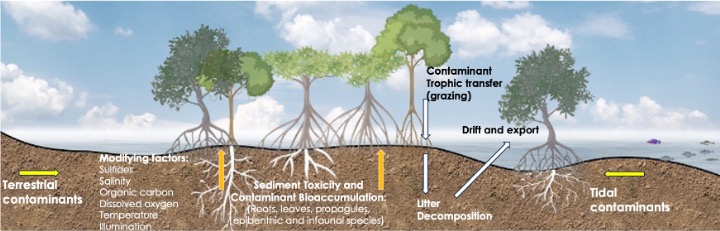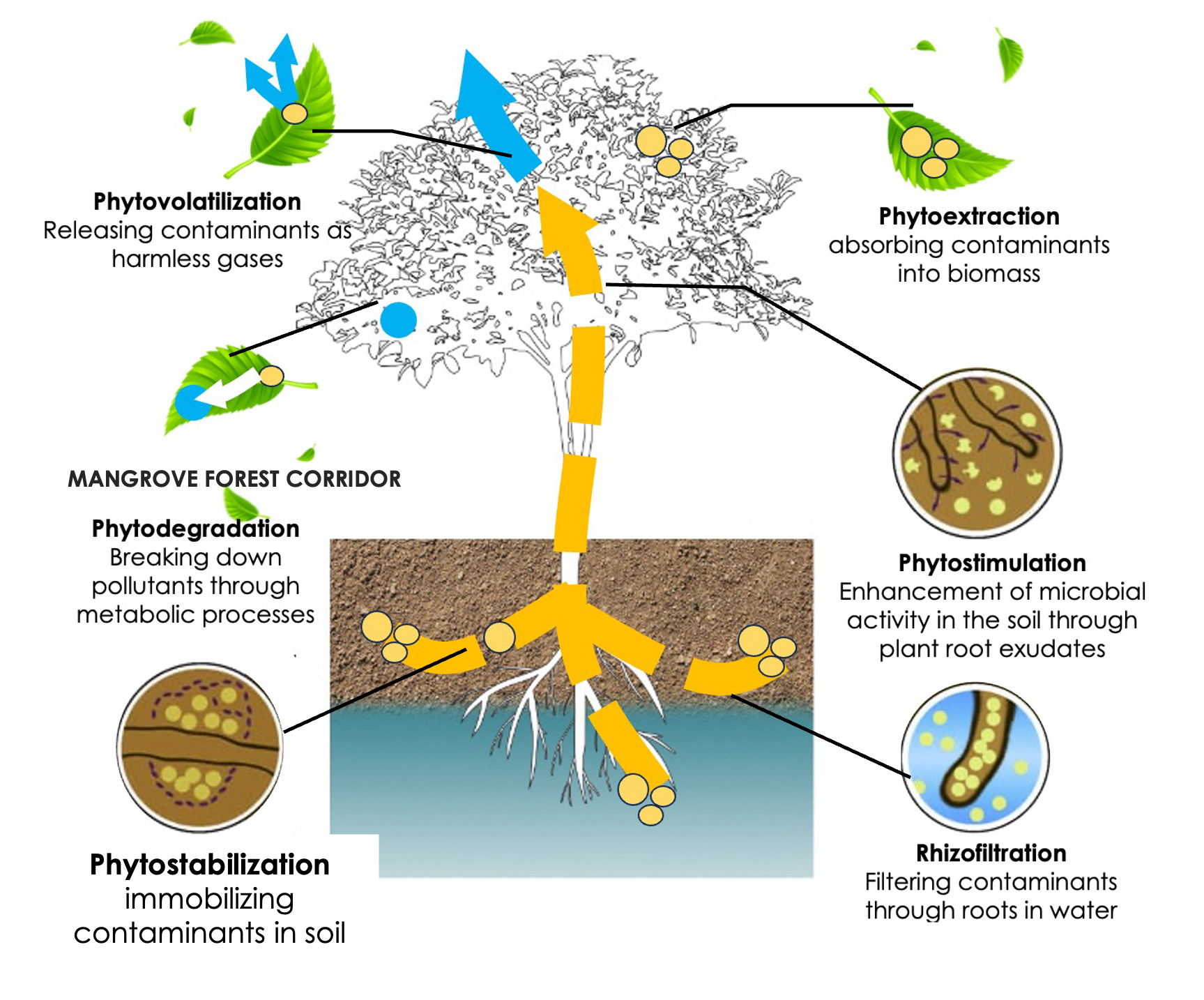

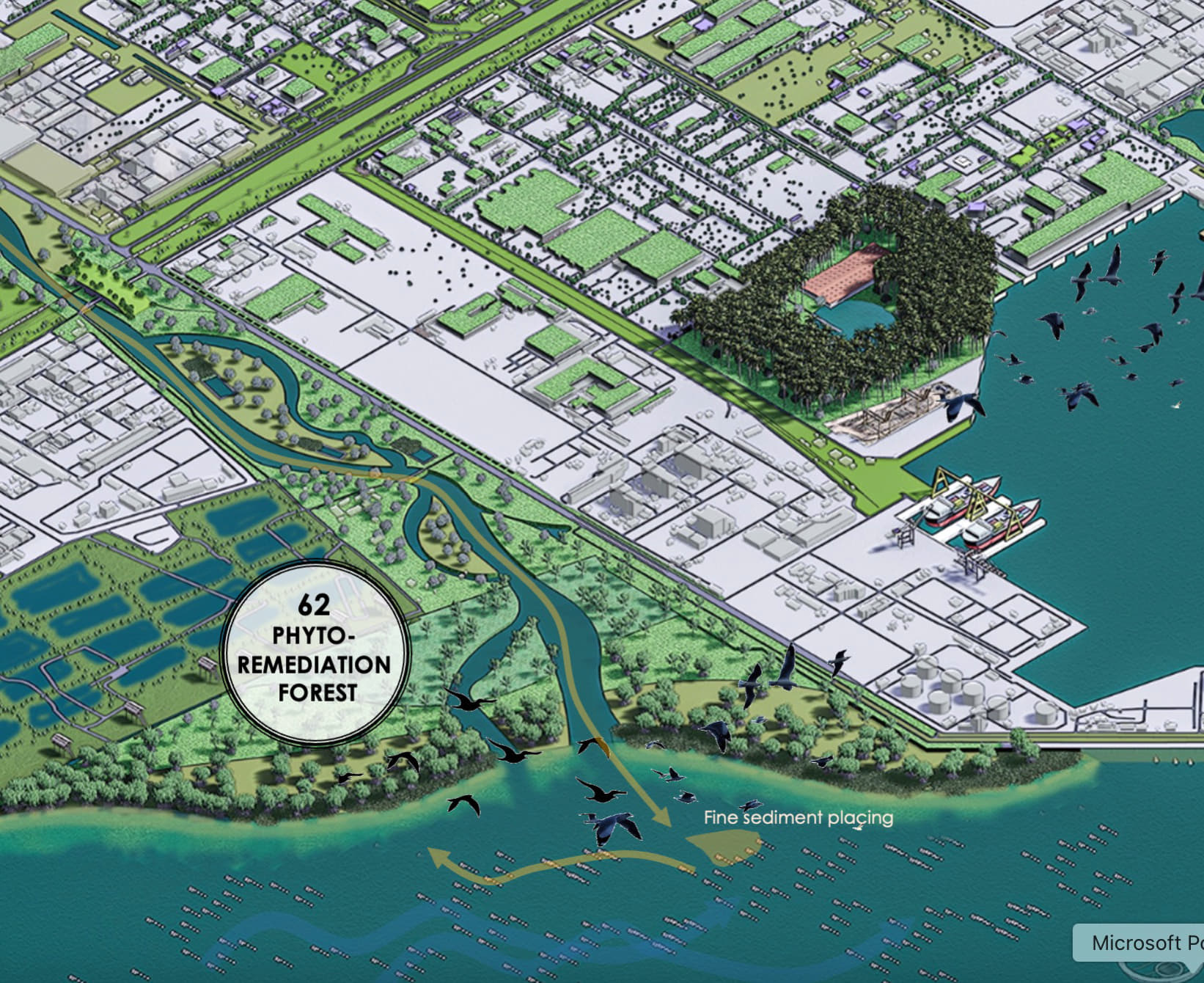
Phytoremediation forest corridors use plants and trees to remove, stabilize, or degrade contaminants in soil, water, and air, aiding in ecosystem restoration. Hyperaccumulator plants play a key role through processes like phytoextraction (absorbing contaminants), phytostabilization (immobilizing pollutants), phytodegradation (breaking down toxins), and rhizofiltration (filtering water contaminants).
Mangrove forests, especially along coastlines and estuaries, are highly effective in trapping sediments, reducing soil toxicity, and enriching landscapes with nutrients. These corridors not only address pollution but also promote biodiversity, carbon sequestration, and soil health.
They provide essential ecosystem services like flood control, coastal protection, and the restoration of degraded lands (e.g., post-mining areas or agricultural soils). Additionally, they enhance local livelihoods by supporting sustainable resource use, making them valuable for both environmental and community resilience.