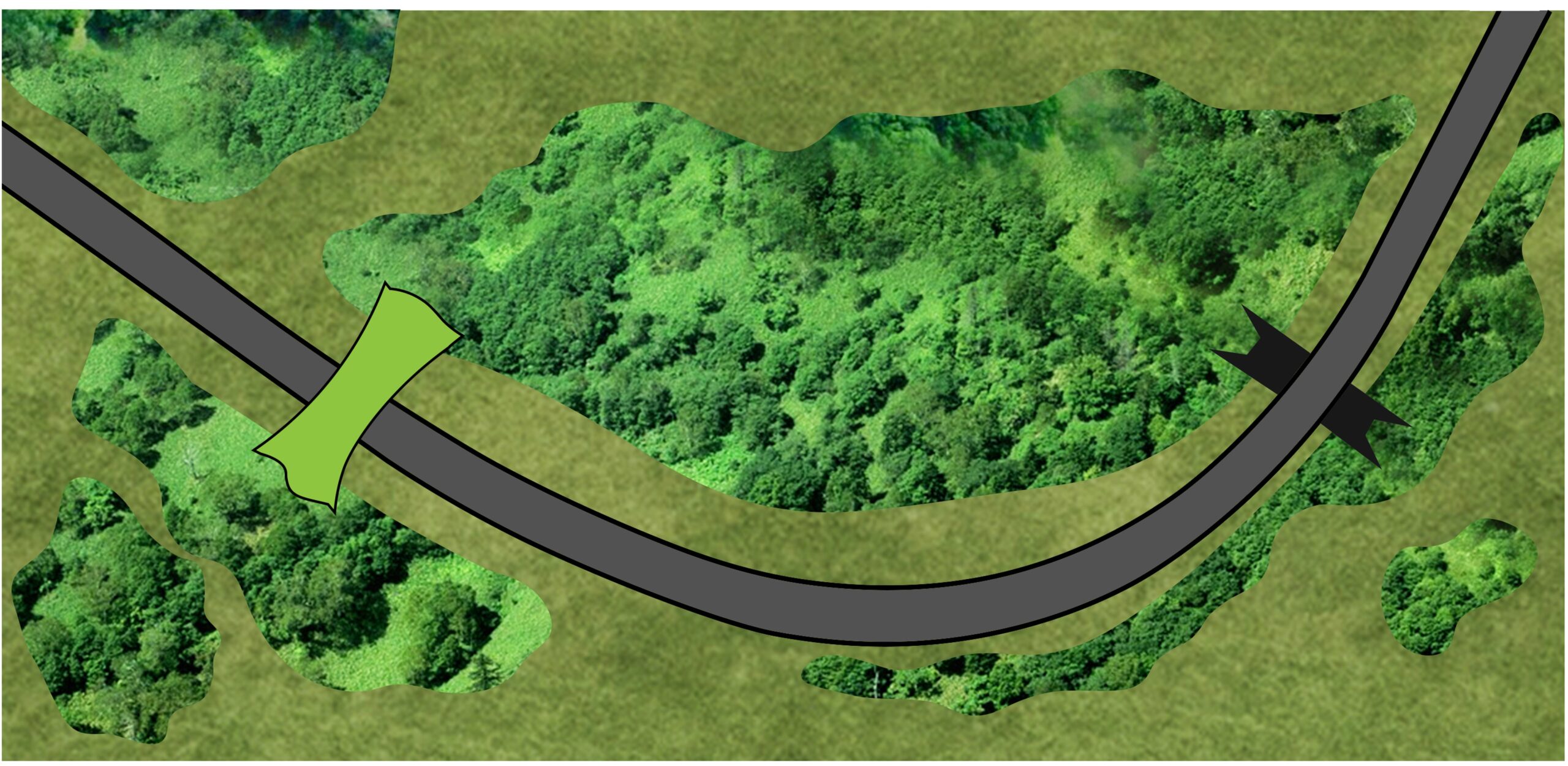

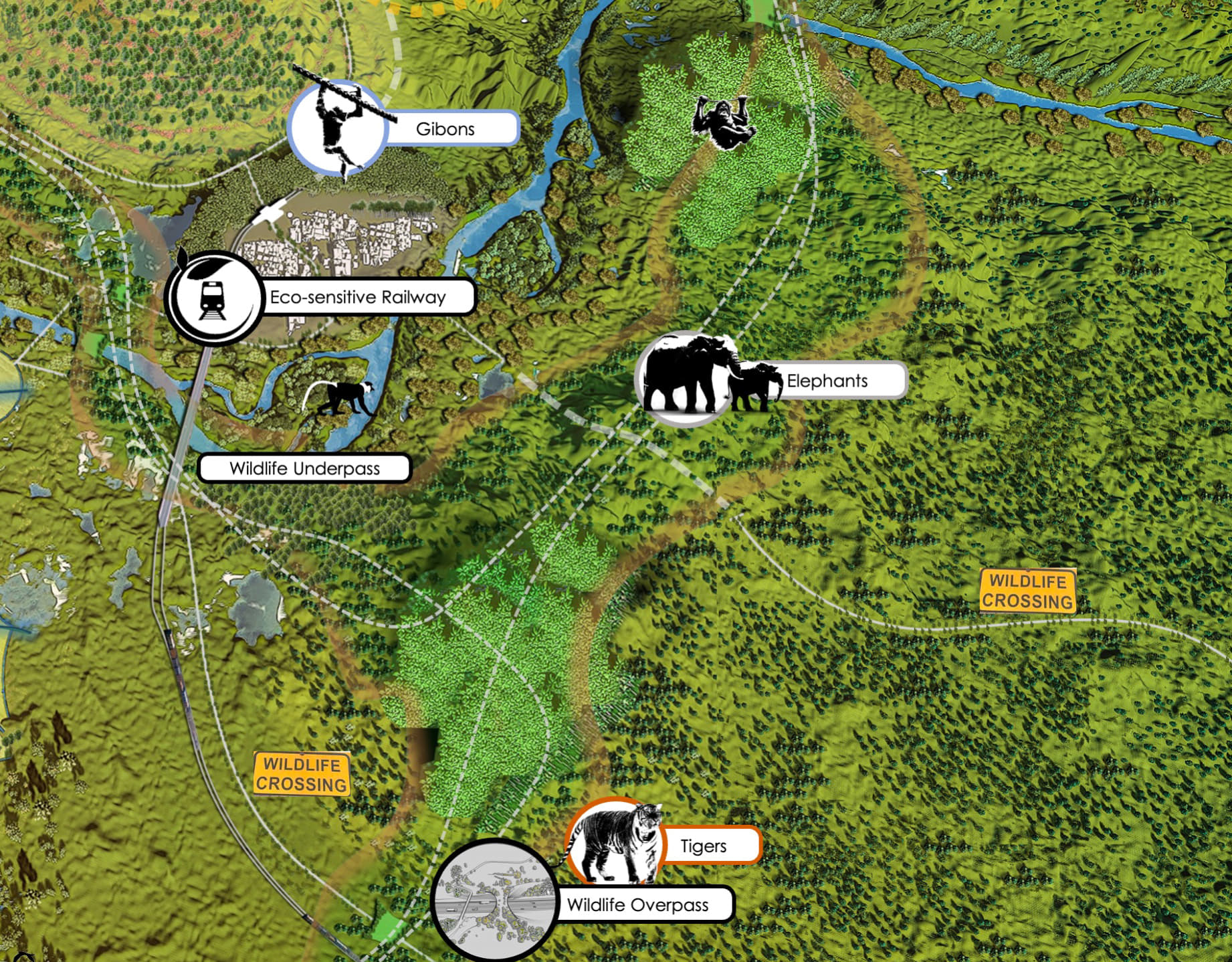
Ecological bridges and underpasses help address the fragmentation of habitats caused by roads, railways, canals, and urban areas, which hinder the mobility of wildlife species such as tigers, elephants, orangutans, and gibbons.
These green infrastructures facilitate safe wildlife movement across human-made barriers, ensuring connectivity between critical habitats, reducing roadkill incidents, and supporting the survival of endangered species. Ecological bridges, often elevated or with green vegetation, allow animals to cross above roads, while underpasses or tunnels provide safe passage beneath highways and railways, ensuring uninterrupted movement for a variety of species.
These solutions are crucial in regions where rapid urbanization and infrastructure development threaten biodiversity. The primary function of ecological bridges and underpasses is to restore habitat connectivity, enabling wildlife to access food, breeding, and migration routes. These structures enhance biodiversity conservation, mitigate human-wildlife conflicts, and support ecosystem health by promoting genetic diversity through safe species movement.
Additionally, they provide social and economic benefits by improving wildlife conservation, which boosts ecotourism and local livelihoods, while reducing the costs associated with road accidents involving animals.