
Upland Reforestation, Afforestation And Agroforestry

Upland reforestation, afforestation, and agroforestry are vital nature-based solutions (NbS) for addressing reforestation needs in the slopes, valleys, and upland areas of Southeast Asia, where rapid deforestation, land degradation, and extreme weather events threaten ecosystems and local livelihoods.

These approaches focus on restoring degraded forests, establishing new forested areas (afforestation), and integrating trees with agricultural practices (agroforestry) to stabilize slopes, reduce soil erosion, mitigate landslides, and enhance water retention. By blending native species with fruit or timber-yielding trees, agroforestry systems balance biodiversity conservation with sustainable resource use, benefiting local communities economically and ecologically.

Reforestation efforts in montane tropical rainforests, dry deciduous forests, and mangroves also enhance carbon sequestration, provide critical wildlife habitats, and regulate hydrological cycles, reducing the risks of floods and sedimentation in valleys.

These NbS approaches foster community engagement, create livelihood opportunities, and restore ecological integrity, making them indispensable for building resilient landscapes and promoting sustainable development in Southeast Asia.


  • Forest landscape restoration
  • Agroecological practices
  • Watershed management
  • Sustainable resource management
  • Wildlife habitat creation
  • Climate change mitigation
Soil Erosion Soil Erosion
Flood Control Flood Control
Biodiversity Loss Biodiversity Loss
Disaster Risk Reduction Disaster Risk Reduction
Carbon Sequestration Carbon Sequestration

SUPPORTING

  • Soil Formation and Fertility: Trees improve soil structure, prevent erosion, and enhance nutrient cycling for long-term agricultural productivity.

REGULATING

  • Water Regulation: Forests stabilize water cycles by reducing runoff, improving infiltration, and maintaining groundwater recharge.
  • Climate Regulation: Tree cover sequesters carbon, reduces heat islands, and mitigates local and global climate impacts.

PROVISIONING

  • Timber and Non-Timber Products: Sustainable harvesting of wood, fruits, and medicinal plants for economic and subsistence use.

SOCIAL BENEFITS

  • Livelihood Enhancement: Agroforestry systems create diverse income sources for rural communities.
  • Disaster Resilience: Trees reduce landslide risks and buffer communities from floods, protecting lives and assets.
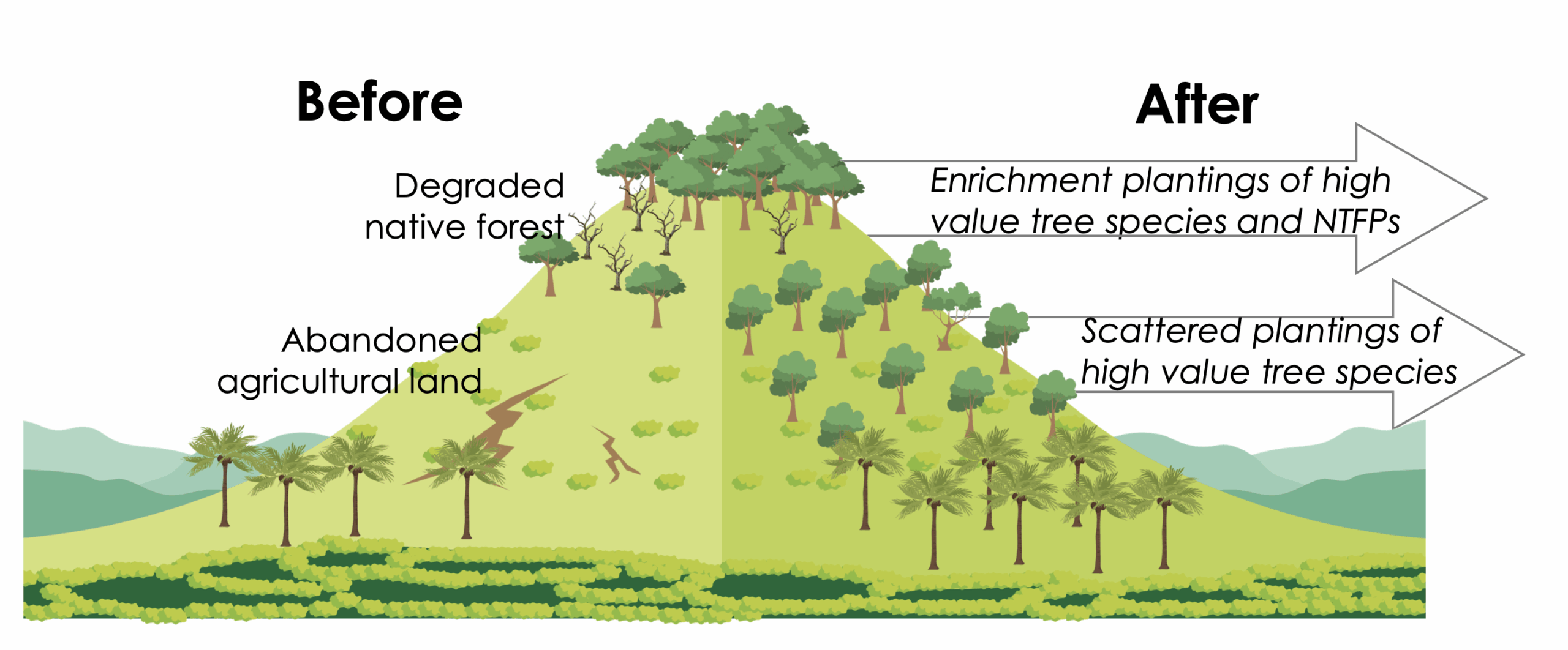
NbS57_Before After Reforestation_ legend
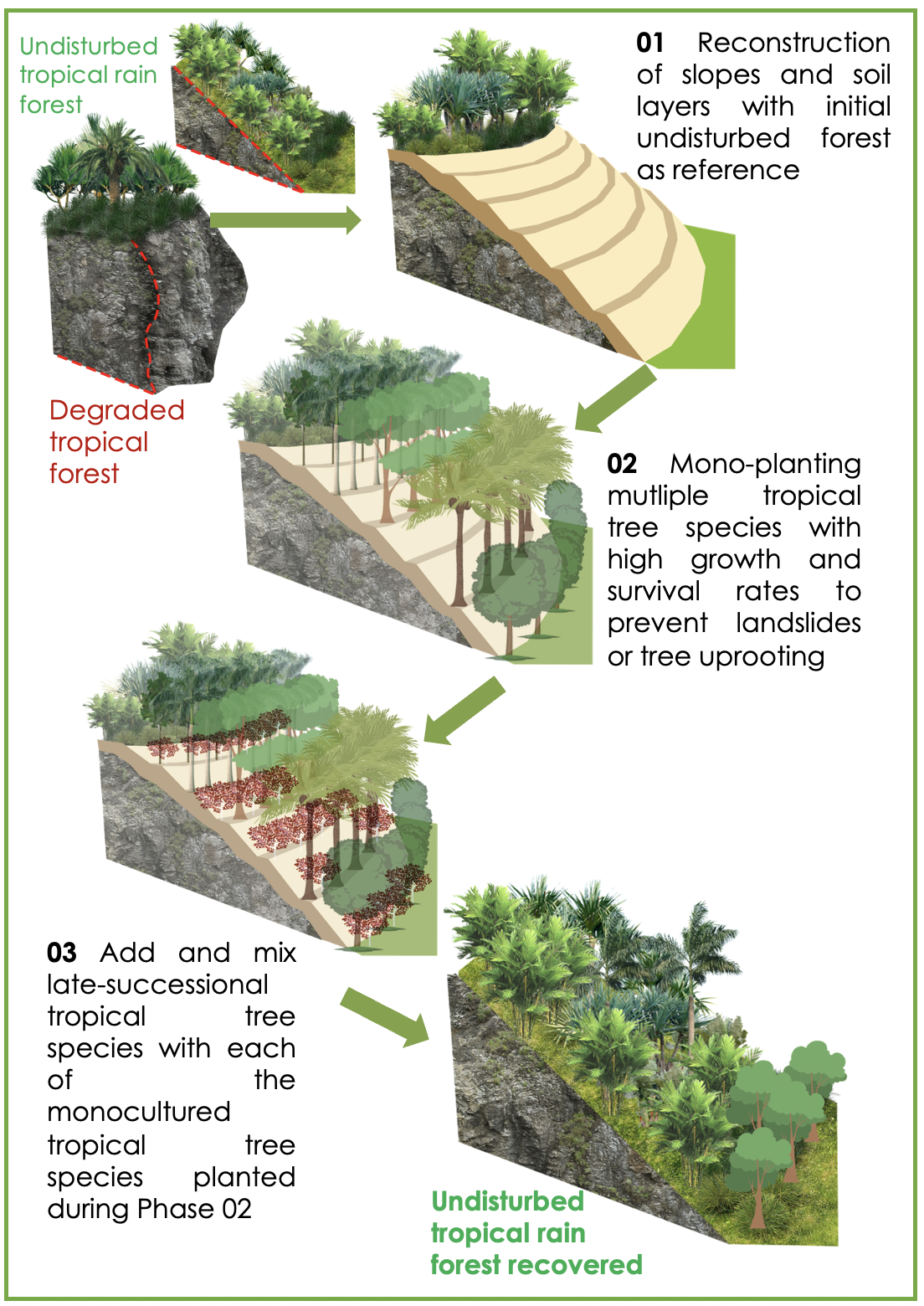
NbS57_Degraded Tropical Forest in Slope Regeneration Steps
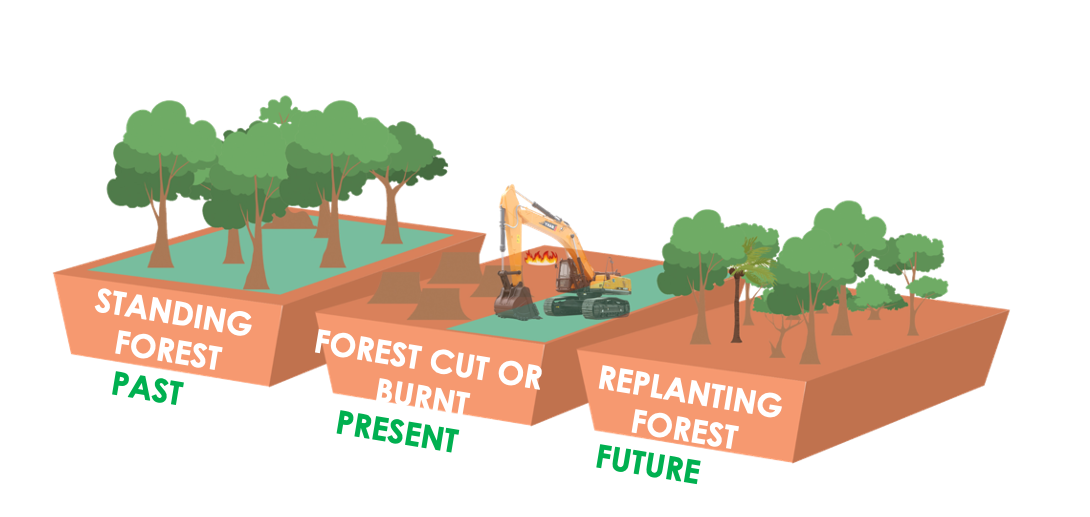
NbS57_Reforestation process
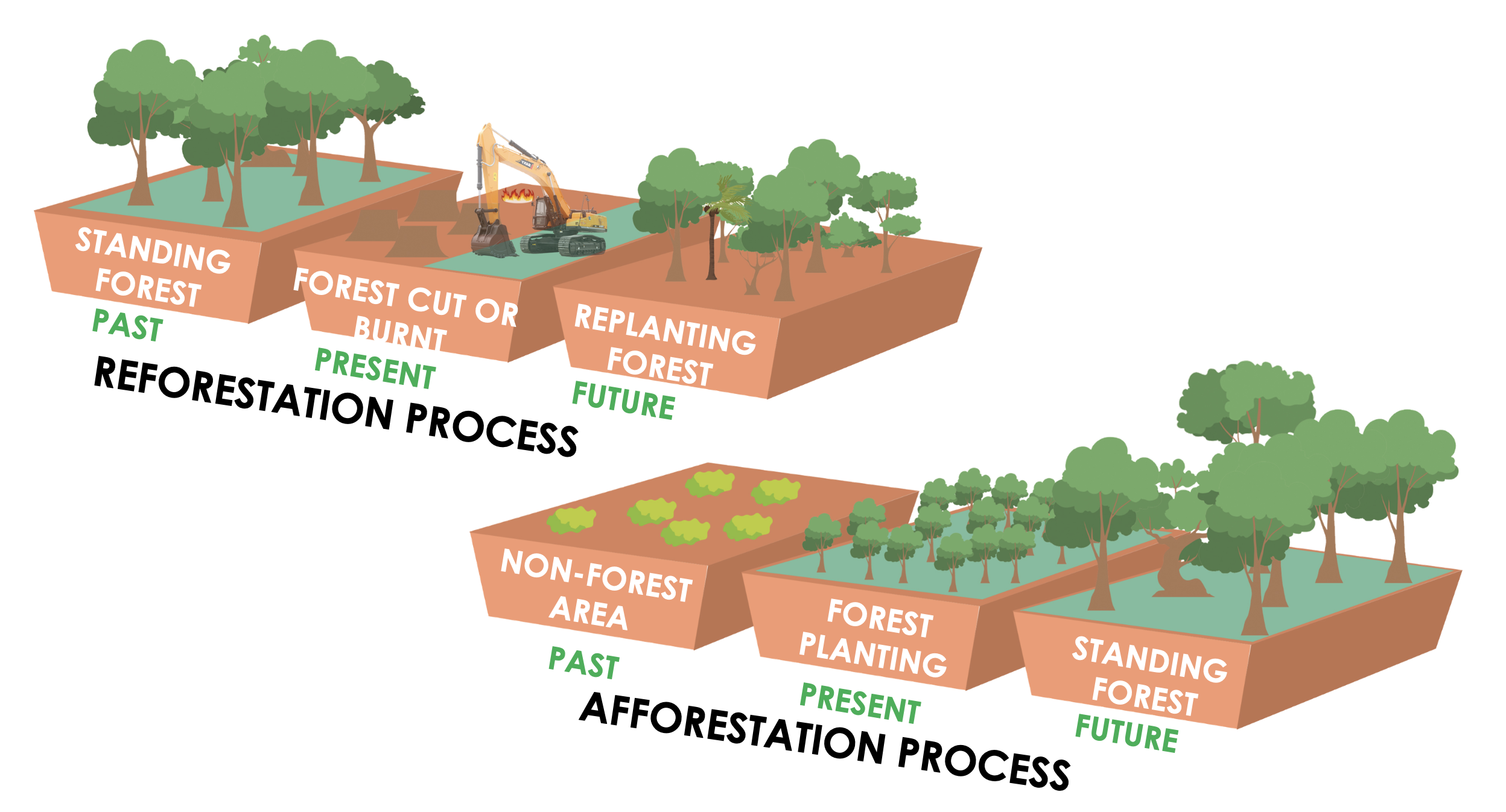
NbS57_Reforestation vs Aforestation_legend

Inappropriate Species Selection: Choosing non-native or poorly adapted species can disrupt local ecosystems and fail to achieve ecological restoration goals.

Community Engagement Challenges: Insufficient involvement of local communities can lead to conflicts over land use and undermine the long-term success of projects.

Climate Vulnerability: Changing climate conditions, such as prolonged droughts or extreme rainfall, can hinder tree survival and growth in upland areas.

Land Tenure Issues: Unclear or disputed land ownership can delay project implementation and create challenges in maintaining reforested or afforested areas.

Erosion Control

Reduces soil erosion on upland slopes, measurable by a 30–50% decrease in annual sediment loss within reforested areas.

Carbon Sequestration

Enhances carbon storage, with an estimated 5–10 tons of CO₂ absorbed per hectare annually in mature forests.

Water Regulation

Improves watershed health, indicated by a 20–40% increase in groundwater recharge and reduced surface runoff during rainy seasons.

Biodiversity Conservation

Supports wildlife habitats, with a measurable increase of 15–25% in species richness in project areas over 5 years.

Livelihood Support

Provides sustainable income through agroforestry crops like coffee or spices.

Disaster Risk Reduction

Mitigates landslide risks, shown by a 60–80% reduction in landslide frequency in reforested regions over a decade.

Direct Costs

Average costs of $800–$2,500 per ha, including sapling purchase, labour, and maintenance.

Indirect Costs

Opportunity costs of land use change and capacity-building activities range from $200–$800 per ha over the project duration.

Time Horizon

Project benefits over 20–50 years, with a discount rate of 5–7% applied for long-term valuation of ecosystem services.

Direct Benefits

Carbon credits and agroforestry yields generate $300–$1,000 annually per hectare after 5–7 years.

Indirect Benefits

Ecosystem service improvements, such as reduced disaster recovery costs and water regulation.

Risk Assessment

Implementation risks are estimated at a 10–20% loss of investment.

REFERENCES

Indonesia, Harapan Rainforest Project (100,000 ha.)

Philippines Upland Reforestation Initiative, Northern Luzon.

Thailand, Chiang Mai Highland Reforestation Project.

IMPLEMENTATION OPPORTUNITIES

Vietnam, Central Highlands.

Indonesia, Dry zones of Timor-Leste and West Timor.

Mekong River Basin.