
Vetiver Grass Systems (vgs)

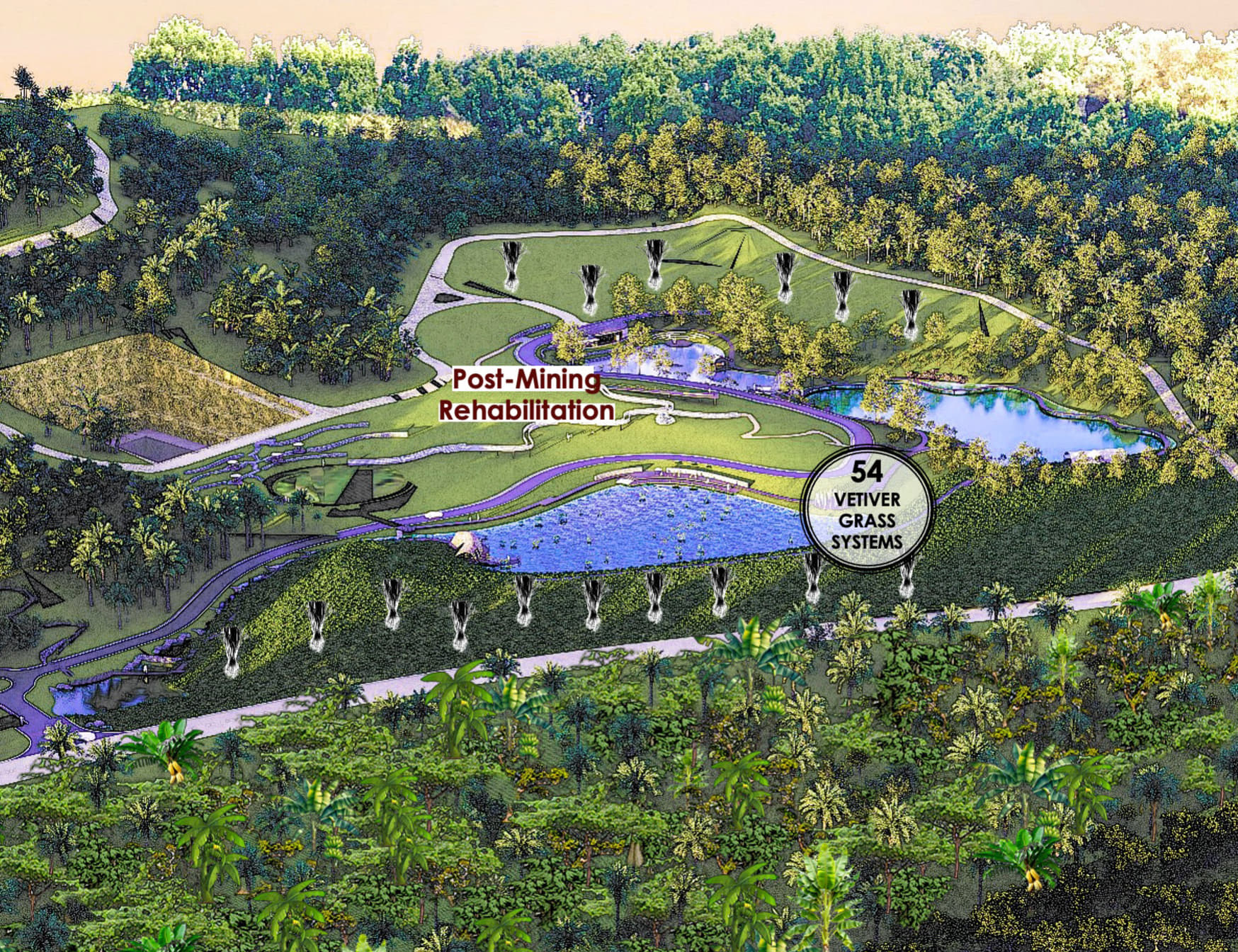
Vetiver Grass Systems (VGS) addresses landslide prevention, slope stabilization, post-mining soil recovery, and soil enrichment near agricultural areas in Southeast Asia.

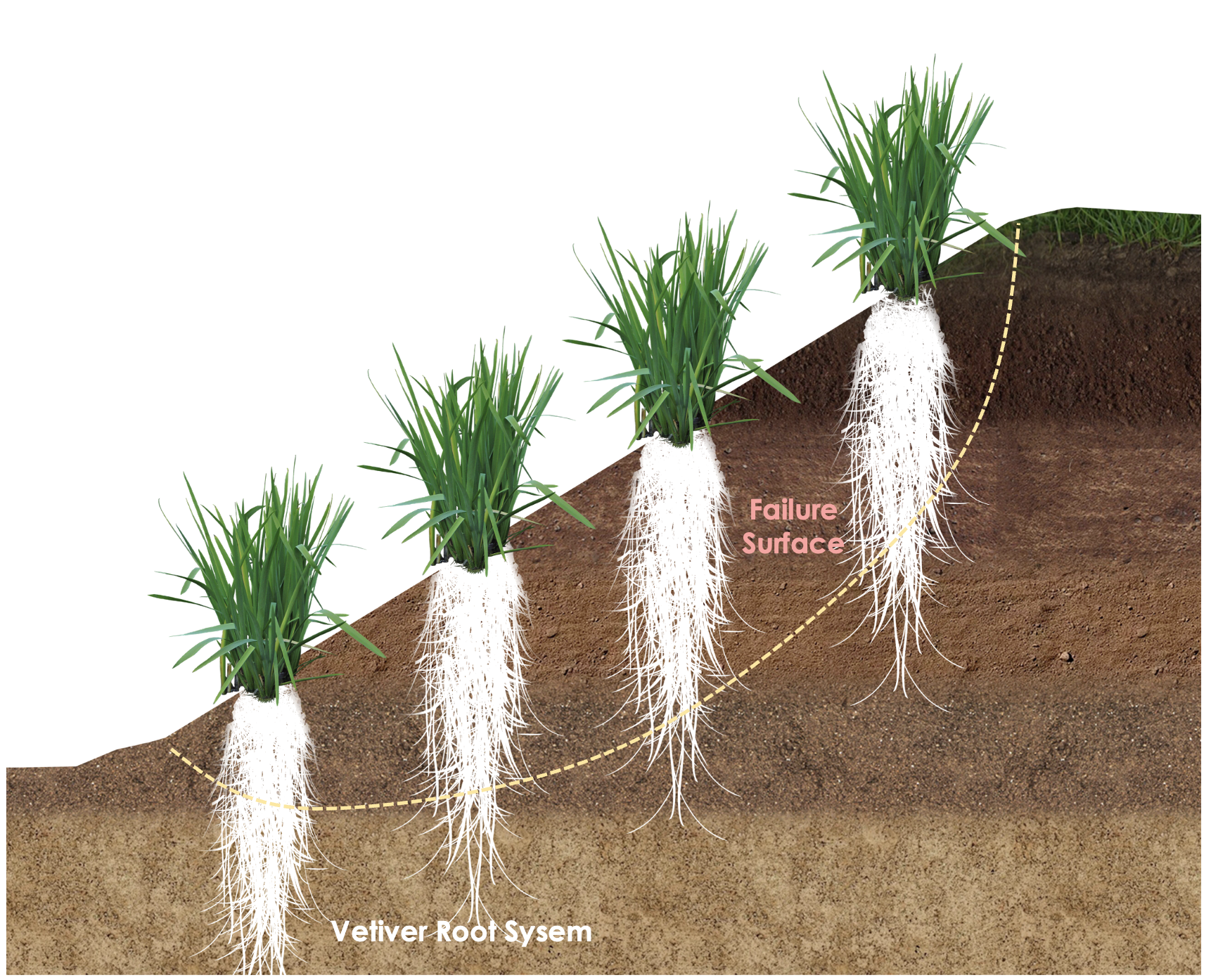
Vetiver grass (Chrysopogon zizanioides), known for its deep, dense, and vertical root system, binds soil effectively, reducing erosion and improving slope stability, even on steep terrains and degraded landscapes. Its adaptability to diverse climatic conditions, from tropical to sub-tropical environments, makes it ideal for the region’s diverse ecosystems.

VGS is often combined with agroforestry practices, integrating native tree species such as teak (Tectona grandis), bamboo, and fruit-bearing trees to create multi-functional landscapes that provide additional ecological and economic benefits, such as wildlife habitat restoration, carbon sequestration, and livelihood support for local communities.By rehabilitating degraded lands, particularly in post-mining areas, VGS enhances soil fertility, water retention, and agricultural productivity, fostering climate resilience in flood- and drought-prone areas.

Its affordability, minimal maintenance requirements, and compatibility with traditional farming systems make VGS socially and economically viable for smallholder farmers and local governments.Existing lessons from Southeast Asia emphasize the importance of participatory approaches in implementing VGS, where community engagement ensures sustained maintenance and integration with local land-use practices.As such, VGS supports not only physical resilience to climate events like floods and landslides but also strengthens rural livelihoods and promotes sustainable land management across the region.

  • Erosion control & soil conservation
  • Agroecosystem resilience
  • Biodiversity enhancement
  • Flood & water management
  • Soil fertility & enrichment
  • Carbon sequestration
Soil Erosion Soil Erosion
Flood Control Flood Control
Disaster Risk Reduction Disaster Risk Reduction

SUPPORTING

  • Biodiversity enhancement: VGS support species by providing ground cover and stabilizing soil.

REGULATING

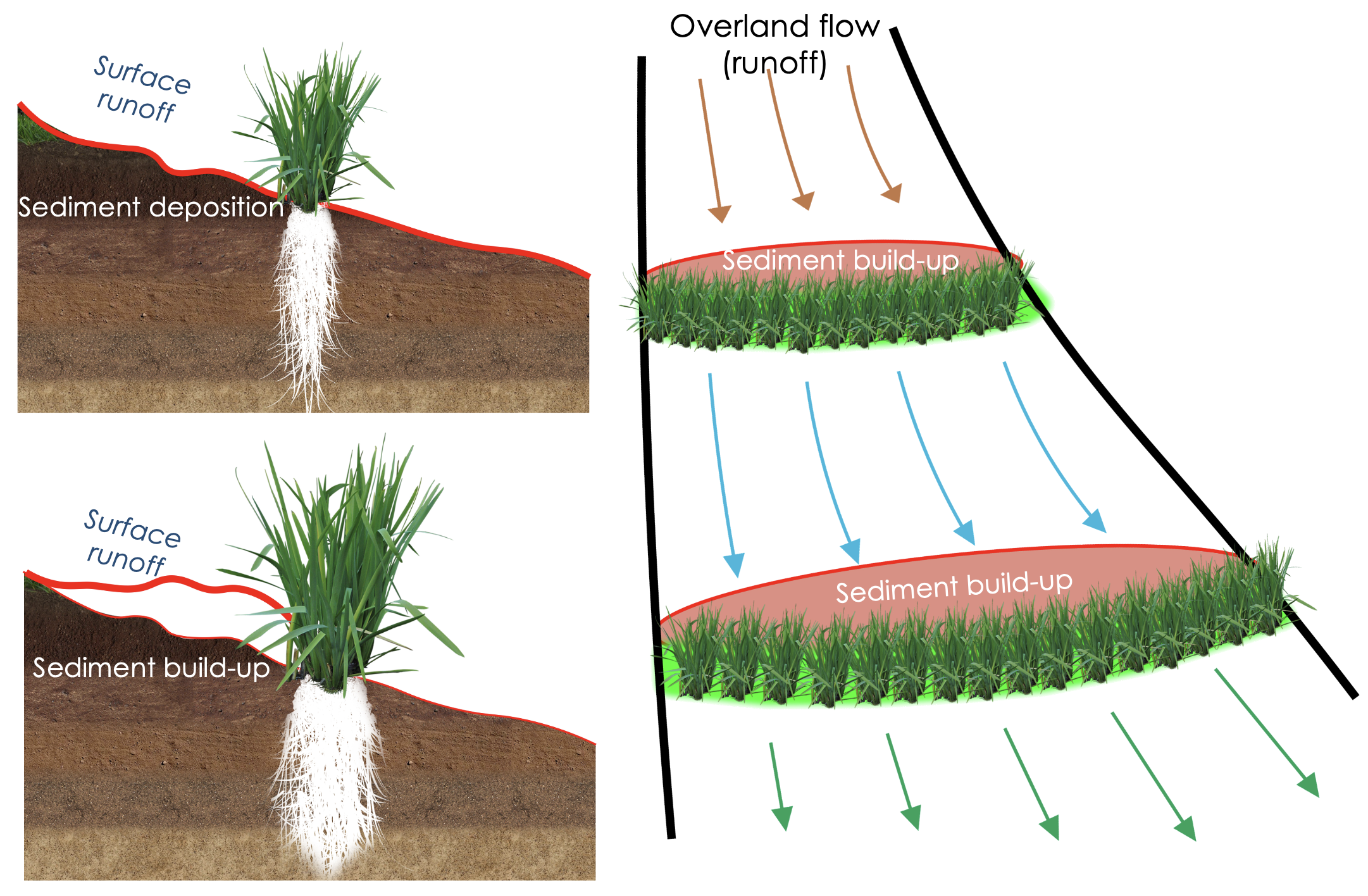
  • Water filtration: VGS dense root system reduces sediment and contaminants in water runoff, improving water quality in nearby water bodies.

PROVISIONING

  • Soil fertility enhancement: The root structure of vetiver enhances soil structure and helps retain moisture, improving soil quality and fertility.

SOCIAL BENEFITS

  • Livelihood support: Vetiver grass can be harvested and processed into mats, baskets, and ropes, providing income for local communities.
NbS54_Sediment deposition and buildup with Vetiver_Legend
NbS54_Vetiver in Slope section_legend

Invasive Potential: Vetiver grass, if not properly managed, may become invasive and outcompete local vegetation, leading to a loss of biodiversity in some ecosystems.

Site-Specific Suitability: VGS may not be effective in areas with extreme soil salinity or poor drainage, limiting its application in certain coastal regions.

Initial Investment and Maintenance: While VGS is cost-effective in the long term, initial establishment costs and ongoing maintenance efforts can be a barrier for smallholder farmers.

Climate Sensitivity: Vetiver grass may not perform optimally in extreme climate conditions, such as prolonged droughts or high heat.

Soil Erosion Control

Reduced soil erosion rates, measured through sediment deposition and soil loss assessments.

Flood Mitigation

Decreased surface runoff, evaluated by water retention capacity and reduced flood frequency in adjacent areas.

Soil Fertility Restoration

Increased organic matter content and nutrient levels in the soil, measured by soil quality tests.

Carbon Sequestration

Amount of carbon stored in vetiver biomass and soil, quantified through carbon sequestration assessments.

Biodiversity Enhancement

Increased species diversity, tracked by monitoring the presence of native flora and fauna in areas integrated with VGS.

Livelihood Improvement

Increase in local income, measured by sales of vetiver-based products or improved agricultural yields.

Direct Costs

Vetiver grass system establishment costs (e.g., seedlings, planting, irrigation) range from $500 to $2,000 per ha.

Indirect Costs

Costs related to monitoring, maintenance, and capacity building for local communities can amount to $200 to $500 annually per ha.

Time Horizon

10–20 years time horizon with a discount rate of 5–10% to account for long-term benefits and costs.

Direct Benefits

Increased agricultural productivity or reduced erosion

Indirect Benefits

Indirect benefits, such as carbon sequestration, improved water quality, and biodiversity enhancement, can yield estimated savings or gains of $200 to $1,000 per hectare annually.

Risk Assessment

Risks include initial establishment failure, invasion by non-native species, or underperformance due to poor site selection

REFERENCES

Mindanao Post-mining Rehabilitation Project, the Philippines

Post-Coal mining rehabilitation, Quang Ninh Province, Vietnam

VGS applications in Northern Highlands, Thailand

IMPLEMENTATION OPPORTUNITIES

Riau Province post-mining recovery, Sumatra, Indonesia

Bolaven Plateau Soil recovery in agriculture, Laos

Slope stabilisation in Benguet Province, Phil.