
Seaweed Aquaculture

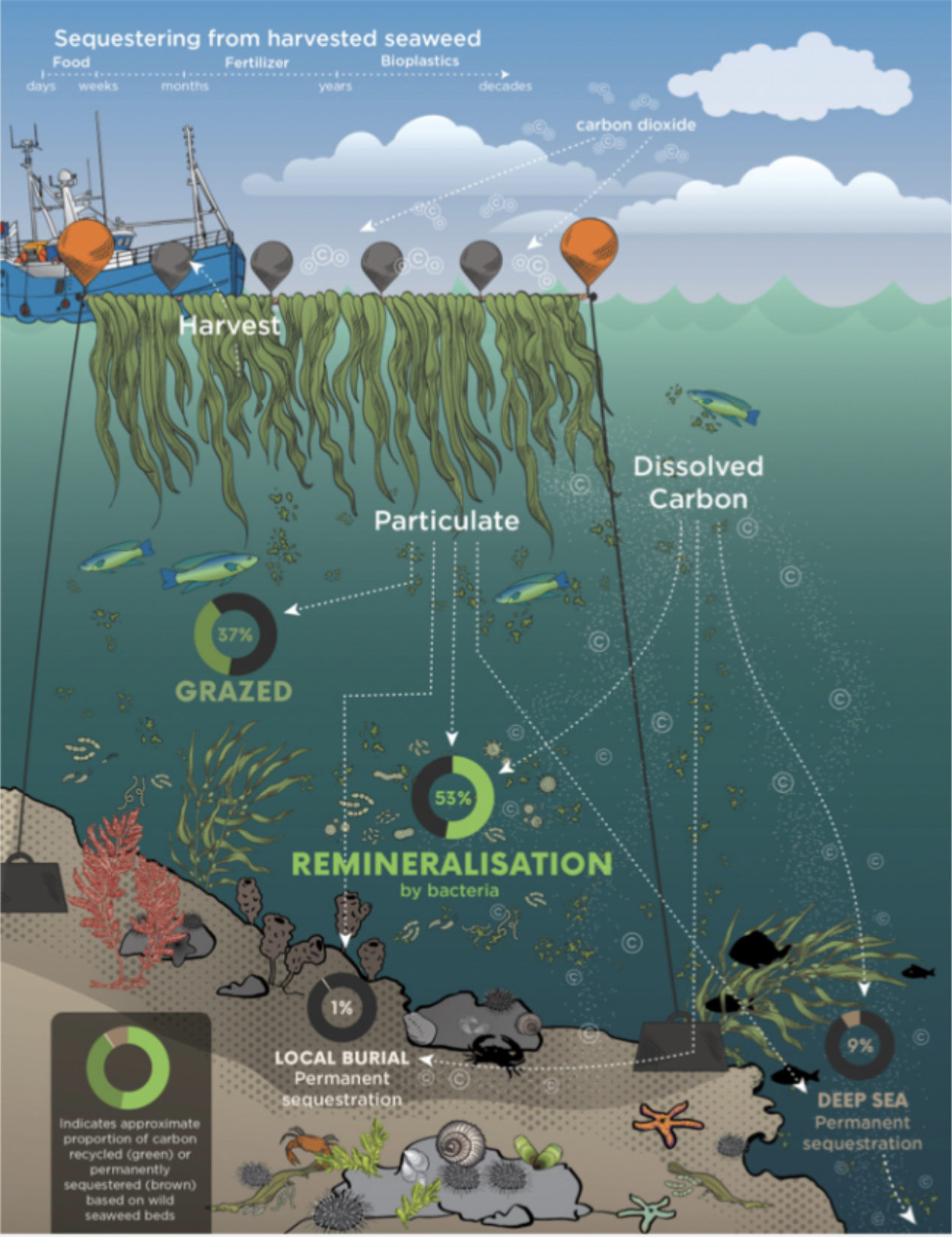
Seaweed aquaculture can contribute significantly to carbon
sequestration and marine ecosystem protection, as it naturally
absorbs CO2 during photosynthesis, helping mitigate the impacts of
climate change by sequestering carbon in their biomass and the
surrounding waters.

Additionally, seaweed cultivation promotes the
remineralisation of nutrients by bacteria, enhancing nutrient cycling
and water quality in coastal zones.

As a biodegradable product,
seaweed can be used in various industries, including food, biofuels,
and pharmaceuticals, creating sustainable economic opportunities
for local communities. Seaweed aquaculture also provides habitat
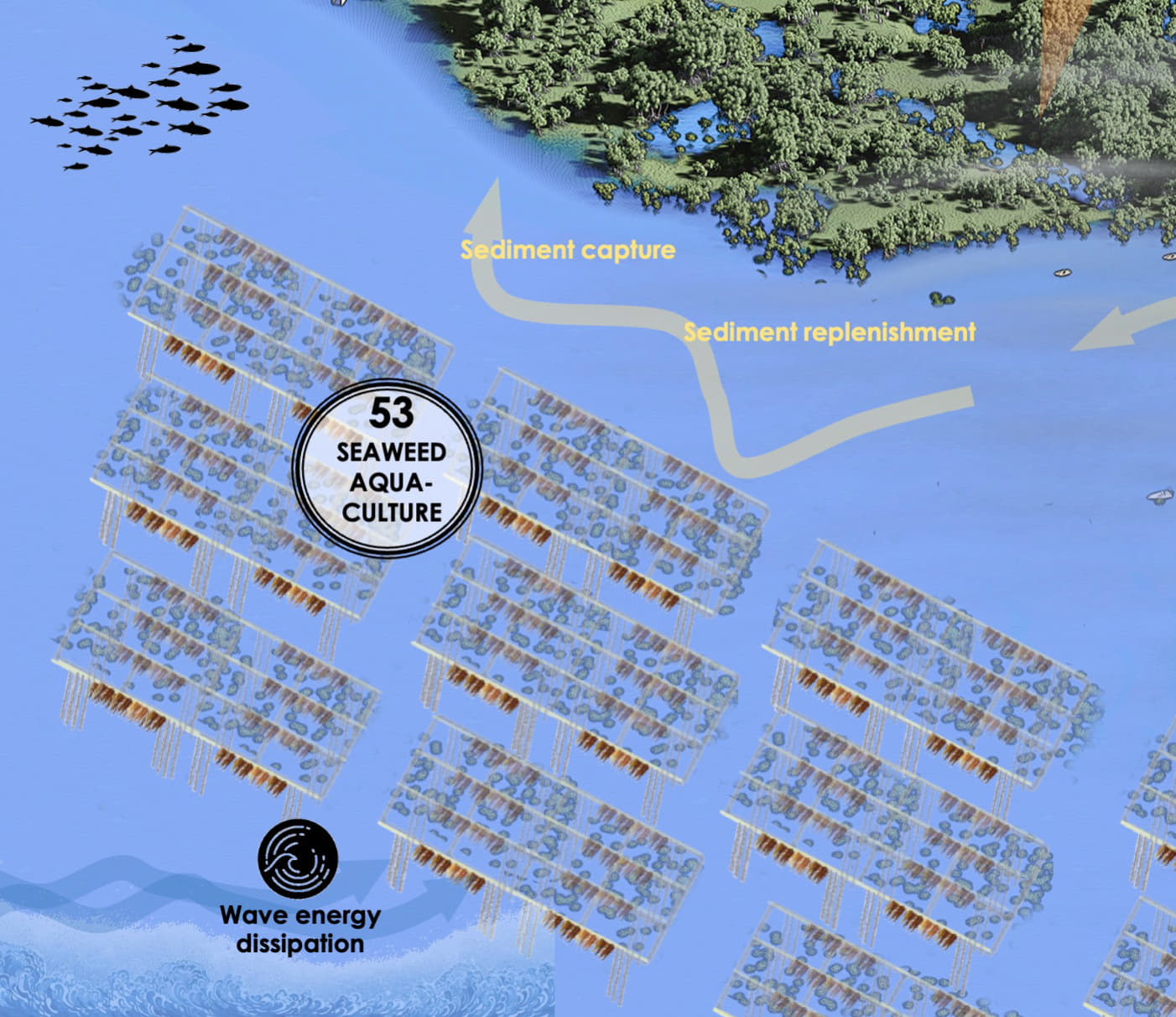
for marine life, supporting biodiversity, while helping to protect
coastal areas from erosion by stabilizing sediments.

However, the size and scale of seaweed farming are crucial to
ensure it remains a beneficial NbS. If managed poorly or cultivated
at too large a scale, seaweed farms could alter local ecosystems,
cause shading that reduces light penetration, and potentially
interfere with native species.

Optimizing the density and location of
seaweed cultivation is essential to avoid negative impacts on
marine wildlife, including fish and coral reefs. Ideal locations are
sheltered coastal zones with high nutrient availability but low risk of
excess eutrophication, and farms should be carefully monitored to
ensure sustainable productivity without disrupting the balance of
marine ecosystems.


  • Carbon sequestration
  • Water quality improvement
  • Biodiversity enhancement
  • Ecosystem restoration
  • Nutrient cycling
Biodiversity Loss Biodiversity Loss
Flood Control Flood Control
Soil Erosion Soil Erosion
Carbon Sequestration Carbon Sequestration
Food Security Food Security

SUPPORTING

• Biodiversity Enhancement: Seaweed
aquaculture provides habitat and
food for various marine species.

REGULATING

• Carbon Sequestration: Seaweed
absorbs CO2 from the atmosphere,
contributing to carbon storage and
climate change mitigation.
• Water Quality Improvement:
Seaweed helps improving water
quality and reducing eutrophication
risks.

PROVISIONING

• Sustainable Seafood Production:
Seaweed farming provides a
renewable source of food, fuel, and
other products with minimal
environmental impact.

SOCIAL BENEFITS

• Livelihood Support: Seaweed
aquaculture creates jobs and
income opportunities for local
communities.

NbS53_Processes of Seaweed Aquaculture
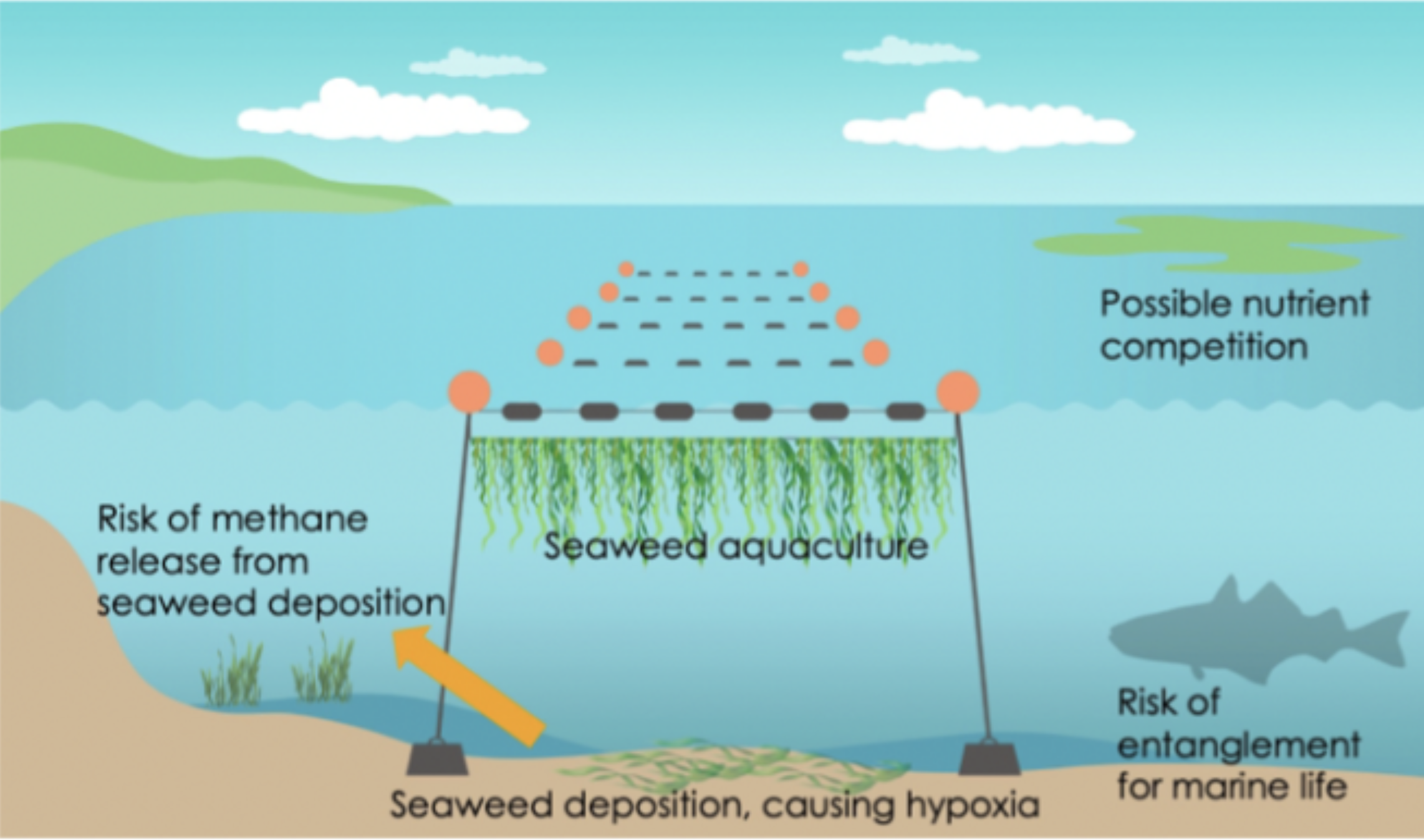
NbS53_Possible Issues with Seaweed Aquaculture if not well implemented

Environmental Stress: Seaweed farmscan be vulnerable to environmentalstressors like temperature fluctuations,
ocean acidification, and pollution.

Coastal Habitat Degradation:Improper placement or large-scaleseaweed farming could lead to thedegradation of sensitive coastal
ecosystems.

Overexploitation and Monoculture:Intensive seaweed farming can lead to overexploitation of coastal areas and the establishment of monocultures.

Market Volatility: Seaweed aquaculture markets can be unstable, with fluctuating prices driven by global demand,
impacting the economic viability of local
farmers

Carbon Sequestration

Reduced atmospheric CO2 levels due to
seaweed biomass growth, measured in tons of
CO2 sequestered per year.

Water Quality Improvement

Decrease in nitrogen and phosphorus
concentrations in farmed areas.

Biodiversity Enhancement

Livelihood Support

Sustainable Food Source

Volume of seaweed harvested and sold as food or
other products, measured in tons per year.

Direct Costs

Indirect Costs

Capacity-building, research, and monitoring costs
range from $500 to $1,500/ha/year.

Time Horizon

Direct Benefits

Indirect Benefits

Risk Assessment

Risks like disease, storm damage, or market
fluctuations could result in losses of $1,000 to $3,000
per hectare in affected years

REFERENCES

Philippines, Farmers’ Development in Tawi-
Tawi.

Indonesia, Seaweed Aquaculture for Blue
Carbon.

Tanzania, Blue Economy and Seaweed
Farming in Zanzibar.

IMPLEMENTATION OPPORTUNITIES

Vietnam, Mekong Delta.

Thailand, Andaman Coast.

Philippines, Central Visayas.

Malaysia, Eastern Sabah.

Indonesia, Sunda Strait.