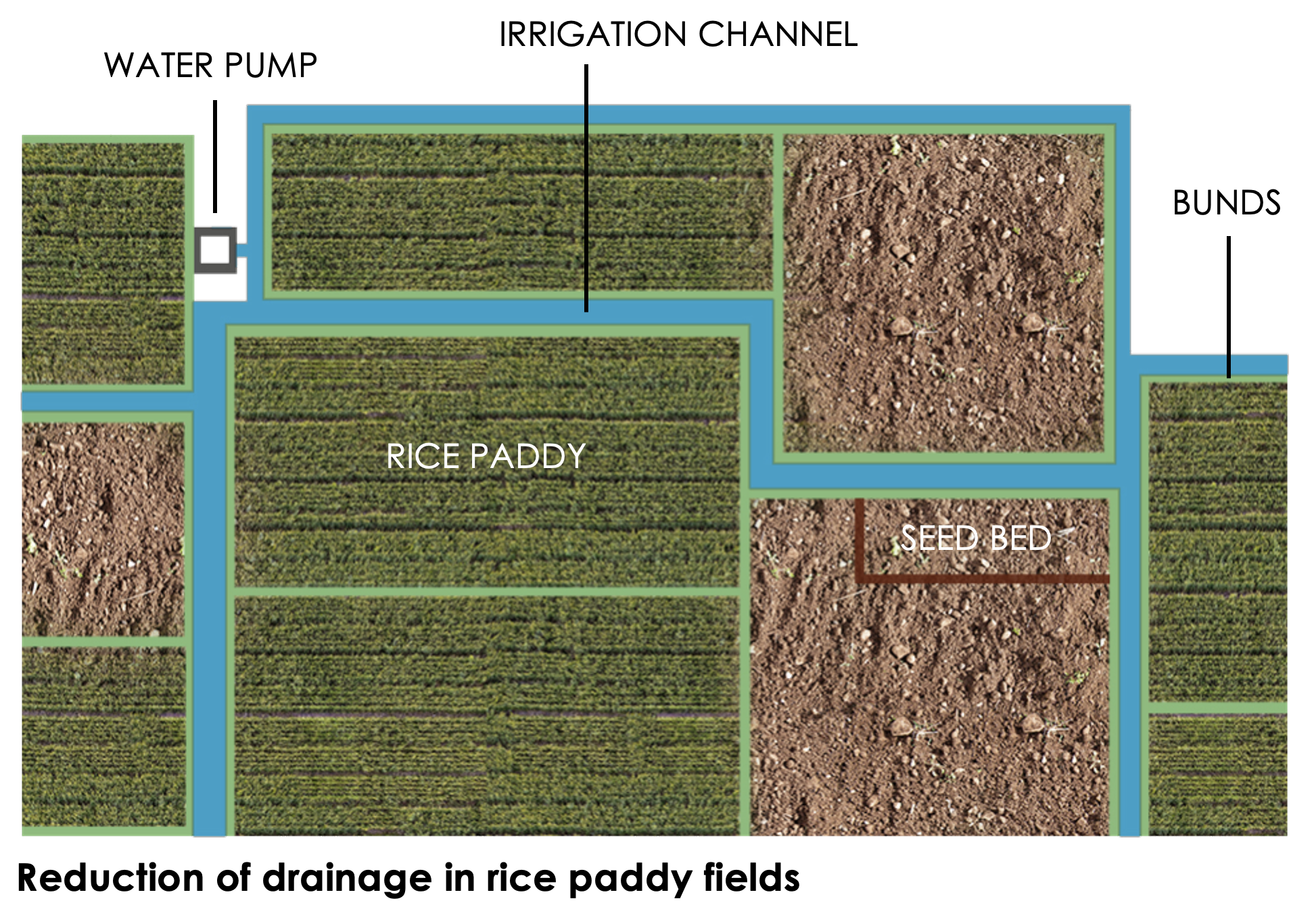

Drainage reduction in rice paddy fields addresses climate resilience and food security by optimizing water management through controlled irrigation and reduced water drainage.
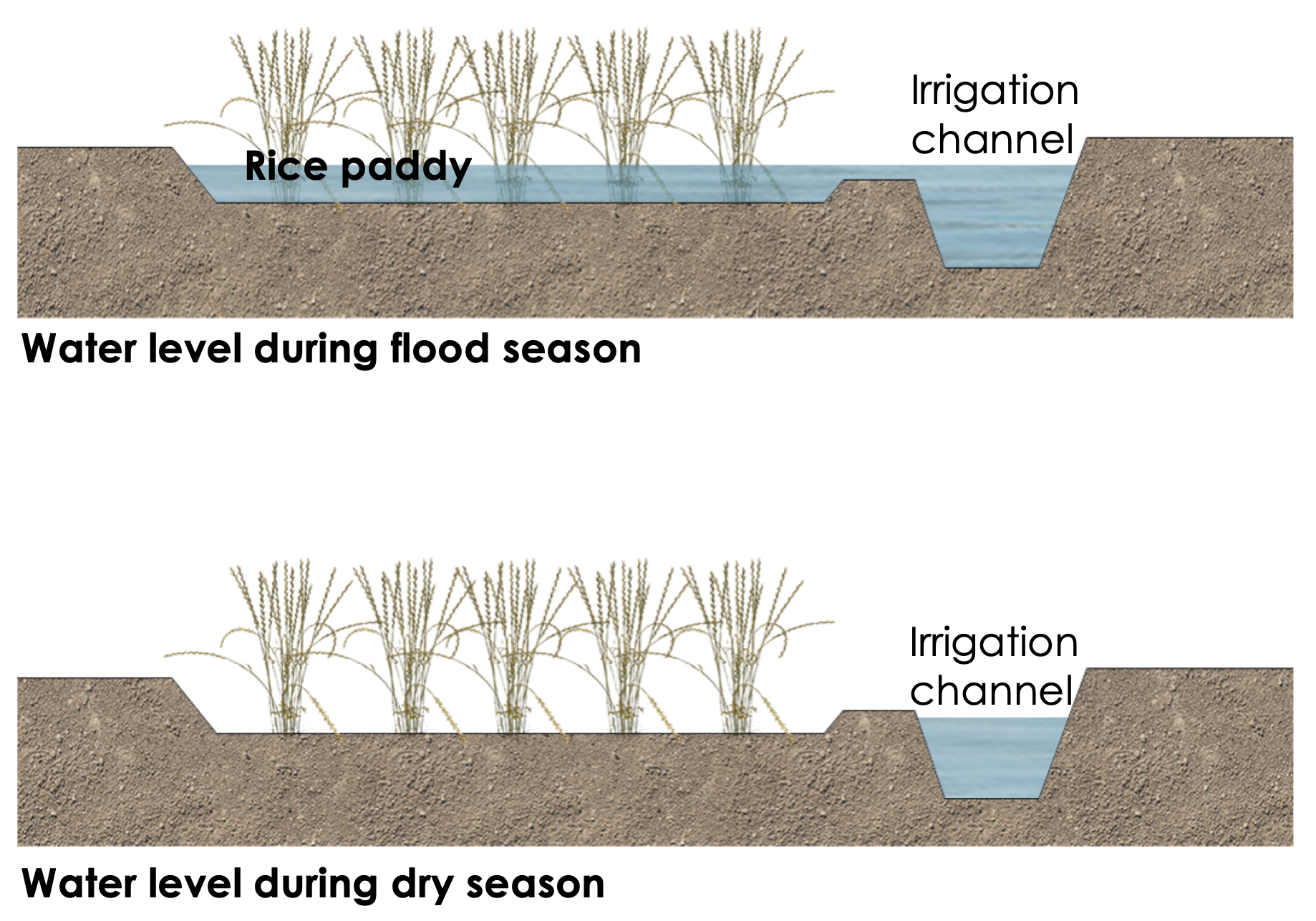
In regions like the Mekong River Delta, where rice cultivation is crucial, this approach involves maintaining higher water levels during the rice growing season, reducing the need for frequent drainage.
Technically, it enhances soil moisture retention, reduces water consumption, and minimizes the release of methane, a potent greenhouse gas, by creating anaerobic conditions.
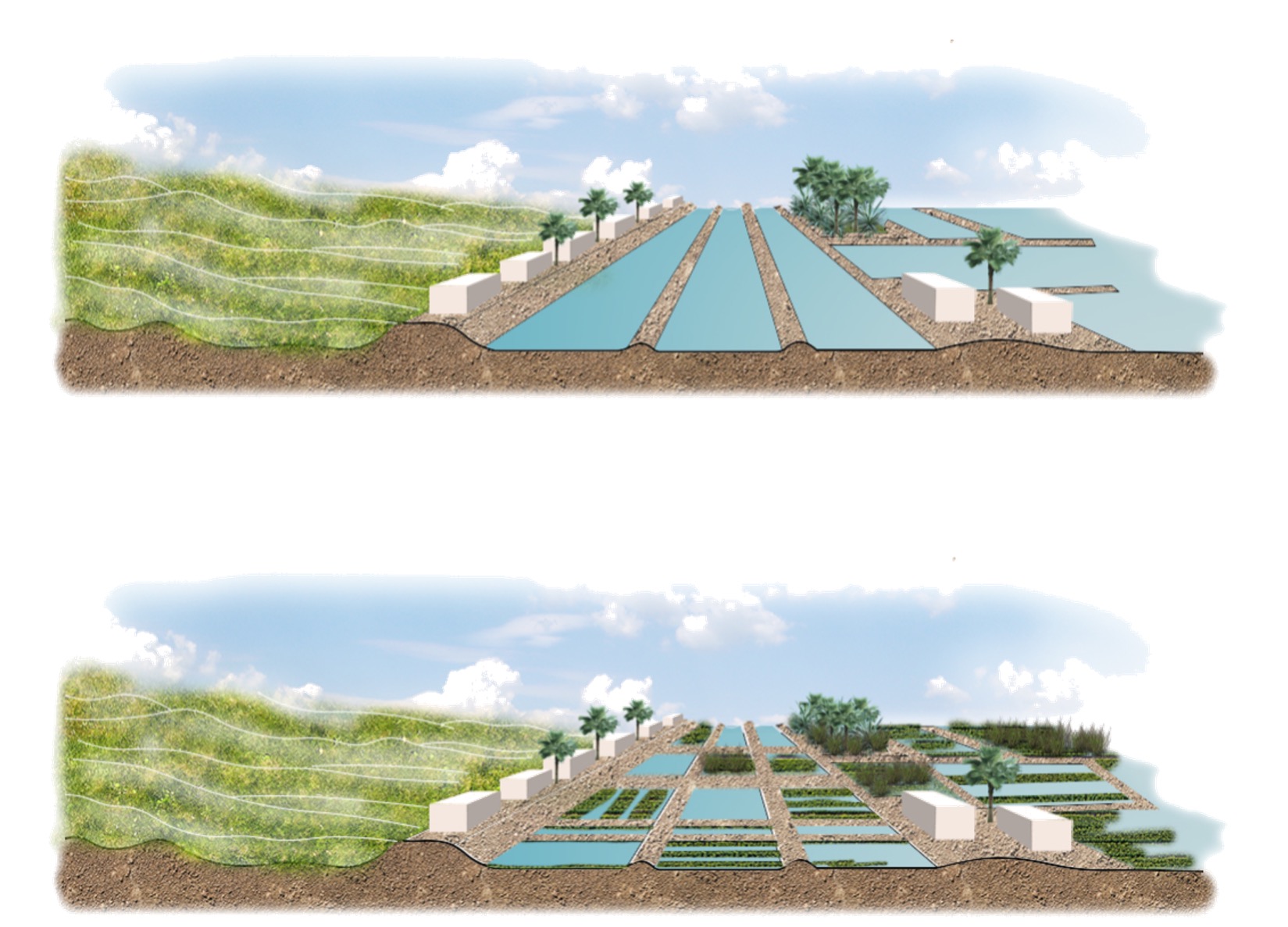
This method can also help mitigate the risks of saltwater intrusion, a growing concern in coastal areas.
On the landscape level, it supports floodplain ecosystems and maintains natural hydrological cycles, while promoting sustainable land use practices.
Socially, drainage reduction ensures stable crop yields, improves farmers’ resilience to climate-related extremes like droughts and floods, and strengthens food security in vulnerable rural communities.
It can be applied in other Southeast Asian regions, such as the Chao Phraya Basin in Thailand and parts of South Kalimantan in Indonesia, where similar climatic challenges are faced.