
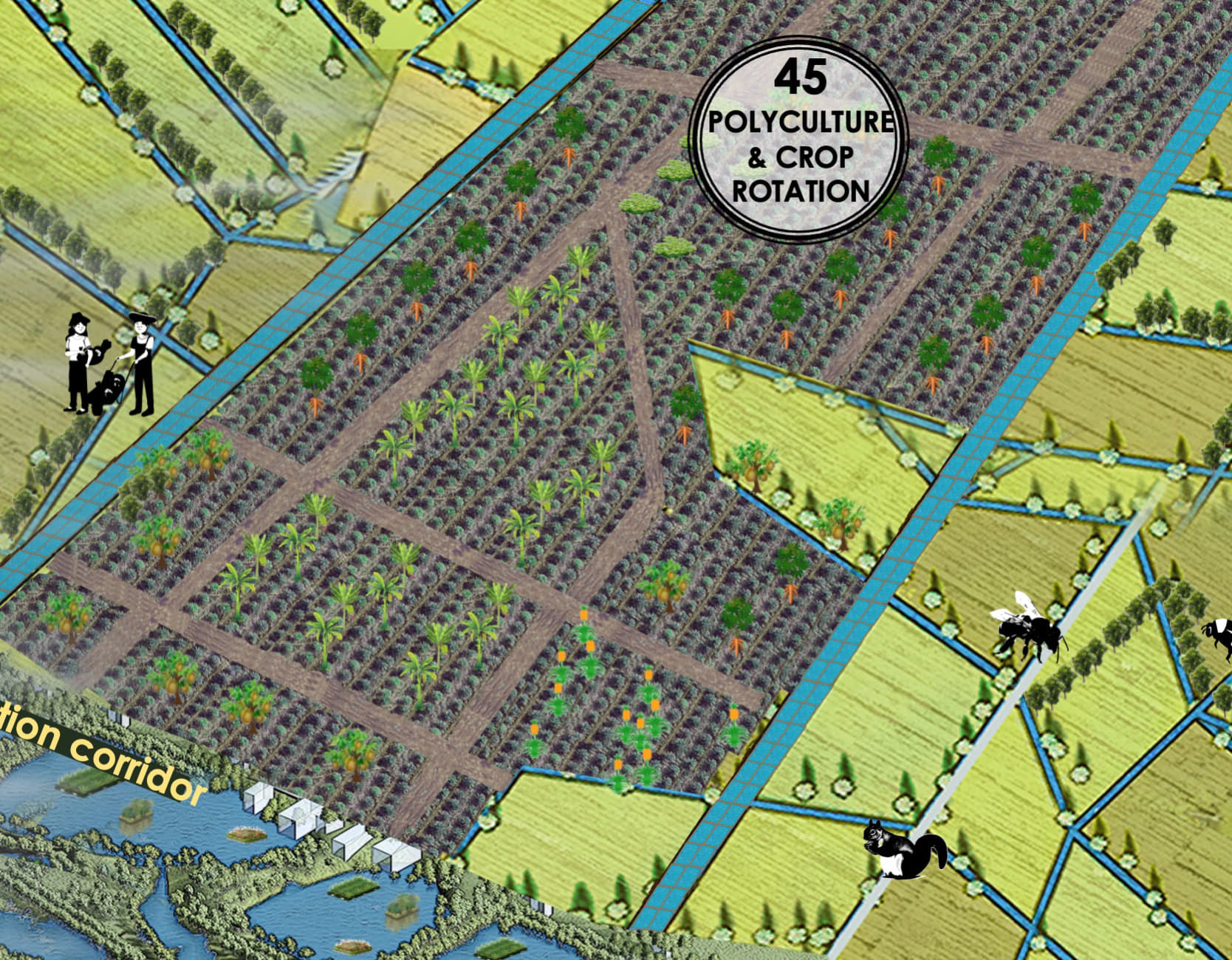
Polyculture & Crop Rotation

Polyculture and crop rotation promote regenerative agriculture by improving soil health, increasing biodiversity, and reducing dependence on chemical inputs.

Polyculture involves planting diverse crops in the same area, mimicking natural ecosystems to reduce pest outbreaks and enhance resource efficiency.

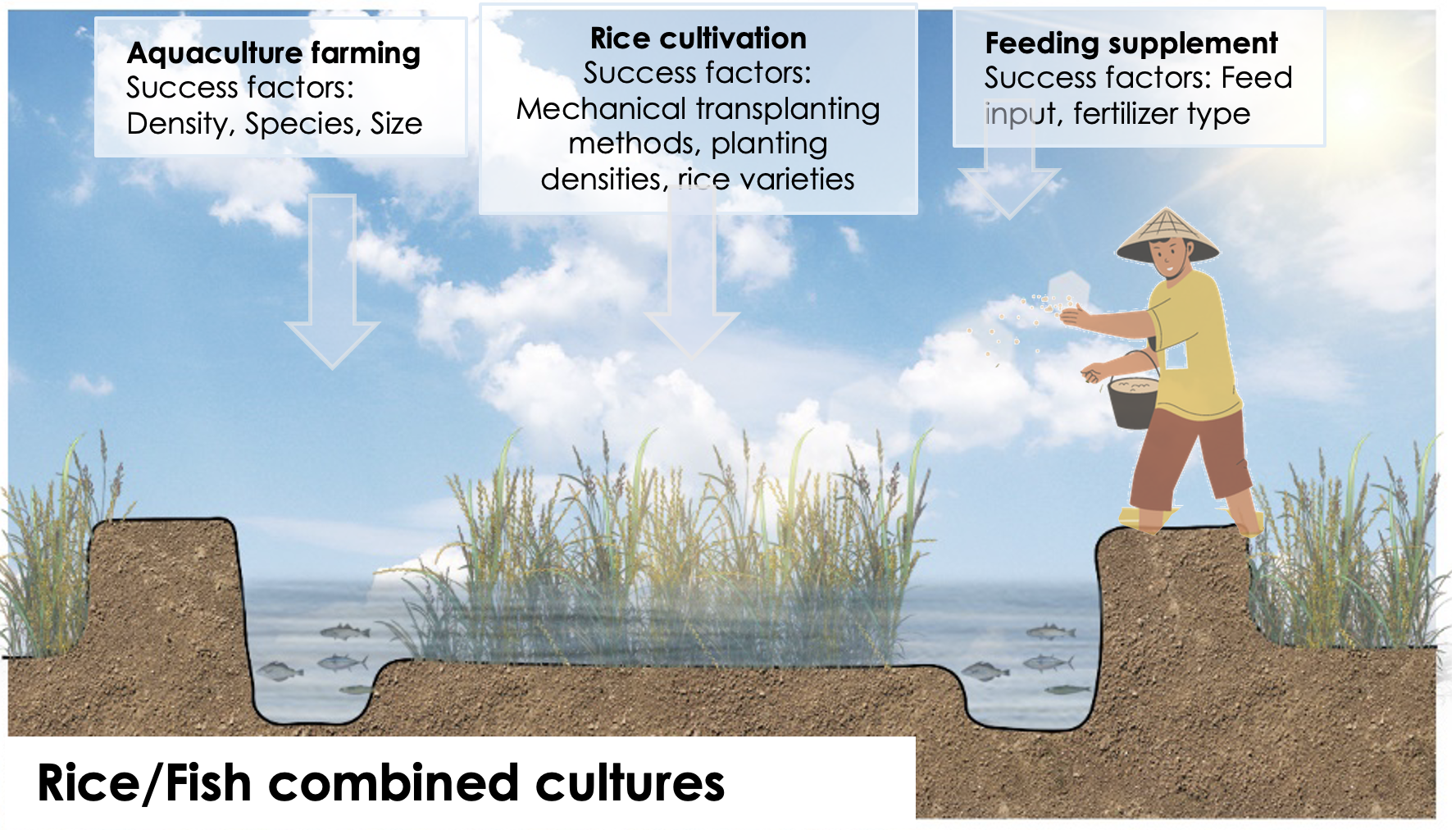
In Southeast Asia, rice-fish farming is a prominent example of polyculture, where rice paddy fields are integrated with aquaculture.

This system, widely practiced in countries like Vietnam, supports sustainable rice production while providing fish and improving soil fertility through nutrient cycling.

Crop rotation alternates different crops in the same field across seasons, helping to break pest and disease cycles, restore soil nutrients, and improve water retention.

In the Philippines, crop rotation with legumes such as mung beans and soybeans has been used in rice paddies to fix nitrogen, which replenishes soil nutrients and reduces the need for chemical fertilizers.

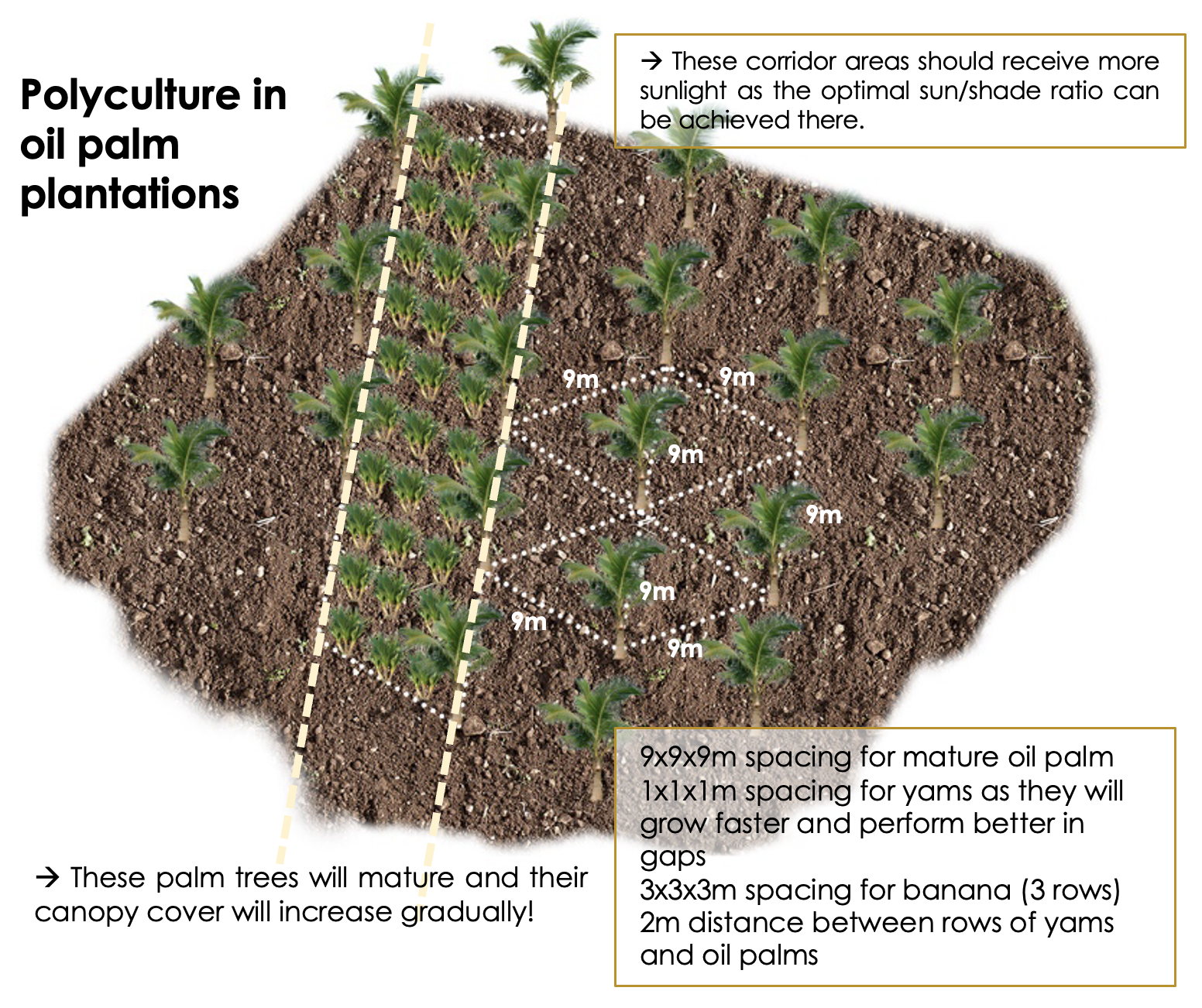
In Indonesia, polyculture systems are being integrated into palm oil plantations, where companion crops like legumes, vegetables, and fruit trees are intercropped with palm oil. This helps to increase soil fertility, reduce erosion, and enhance biodiversity in the palm oil landscape.

In the Mekong Delta in Vietnam, crop rotation is widely practiced to rejuvenate soils after intensive rice farming. By rotating rice with crops like peanuts or maize, farmers help restore soil health and improve water retention, reducing dependency on chemical fertilizers.

These systems combine technical benefits, such as improved yields and lower input costs, with landscape and socio-economic co-benefits, including improved rural livelihoods, food security, and conservation of ecosystems that are critical for biodiversity, water retention, and climate resilience.


  • Agroecology & sustainable agriculture
  • Integrated pest management
  • Climate smart agriculture
  • Agroforestry integration
  • Soil conservation & conservation
Soil Erosion Soil Erosion
Biodiversity Loss Biodiversity Loss
Flood Control Flood Control
Disaster Risk Reduction Disaster Risk Reduction
Carbon Sequestration Carbon Sequestration
Food Security Food Security

SUPPORTING

  • Biodiversity enhancement: Promotes a diverse range of species, improving ecosystem resilience.
  • Soil health improvement: Enhances soil structure, microbial diversity, and nutrient cycling.

REGULATING

  • Pest and disease control: Interrupts pest life cycles and reduces disease outbreaks.
  • Climate regulation: Increases carbon sequestration in soils and reduces GHG by minimizing synthetic fertilizer usage.

PROVISIONING

  • Increased food production: Enhances yields and crop reliability by maintaining soil fertility.
  • Diverse agricultural products: Provides multiple outputs, including staple crops, fruits, vegetables.

SOCIAL BENEFITS

  • Farmer livelihood enhancement: Reduces input costs, diversifies income streams, and builds resilience to climate shocks.
  • Community food security: Ensures a stable and diverse food supply.
NbS45_Polyculture in palm oil plantations
NbS45_Rice Fish Combined Cultures

Knowledge and Training Gaps: Lack of access to knowledge and training on effective polyculture and crop rotation techniques.

Market Accessibility and Demand: Diverse crop production may face challenges in reaching markets that favour monoculture crops with established supply chains.

Initial Labor and Management Intensity: Polyculture and crop rotation require more planning, labor and monitoring compared to conventional monoculture practices.

Climatic Variability and Pests: Unpredictable weather patterns and emerging pests can disrupt crop cycles and affect the success of rotational or mixed farming systems.

Enhanced Soil Fertility

Increased organic matter and nutrient cycling, measured by higher soil organic carbon levels.

Improved Biodiversity

Greater species richness on farms, tracked through the number of plant, insect, and bird species observed.

Reduced Dependency on Chemical Inputs

Decreased use of synthetic fertilizers and pesticides, measured by lower annual expenditure on agrochemicals per hectare.

Climate Resilience

Increased yield stability during extreme weather events, measured by year-on-year production variability.

Livelihood Diversification

More income sources for farmers, tracked through the percentage of households with multiple crop-based revenue streams.

Water Efficiency

Improved water retention and reduced irrigation needs, measured by decreased water use per ton of crop yield.

Direct Costs

Seeds, tools, and training range around $1000/ha, depending on crop types and land preparation requirements.

Indirect Costs

Knowledge transfer and community engagement costs around $200/farmer/year.

Time Horizon

Implementation spans 2–5 years for significant results.

Direct Benefits

Increased crop yields and reduced input costs lead to net revenue gains of $300 to $700/ha/year.

Indirect Benefits

Increased crop yields and reduced input costs lead to net revenue gains of $300 to $700/ha/year.

Risk Assessment

Risks from market volatility and pest outbreaks could cause losses of of projected revenues.

REFERENCES

Integrated Farming Systems Project, Mindanao region, Philippines.

Agroecology Learning Alliance in Southeast Asia (ALiSEA), Cambodia, Laos, Myanmar Zero Budget Natural Farming (ZBNF), India

IMPLEMENTATION OPPORTUNITIES

Mekong Delta, Vietnam: Polyculture of salt-tolerant crops, rice and aquaculture integrated into rotation systems.

Northern Uplands, Laos: Shifting cultivation and deforestation contexts.

Central Dry Zone, Myanmar: Polyculture with drought-resistant crops to address low rainfall and soil erosion.