
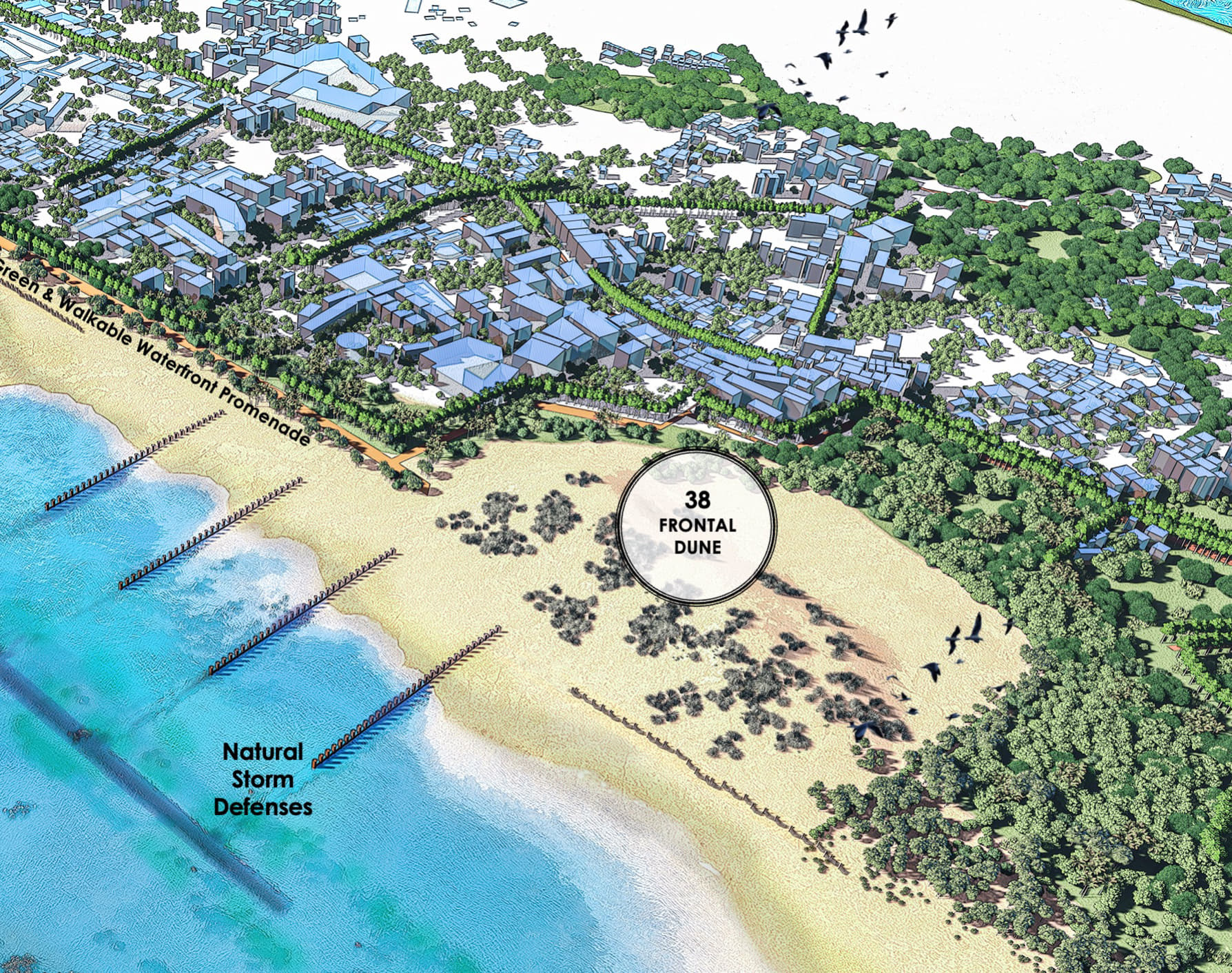
Frontal Dune

Frontal dune implementation focuses on the proactive establishment of dune systems as a Nature-Based Solution to enhance coastal resilience.

This approach employs natural and eco-engineered techniques, including the planting of native vegetation with deep root systems to stabilize sand, and the use of biodegradable geotextiles and sand fences to encourage dune formation.

These initiatives serve as natural buffers against storm surges and rising sea levels, providing sustainable protection for coastal communities while supporting biodiversity.

The implementation process often integrates frontal dunes with adjacent habitats, such as mangroves and seagrass meadows, creating interconnected ecosystems that reduce sediment runoff, improve water quality, and foster ecological balance.

  • Ecosystem based adaptation
  • Ecosystem based disaster reduction
  • Ecosystem restoration
  • Integrated coastal zone management
  • Green infrastructure
Soil Erosion Soil Erosion
Biodiversity Loss Biodiversity Loss
Flood Control Flood Control
Disaster Risk Reduction Disaster Risk Reduction
Carbon Sequestration Carbon Sequestration

SUPPORTING

  • Establishment of habitats for diverse flora and fauna, including dune-specific species and coastal wildlife.
  • Supports interconnected ecosystems, such as mangroves, seagrass beds, and coral reefs, creating corridors for species movement.
  • Stabilizes sandy substrates, preventing erosion and supporting the formation of fertile dune soils.

REGULATING

  • Acts as a natural barrier against storm surges, high waves, and flooding, reducing risks to inland areas.
  • Prevents sand loss through vegetation that anchors the substrate and traps wind-blown sand.
  • Minimizes sediment runoff into marine ecosystems.

PROVISIONING

  • Provides sustainable resources such as plant biomass, which can be used for traditional practices or crafts.
  • Enhances fish and shellfish populations by stabilizing nearby ecosystems, like seagrass beds, which serve as nurseries.

SOCIAL BENEFITS

  • Enhances the safety and livelihoods of local populations by reducing exposure to coastal hazards and supporting ecosystem-based income sources.
  • Creates aesthetic and accessible coastal landscapes, attracting eco-tourism and providing spaces for leisure activities.
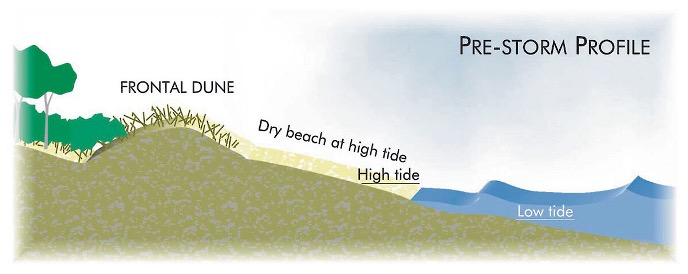
NbS38_Beach pre-storm profile
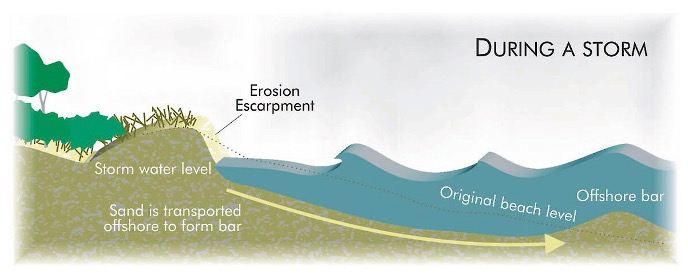
NbS38_Beach during storm dynamics
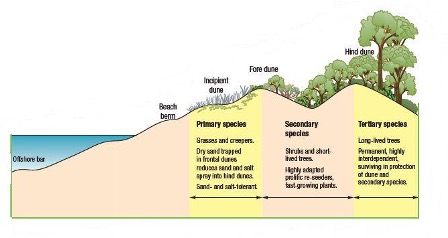
NbS38_Dune protective vegetation

Site Suitability: Sandy beach environments vary in stability, wave energy, and sediment supply, making it challenging to select suitable sites for dune formation.

Maintenance Needs: Dunes require ongoing maintenance to address erosion, invasive species, or damage caused by extreme weather events.

Climate Impacts: Rising sea levels and increasing storm intensity may reduce the effectiveness or longevity of dunes as coastal defences.

Biodiversity Conflicts: Introducing dunes in new areas may displace existing ecosystems or conflict with the needs of species that rely on flat, sandy beaches (e.g., turtle nesting sites).

Disaster Risk Reduction:

Assessment of the role of dunes in protecting human populations and infrastructure: reduced vulnerability index for coastal communities.

Water Quality Improvement:

Reduction in sediment runoff into coastal waters (measured in turbidity levels) and improvement in water clarity.

Flood Mitigation

Frequency and severity of coastal flooding events Increase in percolation capacity (l/m2).

Soil Stabilisation

Rate of soil retention (tons of sediment retained annually).

Carbon Sequestration

Carbon stored in dune vegetation and soil. Growth rate of vegetation biomass (kg/year).

Direct Costs

Planting, materials, labour, monitoring : $18,500–$51,000/ha

Indirect Costs

Opportunity costs, community engagement.

Time Horizon

Short-Term (1–3 years): Initial restoration activities Medium-Term (3–10 years): Ecosystem establishment, monitoring, and adaptive management.

Direct Benefits

Coastal protection, biodiversity enhancement, and carbon sequestration.

Indirect Benefits

Tourism, community jobs, climate resilience.

Risk Assessment

Environmental risks, high initial costs, stakeholder opposition.

REFERENCES

New Zealand, Ngarahae Bay (restoration of eroded dunes, planting of native vegetation).

Australia – Queensland, Kirra Beach (dune revegetation initiative).

The Netherlands, Hondsbossche Dunes (replacement of outdated dike with dunes.


IMPLEMENTATION OPPORTUNITIES

Philippines Eastern Seaboard , Samar and Leyte (Prone to typhoons and wave erosion).

Malaysia, Pahang coastline (impacted by monsoonal erosion).

Vietnam, Phu Yen Province.