
Mangrove As Protective Shield For Aquaculture

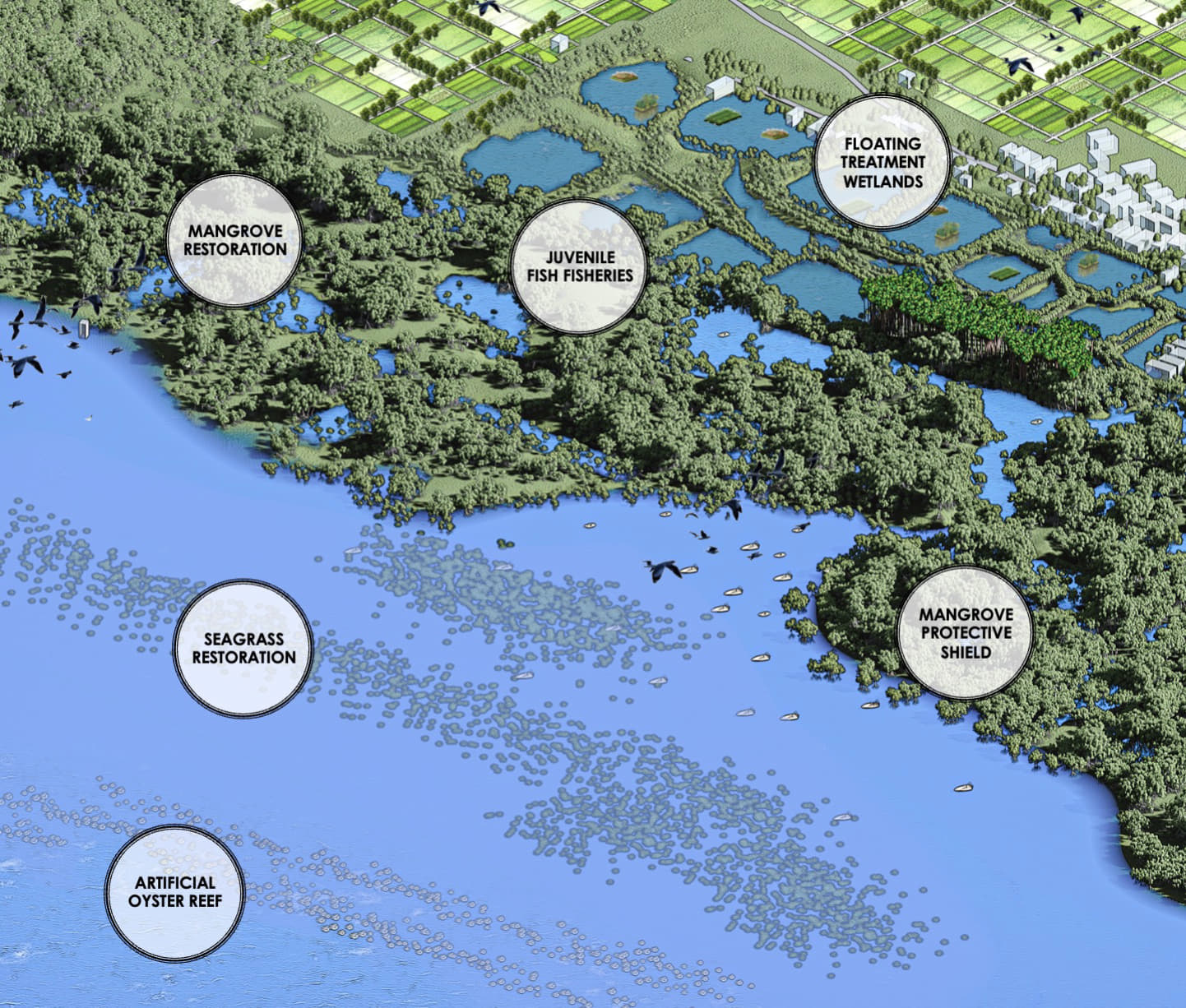
The Coastal Mangrove Shield in synergy with Sustainable Fisheries acts as a natural barrier against tidal waves, coastal erosion, and storms, reducing the energy of incoming waves and stabilizing shorelines through their dense root systems.

This NbS not only protects vulnerable coastal aquaculture sites, villages, and towns from severe weather impacts but also boosts biodiversity by providing habitat for fish and shellfish, which are crucial for local fisheries.

Mangroves support sustainable fishing practices by offering nursery grounds and shelter for marine life, increasing fish stocks, and supporting the livelihoods of coastal communities.


  • Integrated coastal management
  • Reforestation
  • Community based management
  • Biodiversity conservation
  • Sustainable fisheries management
  • Habitat connectivity
Soil Erosion Soil Erosion
Biodiversity Loss Biodiversity Loss
Flood Control Flood Control
Disaster Risk Reduction Disaster Risk Reduction

SUPPORTING

  • Supports critical habitats for fish, crustaceans, and birds Nursery grounds for fisheries, protected by the mangrove

REGULATING

  • Acting as a natural buffer, reducing wave energy, stabilizing sediment, and protecting shorelines from erosion and storm surges. Carbon Sequestration by absorbing and storing large amounts of carbon in biomass and soil.

PROVISIONING

  • Supplying wood, honey, and medicinal plants, balancing extraction with ecosystem health.

SOCIAL BENEFITS

  • Maintaining local economies and improve resilience for local communities. Mangroves lower disaster risk for nearby towns and villages, reducing infrastructure damage.
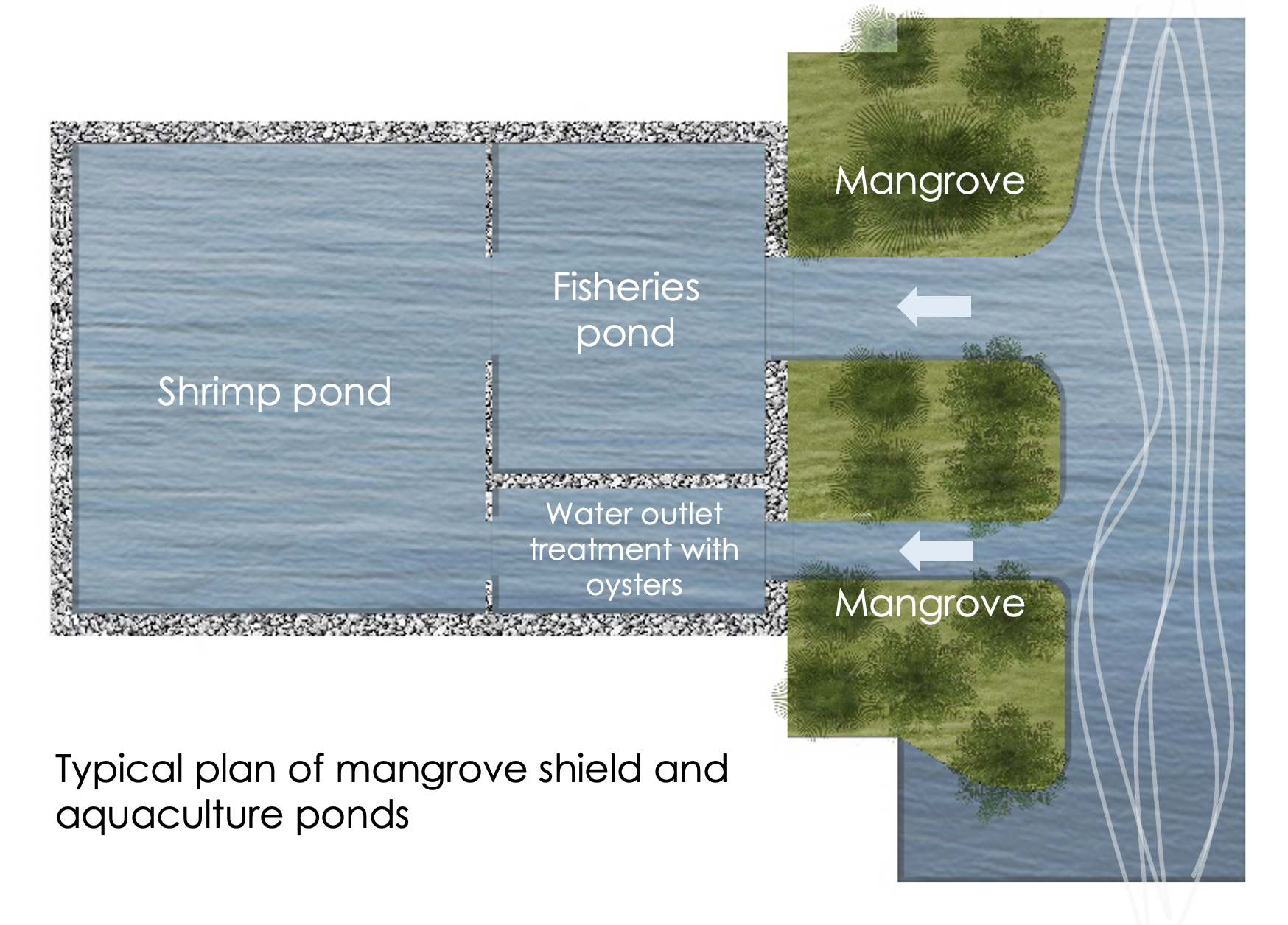
NbS35_Plan of Mangrove Shield with Legends
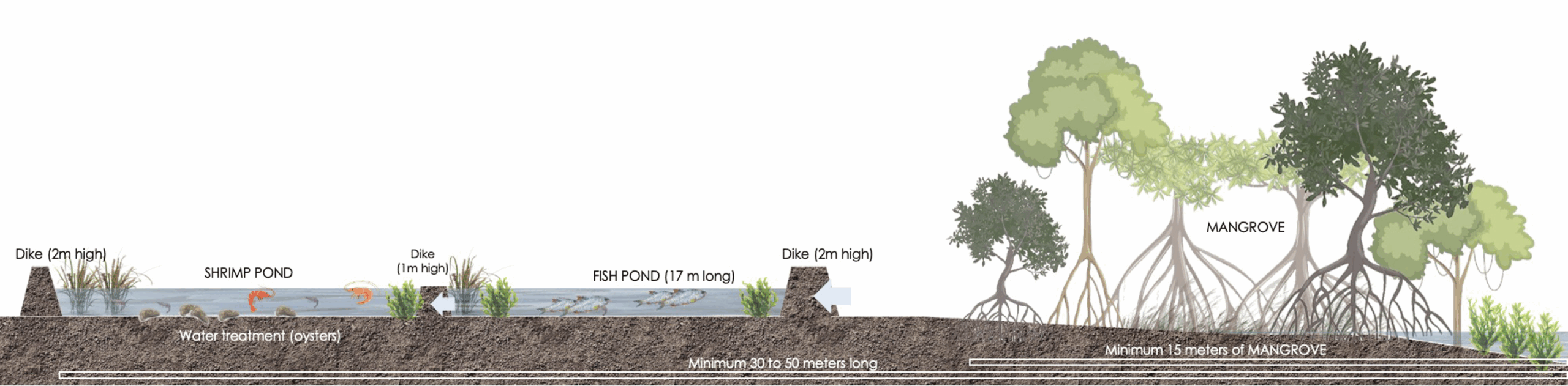
NbS35_Section with Legend of Protective Mangrove
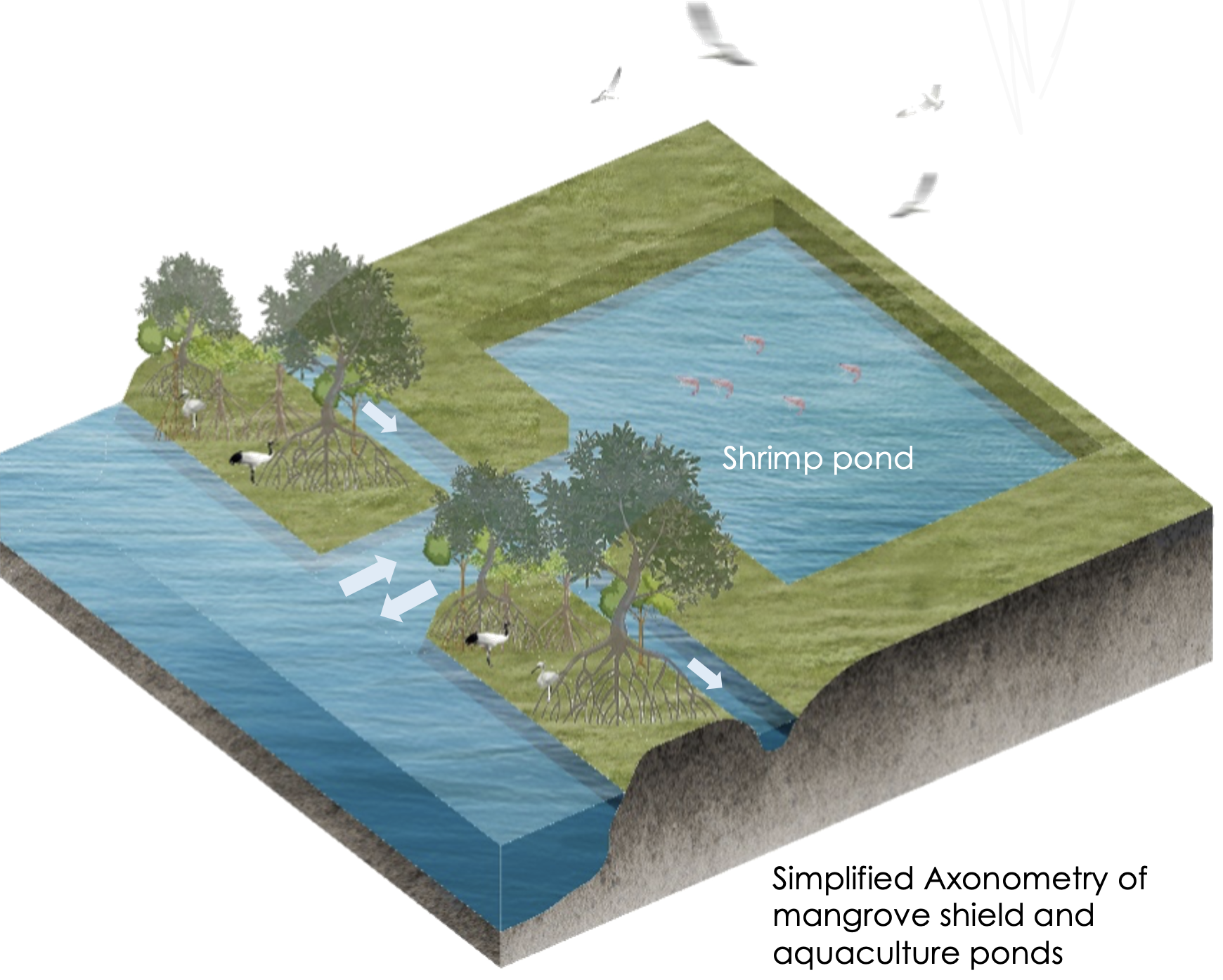
NbS35_Shrimp Pond Axonometry with Legends

Funding Gaps: Long-term maintenance and monitoring often lack sustained funding.

Land Use Conflicts: Due to potential competing interests (e.g., agriculture, aquaculture).

80% of Mangrove Restoration fail: As the soil characteristics, density of plantations and rhythm of plantation will determine the success of the project.

Scaling up Coastal Fisheries: Requires adequate land management and governance to avoid intensive coastal land pressure from the agricultural sector.

Biodiversity Conservation:

Species richness and abundance of key species (fish, crustaceans, birds).

Climate Resilience:

Reduction in shoreline erosion rates, frequency, and intensity of flooding in nearby communities.

Carbon Sequestration:

Carbon stock assessment in above-ground biomass and sediment (tCO₂/ha).

Water Quality Enhancement

Levels of nitrates, phosphates, heavy metals, and sedimentation in water samples.

Livelihoods and Economic Benefits

Increase in sustainable fishery yields, in income from ecotourism, local jobs.

Social Resilience and Community Engagement

Number of community members involved in mangrove protection initiatives .

Direct Costs

Restoration (0.40 USD/m2), infrastructure (fencing, access points), maintenance and monitoring.

Indirect Costs

Opportunity costs if land is repurposed from other uses.

Time Horizon and Discount Rate

10-30 years to capture full ecological and economic benefits, adjusted to account for long-term environmental and social benefits.

Direct Benefits

Reduced storm damage costs, revenue from sustainable fisheries, carbon credit revenue.

Indirect Benefits

Increased biodiversity, improved water quality, reduced health costs due to cleaner environment.

Risk Assessment

Evaluation of factors such as climate change impacts on growth rates, potential for disease, and community engagement level.

REFERENCES

Indonesia, Bogorame-Timbusloko Mangrove Shield, Demak. Bedono Village Mangrove Regrowth.

IMPLEMENTATION OPPORTUNITIES

Thailand, Western coastlines of Mekong Delta.

Vietnam, Ca Mau Peninsula.

Indonesia, Borneo, Java, Papua, Sumatra coastlines.