
Urban Water Buffer

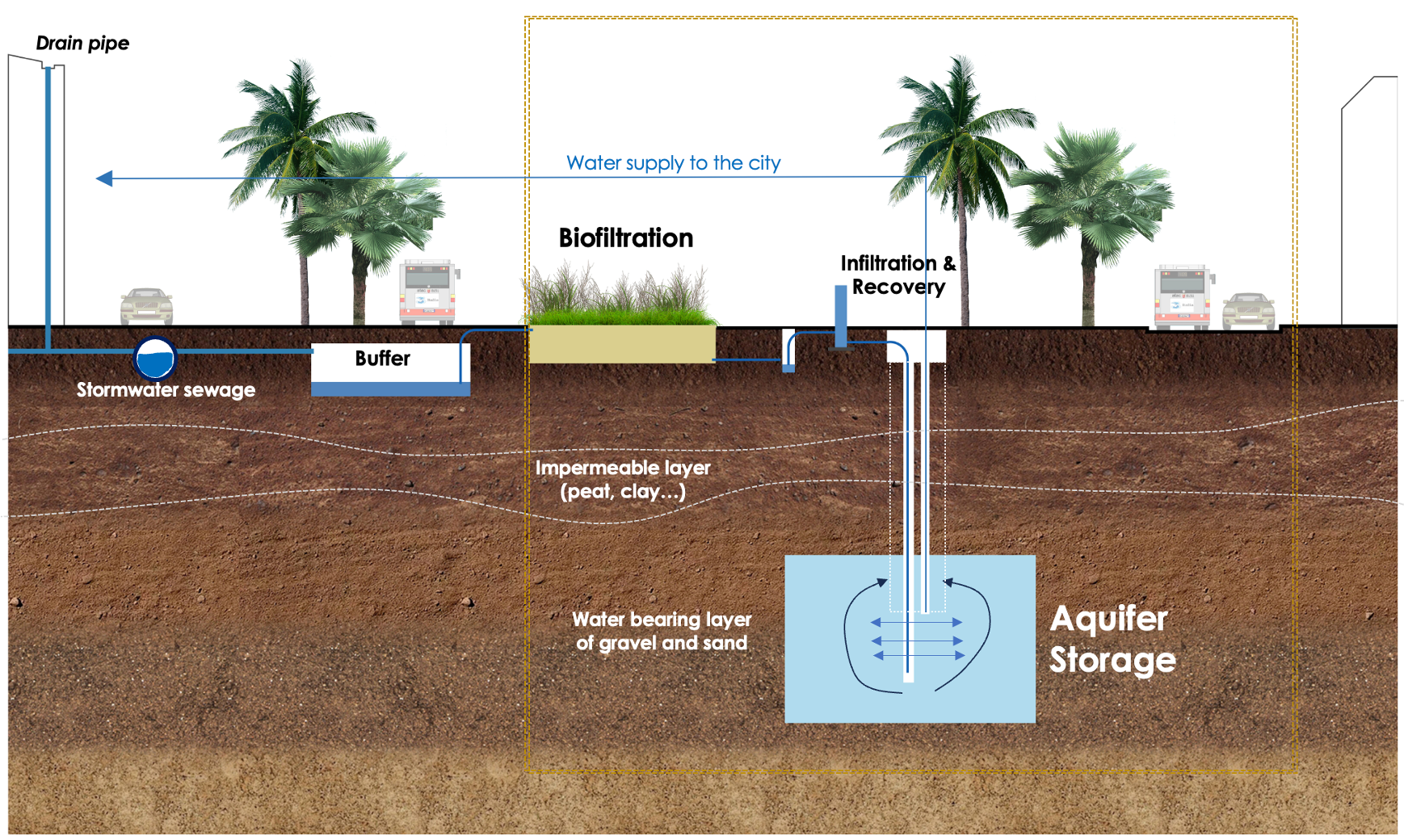
The urban water buffers is a NbS designed to enhance resilience to floods, aquifer depletion, land subsidence, and other climate-related risks. These systems collect, store, and infiltrate excess stormwater into aquifers during heavy rainfall, mitigating urban flooding, replenishing groundwater supplies, and preventing land subsidence caused by excessive groundwater extraction.

In industrial zones and along transport infrastructure, water buffers can reduce runoff, improve water quality through natural filtration, and serve as reservoirs for non-potable water use. Drawing inspiration from the Netherlands, urban water buffer systems in Southeast Asia can implement similar multifunctional solutions that integrate technical features (retention ponds, underground reservoirs, and bioretention cells) with landscape attributes like green corridors, public parks, and biodiversity habitats.

Economically, these buffers lower infrastructure repair costs from flood damage and support urban water security, while socially, they enhance urban aesthetics, provide recreational spaces, and foster community engagement in water stewardship.

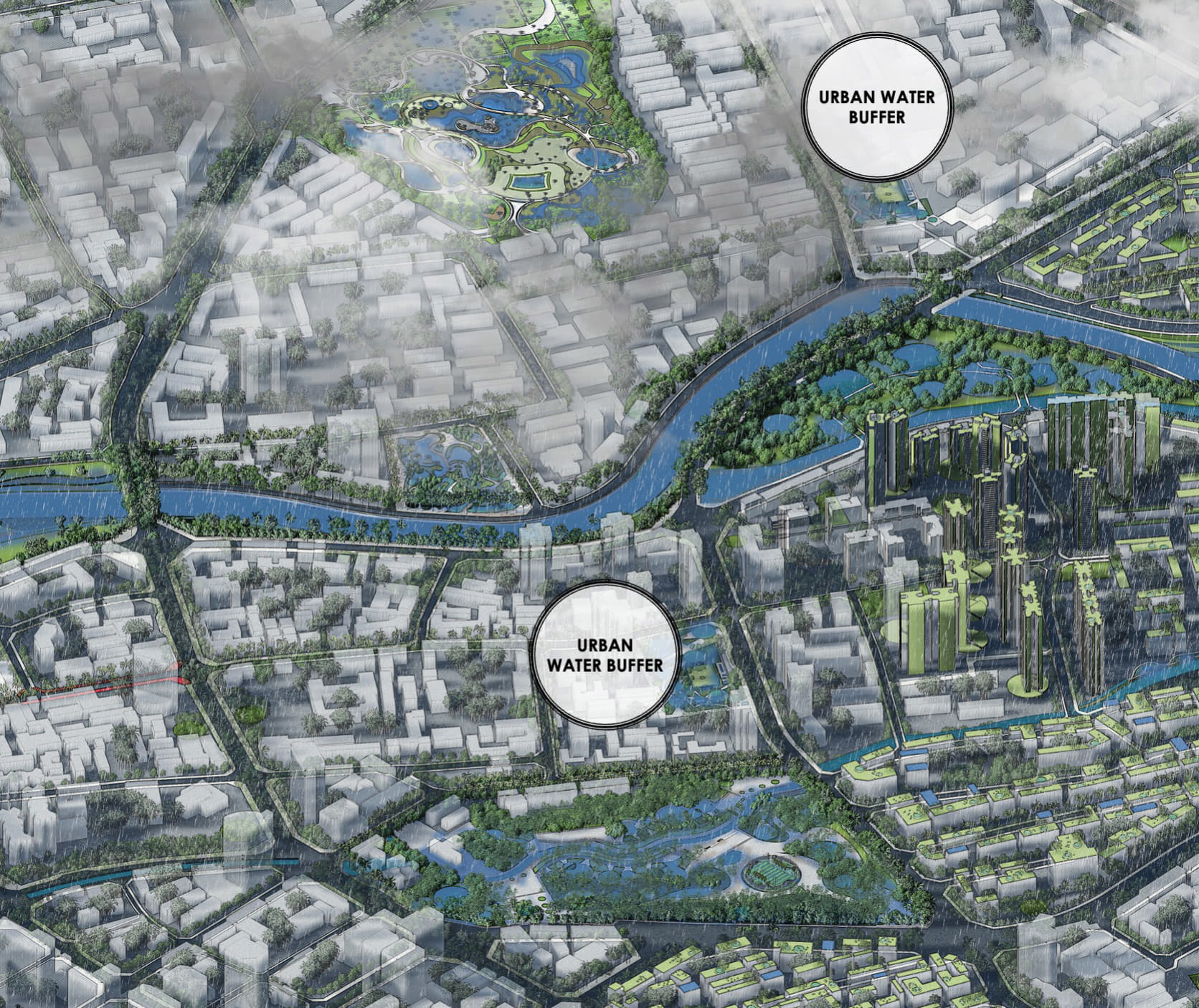
The application of urban water buffers in cities like Jakarta, Bangkok, and Ho Chi Minh City could significantly improve climate resilience while addressing urban water challenges in diverse settings.


  • Integrated water ressource management
  • Green infrastructure developement
  • Climate adaption
  • Ecosystem restoration
  • Sustainable urban drainage systems
Disaster Risk Reduction Disaster Risk Reduction
Flood Control Flood Control
Urban Heat Island Urban Heat Island

SUPPORTING

  • Groundwater recharge: They enhance aquifer infiltration, maintaining water cycles and hydrological balance.
  • Habitat creation provide wetland-like conditions that support biodiversity in urban areas.

REGULATING

  • Flood regulation: They store excess rainwater during heavy storms, reducing flood risks in cities.
  • Climate regulation: They mitigate urban heat islands by maintaining cooler microclimates.

PROVISIONING

  • Water supply: Buffers store and purify stormwater, contributing to non-potable water supplies for irrigation or industrial uses.
  • Soil stabilization: Buffers prevent soil erosion and land subsidence.

SOCIAL BENEFITS

  • Urban aesthetics and recreation: Water buffers improve quality of life with recreational opportunities.
  • Community resilience: They raise awareness and engage communities in sustainable water management practices.
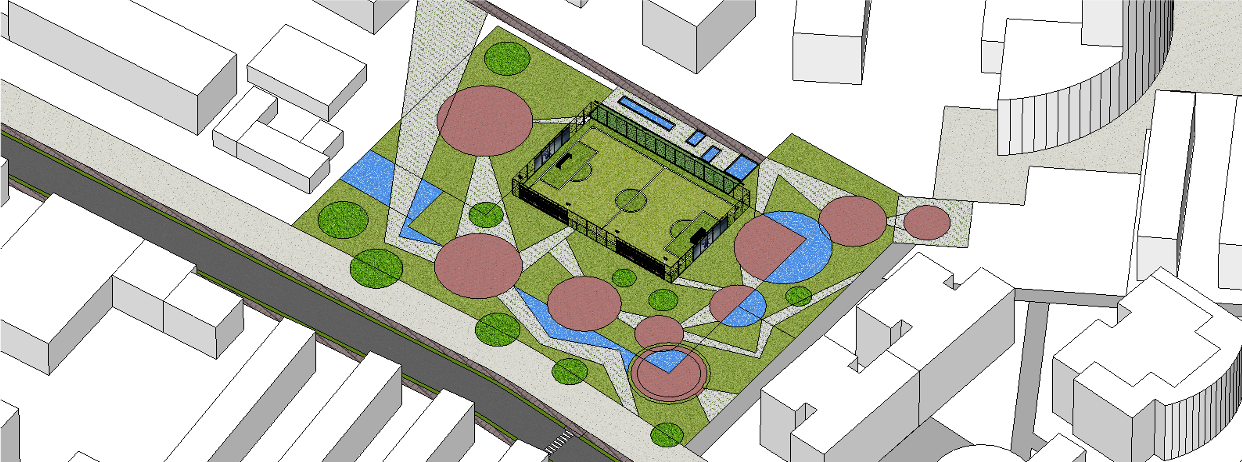
NbS28_Public space urban water buffer
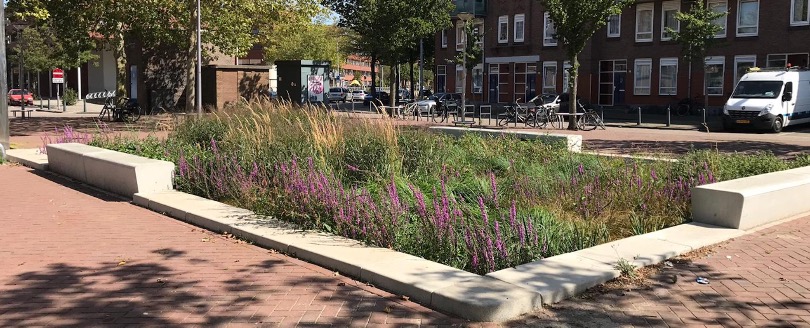
NbS28_Urban Water Buffer Photo_Spangen
NbS28_Urban Water Buffer Section_Rotterdam Spangen

Space constraints: In densely populated cities, finding available land for large-scale water buffers can be challenging due to limited space.

Maintenance requirements: Urban water buffers require consistent maintenance to prevent blockages, ensure water quality, and manage vegetation.

Water contamination: Urban runoff may carry pollutants, and without proper filtration systems, water buffers can be contaminated.

Climate change impacts: Increased frequency and intensity of storms due to climate change can overwhelm urban water buffers.

Flood Risk Reduction

Reduction in flood-related damages and frequency of urban flooding events.

Aquifer Recharge

Increased groundwater levels in nearby wells and aquifers over time.

Water Quality Improvement

Decrease in suspended solids and pollutants in runoff water.

Climate Resilience

Enhanced resilience of urban areas to stormwater runoff and prolonged dry periods.

Biodiversity Enhancement

Increased species richness and abundance in areas with water buffer systems.

Social Well-being

Increased community engagement and usage of green spaces around water buffer areas.

Direct costs

Initial investment includes land acquisition, design, and installation of infrastructure: ranges from $100k to $500k/ha.

Indirect costs

Long-term costs for maintenance, monitoring, and operations can range from $10k to $30k/year.

Time Horizons

Typically 20 to 50 years, with a discount rate between 3% and 6% applied to future benefits.

Direct Benefits

Direct benefits include flood reduction, which can save $50k to $200k annually in flood damage reduction.

Indirect Benefits

Increased quality of life and enhanced tourism, can generate valuable economic returns (long term).

Risk Assessment

Risk of improper implementation or maintenance due to water quality degradation or infrastructure failure.

REFERENCES

Singapore : Marina Barrage Water Management Project.

Thailand, Bangkok, Chao Phraya River Flood Control Project.

Indonesia, Jakarta, Kanal Banjir Timur diverting floodwaters.

IMPLEMENTATION OPPORTUNITIES

Vietnam, Ho Chi Minh City, along Saigon River.

Malaysia, KualaLumpur in the Klang Valley.

Indonesia, Jakarta flood-prone areas.

Philippines, Metro Manila flood-prone areas.