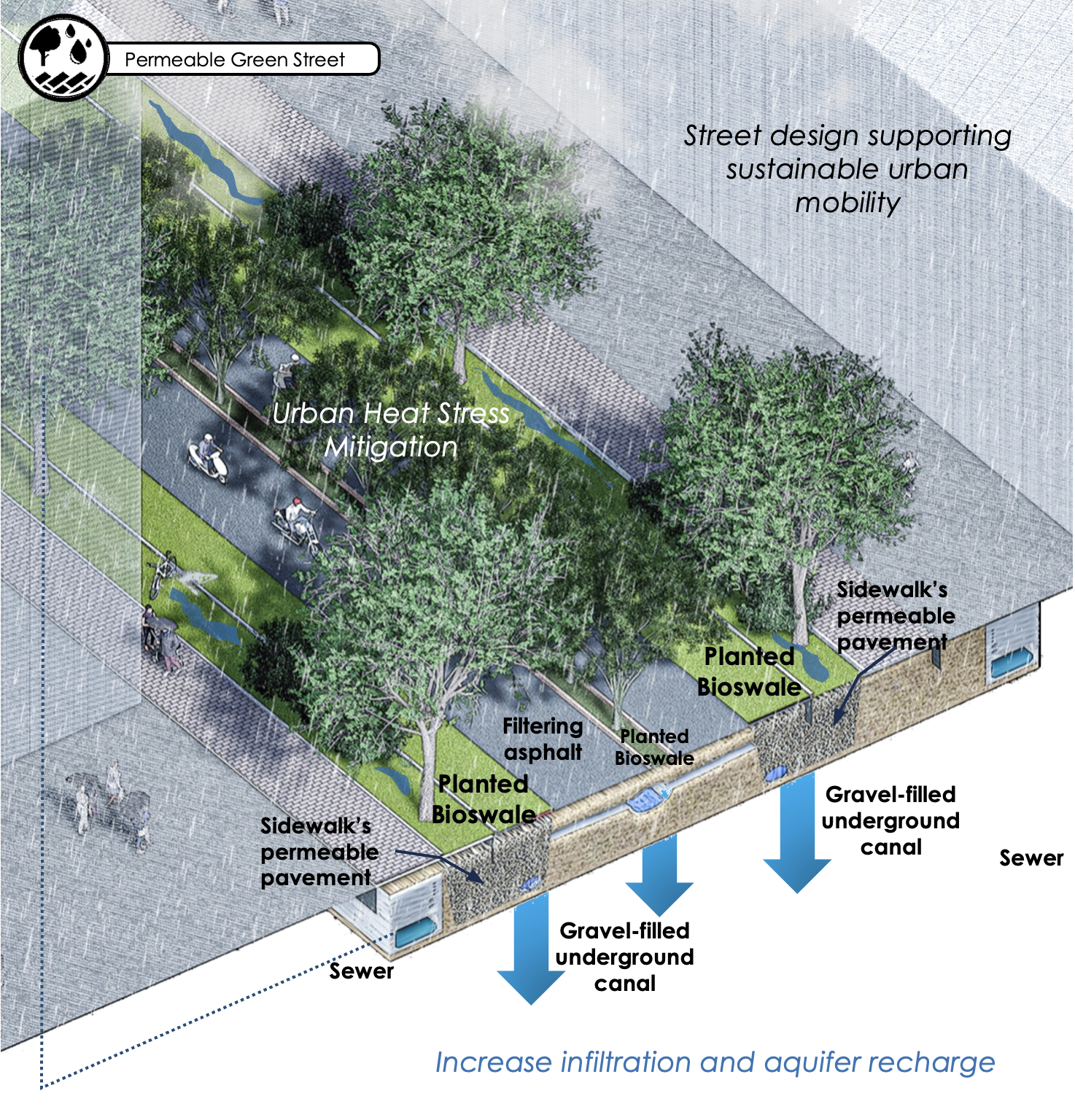

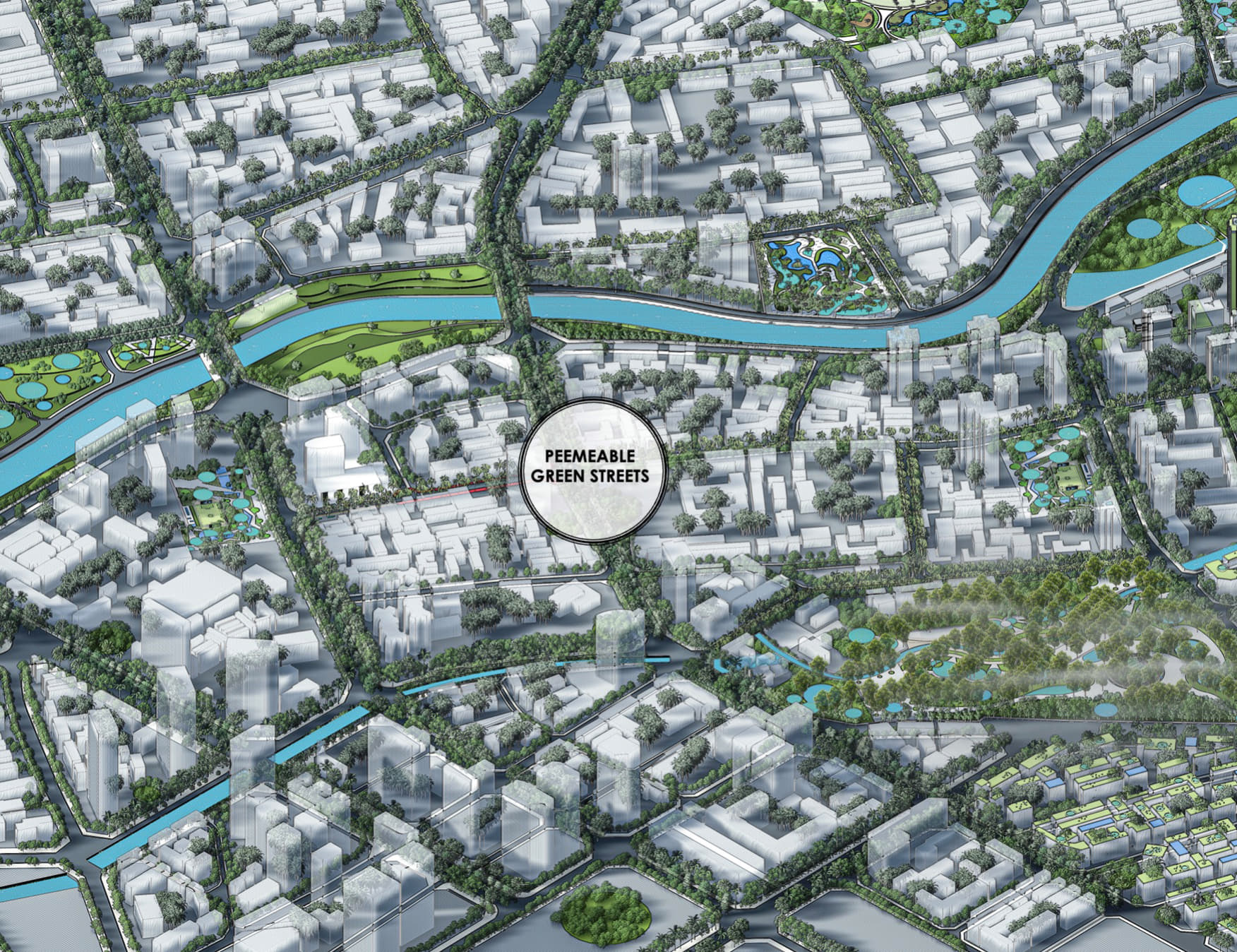
Permeable green streets in urban and industrial environments are designed to address flood control, to mitigate urban heat stress, and to reduce land subsidence in cities prone to heavy rainfall, high temperatures, and over-extraction of groundwater.
These streets integrate permeable pavements, bioswales, and urban greenery, allowing rainwater to infiltrate the ground, recharge aquifers, and reduce surface runoff, thereby alleviating urban flooding.
The green coverage provided by street trees and vegetation enhances shade and evapotranspiration, lowering ambient temperatures and improving air quality.
These streets also contribute to healthier urban mobility by promoting walkability and cycling, creating more liveable and visually appealing urban spaces. Technically, they combine stormwater management with urban landscape design, while socially, they foster community well-being and climate resilience by improving public spaces and reducing disaster risks.