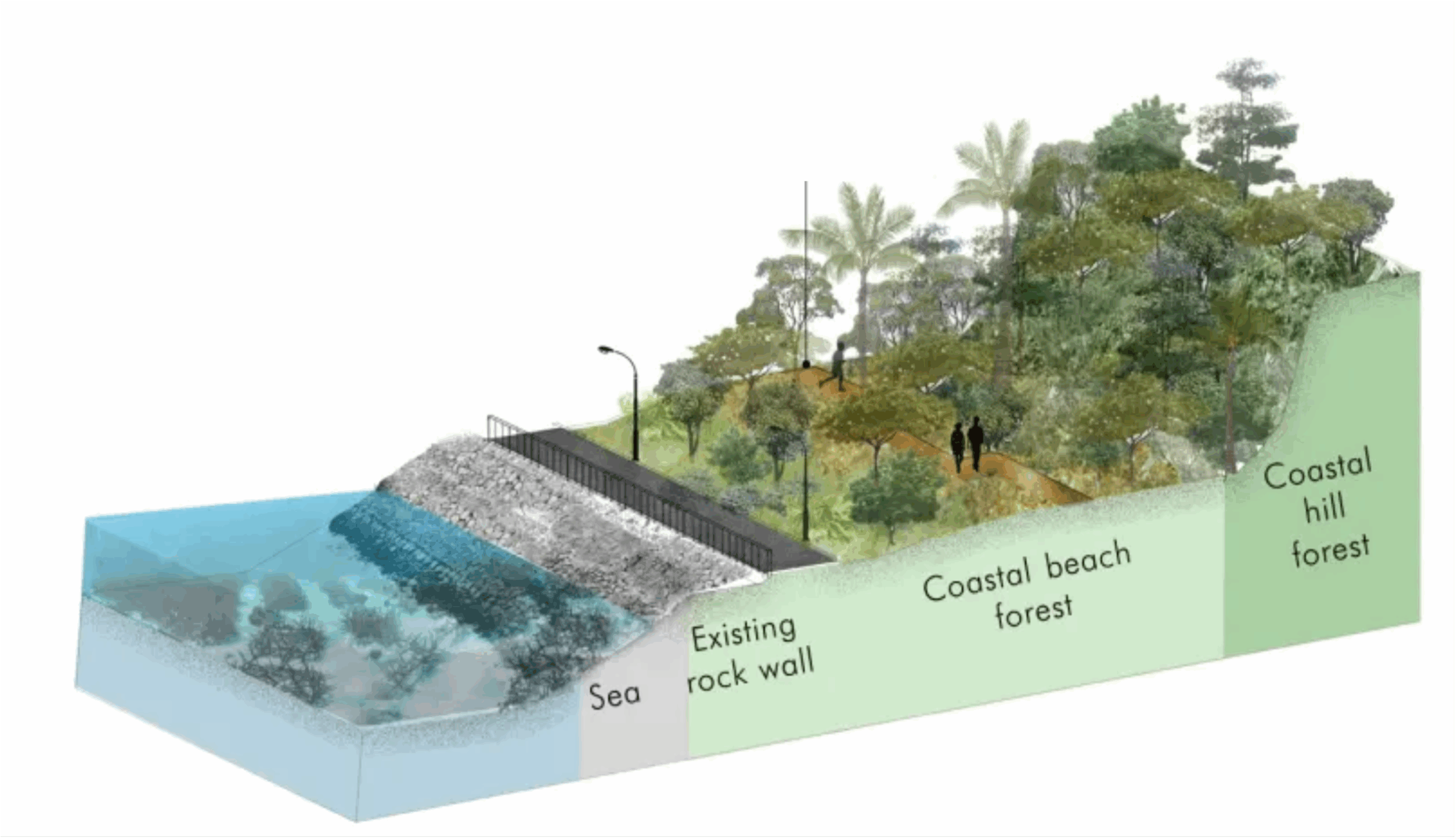

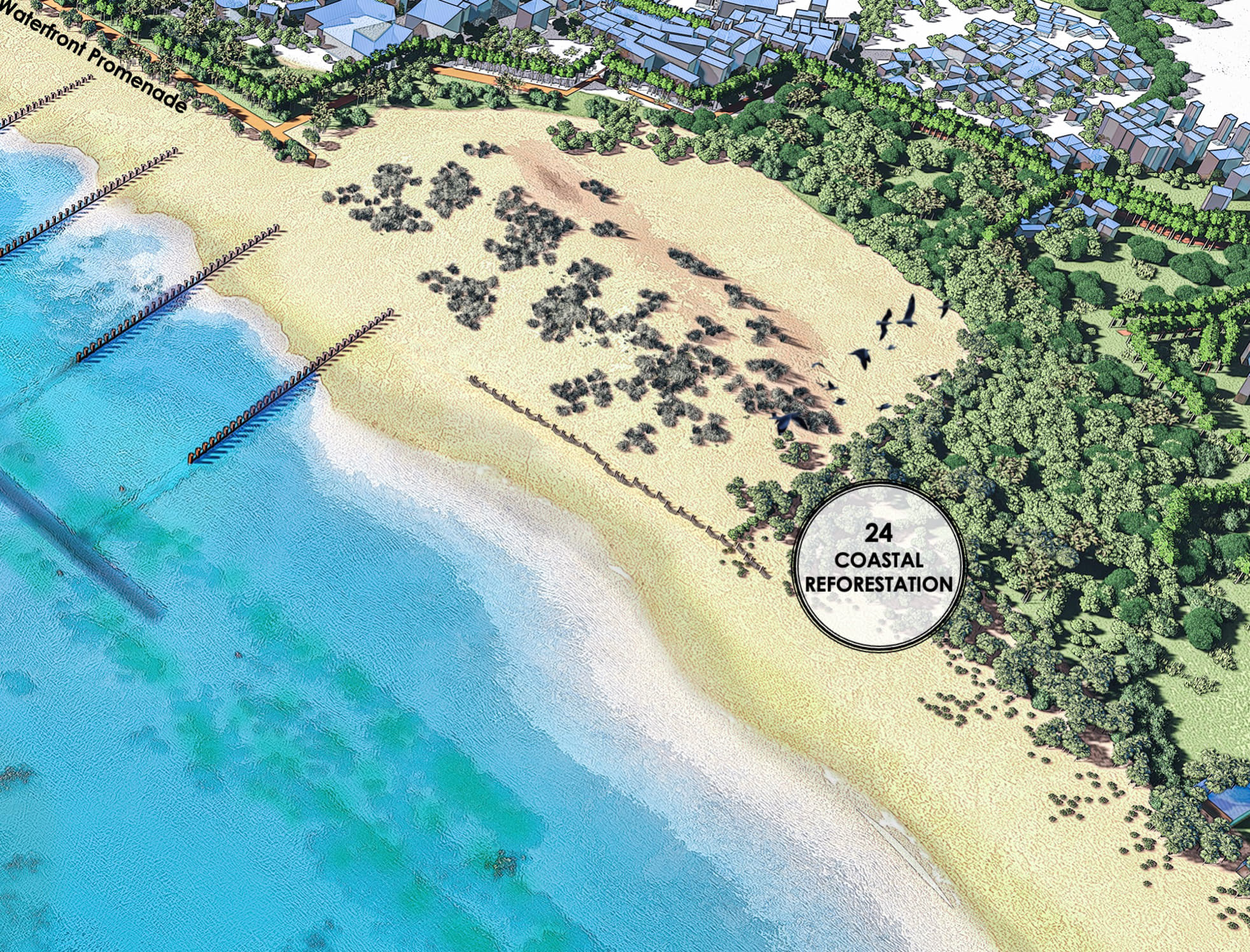
Coastal Reforestation

Coastal reforestation in wetland and sandy beach environments aims to restore natural vegetation adapted to saline, waterlogged, or nutrient-poor soils.

On sandy beaches, reforestation focuses on stabilizing dunes and loose sands using hardy species like sea oats, beach grass, and native shrubs. These plants anchor the soil, reduce erosion, and form windbreaks, creating a microhabitat that fosters further vegetation growth and protects inland areas from storm surges and salt spray.

In wetland coasts, mangroves, saltmarsh grasses, and other halophytic (salt-tolerant) species play a pivotal role. These plants trap sediment, reduce wave energy, and buffer coastlines from flooding. Their intricate root systems also provide essential habitat for aquatic life and improve water quality by filtering pollutants.


  • Ecosystem based adaptation
  • Ecosystem based disaster risk reduction
  • Forest landscape restoration
  • Integrated coastal zone management
  • Green infrastructure
Soil Erosion Soil Erosion
Biodiversity Loss Biodiversity Loss
Flood Control Flood Control
Disaster Risk Reduction Disaster Risk Reduction
Air Quality Improvement Air Quality Improvement
Carbon Sequestration Carbon Sequestration

SUPPORTING

  • Restore habitats for wildlife, promoting species diversity and ecosystem health in coastal environments.
  • Stabilise sandy or eroded coastal soils with plant roots, promoting the development of healthy soil layers.

REGULATING

  • Regulate climate by sequestering carbon in coastal forests and wetlands, helping mitigate climate change.
  • Improve water quality by filtering pollutants and excess nutrients through the roots of coastal vegetation, reducing contamination in coastal waters.
  • Mitigate storm surge impacts by creating natural barriers like mangroves and wetlands that absorb wave energy and reduce the risk of flooding.

PROVISIONING

  • Provide fibers and materials for clothing, textiles, and other products derived from coastal vegetation like cotton, hemp, and bamboo.
  • Offer freshwater by improving the flow and quality of water from coastal watersheds, supporting human consumption and agricultural needs.
  • Provide food by supporting sustainable fisheries and coastal agriculture through healthy, productive ecosystems like mangroves and seagrass meadows.

SOCIAL BENEFITS

  • Support cultural heritage by preserving sacred natural areas like coastal forests, mangroves, and wetlands that have traditional significance for local and indigenous communities.
NbS24_Coastal Forest Restoration Section USDA

Harsh Climatic Conditions and extreme weather events as high temperatures, intense sunlight, and strong winds can stress newly planted vegetation.

Invasive Species: Non-native species introduced for reforestation can outcompete local plants and disrupt native ecosystems.

Limited Resources: High costs of irrigation systems, soil amendments, and other interventions can limit the scalability of the project.

Land Use Conflicts: Competing interests, such as tourism development or aquaculture, may limit areas available for reforestation.

Climate Regulation

Carbon stored in biomass , soil organic carbon content, reduction in atmospheric CO2 levels in the region.

Soil Stabilization and Erosion Control

Reduction in soil erosion rates , increase in soil organic matter and fertility.

Water Quality improvement

Levels of pollutants (e.g., nitrates, phosphates, heavy metals), reduction in algal blooms.

Disaster Risk Reduction

Reduction in flood extent or severity in restored areas, measured wave energy absorption during storms, reduced economic losses from natural disasters.

Enhanced Biodiversity

Increase in species richness and abundance, area of restored habitat, connectivity between habitats (e.g., wildlife corridors, linked ecosystems).

Direct costs

Planting, irrigation, infrastructure, monitoring : $6,500–$22,000 per hectare.

Indirect costs

Opportunity costs, administrative costs : $3,500–$12,000 per project.

Time Horizons

Short-term (1–3 years): Establishment phase with intensive planting, irrigation, and initial monitoring. Long-term (10+ years): Full ecosystem maturity.

Direct Benefits

Flood protection, fisheries, timber products.

Indirect Benefits

Carbon credits, ecotourism, public health.

Risk Assessment

Extreme weather events damaging restored areas, invasive species disrupting the growth of native vegetation, insufficient funding for long-term maintenance.

REFERENCES

Singapore, Labrador nature reserve

Fiji, Sigatoka Sand Dunes National Park.

Puerto Rico, the Tamarindo Beach coastal reforestation Restoration on Culebra Island.

Netherlands Antilles ,Coastal reforestation project on St. Eustatius and Saba .

IMPLEMENTATION OPPORTUNITIES

Indonesia, Lombok (Tanjung Aan Beach)

Philippines, Palawan (El Nido beaches)

Vietnam, Cua Dai Beach, Hoi An

Cambodia, Koh Rong Island