
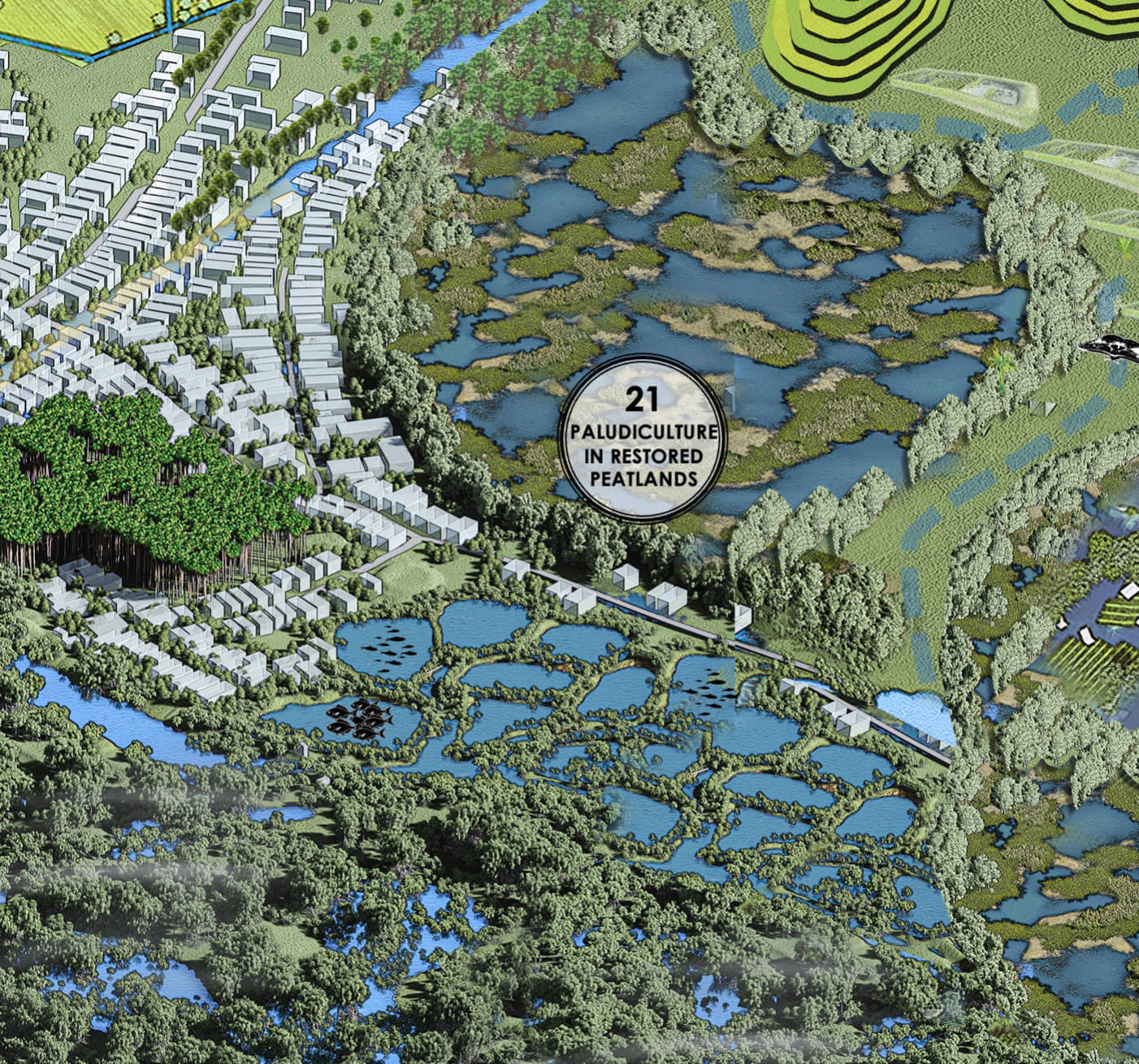
Paludiculture Associated Peatland

Paludiculture associated peatland is an innovative ecological approach focused on restoring and enhancing peatland ecosystems while supporting biodiversity, carbon sequestration, and ecosystem resilience.

By cultivating water-loving vegetation such as sphagnum moss, reeds, mangroves, aquatic grasses, and marsh plants in waterlogged peatland areas, paludiculture helps stabilize soils, reduce erosion, and restore the natural hydrology of these vital ecosystems.

These plants play a crucial role in carbon capture, preventing the release of greenhouse gases from drained peatlands, while providing habitats for diverse wildlife.

In tropical Southeast Asia, paludiculture can contribute to the restoration of degraded peatlands, improve water quality, and promote sustainable land use practices. This approach not only supports biodiversity but also offers economic opportunities by providing sustainable resources for local communities.


  • Ecosystem restoration
  • Ecosystem based adaptation
  • Sustainable land management
  • Ecosystem based mitigation
Biodiversity Loss Biodiversity Loss
Flood Control Flood Control
Carbon Sequestration Carbon Sequestration
Food Security Food Security
Soil Erosion Soil Erosion

SUPPORTING

  • Support the recovery of biodiversity by providing habitats for a variety of plant and animal species in restored peatland ecosystems.
  • Aid in soil formation and stabilization by cultivating water-loving vegetation that prevents further degradation of peat soils.

REGULATING

  • Help mitigate climate change by sequestering carbon in peatlands and preventing the release of stored greenhouse gases.
  • Regulate water flow and reduce flood risks by maintaining natural hydrological processes through waterlogged conditions in peatlands.
  • Improve water quality by filtering excess nutrients and pollutants from water passing through restored peatland areas.

PROVISIONING

  • Provide a sustainable source of raw materials, such as mosses, reeds, and aquatic plants, for use in various eco-friendly products.
  • Offer valuable resources like food and medicinal plants from wetland species cultivated in paludiculture systems.
  • Ensure a steady supply of freshwater by maintaining the natural water regulation capacity of peatland ecosystems.

 SOCIAL BENEFITS

  • Support local livelihoods by offering sustainable, economic opportunities through the cultivation of wetland plants and products.
  • Mitigate the impacts of flooding and extreme weather events, to help protect the well-being and resilience of local communities.
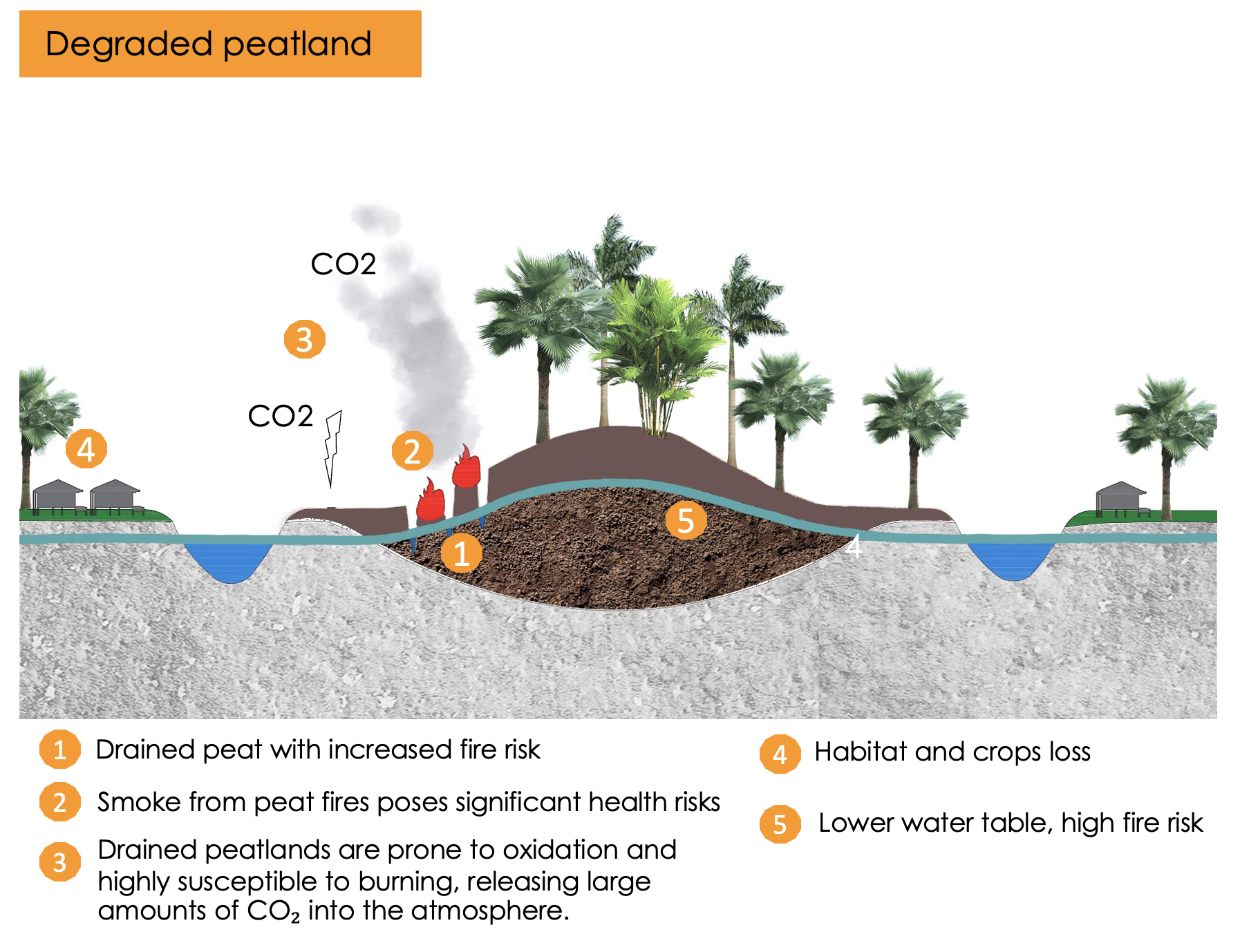
NbS21_Degraded Peatland _Legend
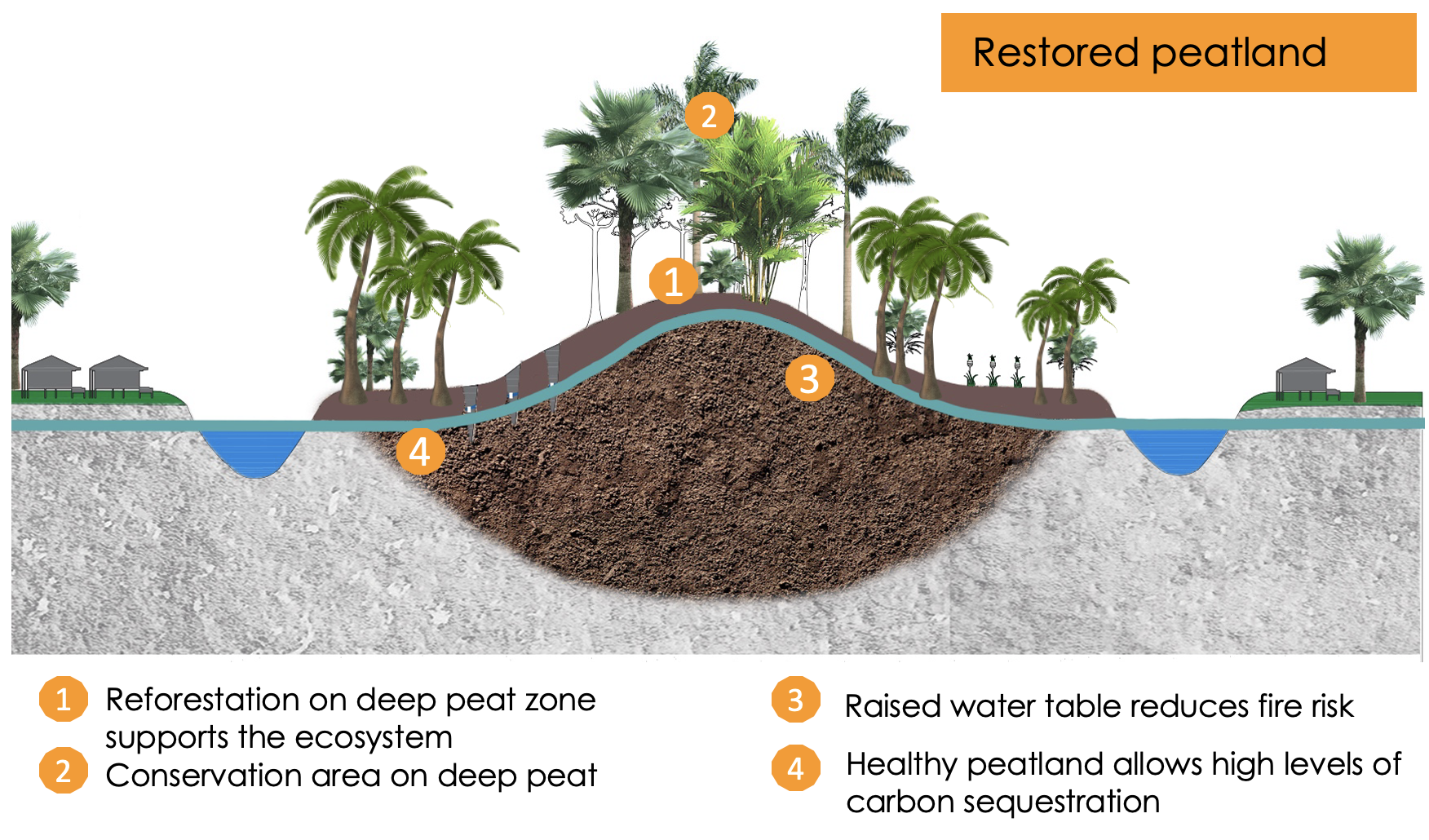
NbS21_Restored Peatland Section_ legend

Water Management: Maintaining appropriate water levels is critical for peatland restoration. Incorrect water management can lead to drying out, soil degradation, and the release of stored carbon, as well as increased fire risk.

Competing Land Uses: Competing land uses, such as agriculture or industrial development, can create conflicts over land rights.

Sustainability Challenges: plant species used in paludiculture may attract pests or become invasive, competing with native vegetation. Extreme droughts or floods, can affect the viability of paludiculture.

Extreme Weather Impact: Droughts can dry out peatlands, excessive rainfall can disrupt the stability of planted vegetation and lead to erosion.

Biodiversity Conservation

Number of species present in restored peatland areas, assessment of habitat suitability for different species.

Carbon Sequestration

Amount of carbon stored in peatlands, annual rate at which carbon is captured or stored in the peatland ecosystem.

Soil Erosion Prevention and Soil Fertility

Rate of soil loss before and after restoration.

Water Regulation and Quality Improvement

Volume of water retained in the peatland during different seasons, reduced frequency and severity of floods in restored peatland areas, concentrations of pollutants (before and after restoration).

Livelihood and Economic Opportunities

Revenue generated from paludiculture products (e.g., plants, raw materials, bioenergy), number of local jobs created through project implementation and related industries.

Direct Costs

Land acquisition, vegetation planting, water management infrastructure, labor.

Indirect Costs

Administrative overhead, training, opportunity costs, legal and regulatory compliance.

Time Horizon

Short-term (1–5 years): setup costs, planting, and initial monitoring. Long-term (10+): ecosystem services established.

Direct Benefits

Carbon sequestration, improved water quality, flood control, sustainable harverst.

Indirect Benefits

Biodiversity improvement, resilience to climate events, community health and well-being.

Risk Assessment

Incorrect water level management can lead to peatland drying or flooding, insufficient funding or financial instability , extreme weather events.

REFERENCES

Vietnam, Ca Mau Province , Mangrove and Peatland Restoration.

Indonesia, Restoration of Peatland Ecosystems in Central Kalimantan.

Thailand, Kuan Kreng Peat swamp forest.


IMPLEMENTATION OPPORTUNITIES

Philippines, Mindanao (Ligawasan Marsh)

Laos, Champasak Province, Beung Kiat Ngong wetland

Vietnam, Mekong delta region, U Minh Ha and U Minh Thuong National Parks.