
Artificial seagrass meadows aim to restore and enhance the ecological functions of marine ecosystems by establishing seagrass beds using both natural and engineered materials.
This approach involves planting or embedding seagrass species in areas where they have been depleted, using biodegradable substrates like coir mats, seed-containing bioengineered structures, or sediment-based inoculants.
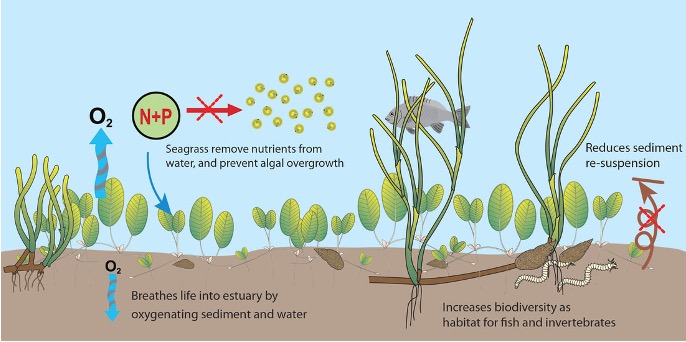
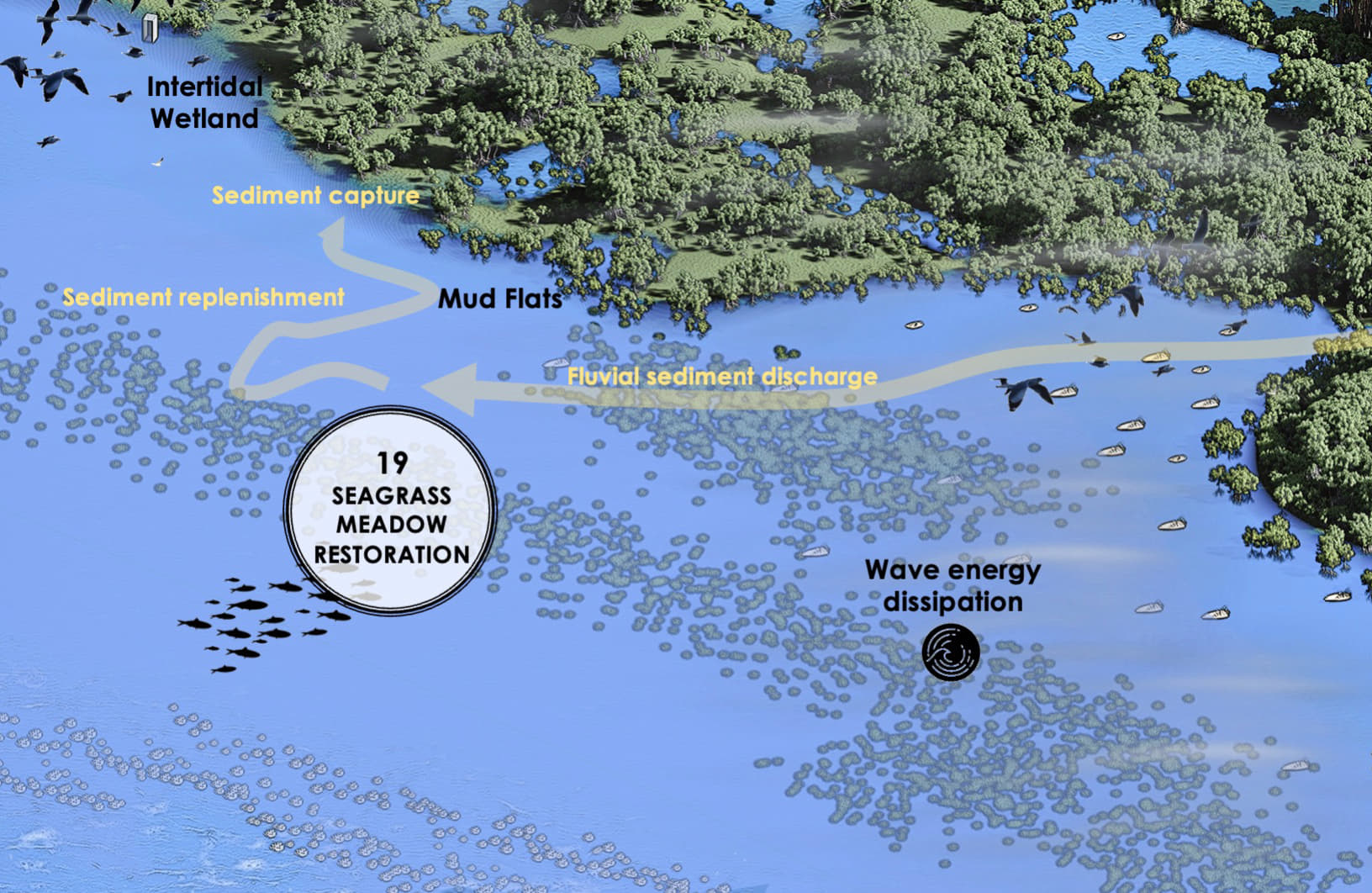
These materials facilitate the establishment of seagrass by providing a stable substrate for growth, reducing erosion, and supporting the accumulation of organic matter. The artificial meadows improve water quality by increasing sediment stability, enhancing nutrient cycling, and reducing turbidity.
They also provide critical habitat for marine life, support biodiversity, and contribute to carbon sequestration, while boosting the resilience of coastal environments against storm surges and sea-level rise.