
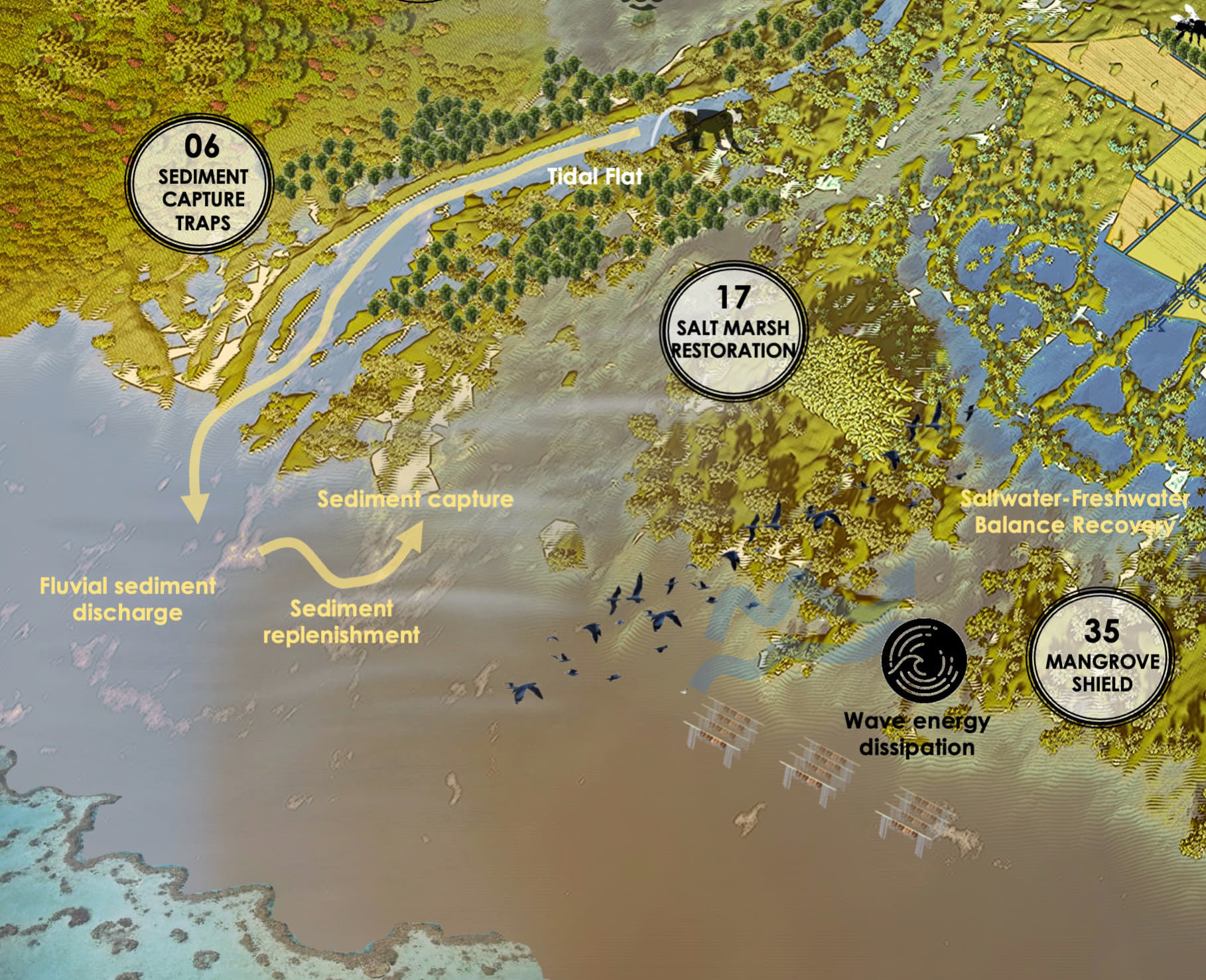
Salt Marsh Restoration

Salt Marsh Restoration focuses on rehabilitating tidal wetlands in coastal and port areas to restore their ecological functions and benefits.

These habitats, characterized by salt-tolerant vegetation such as grasses, sedges, and mangrove-associated plants, are vital for supporting biodiversity, buffering against storm surges, improving water quality, and capturing carbon.

Restoration efforts often include re-establishing natural tidal flows, removing invasive species, and planting native vegetation suited to local conditions. In areas with degraded or subsided land, sediment nourishment or the strategic use of dredged materials can rebuild marsh platforms and enhance their functionality.

Projects frequently adopt a holistic approach by integrating salt marshes with nearby habitats, such as mangroves, mudflats, and seagrass beds, to create interconnected ecological networks.


  • Ecosystem based adaptation
  • Ecosystem based disaster risk reduction
  • Ecosystem restoration
  • Integrated coastal zone management
  • Green infrastructure
Soil Erosion Soil Erosion
Biodiversity Loss Biodiversity Loss
Flood Control Flood Control
Disaster Risk Reduction Disaster Risk Reduction
Carbon Sequestration Carbon Sequestration

SUPPORTING

  • Offer breeding, feeding, and nursery grounds for a wide range of species, including fish, shellfish, birds, and invertebrates.
  • Play a key role in cycling nitrogen and phosphorus.
  • Contributes to soil formation over time by accumulation of organic matter and sediments.

REGULATING

  • Buffer against storm surges, wave energy, and erosion, reducing risks to coastal infrastructure.
  • Sequester and store significant amounts of carbon helping to mitigate climate change.
  • Filter pollutants, sediments, and excess nutrients from water.
  • Reduce the impact of coastal and riverine flooding, by absorbing and holding water.

PROVISIONING

  • Certain salt-tolerant plants are collected as culinary ingredients.
  • Biomass from salt marsh plants, such as reeds and grasses, can be used for thatching, weaving, or as organic matter in soil enrichment.
  • Marsh vegetation can serve as grazing material for livestock in some coastal communities.
  • Plants and organisms in salt marshes may contain compounds with pharmaceutical applications.
  • Decomposed plant material from salt marshes can be used as a fuel source or in bioenergy production.

SOCIAL BENEFITS

  • Attract birdwatchers, photographers, and eco-tourists.
  • Serve as natural laboratories for studying ecosystems and climate resilience.
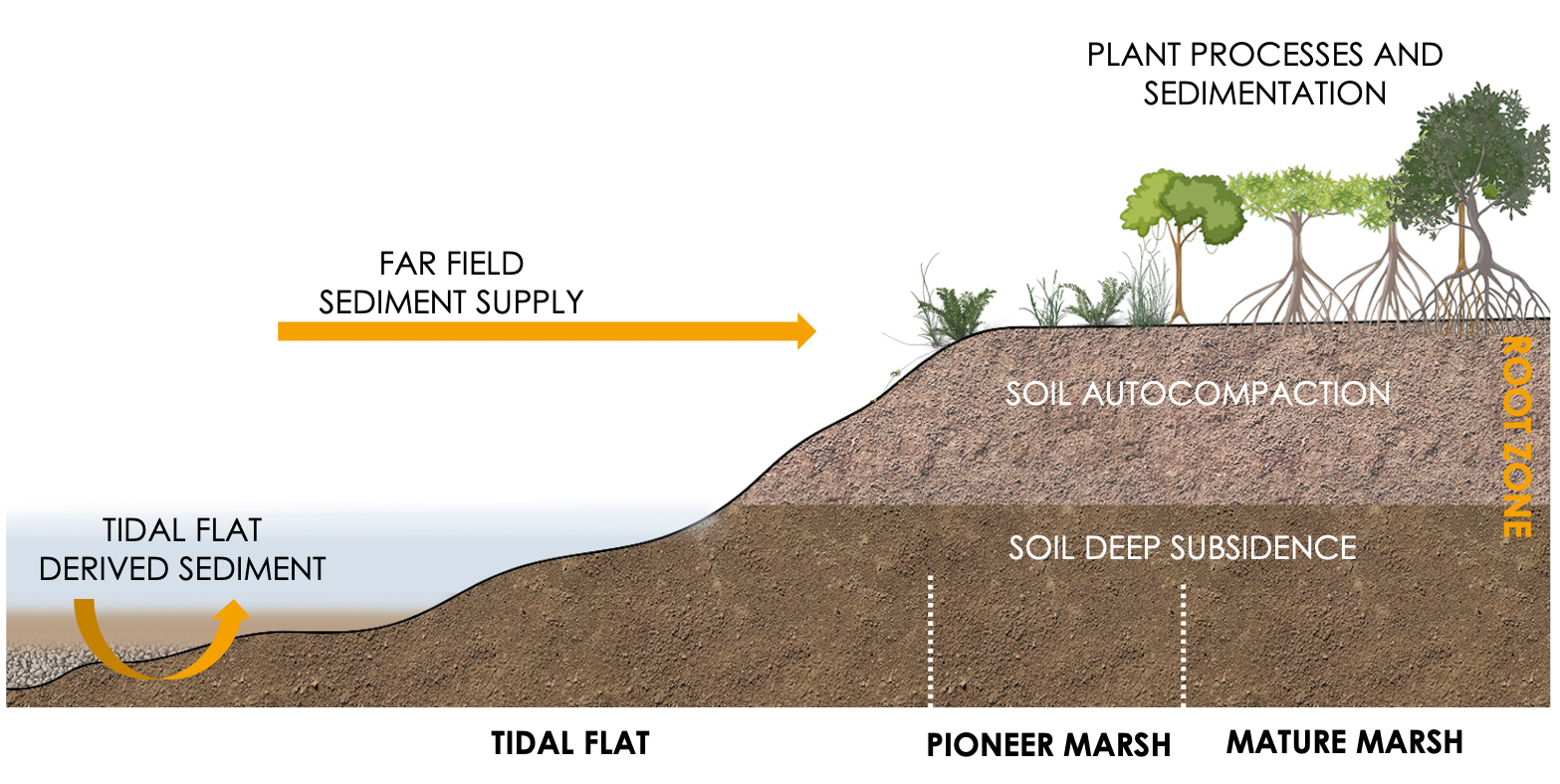
NbS17_Process of Saltmarshes
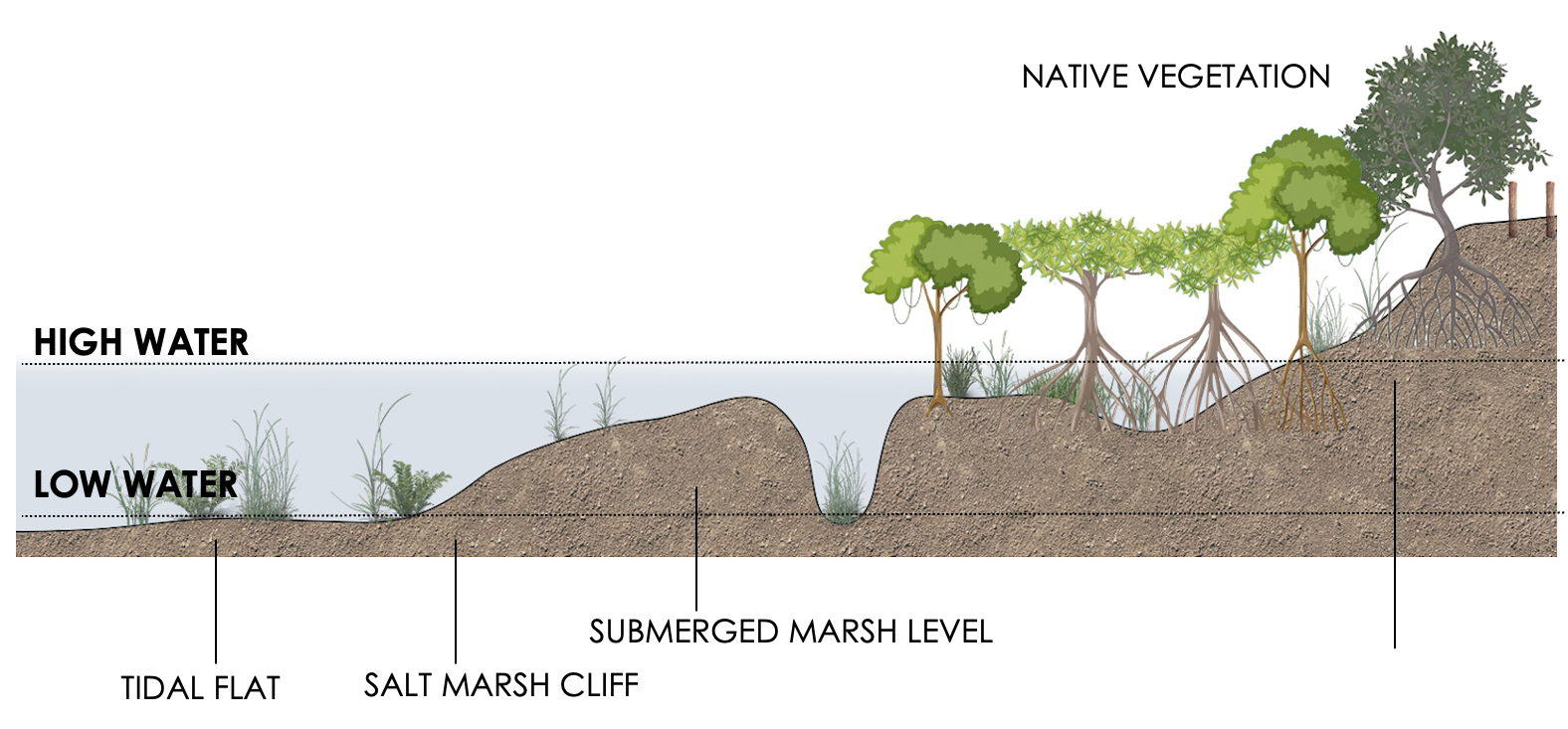
NbS17_Profile of Saltmarsh and mudflat

Pollution and Contamination : Industrial runoff, heavy metals, and nutrient loading can degrade restored areas. Contaminated sites may require costly remediation before proceeding.

Sediment Availability : It can be limited by upstream dams, dredging, or erosion control structures.

Complexity of Ecosystem Recovery : Restoring the full functionality of a salt marsh, including hydrology, vegetation, and biodiversity, requires careful planning and expertise.

Monitoring and Maintenance : Ensuring long-term success requires sustained monitoring and adaptive management.

Biodiversity Enhancement

Increased abundance and diversity of bird, fish, and invertebrate, species using the restored area as breeding or feeding grounds.

Carbon Sequestration:

Soil organic carbon levels (tons per hectare), rate of carbon accumulation in sediments.

Fisheries Support

Increase in fish biomass and abundance, particularly juvenile stages.

Water Quality Improvement

Decrease in nutrient concentrations (nitrogen, phosphorus) in adjacent waters, presence of clear water-tolerant species.

Livelihood Opportunities

Number of people employed in restoration activities or sustainable harvesting . Increase in income from fisheries and eco-tourism related to the restored marsh.

Direct Costs

Site, planning, restoration, equipment, monitoring, maintenance : $270,000 – $1,300,000 /ha.

Indirect Costs

Opportunity costs, ecosystem service losses during transition: $100,000- $850,000/ha.

Time Horizon

Short-term (1-5 years): Initial restoration actions, Long-term (15-50 years): Full restoration benefits are realized.

Direct Benefits

Flood control, carbon sequestration, improved water quality, and biodiversity support.

Indirect Benefits

Improved public health and tourism revenue.

Risk Assessment

Climate change impacts, invasive species, and unpredicted ecological changes. Funding challenges and competing land uses.

REFERENCES

England , Essex, Colne Estuary, saltmarsh restoration.

US, California, Napa River Salt Marsh Restoration Project.

US, South San Francisco Bay , Salt Pond Restoration Project.

IMPLEMENTATION OPPORTUNITIES

Thailand, Krabi Estuary, Krabi Province (loss of wetlands due to urban development, tourism, and agriculture). Vietnam, Tràm Chim National Park, Mekong Delta (saltwater intrusion due to rising sea levels and human activities).