
Small Sand Dams

Small sand dams support the resilience of dry river landscapes by capturing and storing water within sandy riverbeds, offering a sustainable water source for local communities, agriculture, and ecosystems.

Typically constructed from concrete or stone, these dams trap sand and sediment carried by rivers during seasonal floods, creating a natural reservoir that stores water while reducing evaporation and replenishing groundwater. This improves water availability during dry periods, strengthens food security, and ensures access to clean water for drinking and irrigation.

In the watersheds of dry rivers in Western Timor, Indonesia, where water scarcity and flash floods often threaten livelihoods, sand dams can stabilize riverbanks, mitigate soil erosion, and reduce flood risks downstream. Additionally, they provide critical support for riparian reforestation and biodiversity conservation, promoting ecosystem health and sustainable agriculture.

Given Western Timor’s rugged terrain and prolonged dry seasons, sand dams offer a cost-effective, community-driven approach to improve water security, manage floods, and support regenerative farming, aligning with local needs and ecological conditions.


  • Biodiversity corridors
  • Soil and water conservation
  • Climate smart agriculture
  • Riparian buffer restoration
  • Sustainable livelihoods approach
Soil Erosion Soil Erosion
Disaster Risk Reduction Disaster Risk Reduction
Flood Control Flood Control

SUPPORTING

  • Groundwater Recharge: Enhances aquifer replenishment by capturing and storing water in sand-filled reservoirs.

Flood Mitigation:

  • Reduces the impact of sudden floods by slowing water flow and storing it in riverbeds.

PROVISIONING

  • Clean Water Supply: Provides a reliable source of water for drinking, irrigation, and livestock during dry seasons.

SOCIAL BENEFITS

  • Food Security: Supports agricultural productivity by ensuring year-round water availability for crops and livestock.
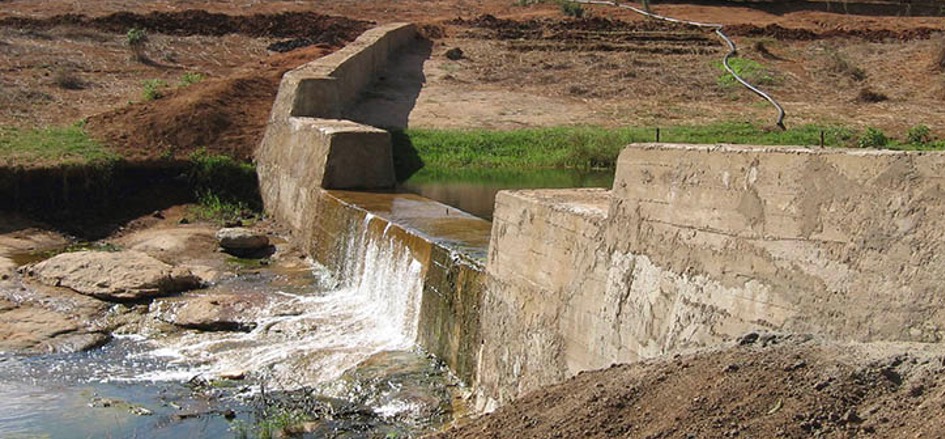
NbS13_Sand Dam Reference Kenya01
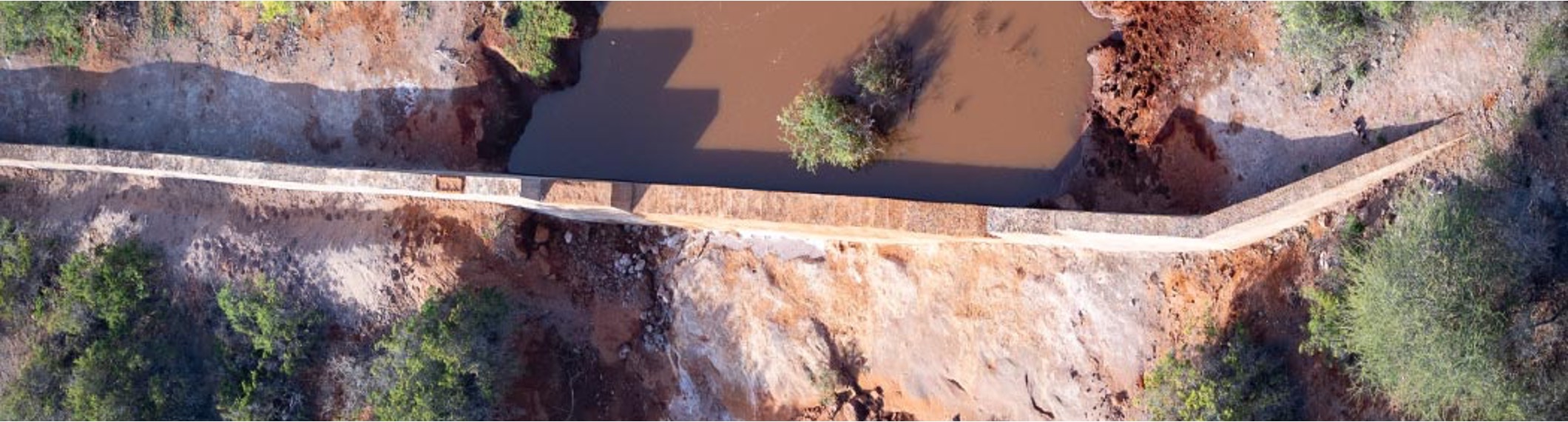
NbS13_Sand Dam Reference Kenya02
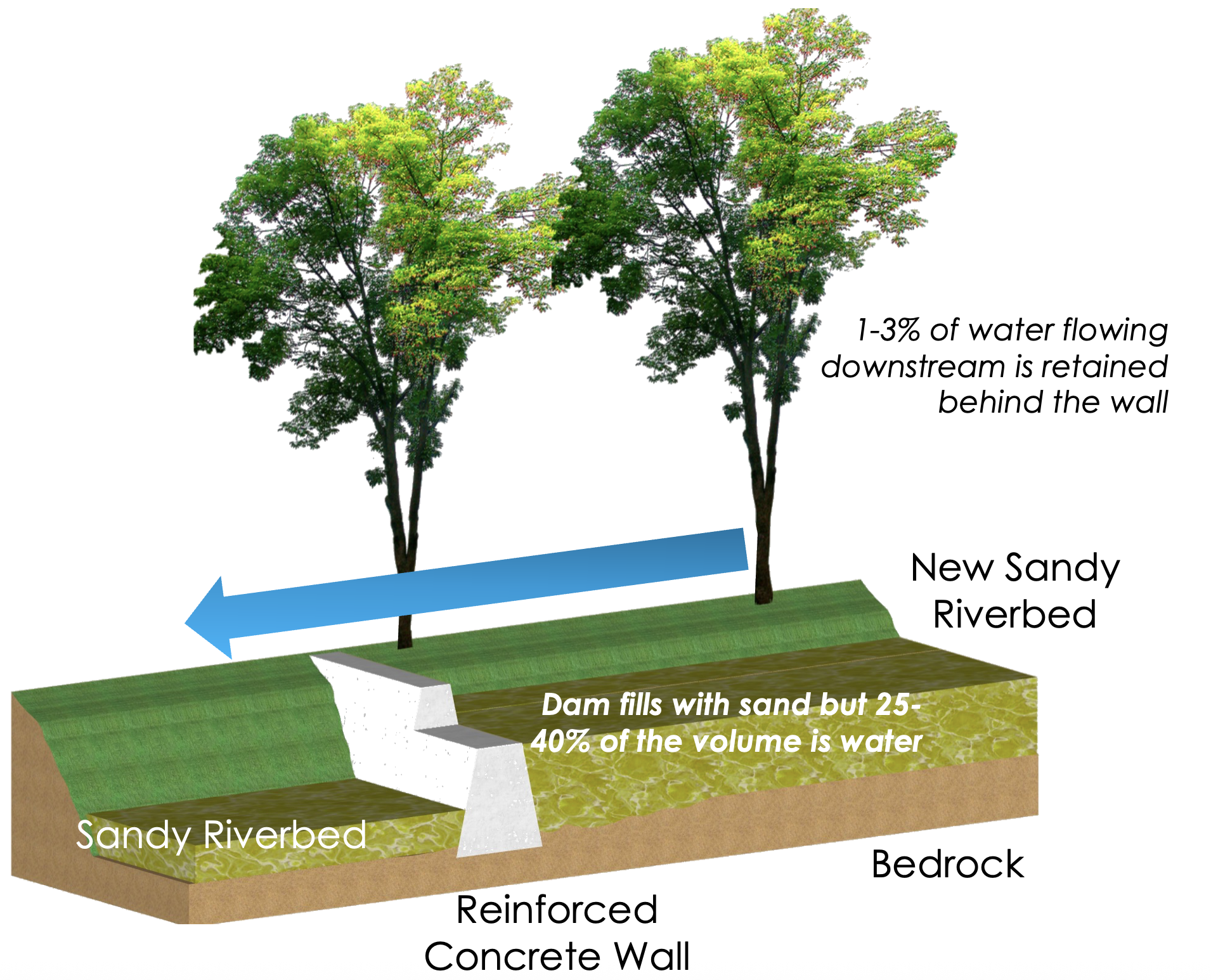
NbS13_Sand Dam Reinforced Concrete Wall_Legends

Site Suitability: Identifying appropriate locations with adequate sand accumulation and stable bedrock can be challenging and resource-intensive.

Community Engagement: Insufficient involvement of local communities in planning and maintenance may lead to lack of ownership and project sustainability.

Sediment Management: Poorly designed sand dams risk excessive sediment deposition, reducing storage capacity and effectiveness over time.

Seasonal Water Flow Variability: Highly irregular or minimal seasonal water flows, common in Western Timor, can limit the ability of sand dams to consistently recharge groundwater.

Enhanced Groundwater Recharge

Small sand dams increase groundwater storage, with water table levels rising by up to 3–5 meters in adjacent areas.

Flood Mitigation

Sand dams regulate sudden water flows during floods, reducing downstream flood intensity by 20–40%.

Agricultural Productivity

Irrigation availability increases crop yields by 50–100% in regions dependent on dryland farming.

Improved Water Access

Communities gain year-round access to clean water, with up to 1,500 people benefiting from a single sand dam.

Biodiversity Support

Sand dams create microhabitats for aquatic and terrestrial species, with a 30–50% increase in vegetation cover near dams.

Climate Adaptation

Strengthened water storage buffers communities against droughts, reducing water scarcity risk by 30% in arid regions.

Direct Costs

Restoration, monitoring, infrastructure. $5,000–$30,000 per hectare restoration cost

Indirect Costs

Loss of income from alternative land uses (e.g., agriculture or development).

Time Horizon

Lifespan of 30–50 years, with a discount rate of 5–7% typically applied for cost-benefit analysis.

Direct Benefits

Annual water savings for agriculture and domestic use can be valued at $5k–10k per community.

Indirect Benefits

Enhanced crop productivity and reduced drought-related losses generate $10k–25k in economic value annually.

Risk Assessment

Mitigating risks such as sediment overflow or structural failure typically requires an additional 10–15% of initial costs for monitoring and reinforcements.

REFERENCES

Philippines, community-based Bohol Sand Dam project.

Kenya, Kitui and Machakos Sand Dam project.

India, Saurashtra Sand Dams for Drylands in Gujarat.

IMPLEMENTATION OPPORTUNITIES

Western Timor, Noelmina and Benain Rivers.

Myanmar , Central Dry Zone’s Ayeyarwady River tributaries.