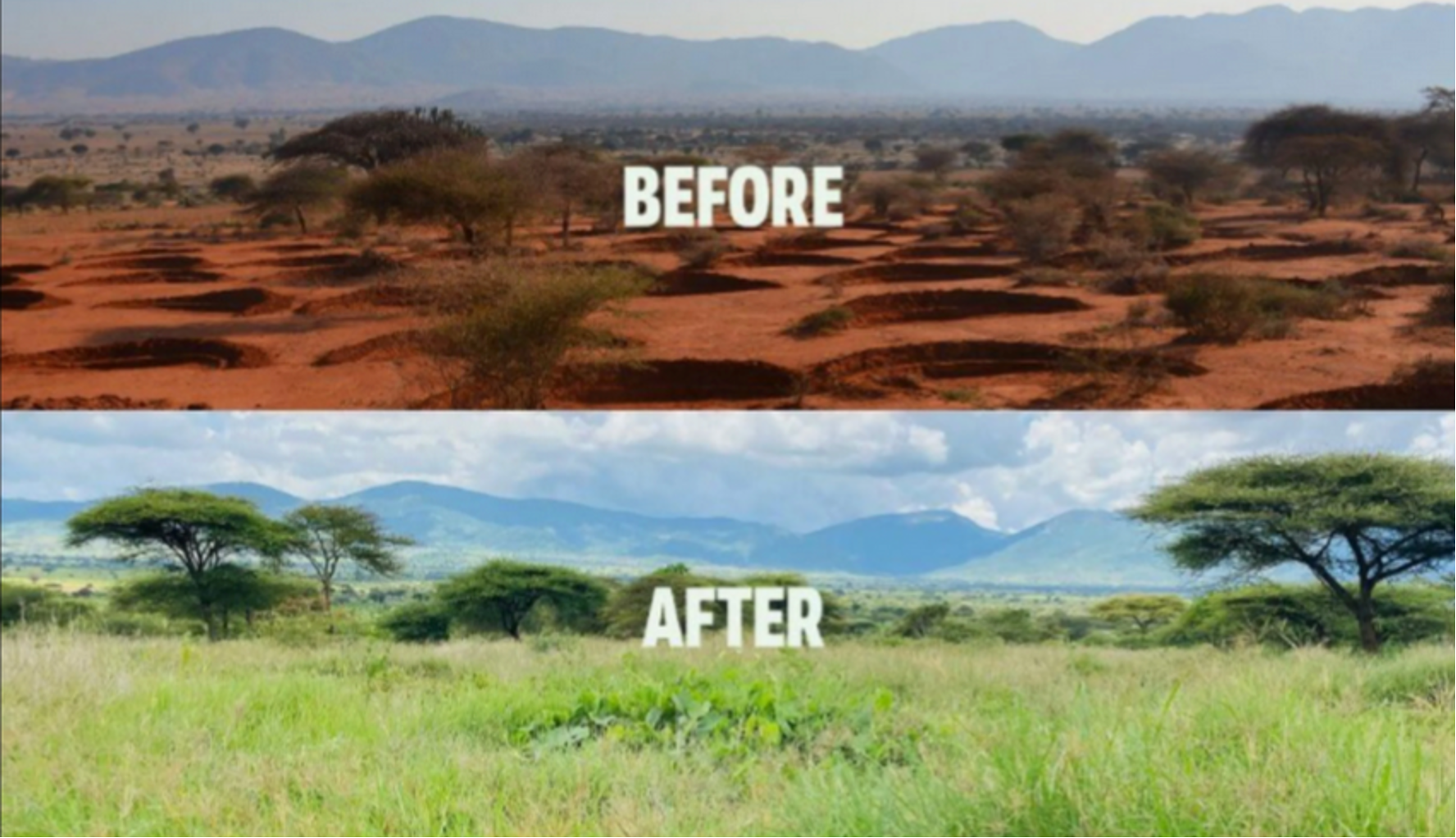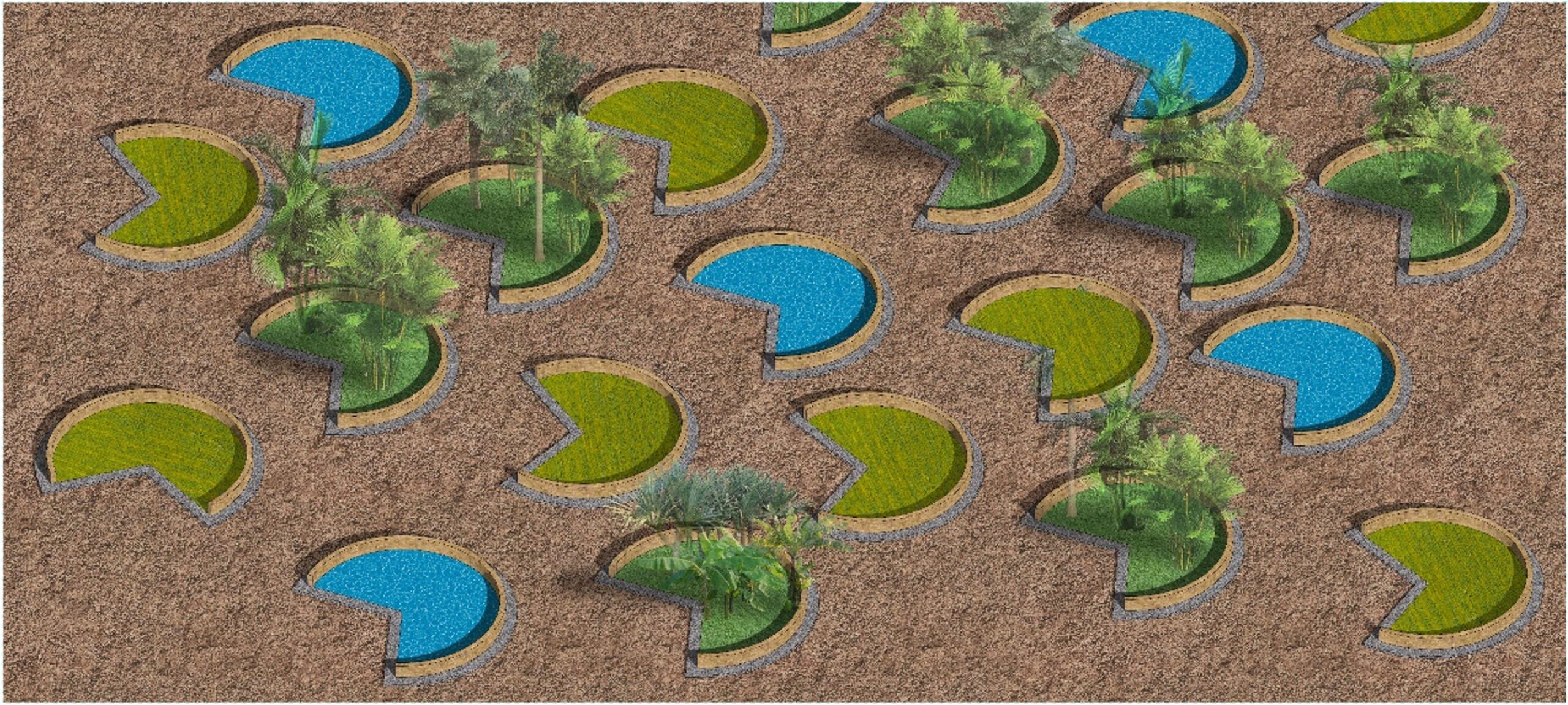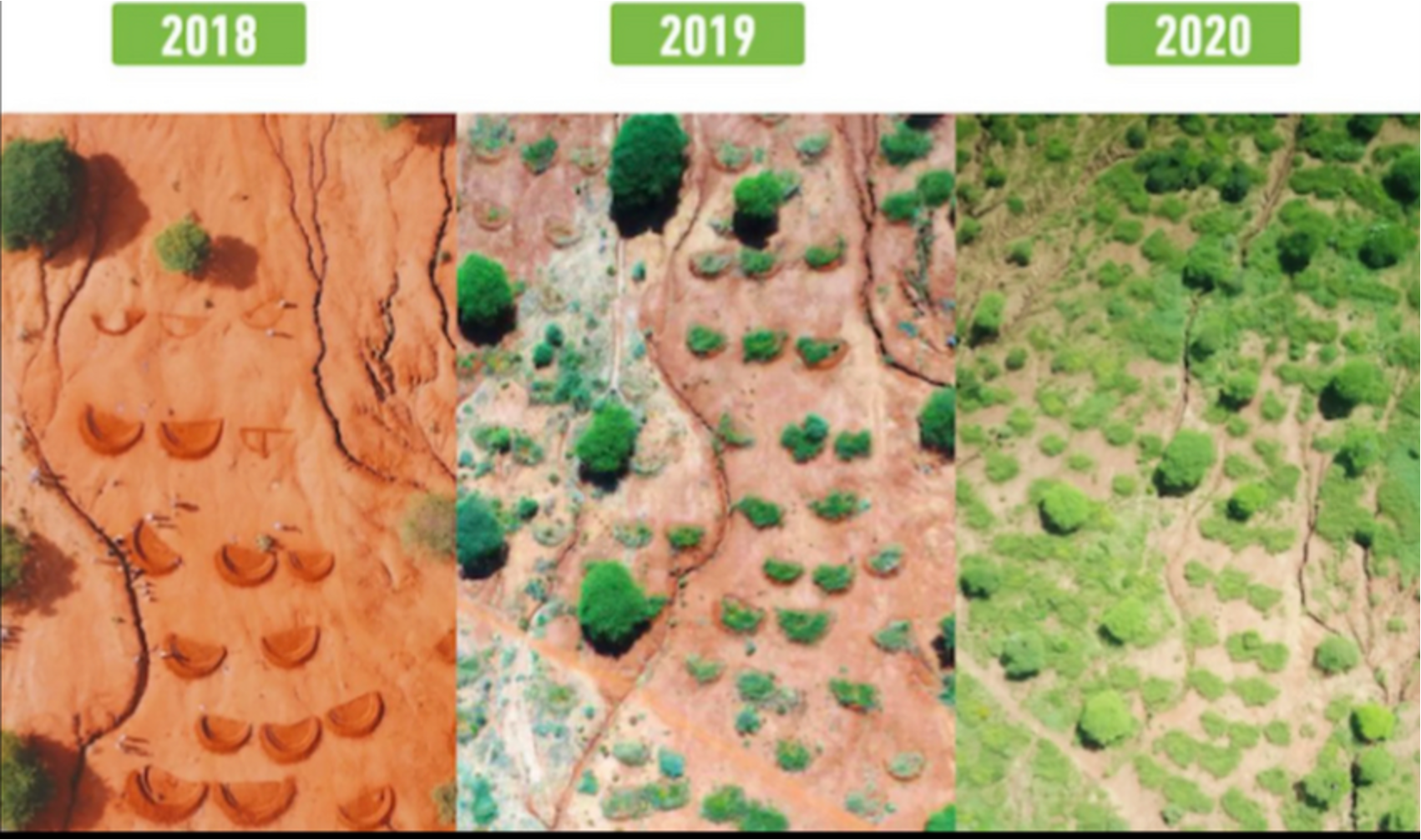

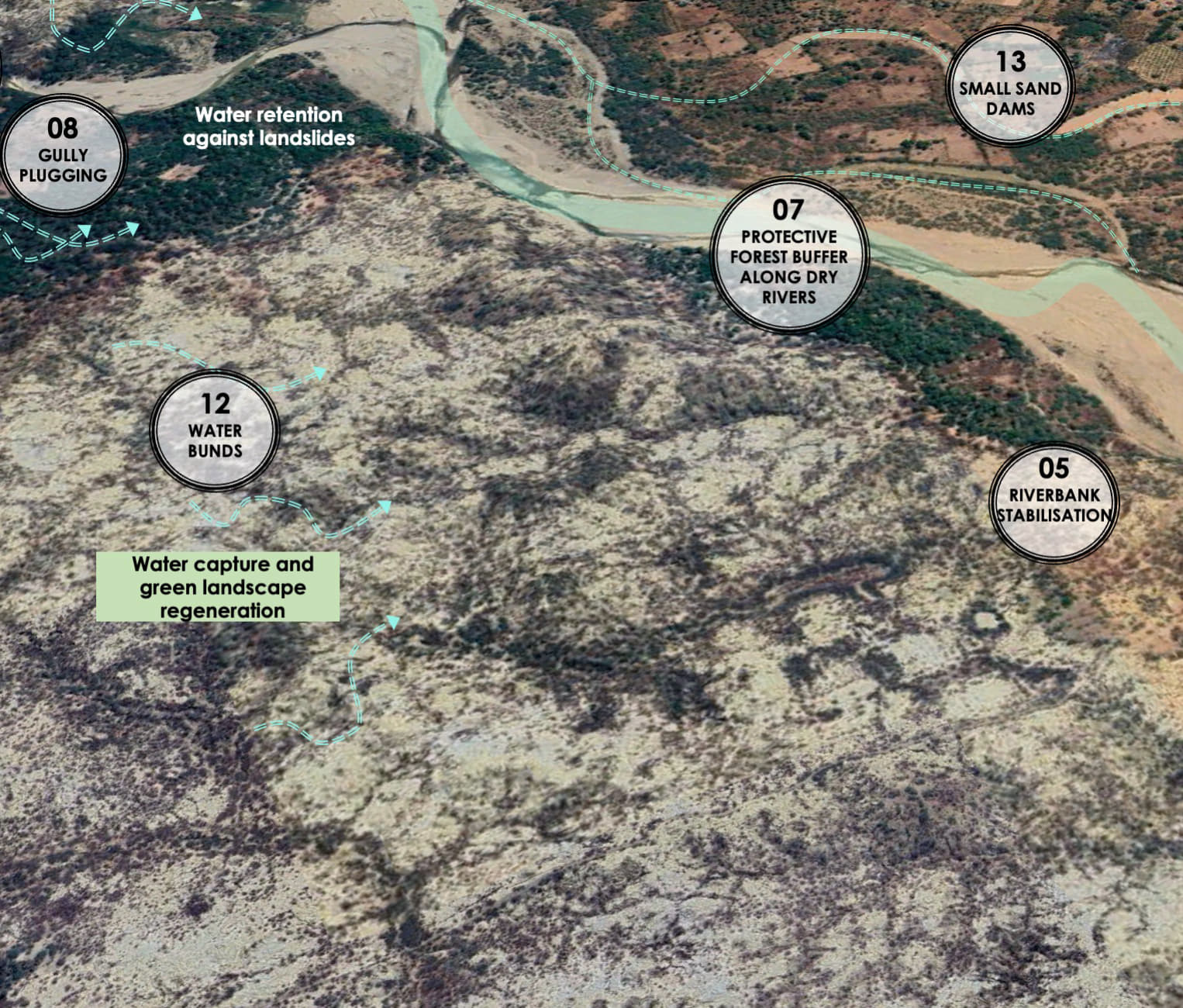
Water bunds are designed to collect, store, and manage water, playing a crucial role in improving agricultural productivity, preventing soil erosion, and recharging groundwater.
Typically built as embankments or earthen ridges along contour lines, water bunds slow down surface runoff during rains, allowing water to infiltrate the soil and be stored for future use.
This technique is especially beneficial in the dry and semi-dry regions such as northeastern Cambodia, central and northern Thailand, and upland Laos, where erratic rainfall and water scarcity challenge agricultural livelihoods. Lessons from similar practices in dry regions of East Africa demonstrate that water bunds effectively conserve moisture, improve soil fertility, and support resilient farming systems even under harsh climatic conditions.
Water bunds mitigate soil erosion by reducing water velocity, trap sediments and organic matter, and enhance the so. it’s capacity to retain moisture. On a landscape scale, water bunds stabilize degraded terrains, promote vegetative cover, and support ecosystem restoration.
Socially and economically, they improve crop yields, reduce vulnerability to droughts, and enhance groundwater availability, directly benefiting farmers and local communities. By fostering participatory approaches, such as community-driven bund construction and maintenance, water bunds also build social cohesion and promote sustainable land and water management.