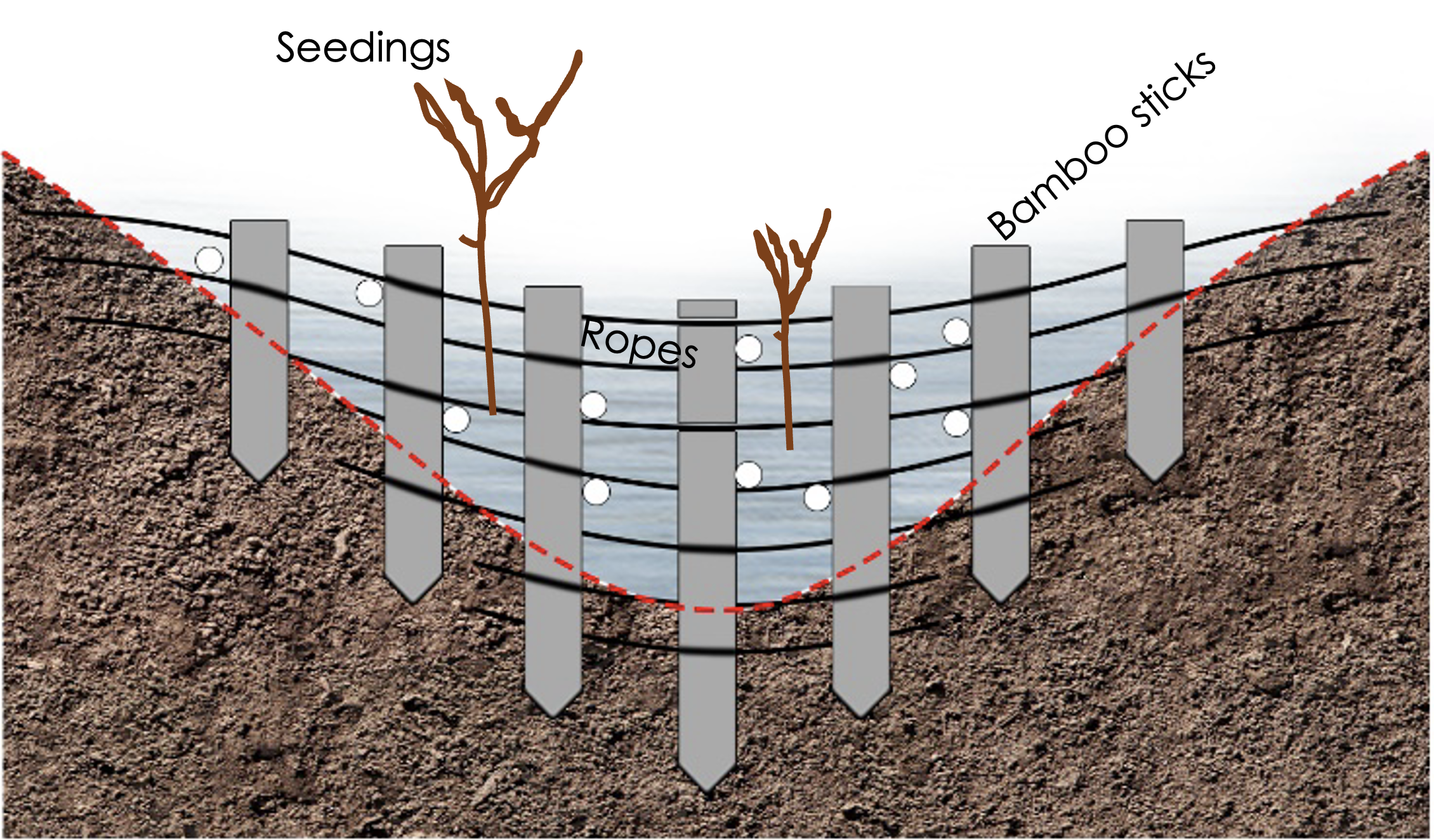

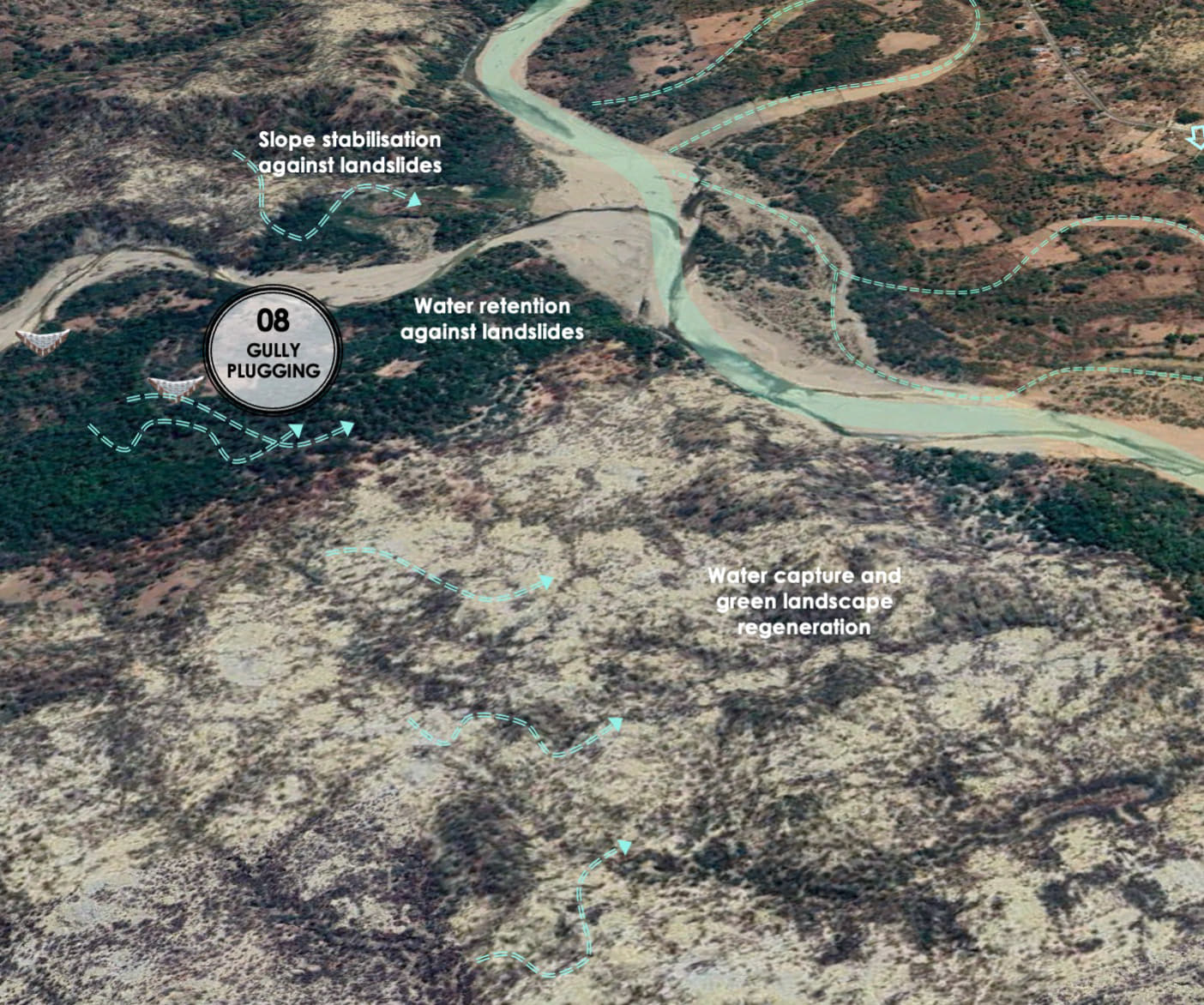
Gully plugging is a low-cost, nature-based solution (NbS) designed to slow water flow, reduce erosion, and promote sediment deposition, particularly in hilly or mountainous regions.
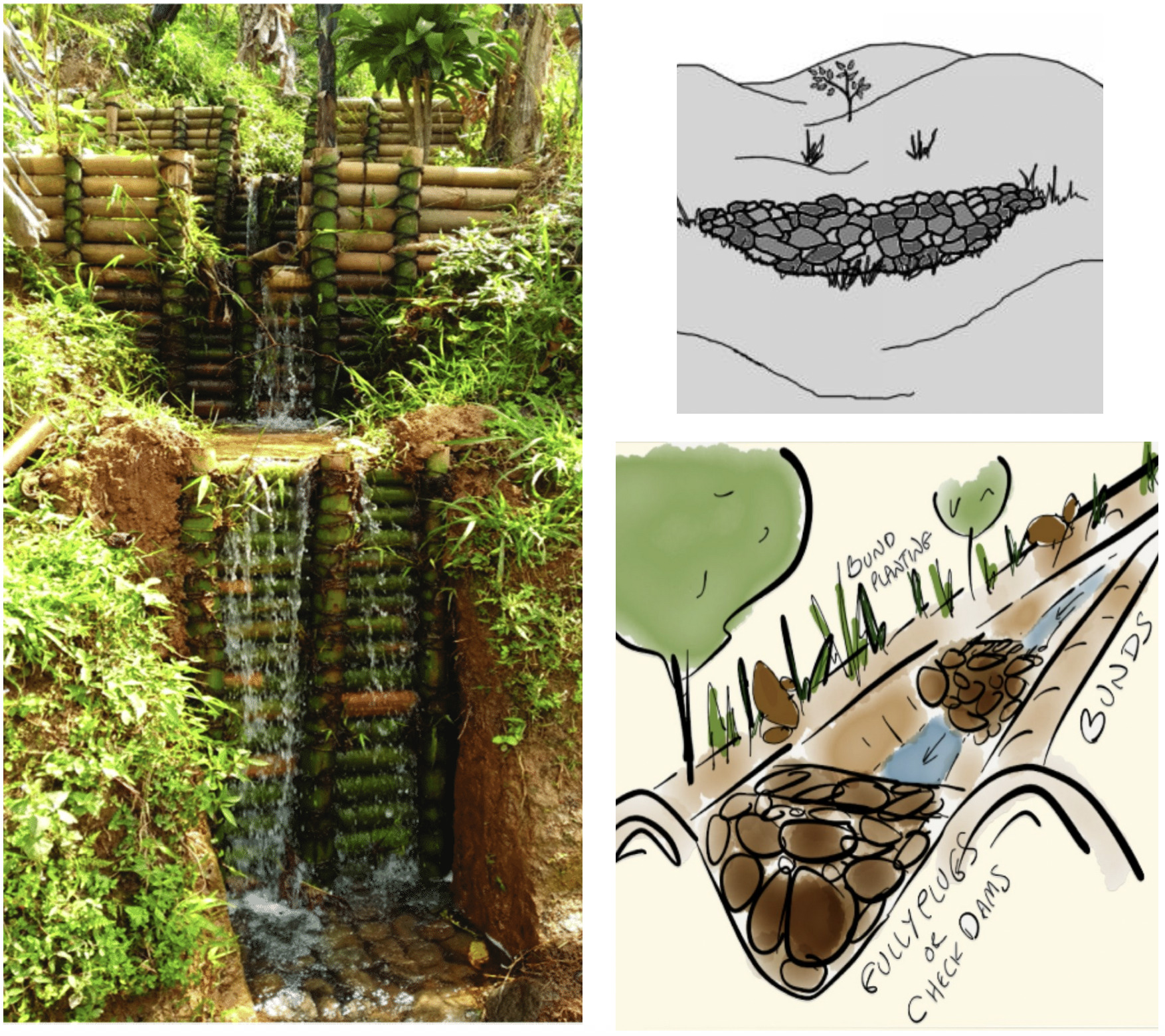
It involves constructing small barriers across gullies using locally sourced materials like bamboo and stones, which are abundant and sustainable. Bamboo gully plugs are lightweight, biodegradable, and effective in trapping sediment and fostering vegetation growth, though they require periodic maintenance due to material degradation.
Stone gully plugs, on the other hand, are more durable, handle higher water flows, and provide a semi-permeable barrier that allows water infiltration while retaining soil upstream.
Both approaches are often complemented by planting vegetation on slopes to further stabilize soil, enhance water retention, and increase long-term resilience. Similar NbS, such as check dams and contour bunding, also address erosion control and water management, making them applicable in regions like Indonesia and the Philippines, where heavy rainfall and steep slopes exacerbate soil degradation. Gully plugging supports regenerative agriculture by restoring degraded land, reducing sedimentation in downstream waterways, promoting groundwater recharge, and improving the sustainability of rural livelihoods.